
Ten years of Belo Monte: The time for justice has come
Verena Glass / Movimiento Xingú Vivo para Siempre
Ten years after its inauguration, the Belo Monte Hydroelectric Plant (UHE) in Pará returns to the center of public debate, this time under the scrutiny of the Inter-American Human Rights System. More than an anniversary, this milestone reinforces the urgency of an effective institutional response:justice cannot continue to be postponed.
The case, currently pending before the Inter-American Commission on Human Rights (IACHR), brings together a substantial body of evidence regarding human rights violations associated with the Belo Monte UHE. Filed by a coalition of civil society organizations, including the Inter-American Association for the Defense of the Environment (AIDA), Global Justice, Coordenação das Organizações Indígenas da Amazônia Brasileira (COIAB), Movimento Xingu Vivo para Sempre (MXVPS), and the Conselho Indigenista Missionário (CIMI), the petition consolidates allegations of violations of the rights to life, health, prior consultation, and a healthy environment. The case is at an advanced stage of review and could soon be referred to the Inter-American Court of Human Rights.
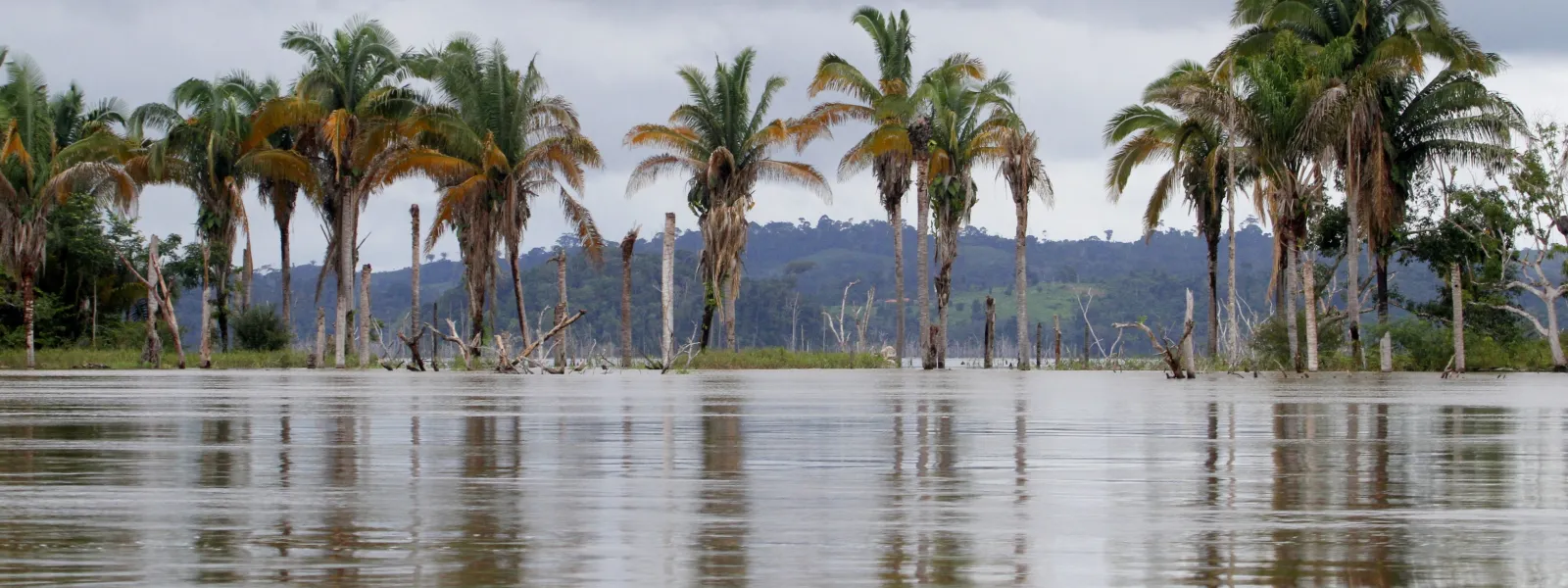
A decade on, the socio-environmental impacts remain significant and largely unmitigated. The Volta Grande do Xingu—a stretch of approximately 130 km directly affected by the artificial reduction in river flow—represents the project’s most serious liability. The alteration of the hydrological regime, compounded by extreme events associated with climate change, has compromised local ecosystems, disrupted the reproductive cycle of species, reduced navigability, and threatened the food and water security of populations that depend directly on the river.
Indigenous communities, riverine populations, and artisanal fishers face the ongoing deterioration of their ways of life, including reduced fish availability and impacts on fishing livelihoods. Additional harms include inadequate resettlements, increased violence, mental health impacts, and threats to cultural practices and traditional ways of life.
Unlike the debates that characterized the project’s implementation phase, today’s discussion is shaped by the climate emergency and new international regulatory standards. Advisory Opinion OC-32 of the Inter-American Court of Human Rights provides clear guidelines on states’ obligations to protect human rights in the face of the climate crisis, recognizing the right to a healthy environment as a foundational principle. In this context, the Belo Monte Hydroelectric Plant case is a significant test of how energy development, environmental protection, and the rights of local populations can—and must—be reconciled.
The organizations monitoring the case highlight non-compliance with precautionary measures issued by the Commission as a key reason to advance to the Court. The legal merit of the case, combined with its international significance, positions the case as ready for adjudication.
"More than a decade after the start of the Belo Monte hydroelectric project, the impacts on the Xingu River continue and are worsening, exacerbated by pressure for new projects and the climate crisis. The communities remain mobilized for justice and confident in the Inter-American Commission’s efforts to bring the case before the Court—the final step to ensure full reparations and the protection of the territory and its ways of life," said Marcella Torres, legal coordinator of AIDA’s Human Rights Program.
According to Melisanda Trentin, coordinator of Socio-Environmental and Climate Justice at Justiça Global, the Belo Sun mining project is moving forward in the Volta Grande do Xingu region with consultation flaws identical to those of the Belo Monte project. “What is at stake in the region is the accumulation of harm and violations of human and environmental rights. A river with reduced flow, communities facing food insecurity and altered ways of life, and now a new project that repeats the same violations denounced in the Inter-American System for over 10 years,” she points out.
For the signatory organizations, the ten-year mark represents a critical window for justice. The Belo Monte case is no longer an isolated episode— it stands as a benchmark for the concrete application of environmental justice in the Amazon, amid growing climate pressure and demands for state accountability.
ABOUT - Belo Monte is the fourth-largest hydroelectric power plant in the world, built on the Xingu River in the state of Pará, in the heart of the Amazon. With an installed capacity of 11,233 MW, it was inaugurated on May 5, 2016. Its operation diverts 80% of the Xingu River’s flow through a canal 500 meters wide and 75 km long. The flooded area between the canal and the reservoir covers 516 km², larger than the city of Chicago, of which 400 km² was native forest.
#JutiçaNoXingu
See the statement from the petitioners in the Belo Monte case before the IACHR
Read what the petitioning organizations in the case have to say:
Coordination of Indigenous Organizations of the Brazilian Amazon (COIAB)
"There is no legal certainty without respect for the inherent rights of indigenous peoples. In the Amazon, this defense goes beyond the legal realm: it is a commitment to life, to the integrity of territories, and to the planet’s climate balance. The harm that the construction of the Belo Monte Dam has caused to indigenous populations and the environment has become a reality and is irreversible. COIAB’s Legal Advisory Office works to ensure that the Constitution, international treaties, and the self-determination of indigenous peoples are effectively respected at all levels of decision-making," states Gabriele Baré, coordinator of COIAB’s Legal Advisory Office.
Movimento Xingu Vivo Para Sempre
"Belo Monte uprooted people from the riverbanks and scattered the Xingu people far and wide, away from the river, their community, and the daily life they knew and loved. The riverine dwellers ceased to be who they were; the fisherwomen ceased to be who they were; they became nothing, many of them wandering the outskirts of cities. These people lost their identity and, with it, their soul. All that remained was emptiness and loneliness. The impact of the loss of their way of life cannot be compensated, but it must be acknowledged so that some form of redress can be made," says Ana Laide Barbosa, an educator with the Xingu Vivo para Sempre Movement.
Observatory of Isolated Indigenous Peoples (OPI)
"The construction of the Belo Monte hydroelectric dam has exacerbated threats and pressures on the indigenous peoples of the Middle Xingu region in a manner similar to what occurred during the dictatorship with the opening of the Trans-Amazonian Highway in the same region. Recently contacted peoples such as the Parakanã and the Arara have suffered from alarming rates of invasions and illegal deforestation on their lands, and the refuge of the isolated indigenous groups of Ituna Itatá has become one of the most deforested areas in Brazil. At the same time, the diversion of the Xingu River’s waters causes ecocidal damage to the indigenous peoples of Volta Grande; and harmful impact compensation policies have had disintegrating and ethnocidal effects on nearly all the peoples. “For all these reasons, the hydroelectric dam has become yet another example of the colonial relationship established by the Brazilian state with the Amazonian peoples and a debt of reparation that must be acknowledged and addressed," says Helena Palmquist, deputy coordinator of the Observatory of Isolated and Recently Contacted Indigenous Peoples (OPI).