
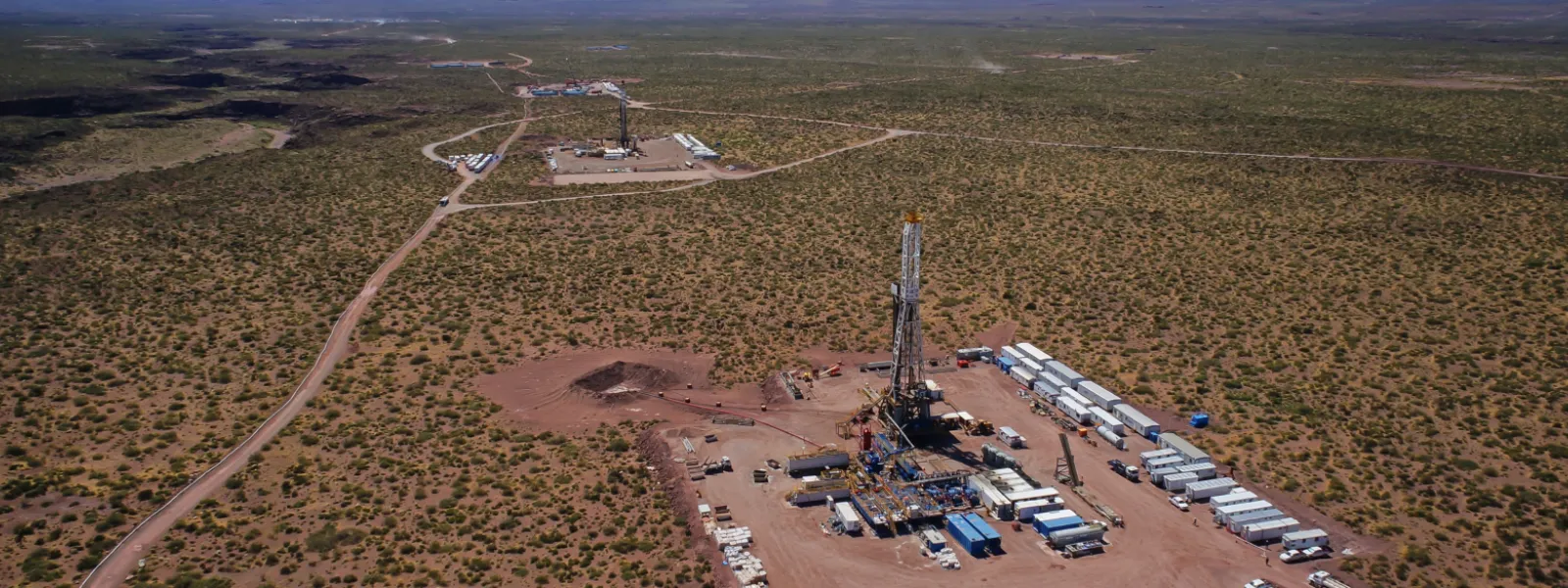
Fracking in Latin America: Impacts and actions to curb its spread
As traditional oil and gas reserves are being depleted due to accelerated extraction, in some Latin American countries—a region highly dependent on fossil fuels—governments and companies have turned to the exploitation of unconventional deposits through hydraulic fracturing, or fracking, an experimental and aggressive technique that can cause serious and irreversible socio-environmental damage.
Since energy production from fossil fuels is the main cause of the global climate crisis—to which Latin America is one of the most vulnerable regions—there is a need to transition to energy systems based on non-conventional renewable sources that are sustainable over the long term and respectful of the environment and people.
At AIDA, we are working to curb oil and gas extraction through fracking in the region, as well as to establish stricter regulations to protect the environment and human rights in the face of this industry.
What is fracking, and what is it used for?
Hydraulic fracturing, or fracking, is a technique used to extract oil and gas from low-permeability geological formations (known as bituminous shales) that are difficult and risky to access.
It involves drilling a straight well into the ground to a great depth, and then turning the drill to create an L-shaped well. A mixture of water, sand, and chemical additives (some of which are toxic) is then pumped or injected into the well at very high pressure to fracture the underground rock and extract the hydrocarbons “trapped” within it.
This flow or process soon declines, necessitating the drilling of new wells to maintain production from the fields. For this reason, fracking requires large tracts of land.
What are the impacts of fracking on the environment and human health?
As an extreme technique for extracting hydrocarbons, fracking has more serious impacts on the environment and human health:
- Water shortage. Fracking uses enormous amounts of freshwater—a single well requires between 9 and 29 million liters—a resource that cannot be recovered. The percentage of water recovered is low, and the recovered water cannot be reused.
- Water source contamination. The mixture of water, chemicals, and sand used in fracking can seep into aquifers and overflow into streams, poisoning water sources for people, agriculture, and livestock. The mixture contains highly toxic chemicals such as methanol, benzene, toluene, ethylbenzene, and xylene, and the flowback water also contains heavy metals, hydrocarbons, and even radioactive materials.
- Emissions of greenhouse gases. Methane leaks occur at fracking wells; methane is 67 times more potent than CO2 in terms of its ability to warm the planet over a 20-year period. These leaks can account for up to 8% of a well’s total production.
- Air pollution. Methane leaks from fracking wells degrade air quality. Methane contributes to the formation of ground-level ozone (O3), the main component of smog, and when burned, it produces soot and volatile organic compounds (VOCs), which are other pollutants.
- Waste generation. Fracking generates large amounts of contaminated solid waste, known as drilling mud. If not properly treated, this waste can contaminate the soil, water, and air.
- Harm to human health. According to the Mexican Alliance Against Fracking, at least 25% of the substances used in the process can cause cancer and mutations, 37% can affect the endocrine system, 40% can trigger allergies, and 50% can damage the nervous system. In addition, air pollution generated by fracking has been linked to respiratory and lung conditions, including lung cancer.
- Earthquake induction. The wastewater generated by fracking is commonly disposed of in injection wells or latrine wells. This process can destabilize geological faults and trigger earthquakes.
There is no such thing as sustainable fracking. It doesn’t exist. There are industry best practices that significantly reduce the risks and damage caused by fracking, but no technology makes it sustainable. Economically, it is not feasible to apply the limited technology that exists to reduce the impacts even slightly.
An overview of fracking in Latin America
In Latin America, fracking for unconventional hydrocarbons began in the last decade, primarily in Argentina and Mexico. And for the past few years, governments in other countries in the region have been promoting the use of this technique within their territories.
- Argentina. The activity began in 2014 and grew exponentially, reaching more than 2,000 wells and becoming one of the country’s main economic and energy policies, which led to government investments in infrastructure and tax benefits, including subsidies and exemptions. The widespread use of fracking stems from the Vaca Muerta megaproject, which covers approximately 30,000 km² across four provinces and is considered the world’s second-largest reserve of unconventional gas and fourth-largest reserve of unconventional oil. This operation encompasses ancestral territories of the Mapuche people and has caused significant socio-environmental problems.
- Mexico. The use of fracking became possible a decade ago, following the energy reform enacted in 2013. However, according to a study published in Gaceta UNAM, the environmental and social impacts of hydraulic fracturing in Mexico date back 50 years, when the state-owned company Petróleos Mexicanos (Pemex) began using the technique to extract more hydrocarbons from its conventional reservoirs. In April 2026, Mexico’s president introduced a scientific committee that will analyze the use of fracking in the country in a "sustainable" manner.
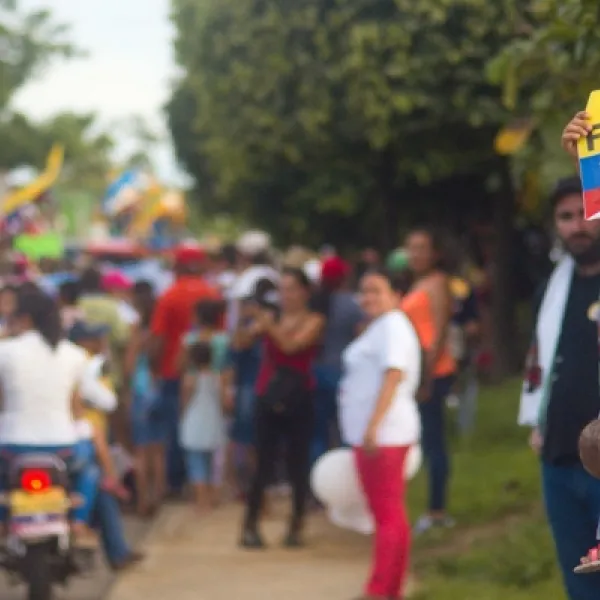
- Colombia. Attempts were made to implement pilot projects in this country, but they were suspended due to legal actions arguing a lack of participation and consultation, as well as political and social movements calling for a ban on the technique. The debate resurfaced in the context of the recent presidential elections, during which business and energy sectors—as well as the president-elect—proposed reactivating the fracking pilot projects. In Colombia, the technique threatens water systems such as the páramos, which provide water to millions of people.
- Brazil. This is another country where the possibility of using fracking to extract unconventional gas and oil is being debated. Authorization of the technique is currently under review by the Superior Court of Justice as part of litigation, and as a result, all related activities have been suspended. The proceedings will determine whether the technique is compatible with environmental regulations and the government's climate commitments. Fracking poses a threat to the rights of Brazil’s indigenous and traditional communities due to projects located near or overlapping with their lands.
Where has the use of fracking been banned or suspended?
Due to its socio-environmental impacts, fracking is currently banned or has been halted by moratoriums in several countries. These include Germany, Bulgaria, Scotland, Spain, France, Wales, England, Northern Ireland, Italy, New Zealand, the Czech Republic, Switzerland, and South Africa. There are also bans in some states and cities in the United States and Canada.
Although some European countries ban fracking within their own borders, European companies do use it in other countries.
In Latin America, the technique has been suspended in Colombia and is banned at the local level in several Brazilian states and municipalities. In Argentina, there is a specific ban only in the province of Entre Ríos and in some municipalities.
Read our report “Moratoriums and Bans on Fracking: Comparative Legislation” (2019).
Many of the bans and moratoriums on fracking stem from the application of the "precautionary principle," which requires that, in the event of environmental or health risks that cannot be safely predicted, controlled, or remedied, appropriate measures must be taken to prevent damage that could be irreversible.
Our work
In light of the impacts and risks of fracking on the continent, AIDA is focusing its efforts on:
- Developing and supporting local, national, and international defense strategies—including strategic litigation—to ensure that governments apply the precautionary principle to fracking proposals.
- Denouncing internationally the violation of the rights of communities affected by fracking projects in Argentina, Colombia, and Mexico, and strengthening safety measures for those communities.
- Using strategic litigation and advocacy efforts to prevent the development of new fracking projects in Colombia and Mexico, and to prevent the technique from being adopted in countries such as Brazil.
- Stopping the expansion of the Vaca Muerta megaproject in Argentina and demonstrating the economic unfeasibility of fracking.
- Promoting regional and joint actions—through our participation in the Latin American Alliance on Fracking—that engage initiatives and organizations from across the continent.