
Organizations and communities call on the IACHR to take action against human rights violations caused by fossil fuel projects
Shutterstock.
At a public hearing, they highlighted the impacts and risks to Latin American communities resulting from decades of extraction, commercialization, and use of coal, oil, and gas, as well as from irresponsible closure and exit of projects in the context of the energy transition.
Guatemala City. Representatives of organizations and communities in Latin America called on the Inter-American Commission on Human Rights (IACHR) to address human rights violations resulting from the operation and closure of fossil fuel projects (coal, gas, and oil) in the region.
They did so at a public hearing in which—based on emblematic cases in Colombia, Chile, Ecuador, and the Dominican Republic—they presented evidence to the Commission of human rights violations and risks of violations resulting from decades of extraction, commercialization, and use of fossil fuels without complying with socio-environmental standards. They also warned of violations already occurring in the irresponsible closure and exit from projects within the framework of energy transition policies.
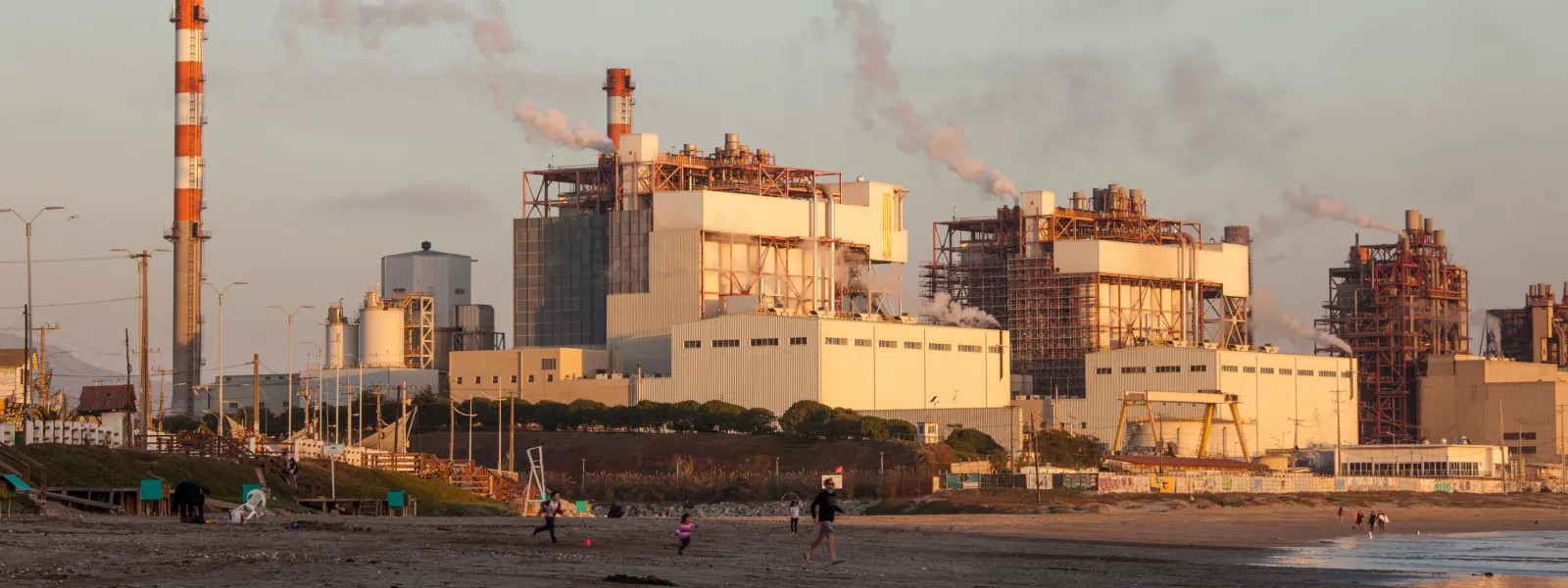
The cases presented included the Carbones de Cerrejón project in La Guajira, northern Colombia, which is the largest open-pit coal mine in Latin America; the Punta Catalina Thermoelectric Power Plant, located in the southern region of the Dominican Republic and fueled by Colombian coal; the Quintero and Puchuncaví Thermoelectric Complex, located in a bay in Chile recognized as an environmental sacrifice zone and where 14 polluting industries converge; the Norgener thermoelectric power plant in Tocopilla, Chile, whose closure process included the forced and accelerated burning of 94,000 tons of coal that were in storage; and oil exploitation in the Amazon, including that installed in the Yasuní National Park in Ecuador, declared a Biosphere Reserve by UNESCO.
The hearing—held during the 195th Session of the IACHR—was granted to the Interamerican Association for Environmental Defense (AIDA), the Waorani Nationality (Ecuador), the La Guajira le Habla al País Platform (Colombia) (1), communities of Tocopilla and the association Mujeres de Zona de Sacrificio Quintero-Puchuncaví en Resistencia (Chile), and the National Committee to Combat Climate Change (Dominican Republic).
During the session, organizations and communities also presented information demonstrating that Latin America lacks regulatory frameworks to ensure the closure and exit of fossil fuel projects with a human rights approach. In this context, and based on the cases described and the trends identified, they requested that the Commission:
Establish standards to guide States in fulfilling their obligations to respect and guarantee human rights throughout the entire project life cycle, ensuring early identification of impacts, prevention of harm, definition of responsibilities, and reparation for damages.
Define standards and criteria to guide States in adopting preventive, corrective, and impact mitigation measures in relation to human rights, including comprehensive closure plans, the safe dismantling of infrastructure, environmental remediation, and the monitoring of risks to health and ecosystems.
Promote regulatory frameworks that require companies to plan for project closure, including establishing responsibilities for environmental and social liabilities, financial guarantees for closure, and mechanisms to prevent the abandonment of operations or the transfer of assets without fulfilling closure obligations.
Incorporate differentiated approaches that address the disproportionate impacts on indigenous peoples, Afro-descendant communities, rural communities, and other groups in vulnerable situations.
Strengthen guarantees of access to information, effective participation, and access to environmental justice throughout the project cycle, ensuring that affected communities participate in an informed manner in the design, implementation, and oversight of closure and transition processes.
Guide States in the creation of oversight, monitoring, and accountability mechanisms to monitor operational, closure, and post-closure processes; define corporate and State responsibilities; and prevent asset transfers or other corporate restructuring as a means of evading responsibilities.
Urge States to anticipate and manage the social, economic, cultural, and environmental risks of the gradual replacement of fossil fuels, including measures to address the economic dependence of territories, protect communities' livelihoods, and avoid the impacts of abrupt or poorly managed closure processes.
Organizations and communities argued before the IACHR that there is a growing regional risk that the closure and exit processes of fossil fuel projects will be carried out irresponsibly. In several cases, companies abandon operations, cede or transfer assets, return concessions, and cease operations without ensuring the proper management of the socio-environmental impacts generated over many years. These practices can leave impacts unaddressed or unrepaired, while blurring the responsibilities of public and private actors, thereby deepening the risks to human rights and territories.
They emphasized that Amazonian states must adopt regional cooperation measures and guarantee the comprehensive protection of the Amazon—one of the most important ecosystems on the planet due to its biodiversity and role in climate regulation—in the face of the closure and exit of hydrocarbon extraction projects.
(1) The platform is made up of Wayuu indigenous communities and Afro-descendants from La Guajira, the Center for Research and Popular Education Program for Peace (Cinep/PPP), Censat Agua Viva, and the José Alvear Restrepo Lawyers' Collective (CAJAR).
Press contact
Lorena Zárate | AIDA | [email protected] | +52 553902 7481