Toxic Pollution


Human Rights, Toxic Pollution

Health Risks in La Oroya are Higher Than Expected: Lead and Lead Compounds Classified as Carcinogens (Spanish text)

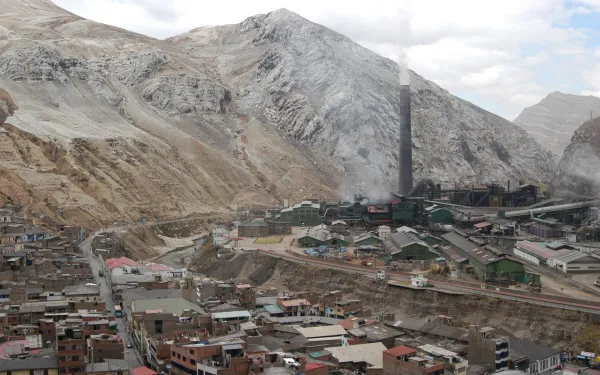
PARA PUBLICACIÓN INMEDIATA: 8 de febrero de 2005 Contactos: Carlos Chirinos, SPDA, +51-4211394, [email protected] Eliana Ames, LABOR, +51-2616515, [email protected] Anna Cederstav, AIDA, +1-510-550-6748 (EEUU)   RIESGO DE SALUD EN LA OROYA ES MAYOR DE LO PENSADO: PLOMO Y COMPUESTOS DE PLOMO CLASIFICADOS COMO CANCERÍGENOS.   LIMA, PERÚ – El 31 de enero de 2005, el Departamento de Salud y Servicios Humanos de los Estados Unidos publicó el Informe Semestral sobre Cancerígenos, el cual incluye por primera vez el plomo y todos los compuestos con contenido de plomo como sustancias que probablemente causan cáncer en seres humanos. Este informe enlista las sustancias cancerígenas en dos categorías, aquellas “conocidas como cancerígenas para el hombre,”y aquellas “con probabilidad razonable de ser un cancerígeno para el hombre.”Debe resaltarse en este Informe la inclusión del plomo y de los compuestos del plomo en la categoría de “probabilidad razonable de ser un cancerígeno humano”. Esta nueva clasificación de plomo y todos los compuestos de plomo se ha basado en datos epidemiológicos de estudios en humanos y en evidencia sustancial de estudios en animales experimentales. Por ejemplo, se demostró que la exposición al plomo aumenta la presencia de tumores en los riñones, el cerebro, el sistema hematopoyético y los pulmones en ratas y/o ratones (IARC 1980, 1987). Todavía no se entienden completamente los mecanismos por los que el plomo causa cáncer, pero los estudios realizados en seres humanos que estuvieron expuestos por su ocupación al plomo, han sugerido que el plomo daña los cromosomas o el ADN, lo cual puede causar cáncer (ATSDR 1999, NTP 2003). El plomo es liberado en el ambiente predominantemente por procesos industriales. Dentro de estos procesos, las fundiciones de plomo por sí solas son actualmente la fuente principal de las emisiones de este metal pesado, contabilizando más del 78% de todas emisiones de plomo en 2001 en los Estados Unidos (EPA 2003). Además de incluir el plomo y sus compuestos en la clasificación de sustancias con “probabilidad razonable de ser un cancerígeno para el hombre”, en noviembre de 2004 la Agencia de Protección Ambiental (EPA) de los Estados Unidos anunció el inicio de un proceso de recopilación de información necesaria para revisar los estándares de calidad de aire respecto del plomo. El estándar actual de los Estados Unidos de 1.5 ug/m3 como promedio anual, el que sirvió de base a los estándares fijados para el Perú en 2003, no ha sido revisado en más de veinte años, por lo que no toma en cuenta la información científica más reciente y esta alejado de los estándares internacionales. De hecho, el estándar de la Organización Mundial de la Salud (OMS) es de 0.5 microgramos de plomo por metro cúbico en el aire, siendo hasta tres veces más estricto que el de los Estados Unidos. Estas ultimas dos acciones del gobierno de los Estados Unidos evidencian la rigurosidad necesaria con la que se viene asumiendo el tema del plomo, debido al alto riesgo que este conlleva para la salud humana. En contraste, en el caso peruano resulta particularmente preocupante la situación de ciudades como La Oroya y otras poblaciones ubicadas en áreas de influencia minero metalúrgicas en donde se producen concentrados de plomo, por las altas concentraciones de este contaminante, que claramente representan un riesgo para las personas. No hay duda entonces de la urgencia de implementar medidas eficientes para evitar el aumento del riesgo para la salud humana, incluso la posibilidad de sufrir cáncer, que enfrentan las personas que viven y trabajan en estos lugares.

Read more

Toxic Pollution

Colombian Court Orders the Suspension of Plan Colombia Spraying

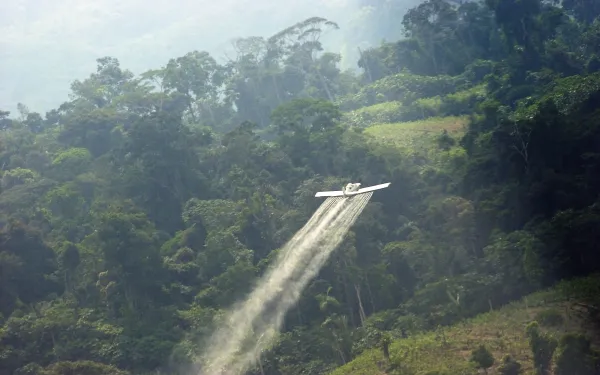
FOR IMMEDIATE RELEASE: June 26, 2003   CITING RISK TO HUMAN HEALTH AND THE ENVIRONMENT, COLOMBIAN COURT ORDERS THE SUSPENSION OF THE US-FINANCED SPRAYING OF COCA AND POPPY CROPS OAKLAND, CA/BOGOTA, COLOMBIA – A recent decision by the Superior Administrative Court of Cundinamarca, Colombia, (released to the public on June 25) declared that the aerial spraying with herbicides to eradicate coca and poppy crops violates the Colombian constitutional rights to a healthy environment, security and public health. As a result, the court ordered that the aerial spraying of potent glyphosate herbicides be suspended until the government complies with the Environmental Management Plan for the eradication program, and conducts a series of required studies intended to protect human health and the environment.   This verdict supplements earlier declarations by the Colombian Constitutional Court and the State Council, which respectively ordered the suspension of spraying in indigenous territories and full compliance with the Environmental Management Plan approved by the Ministry of Environment.   According to Yamile Salinas of the Colombian Ombudsman’s Office, “This ruling recognizes the potential risks that the herbicide and the manner in which it is being applied pose to human health and the environment in Colombia,” She added that, “The application of the precautionary principle is of singular importance because the Court affirms that the significant and potentially irreparable risk posed by the spraying is reason enough to suspend the fumigation program.”   “The US Congress has required the State Department to evaluate environmental and health impacts of Plan Colombia. This decision by a court in Colombia must be taken into account by the US State Department,” said Anna Cederstav, staff scientist with Earthjustice and AIDA. “In light of the evidence presented and the court’s clear decision on this matter, the Department of State cannot certify to Congress that the herbicide mixture, in the manner it is being used, poses no unreasonable risks or adverse effects to humans or the environment, or that the herbicide is being used in compliance with the Environmental Management Plan for the program.” She concluded that, “It would be highly irresponsible for the United States to continue the eradication program in contravention of the Colombian court order to suspend the spraying until appropriate public health and environmental protections are in place.”   “This court order formally adopts many of the requirements for environmental and human protection that the Colombian Ombudsman and Comptroller General, along with both national and international non-government organizations, have been demanding for years,” said Yamile Salinas. “This decision is a victory for both public health and the environment of Colombia.”   Press Contacts: Anna Cederstav, Staff Scientist with Earthjustice and AIDA, (Oakland, CA) tel. 510-550-6700 Yamile Salinas, Colombian Ombudsman’s Office, (Bogotá, Colombia) tel. 571-314-7300 Ext. 2324

Read more

Toxic Pollution

La Oroya Cannot Wait

This publication is the product of a careful analysis of official environmental monitoring reports submitted for the Doe Run multi-metal smelter to the Peruvian Ministry of Energy and Mines between 1996 and 2001. By finally filling the void in public information about contamination levels in La Oroya, this work demonstrates that the right to access information is an essential pillar of citizen participation. Only with these type of facts in hand can civil society protect itself against the powerful interests of giant mining companies like Doe Run. The reader will come to understand the severe health problems and risks suffered by the local population and particulary the children in La Oroya. But the authors go beyond this. They suggest the implementation of corrective and preventive measures that will require the participation of not only the company but also the Peruvian State. These are actions that cannot be postponed if we are to guarantee the human right to health, improve quality of life, and permit development in Peru. The authors also provide a legal analysis of environmental protection in the minerals sector, and recommendations for making this system more effective. Above all, this publication is an invitation to take meaningful and timely steps toward solving the extraordinary environmental and human health problems in La Oroya. Read and download the publication  

Read more