
Project
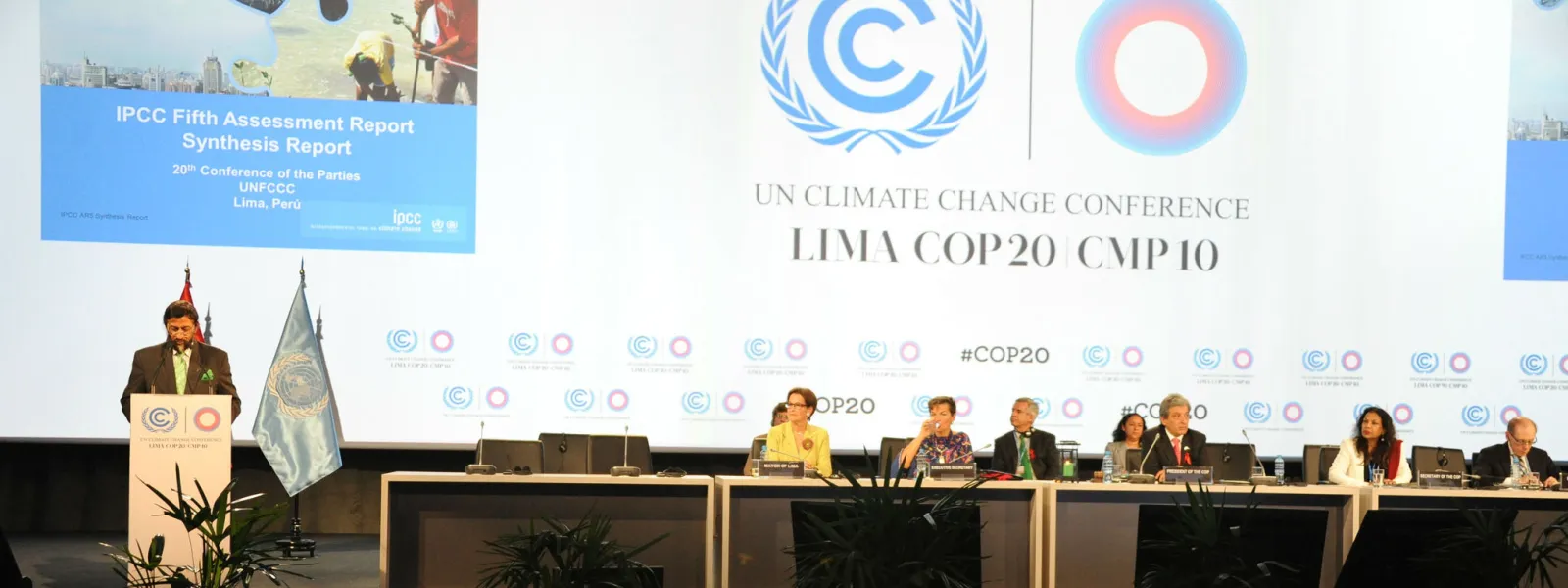
Photo: UNFCCCMonitoring the UN Climate Negotiations
As changes in climate become more extreme, their affects are being hardest felt throughout developing countries. Since 1994, the United Nations Framework Convention on Climate Change has laid out actions to limit the increase of global average temperatures and confront the impacts of climate change.
The States that are Parties to the Convention meet every year in the so-called Conference of the Parties (COP) to review their commitments, the progress made in fulfilling them, and pending challenges in the global fight against the climate crisis.
At COP21 in 2015, they adopted the Paris Agreement, which seeks to strengthen the global response to the climate emergency, establishing a common framework for all countries to work on the basis of their capacities and through the presentation of Nationally Determined Contributions (NDC) that will:
- Limit the increase in global temperatures to 2°C compared to pre-industrial levels and continue efforts to limit it to 1.5°C;
- Increase the capacity of countries to adapt to the impacts of climate change; and
- Ensure that financing responds to the goal of reducing greenhouse gas emissions.
Our focus areas
THE CLIMATE CRISIS AND HUMAN RIGHTS
The climate crisis, due to its transversal character, has repercussions in various fields, geographies, contexts and people. In this regard, the Preamble to the Paris Agreement states that it is the obligation of States to "respect, promote and fulfill their respective obligations on human rights, the right to health, the rights of indigenous peoples, local communities, migrants, children, persons with disabilities and people in vulnerable situations and the right to development, as well as gender equality, the empowerment of women and intergenerational equity."
AIDA at the COP
COP25: Chile-Madrid 2019
At COP25 in Madrid, Spain, we advocated for the inclusion of the human rights perspective in various agenda items. We promoted the incorporation of broad socio-environmental safeguards in the regulation of Article 6 of the Paris Agreement, which refers to carbon markets. We closely followed the adoption of the Gender Action Plan, as well as the Santiago Network, created "to catalyze technical assistance […] in developing countries that are particularly vulnerable to the adverse affects of climate change." We also encouraged the inclusion of ambitious and measurable targets for the reduction of short-lived climate pollutants in the climate commitments of States.
Related projects
Putting my heart in the conservation of wetlands
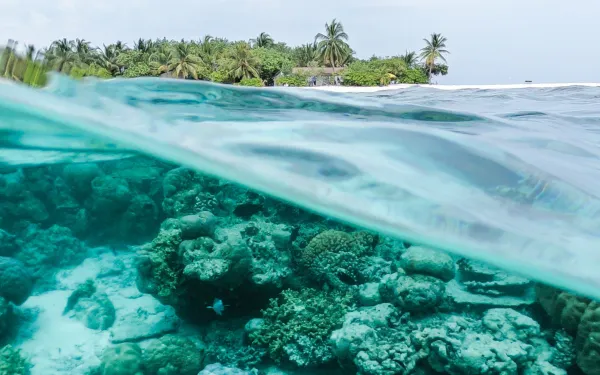
Coral reefs are my favorite wetlands. They’re full of so many colors and shapes, and simply teeming with life. When I’m underwater, my heart is full of peace and excitement, as I see myself surrounded by so many forms of life, so many species living together. As a marine biologist, I’ve had the opportunity to scuba dive in a variety of countries and see many of these beautiful ecosystems up close. Of all my dives, the ones I enjoyed most were those I did—for work and for pleasure—in the Bay Islands of Honduras. As a recent college graduate and volunteer with the Atlantic and Gulf Rapid Reef Assessment Program, I was in charge of monitoring the countless organisms that live in or on the reefs—seaweed, sea urchins, lobsters, queen snails, and so many others. Without a doubt, my time diving in the Cayos Cochinos sparked my personal and professional journey. Since then, I’ve set out to protect these magical ecosystems, vital to all life this planet. My current role, as scientific advisor to AIDA, uses science to strengthen the legal arguments employed to protect these and other at-risk natural environments in Latin America. Wetlands, vital and at-risk In addition to coral reefs, wetlands—characterized by the presence of water—include lakes and rivers, underground aquifers, swamps and marshes, grasslands, peat bogs, estuaries and deltas, mangroves, and sea grasses. Wetlands act as the “kidneys” of the planet because they recycle water and waste, retain sediment and nutrients, reduce erosion, and absorb carbon dioxide from the atmosphere, in turn mitigating climate change. However, it’s estimated that since 1700 we’ve lost nearly 87 percent of our wetlands at a speed three times greater than the loss of our natural forests. This has caused a drastic reduction in biodiversity, affecting 81 percent of continental species and 36 percent of marine and coastal species. Among the greatest threats to our wetlands are contamination by garbage, wastewater and industrial pollution; changes in land use; agricultural runoff, erosion and climate change. What’s more, global warming is increasing the temperature of the oceans, raising sea levels, and melting the poles. According to the Intergovernmental Panel on Climate Change, an increase of 1.5°C in global temperature could kill almost 90 percent of the world’s coral reefs—an irreversible and heartbreaking loss. Taking action to save wetlands Given this frightening global scenario, urgent action is required to protect our planet’s wetlands. In fact, there are many ways we can begin to do so immediately, such as: Creating restoration campaigns for vital ecosystems like mangroves and coral reefs. Declaring natural protected areas, to conserve wetlands and the species that depend on them. Developing policies that allow for the rational use of wetlands, where conservation is prioritized. Prohibiting the destruction of these ecosystems in any type of project, be it tourism, development or infrastructure. Establishing water treatment plans to prevent drainage and runoff from contaminating wetlands. Every year, on February 2, we celebrate World Wetlands Day, commemorating the signing of the Ramsar Convention, the only intergovernmental treaty for the conservation and rational use of our planet’s wetlands. This year’s celebration is focused on wetlands and climate change, inviting us all to reflect on the value of our wetlands, the critical services they provide, and urgency with which we must protect them. We are not powerless in the face of climate change. Saving our wetlands may just be the first step toward saving our planet, and ourselves.
Read morePutting my heart in the conservation of wetlands
Coral reefs are my favorite wetlands. They’re full of so many colors and shapes, and simply teeming with life. When I’m underwater, my heart is full of peace and excitement, as I see myself surrounded by so many forms of life, so many species living together. As a marine biologist, I’ve had the opportunity to scuba dive in a variety of countries and see many of these beautiful ecosystems up close. Of all my dives, the ones I enjoyed most were those I did—for work and for pleasure—in the Bay Islands of Honduras. As a recent college graduate and volunteer with the Atlantic and Gulf Rapid Reef Assessment Program, I was in charge of monitoring the countless organisms that live in or on the reefs—seaweed, sea urchins, lobsters, queen snails, and so many others. Without a doubt, my time diving in the Cayos Cochinos sparked my personal and professional journey. Since then, I’ve set out to protect these magical ecosystems, vital to all life this planet. My current role, as scientific advisor to AIDA, uses science to strengthen the legal arguments employed to protect these and other at-risk natural environments in Latin America. Wetlands, vital and at-risk In addition to coral reefs, wetlands—characterized by the presence of water—include lakes and rivers, underground aquifers, swamps and marshes, grasslands, peat bogs, estuaries and deltas, mangroves, and sea grasses. Wetlands act as the “kidneys” of the planet because they recycle water and waste, retain sediment and nutrients, reduce erosion, and absorb carbon dioxide from the atmosphere, in turn mitigating climate change. However, it’s estimated that since 1700 we’ve lost nearly 87 percent of our wetlands at a speed three times greater than the loss of our natural forests. This has caused a drastic reduction in biodiversity, affecting 81 percent of continental species and 36 percent of marine and coastal species. Among the greatest threats to our wetlands are contamination by garbage, wastewater and industrial pollution; changes in land use; agricultural runoff, erosion and climate change. What’s more, global warming is increasing the temperature of the oceans, raising sea levels, and melting the poles. According to the Intergovernmental Panel on Climate Change, an increase of 1.5°C in global temperature could kill almost 90 percent of the world’s coral reefs—an irreversible and heartbreaking loss. Taking action to save wetlands Given this frightening global scenario, urgent action is required to protect our planet’s wetlands. In fact, there are many ways we can begin to do so immediately, such as: Creating restoration campaigns for vital ecosystems like mangroves and coral reefs. Declaring natural protected areas, to conserve wetlands and the species that depend on them. Developing policies that allow for the rational use of wetlands, where conservation is prioritized. Prohibiting the destruction of these ecosystems in any type of project, be it tourism, development or infrastructure. Establishing water treatment plans to prevent drainage and runoff from contaminating wetlands. Every year, on February 2, we celebrate World Wetlands Day, commemorating the signing of the Ramsar Convention, the only intergovernmental treaty for the conservation and rational use of our planet’s wetlands. This year’s celebration is focused on wetlands and climate change, inviting us all to reflect on the value of our wetlands, the critical services they provide, and urgency with which we must protect them. We are not powerless in the face of climate change. Saving our wetlands may just be the first step toward saving our planet, and ourselves.
Read more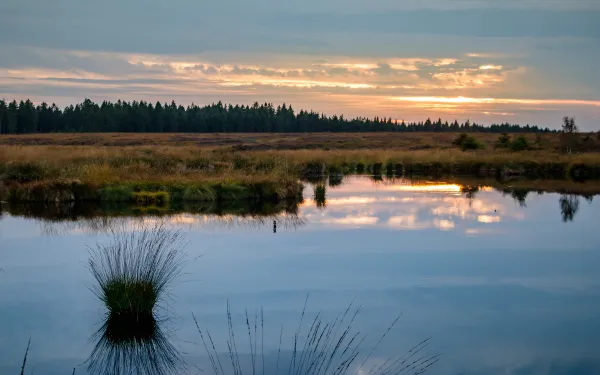
Protecting Wetlands: A Ramsar Infographic
Wetlands worldwide are at threat due to changes in land use, pollution and unsustainable development. The Ramsar Convention is an intergovernmental treaty that works to protect wetlands across international borders, and advocates for their wise use. This infographic breaks down why wetlands are so important, and how the application of the Ramsar Convention can help us protect these sensitive and vital ecosystems.
Read more