
Project
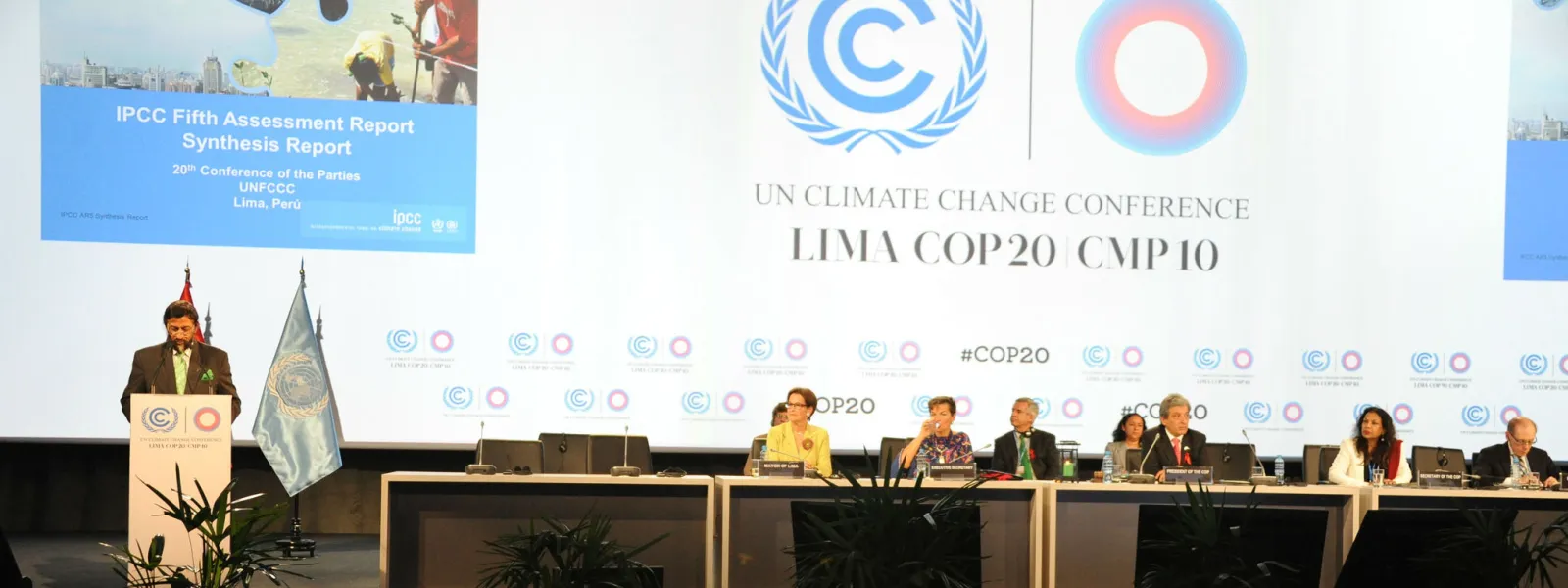
Photo: UNFCCCMonitoring the UN Climate Negotiations
As changes in climate become more extreme, their affects are being hardest felt throughout developing countries. Since 1994, the United Nations Framework Convention on Climate Change has laid out actions to limit the increase of global average temperatures and confront the impacts of climate change.
The States that are Parties to the Convention meet every year in the so-called Conference of the Parties (COP) to review their commitments, the progress made in fulfilling them, and pending challenges in the global fight against the climate crisis.
At COP21 in 2015, they adopted the Paris Agreement, which seeks to strengthen the global response to the climate emergency, establishing a common framework for all countries to work on the basis of their capacities and through the presentation of Nationally Determined Contributions (NDC) that will:
- Limit the increase in global temperatures to 2°C compared to pre-industrial levels and continue efforts to limit it to 1.5°C;
- Increase the capacity of countries to adapt to the impacts of climate change; and
- Ensure that financing responds to the goal of reducing greenhouse gas emissions.
Our focus areas
THE CLIMATE CRISIS AND HUMAN RIGHTS
The climate crisis, due to its transversal character, has repercussions in various fields, geographies, contexts and people. In this regard, the Preamble to the Paris Agreement states that it is the obligation of States to "respect, promote and fulfill their respective obligations on human rights, the right to health, the rights of indigenous peoples, local communities, migrants, children, persons with disabilities and people in vulnerable situations and the right to development, as well as gender equality, the empowerment of women and intergenerational equity."
AIDA at the COP
COP25: Chile-Madrid 2019
At COP25 in Madrid, Spain, we advocated for the inclusion of the human rights perspective in various agenda items. We promoted the incorporation of broad socio-environmental safeguards in the regulation of Article 6 of the Paris Agreement, which refers to carbon markets. We closely followed the adoption of the Gender Action Plan, as well as the Santiago Network, created "to catalyze technical assistance […] in developing countries that are particularly vulnerable to the adverse affects of climate change." We also encouraged the inclusion of ambitious and measurable targets for the reduction of short-lived climate pollutants in the climate commitments of States.
Related projects
Organizations ask for immediate suspension of aerial fumigations of glyphosate and other chemicals in Colombia
A citizen petition was released by the website Change.org addressed to President Juan Manuel Santos and the National Narcotics Council. It requested that such fumigations are suspended because they damage the environment, human health and may cause cancer. Bogota, Colombia. The Interamerican Association for Environmental Defense (AIDA), with the help of the Institute for Development and Peace Studies (INDEPAZ) and the Observatory of Crops Declared Illicit, launched a citizen petition today open to signatures through the website Change.org to request that president Juan Manuel Santos and the National Narcotics Council suspend aerial spraying of illicit crops using glyphosate and other harmful chemicals. "Independent scientific studies show that the fumigations are inefficient and have not reduced coca and poppy crops. To the contrary, they have contributed to the destruction of forests and affected populations, including ethnic groups. Recently, the International Agency for Research on Cancer of the World Health Organization (WHO) determined that the glyphosate usedin in spraying may cause cancer in humans," says Astrid Puentes Riaño, AIDA Co-Executive Director who signed the petition. The National Narcotics Council will meet on May 14 to address the issue and decide whether to suspend the spraying. In the case of Colombia, this practice is carried out on a mass scale, through aerial spraying and uses a concentration of glyphosate higher than that used commercially. In addition, the spraying occurs indiscriminately over houses, farms and water sources. On April 24 and based on the determination of the WHO, the Ministry of Health recommended the National Narcotics Council immediately suspend aerial spraying of glyphosate, which was introduced to the country more than 15 years ago with funding from the United States Government. In the past, high courts in the country such as the Constitutional Court have also solicited the suspension of the spraying, but these provisions have not been met. This issue reached the International Court of Justice when Ecuador sued Colombia for impacts of the fumigations in the border area. The Colombian government compensated the neighboring country and pledged to stop spraying along the border. Apart from damage to health, the fumigations impact ecosystems rich in biodiversity and the species that inhabit them, pollute water and destroy food crops that are a source of subsistence for indigenous and Afro-Colombian communities and small farmers.
Read more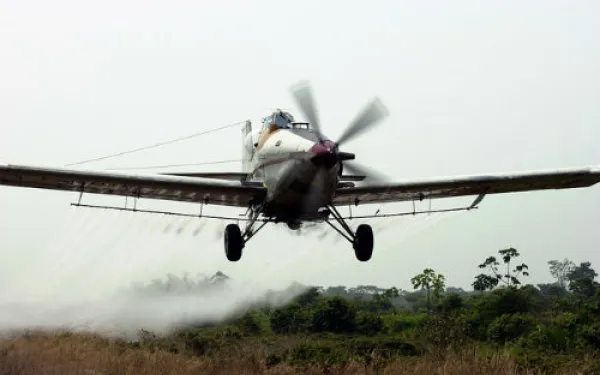
Colombian government must immediately suspend the use of glyphosate
Bogota, Colombia. Glyphosate, the herbicide used to eradicate crops considered illicit in Colombia, has been classified as a substance probably carcinogenic to humans by the International Agency for Research on Cancer, the specialized cancer agency of the World Health Organization. Based on these findings, the Colombian Ministry of Health is recommending that the country’s Ministry of Justice "immediately suspend the use of glyphosate in the Illicit Crops Eradication Program’s aerial spraying operations." The Interamerican Association for Environmental Defense (AIDA) strongly supports this recommendation so that the human rights to health and a healthy environment, both closely linked to the right to life, are protected in Colombia. We urge the government to fulfill its national and international obligations, respecting the conclusions reached by the highest health authorities, in order to prevent further damage to the country’s people and environment. For 15 years, AIDA and partner organizations have been warning of the grave impacts glyphosate has on the environment and human health. We’ve advocated for the need to apply the precautionary principle to suspend Colombia’s fumigation program, which has been financed by the government of the United States. Astrid Puentes Riaño, attorney and co-director of AIDA: "Colombia, like no other country, has used millions of liters of glyphosate that have not succeeded in destroying coca and poppy plants, but have irreparably damaged the environment and human health. Without excuses or delays, the National Narcotics Council must act responsibly and immediately suspend the use of glyphosate in the eradication of illicit crops." Anna Cederstav, co-director of AIDA and PhD in Chemistry: "The scientific evidence on the impacts of glyphosate on the environment and human health is sufficient to support a decision of the suspension of aerial spraying of glyphosate in Colombia."
Read more
Green Climate Fund Begins Accreditation Process
2015. This is the year. Sink or swim. It’s all or nothing. Opening the Green Climate Fund’s Ninth Meeting of the Board last month, Executive Director Hela Cheikhrouhou spoke with an urgency characteristic of the lead-up to December’s UN Climate Conference in Paris, describing this year as one of the last opportunities humanity has to change course and steer a sustainable path. As we approach the signing of a new global agreement on climate change, the efficacy of the Green Climate Fund (GCF) holds particular importance. Counting now with $10.2 billion, it will serve as the primary vehicle to finance projects designed to help all societies – whether developed or developing – confront the causes, and the effects, of a changing climate. At last month’s meeting, the Fund’s Board accredited its first intermediary and implementing institutions – charged with channeling money into developing nations – and then announced plans to begin allocating its resources before the year’s end. These accreditations, in turn signaling the imminent arrival of the first project proposals, represent an important milestone in the rigorous, nearly five-year process since the Fund was first established. "This will be the ultimate test of the effectiveness of the institution," said Andrea Rodríguez Osuna, AIDA’s Senior Attorney for Climate Change, who has been monitoring the development of the Fund. "When it all comes down to it, this is the step that matters." The first seven entities accredited by the Board represent a broad geographic and thematic range, and will likely be the first to submit proposals for funding. Including organizations from Senegal to Peru, they specialize in issues such as coastal protection, biodiversity conservation, sustainable development, and improving the lives of low-income communities. While the accreditations represent an advance towards the actualization of the Fund’s mission, a number of significant organizational decisions remain under debate, or are as yet unaddressed. Among other topics on the agenda last month, the Board addressed the expected role and impact of the Fund, which will enable them to identify financing priorities, and the Initial Investment Framework, which will outline what types of projects will be financed and how they will be selected and assessed. "Alongside accreditation, these elements are essential. Without them, the Fund can’t advance toward the future, toward having more focused and productive discussions," Rodríguez explained. The criteria and methodology for the Fund’s Initial Investment Framework triggered a heated debate, which largely pitted developed against developing nations. On one side, the developed nations pushed for minimum required benchmarks that would enable simpler measurement of success; on the other side, developing nations pushed for qualitative measures with no strict requirements that would better ensure more equal access to funds. Finally, they reached a compromise, deciding to use non-mandatory indicative minimum benchmarks that would both encourage ambition and take into account the needs of those developing countries most vulnerable to the adverse effects of climate change. The Secretariat will present the proposed benchmarks for further development in about a year’s time, at the 13th meeting of the Board. Discussing the expected role and impact of the Fund, the Board came to an uncharacteristically unified decision – to keep the Initial Investment Framework under review, and to take action as needed regarding the criterion on needs of the recipient countries. Agreeing the document presented by the Secretariat lacked sufficient information, the Board requested they be presented with more technical and scientific data before beginning to outline their priorities. Notably missing from the conversation, due to lack of time, was an item particularly important to AIDA’s work, Enhanced Direct Access, which would obligate public participation in certain projects. If approved, this direct access would ensure the moreequitable involvement of all the actors working to confront the effects of a changing climate. The next meeting of the Board of the Green Climate Fund will be July 6-9 at the Fund’s headquarters in Songdo, South Korea. AIDA will be there again to monitor these issues and report back on important developments, as the world prepares for a new global climate accord, and the Green Climate Fund moves ever closer to implementation.
Read more