
Project
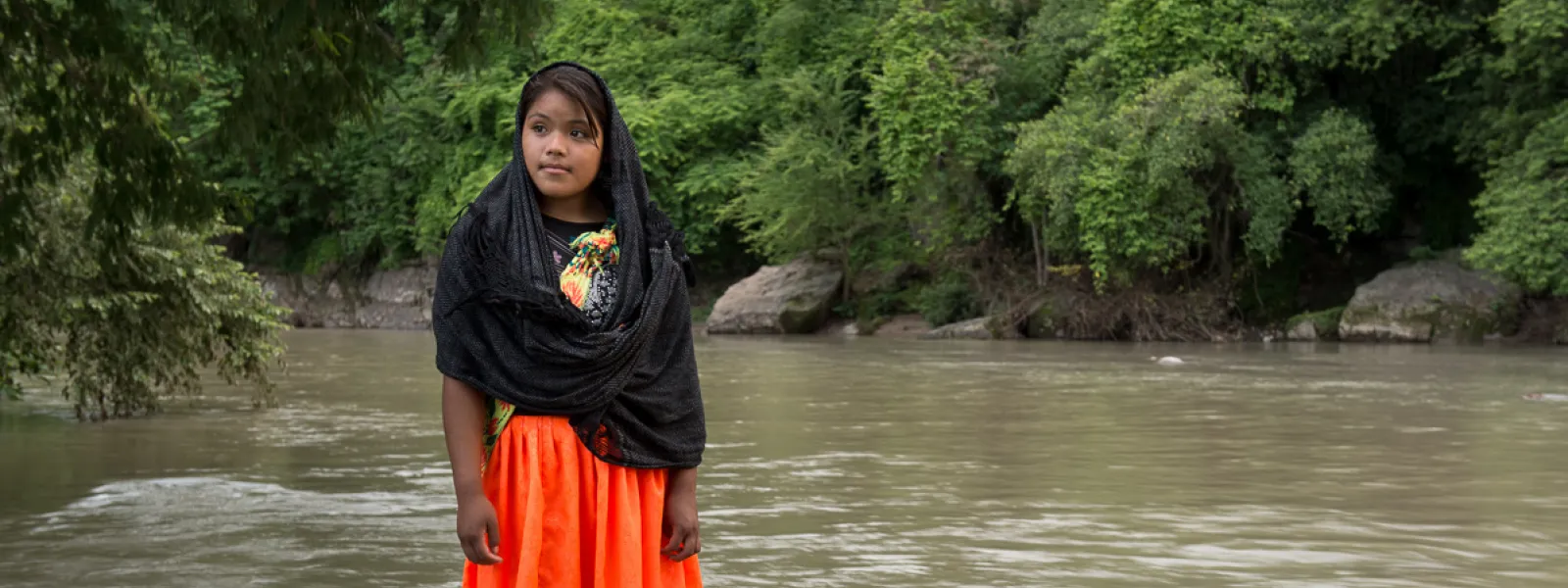
Photo: Jaime RojoSaving the San Pedro Mezquital River from a destructive large dam
If built, the Las Cruces Dam would block the San Pedro Mezquital, the last free-flowing river in Mexico’s western Sierra Madre. It would affect fisheries, agriculture, livestock and other activities that nearly 12,000 families depend upon for survival.
The reservoir would flood the village of San Blasito and impact the town of Saycota. It would destroy an indigenous ceremonial center and 14 sacred sites. And it would restrict the water and nutrients that the river carries to Marismas Nacionales—the National Wetlands—which harbors one of the largest mangrove forests in Mexico.
In September 2014, the Mexican government approved the dam, despite the environmental impacts and without consulting and obtaining consent from affected indigenous communities.
The authorization ignored the technical opinions of national authorities, as well as recommendations from international organizations about the threats the project poses to the environment and human rights.
AIDA is working hand-in-hand with local organizations to support the communities affected by the project in their fight to have their rights respected.
Partners:
Related projects
Costa Rican Court Orders Expropriation Of Land Slated For Tourism Development In The Leatherback Marine National Park
For immediate release: May 14, 2008 Press contacts: Rolando Castro, Attorney, CEDARENA Gladys Martínez, Attorney, AIDA (506) 2837080, [email protected] (506) 2837080, [email protected] COSTA RICAN COURT ORDERS EXPROPRIATION OF LAND SLATED FOR TOURISM DEVELOPMENT IN THE LEATHERBACK MARINE NATIONAL PARK SAN JOSÉ— On May 5th, the Constitutional Chamber of the Supreme Court of Justice of Costa Rica ordered the Ministry of Environment and Energy (MINAE) to begin expropriating private lands slated for tourism development within the Leatherback Marine National Park (LMNP) in Guanacaste. This decision follows a lawsuit filed in March 2005 by AIDA and its participating organizations in Costa Rica, the Center for Environmental Law and Natural Resources (CEDARENA), and Justice for Nature (JPN). The complaint alleged that the National Environmental Technical Secretary (SETENA), the Municipality of Santa Cruz, the Ministry of Finance, and MINAE violated the constitutional right to a healthy and ecologically balanced environment by not protecting the LMNP and the nesting sites of the leatherback turtle located therein. This is a very important precedent in Costa Rica and the hemisphere, given that tourism development is proceeding at an unprecedented pace throughout the Americas. The Municipality of Santa Cruz and SETENA had issued construction permits within the park, ignoring the impacts that tourism development would have upon the leatherback turtles. With this decision, these permits are now invalid. “We hope that the Municipality and SETENA have received a clear message that they must take extreme caution with regard to national parks, and not approve projects that endanger what the parks were created to protect,” stated Rolando Castro, an attorney for CEDARENA. “Construction and operation of tourist sites within the LMNP would aggravate existing threats to the beach,” he added. Leatherback turtles are animals from the Jurassic age that have been declared an endangered species on the international level. They require particular nesting conditions that can be easily disturbed by the presence of human beings and construction lights. Hence, the development of tourist sites can severely affect the turtles’ reproduction, and consequently, their survival. The Leatherback Marine National Park has become the most important nesting site for this species in the Western Pacific Ocean. “MINAE should immediately heed this order to prevent the destruction that has occurred at other Costa Rican nesting beaches, such as Flamingo and Tamarindo,” affirmed Gladys Martinez, AIDA attorney. “All authorities within the Costa Rican government have an obligation to protect this species, which is part of our common patrimony, in addition to being a tourist attraction and hence a valuable economic resource for the country,” she added.
Read moreConstitutional Court Orders Change in Environmental License for Baba Dam, Ecuador
CONSTITUTIONAL COURT ORDERS CHANGE IN ENVIRONMENTAL LICENSE FOR BABA DAM, ECUADOR FOR IMMEDIATE PUBLICATION: CONTACTS: Silvana Rivadeneira (593 3) 2 459822 Astrid Puentes, AIDA (5255) 5212-0141 [email protected] [email protected] Quito, January 8, 2009 - The Constitutional Court of Ecuador ordered the country's Ministry of Environment to review and reformulate the environmental authorization granted to Baba's Multi-purpose Project (PMB), and the Attorney-General to audit the procedures and the approval of the environmental impact evaluations. According to the court's decision, there are risks of severe, irreparable damage to the Ecuatorian biodiversity that weren't properly assessed, in accordance with the conclusions of the Inter-American Development Bank experts. This resolution from Ecuador's highest court is a consequence of the lawsuit promoted by ECOLEX in May, 2007, which was rejected by the initial judge. ECOLEX then appealed to the Constitutional Court, insisting that it consisted in a violation of the human rights to a safe environment, to water, to property, to work, and to food, among others. Last June AIDA and the international organizations International Rivers and FIAN International supported the appeal through an amicus curiae document, denouncing the violations to international environmental standards and human rights, all of those binding the State of Ecuador. In addition to that, experts from the US organization ELAW also had mentioned serious mistakes in the study. The Constitutional Court's decision effectively recognized that the lack of a adequate evaluation violated the previously mentioned rights, as well as the principle of environmental caution. Silvana Rivadeneira, from ECOLEX, stated that "the decision is a great triumph to the affected communities and to the country, since it reinforces that the environmental protection is also a matter of national interest." The PMB would have implied in the flooding of more than 2.500 acres of important ecosystems at the province of Los Rios, affecting the river populations of the Baba Quevedo Vinces river and the habitat of endangered species such as the rascón bird, the small deer and chaleco's ant-eating bear. The project was authorized by the Ministry of Environment in November 2006 and it is being executed by the company Hidronación S.A., which took it over after the Brazilian Odebrecht was expeled from the country by the Ecuatorian government. In September 2008, AIDA, Earthjustice and ECOLEX, FIAN International and International Rivers requested for the international credits from the Clean Development Mechanism (a tool from the Kyoto Protocol to help fight climate change) not to be granted to the PMB. "The Baba project is an example of unclean energy and it could worsen the climate change, the court's decision confirms its lack of sustainability", said Monti Aguirre from International Rivers. "It is very significant that the court issued such decision a few days after the World Conference on Climate Change in Poland" mentioned Astrid Puentes, co-director of AIDA. "Given the negative effects for the environment, the people and the climate change caused by the hydroelectric dams - the very reason for which we supported such demand - the order to completely evaluate Baba's project is outstanding news. We will be following the review closely, and we expect this decision to serve as a precedent for the hundreds of hydroelectric powerplants that are currently ongoing in the Americas with flaws very similar to those present in Baba.
Read moreAIDA Supports Legal Action Against Baba Dam (Spanish Text Only)
Para publicación inmediata Contactos: Astrid Puentes (México) Natalia Landivar (Quito) Monti Aguirre (Berkeley, EEUU) (5255) 55212-0141 (593) 2 22 24 962 (1-510) 848-1155 [email protected] [email protected] [email protected] Organizaciones Internacionales apoyan amparo contra Proyecto Multipropósito Baba ante Tribunal Constitucional de Ecuadorpara proteger derechos humanos y ambiente QUITO, MÉXICO, BERKELEY, 19 DE JUNIO DE 2008-- La Asociación Interamericana para la Defensa del Ambiente (AIDA), presentó un amicus curiae (escrito de amigo de la corte) ante el Tribunal Constitucional de Ecuador, suscrito por International Rivers y FoodFirst Information and Action Network (FIAN) International, apoyando la demanda de Amparo Constitucional interpuesta por afectados del Proyecto Multipropósito Baba. Las organizaciones internacionales argumentaron violaciones a los derechos humanos y al ambiente en la aprobación del proyecto, por lo cual se unen a los demandantes para solicitar la suspensión de su ejecución. “Existen sinnúmero de experiencias donde la implementación inadecuada de mega-represas ha generado daños irreversibles, es necesario aprender de ellas” aseguró Astrid Puentes de AIDA. “La producción de energía no puede implementarse a costa del ambiente y de los derechos humanos, más aún cuando existen alternativas que ni siquiera se han evaluado y que a la larga, podrían evitar mayores costos para los países” puntualizó. El Proyecto Baba, que incluye la construcción de una represa que inundará más de 1,000 hectáreas, fue aprobado por el Ministerio de Medio Ambiente en noviembre de 2006 sin los estudios de impacto ambiental y sociales integrales que se exigen en la legislación nacional e internacionalmente. Estos estudios son de vital importancia, pues el proyecto afectará importantes zonas y tierras de cultivo, impactando seriamente la vida de cientos de personas que dependen de la pesca y la agricultura. Además, se dañará seriamente el hábitat de biodiversidad endémica y en peligro de extinción, como el ave rascón, el venado pequeño y el oso hormiguero de chaleco. “Tenemos la confianza que el Tribunal considerará los estándares internacionales en su decisión” mencionó Monti Aguirre de International Rivers. Dentro de los derechos afectados con este proyecto se incluyen el derecho a la calidad de vida, a la alimentación y a la vivienda, al ambiente sano, al debido proceso y a las garantías judiciales, y a la consulta previa, consagrados en la Constitución Ecuatoriana, en la Convención Americana, el Convenio 169 de la OIT, el Pacto Internacional de Derechos Económicos, Sociales y Culturales y el Protocolo de San Salvador, entre otros. “Buscamos aportar argumentos ante el Tribunal Constitucional evidenciando que la aprobación del proyecto ignora normas internacionales ambientales y de derechos humanos, lo cual puede generar responsabilidad internacional del gobierno ecuatoriano” aseguró Natalia Landivar de FIAN ECUADOR. “Confiamos en que se fallará de acuerdo a las normas” agregó.
Read more