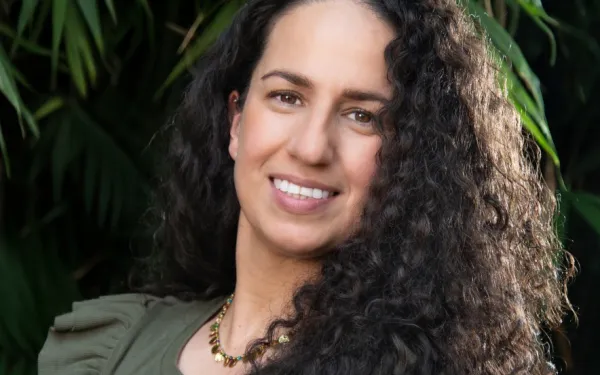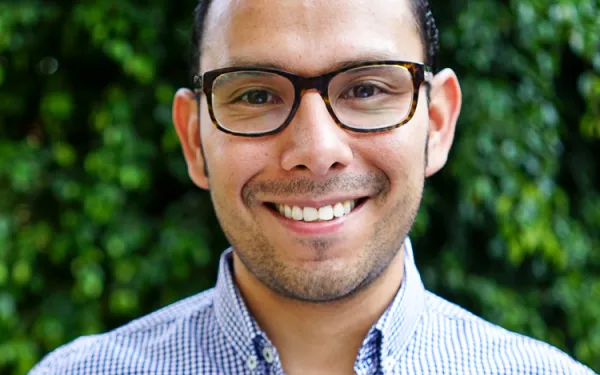
Maria Antonia Tigre
is Global Climate Litigation Fellow in the Sabin Center for Climate Change Law of the Columbia University.
Read more
is Global Climate Litigation Fellow in the Sabin Center for Climate Change Law of the Columbia University.
Read more
Gisselle García is an attorney with AIDA's Climate Program working in Mexico. She is a graduate of the National Autonomous University of Mexico (UNAM). She holds a Master's degree in Environmental Law from Rovira i Virgili University (Spain) and a Diploma in Public Policy and Evaluation from the Centro de Investigación y Docencia Económicas (Mexico). Gisselle has significant experience in applied research and strategic litigation on climate change, air quality, biocultural heritage, indigenous law and food sovereignty. She is a member of the Berta Cáceres Legal Clinic for Environmental Justice at the Universidad Iberoamericana, Ciudad de México.
Read more
Manuel Morales is the Executive Director of ECOLEX in Ecuador. He has consulted with several national and international, governmental and non-governmental organizations, specializing in environmental law. He is the creator of the Community Paralegal Program; which has been replicated in all indigenous nationalities in Ecuador and in several countries in Latin America, Africa, Eastern Europe and Asia through agencies such as the World Bank, the Legal Empowerment Network and NAMATI.
Read more
Martin Wagner is an attorney and director of Earthjustice's International Program, based in San Francisco, California. He leads a team of lawyers and scientists working with organizations around the world to advance the transition from fossil fuels to clean energy, with cases currently underway in Australia, Indonesia, South Africa and several Latin American countries, among others.
Read more
Manuel is the Global Leader of Climate & Energy at WWF International. He has 35 years of experience in environmental law and policy. He was Minister of Environment of Peru (2011-2016) and President of the Twentieth Conference of the Parties (COP20) of the United Nations Framework Convention on Climate Change in 2014. He is a member of the Board of Directors of Forest Trends, the Amazon Conservation Association, the Peruvian Society of Environmental Law and WWF Colombia.
Read more
Xavier Martinez is coordinator of TerraVida. He holds a law degree from the Universidad Iberoamericana and a Master's degree in Tropical Ecology from the Centro de Investigaciones Tropicales of the Universidad Veracruzana, both with honors. He has collaborated as an attorney in Litiga, Organización de Litigio Estratégico de Derechos Humanos A.C. (Human Rights Strategic Litigation Organization). Among his main lines of work are the human rights of indigenous peoples and similar communities, biocultural heritage and the construction of a pluricultural State in Mexico.
Read more
Monica Roa is the founder and executive director of Bridges, a civil society organization dedicated to strengthening the strategic capacity of human rights and gender justice movements and fostering alignment across movements, regions and disciplines. Monica works with a diverse set of public and private actors to achieve social justice, human rights protection and gender equality by combining legal, policy and communications tools. She has extensive experience advocating for women's human rights, promoting sexual and reproductive health and rights, designing strategic litigation, working with the judiciary and promoting exchanges in the global south.
Read more
An attorney with emphasis in environmental and administrative law, Rafael González is the author of books and monographs published in national and international journals on environmental issues. He is an international researcher, consultant and lecturer. He is also founder and president of Justicia para la Naturaleza, a public interest NGO dedicated to the defense of the environment. He is also founder and member of the Academy of Environmental Law of the International Union for Conservation of Nature.
Read more
Maria Amália Souza is founder and Executive Director of CASA Socio-Environmental Fund. She has dedicated more than 35 years to designing systemic strategies that ensure that philanthropic resources reach the most excluded and vulnerable grassroots communities. Maria Amália is also co-founder of the Brazilian Philanthropy Network for Social Justice and leads her organization in many global/regional funder coalitions. In addition, she is an advisor at The Ocean Foundation and Chair of the Board of Directors of the NUPEF Institute (Research, Education and Training Nucleus). She holds a B.A. in International Services and Development, with an emphasis in Environmental Studies, from World College West in California, and is a fellow of the Donnella Meadows Leadership Program on Systems Thinking. In 2016, Maria Amália was a finalist, among seven global leaders, to receive the Olga Alexeeva Award on Innovative Philanthropy in the Global South.
Read more
Jennifer Astone is a PhD and Principal at Integrated Capital Investing. As a financial activist, she works to transform philanthropic investing. She founded Integrated Capital Investing in 2019 to galvanize foundations and investors to move their funding, grantmaking, and leadership toward regenerative economies and healthy food systems. She served as executive director of the Swift Foundation, guiding its transitional investment portfolio for eight years. Jennifer is also a researcher, advocate, writer, and builder of solution-focused, community- and movement-led coalitions. She helped launch the Agroecology Fund and the Transformational Food Systems Investment Initiative. In addition, Jennifer is an Integrated Social Finance Capital Fellow at RSF. She earned her PhD in anthropology based on fieldwork on gender and agriculture in Guinea, West Africa.
Read more