
Project
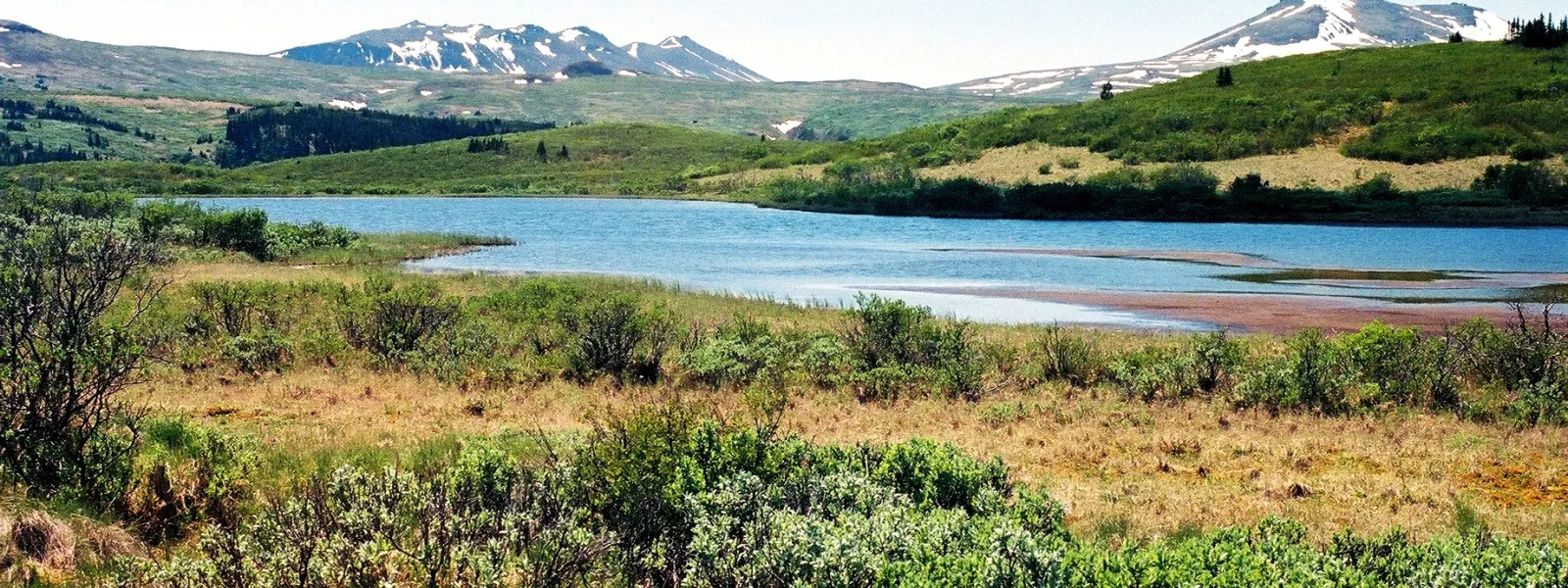
Photo: Steven Ablitt / Cassiar WatchVictory: Canada supports public participation and environmental assessment
Thanks to a court ruling to which AIDA and our allies contributed, Canadian authorities must allow active participation in all mining and industrial megaprojects, as well as comprehensive environmental impact assessments.
The decision came after a long legal battle that began in 2006. That year, an open-pit copper and gold mine called Red Chris was approved without the adequate evaluation of its environmental impacts. It was sleighted to process 30 thousand metric tons a day.
The Imperial Metals company intended to build the mine in the Kapplan River Valley, a remote and pristine natural area home to large mammals such as Dali’s sheep, caribou, bears and moose. In addition, the area is part of the migratory salmon route and the Tathlan indigenous community lives nearby.
The company had fragmented the project into small parts to avoid evaluating the full impact of the project, thus violating international standards and the right to public participation.
In 2009 AIDA filed a brief with Canada’s Supreme Court in support of a lawsuit filed against the project by MiningWatch and Ecojustice.
The ruling remains a powerful tool to protect huge expanses of pristine and valuable land for its biodiversity, water sources, and the culture of indigenous communities.
It was a watershed moment in terms of ensuring companies fulfill their obligations when developing projects that put at risk the natural environment and those who depend on it.
Related projects
Environmental organizations condemn attacks on the environment in Colombia
Bogota, Colombia. The undersigned environmental organizations condemn attacks on the environment made in the Colombian departments of Putumayo, Nariño, Arauca, Boyacá and Norte de Santander, which have been attributed to FARC-EP. According to media sources, attacks on oil infrastructure have caused environmental damage in the river basins of Tibú and Caunapí, among others, and in Bahia de Tumaco, affecting more than 84,000 people. These acts adversely impact local communities, the country and the environment on a global scale. Oil pollution in bodies of water seriously threatens the life and health of people, as well as the integrity of ecosystems and animal species. The undersigned organizations recall that international humanitarian law prohibits actors of armed conflict from engaging in environmental destruction unjustified by military needs, according to the principles of distinction and proportionality. Similarly, actors of armed conflict, when conducting hostilities, should refrain from undermining the human rights to water and a healthy environment. The organizations reaffirm that human rights and environmental law applicable in Colombia, as well as the government’s obligations in the field, are not suspended during periods of armed conflict. For all of these reasons, the undersigned environmental organizations call on FARC-EP to respect international humanitarian law and refrain from causing harm to the environment. They also reaffirm the necessity to exclude communities and ecosystems from armed conflict. Asociación Ambiente y Sociedad Asociación Interamericana para la Defensa del Ambiente (AIDA) Foro Nacional Ambiental Fundación Natura Klimaforum Latinoamérica Network (KLN) Red por la Justicia Ambiental en Colombia (RJAC)
Read more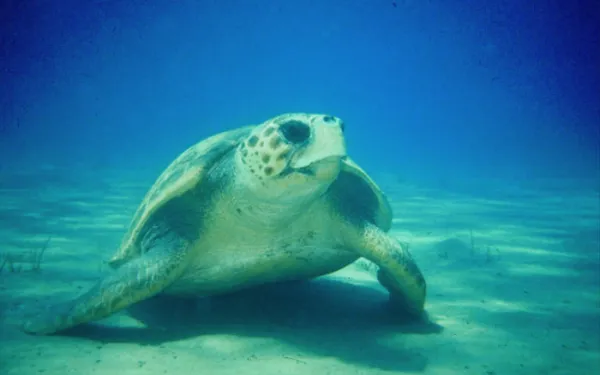
Strengthening the Sea Turtle Treaty
By Gladys Martínez When baby sea turtles first break through their shells, they slowly stick their heads out into the world. Then, they run as fast as they can to the vast body of salt water before them, where they will spend their lives. Sea turtles are migratory creatures that swim in the oceans, and nest on the beaches, of many different countries. Their survival is at risk from the impacts of human activity, such as unsustainable fishing, poorly planned development, and mining projects in marine and coastal areas. In an effort to confront these threats, the Inter-American Convention for the Protection and Conservation of Sea Turtles was created in 2001. The international treaty promotes the protection, conservation and recovery of sea turtle populations. From June 24 to 26 in Mexico City, representatives from member States will discuss achievements and plan for the future of the Convention during the 7th Conference of Parties. AIDA will be there advocating for the States to continue meeting their obligations and making new commitments. Fifteen Contracting Parties have signed the Convention: Argentina, Belize, Brazil, Chile, Costa Rica, Ecuador, Honduras, Mexico, Nicaragua, Netherlands (Antilles), Panama, Peru, Uruguay, Venezuela and the United States. Thirty-two accredited observers, including academic institutions and NGOs, may participate in meetings of Scientific and Consultative committees of experts. The 7th Conference of the Parties will focus on adopting three key resolutions, on: The conservation of leatherback sea turtles (Dermochelys Coriacea) in the Pacific Ocean. The conservation of loggerhead sea turtles (Caretta Caretta). Exceptions to the subsistence harvest of olive ridley turtle eggs in Costa Rica. The Conference will also review the States’ compliance with regards to their annual reports, present the Secretariat’s work plan, and elect a new President, Vice President and Rapporteur. AIDA will seek for the States to: Commit to avoiding threats to turtle nesting habitats by mining projects. Continue restricting and prohibiting developments that affect sea turtle migration routes. Strengthen measures for responsible fishing and bycatch (sea turtles are captured and killed incidentally by fishermen targeting other species). We will concentrate our outreach efforts on creating awareness and promoting measures to curb the risks that the Don Diego marine mining project will have on the loggerhead turtle and Mexico’s marine ecosystem. AIDA has worked since 1998 to protect sea turtles. First we advocated the Convention’s ratification. A campaign organized by AIDA and other sea turtle advocates helped secure the signatures necessary to continue the negotiation process, and, in 2011, for the Convention to enter into force. We have advocated before Courts and decision-makers for the protection of sea turtles in several countries of Latin America, basing our advocacy on the obligations assumed by States under the Convention. Using this strategy, we have protected the green turtle from illegal poaching on Costa Rica’s Atlantic coast, avoided loss of nesting habitat of the leatherback turtle, and guaranteed that hawksbill and olive ridley turtles continue to enjoy one of their favorite coral reefs, Coiba National Park in Panama. Follow us on Facebook and Twitter to learn more about the 7th Conference of Parties of the international treaty to protect sea turtles!
Read more
AIDA applauds Pope Francis’ recognition of urgent environmental challenges
The Interamerican Association for Environmental Defense (AIDA) applauds Pope Francis’ new Encyclical, Laudato Si: On Care For Our Common Home, released today. In it, the Pope addresses the environmental challenges facing humanity, which must be urgently addressed in order to protect the earth “with which we share existence.” His Holiness highlights the recommendations of organizations, like AIDA, which we hope will finally be echoed in governments, international organizations, corporations, and by all the people of this planet. We all have a responsibility to act to protect our home. The encyclical is comprehensive and covers many important issues. We would like to emphasize the Pope’s recognition of the following: The work performed by organizations and individuals to protect the environment. We are grateful for his gesture, and feel honored and committed to continuing this hard work. That fact that “recent World Summits on the environment have not lived up to expectations because, due to lack of political will, they were unable to reach truly meaningful and effective global agreements on the environment.” He concludes, “Reducing greenhouse gases requires honesty, courage and responsibility, above all on the part of those countries which are more powerful and pollute the most.” Social inequality and the impact of environmental degradation, which worsens the misery of the poor, including migrants and indigenous communities. We therefore reiterate our call to protect Earth, taking into particular consideration solutions that address this inequality. The rich and complex biodiversity of the planet’s ecosystems, which must be preserved, as well as the human right to water, which “is essential to human survival and, as such, is a condition for the exercise of other human rights.” The Precautionary Principle as a tool to avoid serious and irreversible harm to the environment. With this Encyclical, Pope Francis joins other religious leaders who have made an urgent call for the adoption of immediate measures to protect the planet.
Read more