
The future of shipping is at stake: What is being negotiated at the IMO?
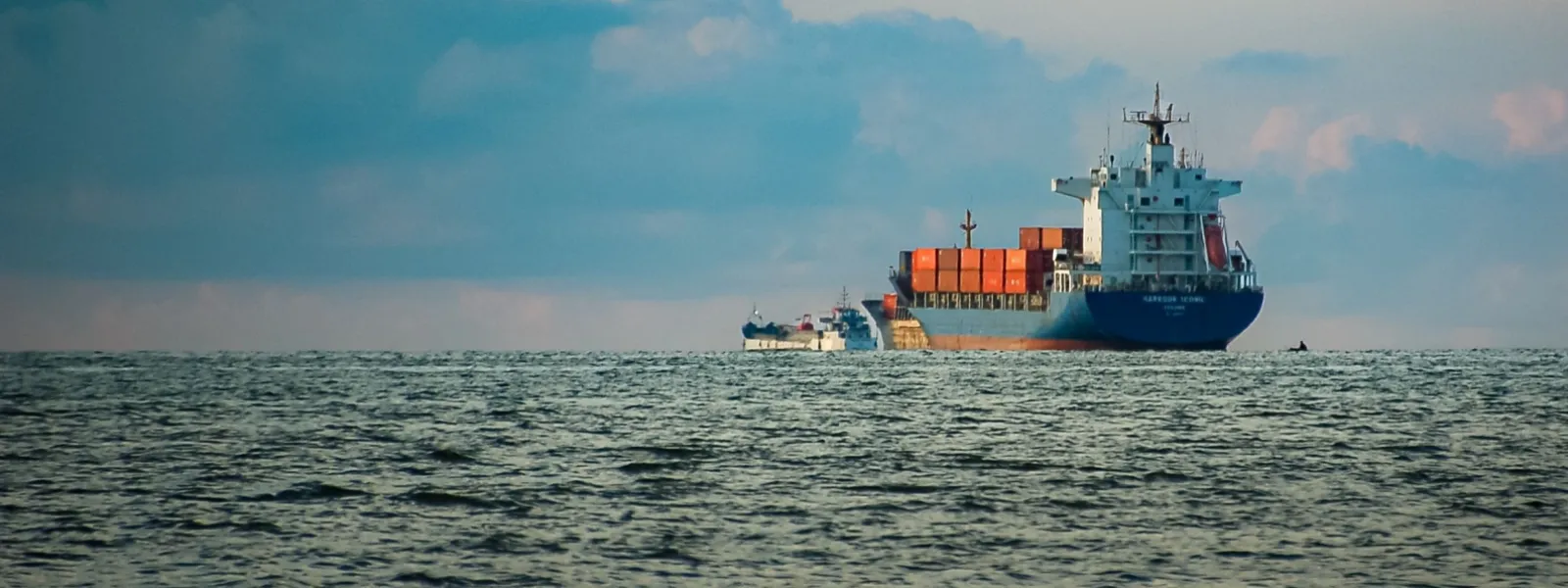
Hatta Sun / Pexels.
Shipping moves a large portion of the products we use every day. But it also accounts for about 3% of global greenhouse gas (GHG) emissions. Along with air travel, it is a sector where reducing emissions can be difficult because it requires a global agreement.
In a previous post, we discussed how the International Maritime Organization (IMO), the United Nations agency that regulates maritime transport, was negotiating measures to decarbonize the sector. Since then, there have been both progress and setbacks. Today, that discussion has reached a decisive moment.
An unprecedented, historic agreement
In 2023, IMO member states agreed on a strategy to reduce emissions from shipping and achieve net-zero emissions by around 2050, with a commitment to promote a fair and just transition. They also set medium-term reduction targets—based on 2008 emissions levels—of at least a 20% reduction by 2030 and a 70% reduction by 2040.
To translate these objectives into specific rules, in April 2025, during the 83rd session of the IMO’s Marine Environment Protection Committee (MEPC 83), the text of the Net-Zero Framework (NZF) was adopted. Its design combined two tools:
- A technical measure to require that the fuels used by ships become progressively less polluting, promoting the use of zero- or near-zero-emission alternatives and establishing increasingly strict annual emission reduction targets.
- An economic measure that requires payments from ships that exceed certain emission limits. This measure proposed creating the Net Zero Fund so the funds raised can be used to encourage cleaner technologies and support measures for a just and equitable transition.
The agreement marked an unprecedented step forward that would increase the cost of using traditional marine fuels, such as HFO (heavy fuel oil), thereby encouraging the use of less polluting fuels and allowing the resources raised to support less developed countries in the transition.
However, in October 2025, during MEPC 83, when the agreement was due to be formally adopted, intense political pressure surrounding the climate ambition of the Net Zero Framework and its implementation led to the discussion being postponed for a year. The NZF was not definitively adopted amid disagreements over its costs, implementation, and economic component.
What happened in 2026?
In April 2026, during the MEPC 84 sessions, the States agreed to create a new forum to discuss outstanding concerns and seek a broader consensus. To this end, two meetings of the IMO Intersessional Working Group on Greenhouse Gas Reduction (ISWG-GHG) were scheduled.
The first meeting was held from September 1 to 4 (ISWG-GHG 22), and the second will take place in November, in conjunction with MEPC 85. Although the first meeting saw a willingness to engage in dialogue and agreement on some technical aspects, significant differences remained among the various groups of countries, and no new version of the NZF was agreed upon. Some countries are seeking to relax and make the emission reduction targets less stringent, in addition to limiting or eliminating all types of payments and incentives to comply with the mechanism, thereby significantly reducing the possibility of a just and equitable transition in maritime shipping.
The discussions at ISWG GHG 22 make it possible to identify, with reasonable clarity, two approaches: one that seeks to maintain the structure of the MEPC 83 agreement and ensure that the regulations effectively accelerate the shift toward lower-emission fuels and meet the climate goals set by the IMO; and another that seeks to incorporate the pace of the current fuel market—based on availability, scalability, and price—into the decarbonization strategy, thereby allowing for the continued use of fossil fuels, such as liquefied natural gas, as transition fuels in the maritime sector. There are two main points of debate in the negotiations:
a. Determining how much and at what rate GHG emissions from ships should be reduced
The NZF proposes a global standard that progressively limits the amount of GHGs generated per unit of energy used by ships. To calculate this, it accounts for fuel emissions throughout its entire life cycle, from production to use on board (well-to-wake). This prevents alternatives that pollute along their value chain before reaching the ship from being presented as clean.
Some proposals from countries seek to make the initial targets more flexible or to link their requirements to the availability, affordability, and scalability of fuels. Advocates for these proposals point out that the transition requires investments, infrastructure, and technologies that are not yet sufficiently available in all regions. While these challenges are real and inherent to the process, weakening the targets does not appear to be the most appropriate solution. This would be counterproductive, as it would further delay investment in new technologies, prolong the use of fossil fuels, and make it harder to meet climate goals. The solution must allow for viable implementation without losing sight of the goal of effectively reducing emissions from the international fleet.
b. Deciding who pays for pollution and who receives support
The second debate centers on the NZF’s financial mechanism. Under the version approved in 2025, ships that fail to meet certain performance standards must make financial contributions. These funds would go toward the IMO’s Net Zero Fund, which is designed to support the use of less polluting fuels and finance measures for a just and equitable transition in vulnerable countries.
Specifically, Regulation 41 stipulates that a portion of the revenue collected should fund measures that support a just and equitable transition, promote environmental and climate protection, and support adaptation and resilience, with a focus on the needs of developing countries.
This regulation also addresses financing for research and development of new technologies, the development of maritime and port infrastructure, technology transfer, capacity building, and technical cooperation among countries. In addition, it provides support for workers in the maritime sector and seafarers; the implementation of national action plans, including fleet modernization and renewal; and measures to address the disproportionate negative impacts that new measures may have, for example, on food security.
Although many countries support this revenue-generation scheme, others seek to eliminate mandatory payments and the Net Zero Fund. Liberia and Panama propose replacing them with a system of emissions credit trading among ships, where financial transactions would take place primarily within the maritime industry. For its part, Japan proposes that shipping companies, rather than contributing to a common fund, fulfill their obligations through direct contributions to projects they select themselves, subject to IMO approval. Brazil proposes a middle ground: maintaining the collection and redistribution of resources through a more flexible financial entity (Facility).
The paradox is that without a stable, predictable source of funding that sends the right signals, it is much harder to reduce CO2 emissions and support countries with fewer resources in adapting. Incentives for businesses or a more flexible, gradual transition do not, on their own, guarantee that decarbonization goals will be met or that the benefits of the transition will reach the countries and communities that need them most. While it is currently estimated that the NZF would raise between $11 billion and $12 billion annually to incentivize decarbonization and finance a just transition, alternatives that eliminate centralized revenue collection would concentrate the economic benefits within the companies themselves, without guaranteeing resources to support the most vulnerable countries.
What's at stake for the countries of Latin America and the Caribbean
For the region, these decisions are not a distant concern and require decisive action to ensure that decarbonization delivers climate benefits—not just economic costs. Many countries rely on maritime transport to import food, medicine, and energy, or to export their products. In addition, the region produces fossil fuels and needs economic incentives to adapt its energy systems to the new demands of maritime transport—particularly in ports—while enabling countries to remain competitive and comply with IMO regulations. The need for regional ports to adapt to the risks associated with the climate crisis must also be considered.
Weakening the agreement will not ensure that the region is integrated fairly and equitably into the IMO’s decarbonization process. The energy and fuel transition is already underway—at varying speeds—and the most developed countries are investing in infrastructure and technical capabilities, paving the way to secure their participation in the sector’s future and the process's benefits and opportunities.
However, Latin America and the Caribbean’s participation in the transition is at stake. Without an agreement establishing a clear framework to support the transition of developing and least developed countries, as outlined in Regulation 41, there is a real risk that the region will be sidelined and its countries will bear the costs of the transition. This is because many countries face constraints in undertaking energy investments in the maritime sector, and it could take years for them to become suppliers of clean fuels.
Reaching a robust, fair, and equitable agreement at the IMO will not only accelerate the reduction of polluting emissions. It will also make the transition possible for countries around the world, leaving no one behind.
A fair agreement should address both climate challenges and the needs of countries undergoing the transition. In particular, it needs to:
- Have clear and ambitious goals that will reduce the sector’s pollutant emissions with the necessary urgency and without indefinitely delaying technological change.
- Provide sufficient funding to enable countries with fewer resources to address the disproportionate impacts of regulation and invest in new technologies, technical capabilities, and port infrastructure.
- Protect people and the environment so that the production of new fuels and the transformation of ports respect the rights of workers, coastal communities, and indigenous peoples.
The region therefore has an active role to play. Its governments can advocate for policies that combine climate ambition, environmental protection, international cooperation, and safeguards for a just and equitable transition, rather than accepting that there is a choice between protecting the economy and protecting the climate.
A decisive end to the year
In the coming months, negotiations at the IMO will enter a critical phase that could shape the agreement's future and determine whether discussions continue to be postponed or a final text is adopted. From November 23 to 27, the ISWG-GHG 23 meetings will be held; from November 30 to December 3, MEPC 85 will take place; and on December 4, the extraordinary session (MEPC ES.2) postponed in 2025 could resume, if the Committee confirms it.
Reaching a global agreement with common rules will provide greater clarity on the sector’s future and prevent individual countries or regions from moving forward on their own. But adopting an agreement is not enough. Its success will depend on whether it effectively reduces polluting emissions, accelerates the phase-out of fossil fuels, and mobilizes sufficient resources to support the countries facing the greatest challenges.
At AIDA, we will closely monitor these negotiations, advocating for the delegations from Latin America and the Caribbean to have an active voice, based on their legitimate interests and the best available technical expertise, not on political pressure.
The challenge is to ensure that the transformation of shipping is both an effective response to the climate crisis and an opportunity to move toward a more just and equitable future for the region's countries.
Juan Francisco Zapata Hassi

Juan Francisco Zapata Hassi is a fellow attorney with AIDA's Climate Program, working from Chile. He is a lawyer from the Universidad de Concepción and holds a Master's degree in International Environmental Law and Human Rights from the University of Kent, UK. Juan has experience as an environmental lawyer in Chile and is a researcher in environmental and climate law. He has been a visiting professional at the Inter-American Court of Human Rights.