
Voices for the Motagua River: Nazario Pascual, an artery of the Poqomam people
Mayela Sánchez García.
Stories of courage, dignity, and resistance for life in the face of pollution in Guatemala’s longest river.
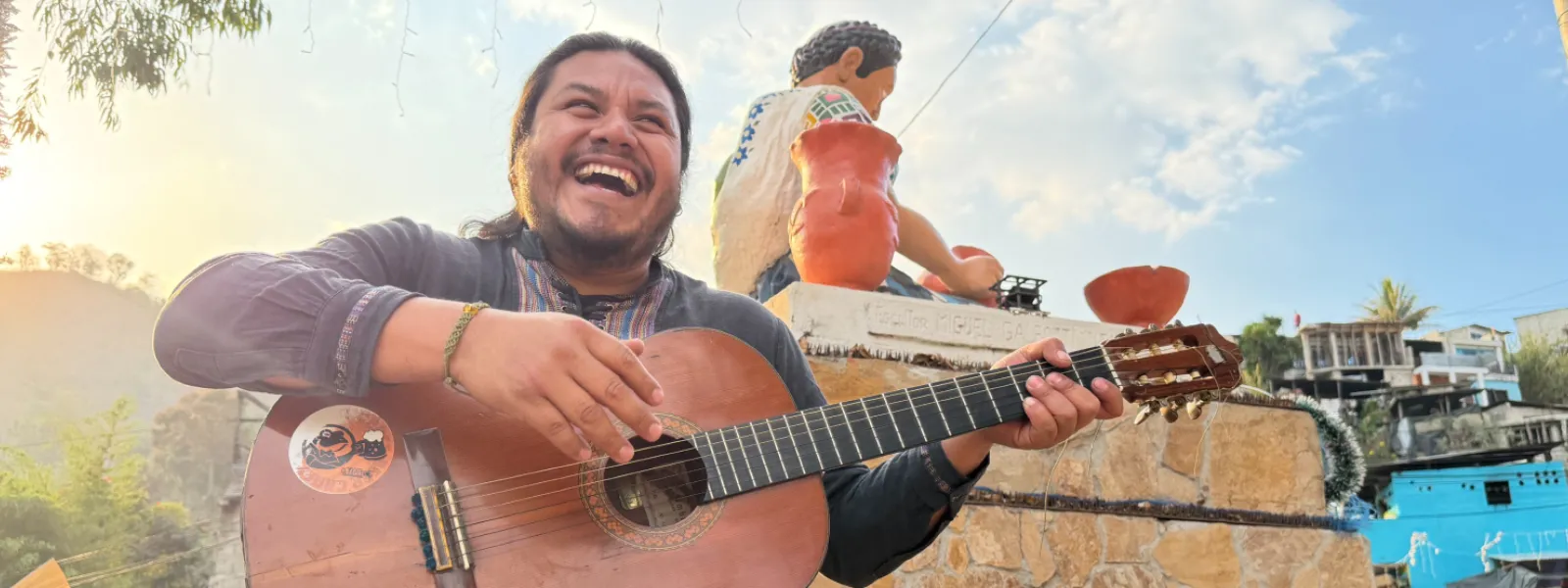
Nazario Pascual needs no embellishments to define himself: "I am a Poqomam warrior who uses music and sung poetry to plant a little seed in people’s minds. I am an artery of the Poqomam people."
A musician, cultural promoter, and independent producer, Nazario lives in Santa Cruz Chinautla, a community affected by pollution in the Motagua River. From there, he sings in Poqomam so that his language will not disappear, and so that the children who listen to him will grow up knowing that the river, too, has a memory.
His journey began in the church pews, watching his father play. But it was an intimate moment that ignited the spark: one night, he heard his dad praying in Poqomam. "I thought, ‘Wow, God hears us in Poqomam. It’s your heritage.’ That’s where I started."
The landscape that took away his childhood
When Nazario talks about his childhood, he describes fruit trees, springs, and a communal washhouse where mothers washed clothes while the children played. Today, all of that is gone.
The uncontrolled expansion of the capital and the diversion of stormwater to the Zone 3 landfill have turned the river into an open wound. Added to this are the sand pits that extract material without any oversight: "They’ve eaten away at a large part of the Poqomam territory. Here we call it ‘black gold.'"
His family has lost their land dozens of times. When it rains in the city, the smells reach Chinautla even if not a single drop falls there. Houses are sinking, the ground is cracking, and residents are being displaced.
"The river is a monster coming from the city," he says.
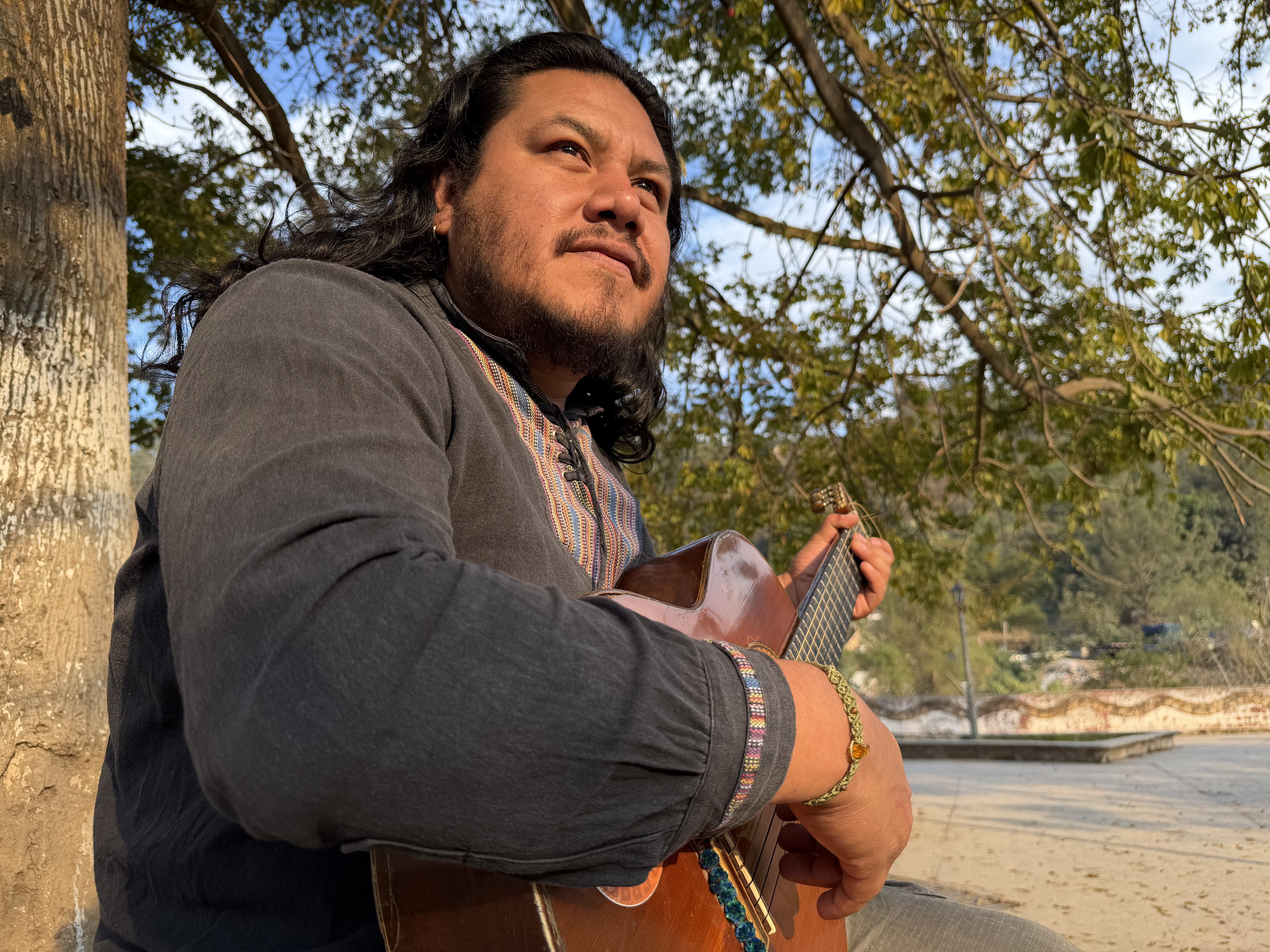
Photo: Mayela Sánchez García.
A legacy of struggle, but also of weariness
Nazario inherited his father’s conviction to protest. He took part in demonstrations, organized meetings, and, together with others, built a retaining wall under the red bridge with community support. But he also bears the weight of so many years: "At first there were 17 of us at the protests, then 12, then 7, and now barely 4."
An aunt told him straight out: "Don’t try to be a folk hero." The remark made him reflect on the limits of commitment… and on the need for new forms of resistance.
Seeds that sing
Nazario found that new path in music. He formed a band with his cousins and later began working with children. Together, they write lyrics about the river, compose melodies, and sing in Poqomam. That’s how "Mamut" was born—one of the songs sung in the community today.
"Getting children and young people involved is the small contribution I’m trying to make,” he explains. “They’re the ones who will remain here."
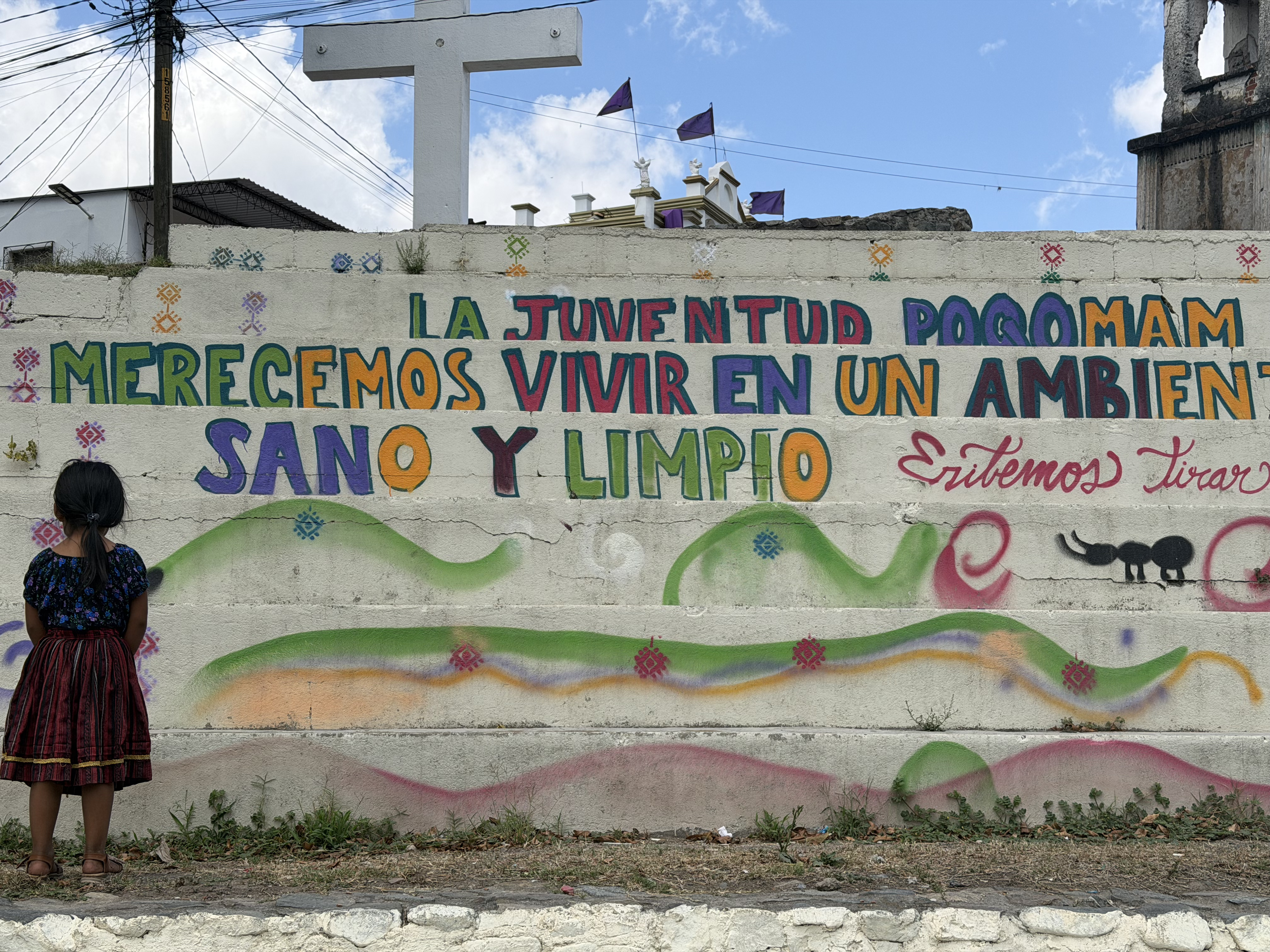
Photo: Mayela Sánchez García.
A message that endures
Nazario knows the problem is bigger than he is. The Motagua River carries trash that ends up in the Caribbean, affecting entire communities. But he also believes that local struggles have power.
"It’s understandable to go to work—because we have to—but we shouldn’t be indifferent to what’s happening in the town."
He fears that the real plan of the polluting and extractive industries is to wipe the Poqomam people off the map. But he dreams of a different story:
"I imagine Chinautla with the river stabilized, children growing up in a dignified environment, knowing their rights and fighting for them."
The pulse of a community
His voice is a blend of pain and hope. He speaks of losses—of his father, of the land, of the river—but also of music, of living languages, and of children singing along to his songs.
"I am an artery of the Poqomam people," he repeats.
And like any artery, he beats to keep his community alive.
Lorena Zárate
Lorena Zárate Cuevas is AIDA's Positioning Coordinator, working from Mexico. She has a degree in Communications from the Universidad Iberoamericana in Mexico, with a specialization in journalism and advertising. Lorena has significant experience in communications and public relations in environmental, social and cultural organizations. Prior to joining AIDA, she led regional communications initiatives for the World Wildlife Fund (WWF). She has collaborated in the press areas of public sector entities, such as the Secretariat of Foreign Affairs and the Secretariat of the Interior, and has worked as a co-editor in print media.