
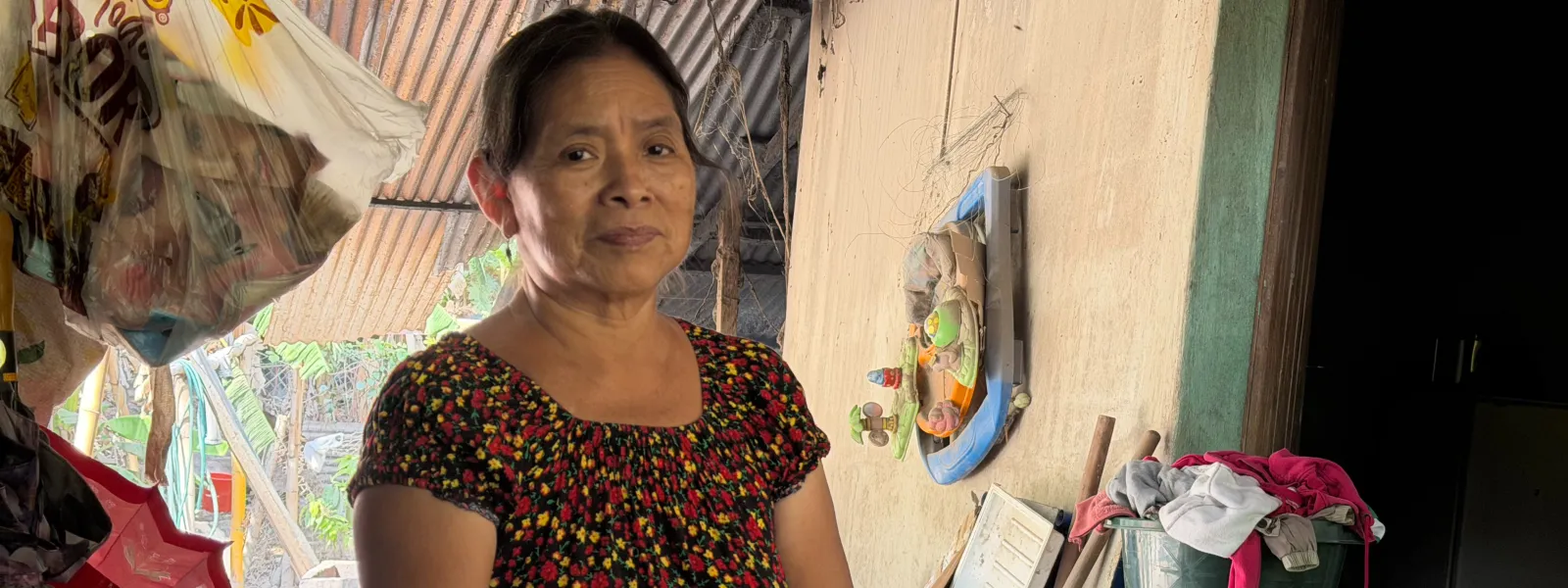
Voices for the Motagua River: Olga Vázquez, hands that shape hope
Mayela Sánchez García.
Stories of courage, dignity, and resistance for life in the face of pollution in Guatemala’s longest river.
For generations, clay was the heart of Santa Cruz Chinautla. It emerged from the earth as a daily gift, was shaped by patient hands, and transformed into pots, jugs, whistles, and comales that were taken to the markets in the capital.
There, between the river and the wood-fired kilns, doña Olga Noemí Vázquez grew up. From childhood, she learned the art of pottery from her mother. Today, at nearly sixty years old, she continues to work with clay, but the craft is no longer the same. Clay is scarce, the river smells like sewage, and her hands crack from the chemicals carried by the polluted water.
Doña Olga fondly recalls how she first got into pottery. "I learned it when I was ten years old. My mom taught me. I wanted to make different shapes and styles, because sometimes tourists would bring different figurines, and here we’d try to imitate them," she says from the small workshop she’s set up in her home. Every piece she creates is an act of remembrance, a way to resist oblivion and the loss of the landscape and her livelihood.
He also recalls that in the past, the town's inhabitants didn't go to the capital to work. "We made our living right here. We grew vegetables, güisquiles, and corn. Everything was produced right here. And we made a living from clay. Today, it’s not like that anymore."
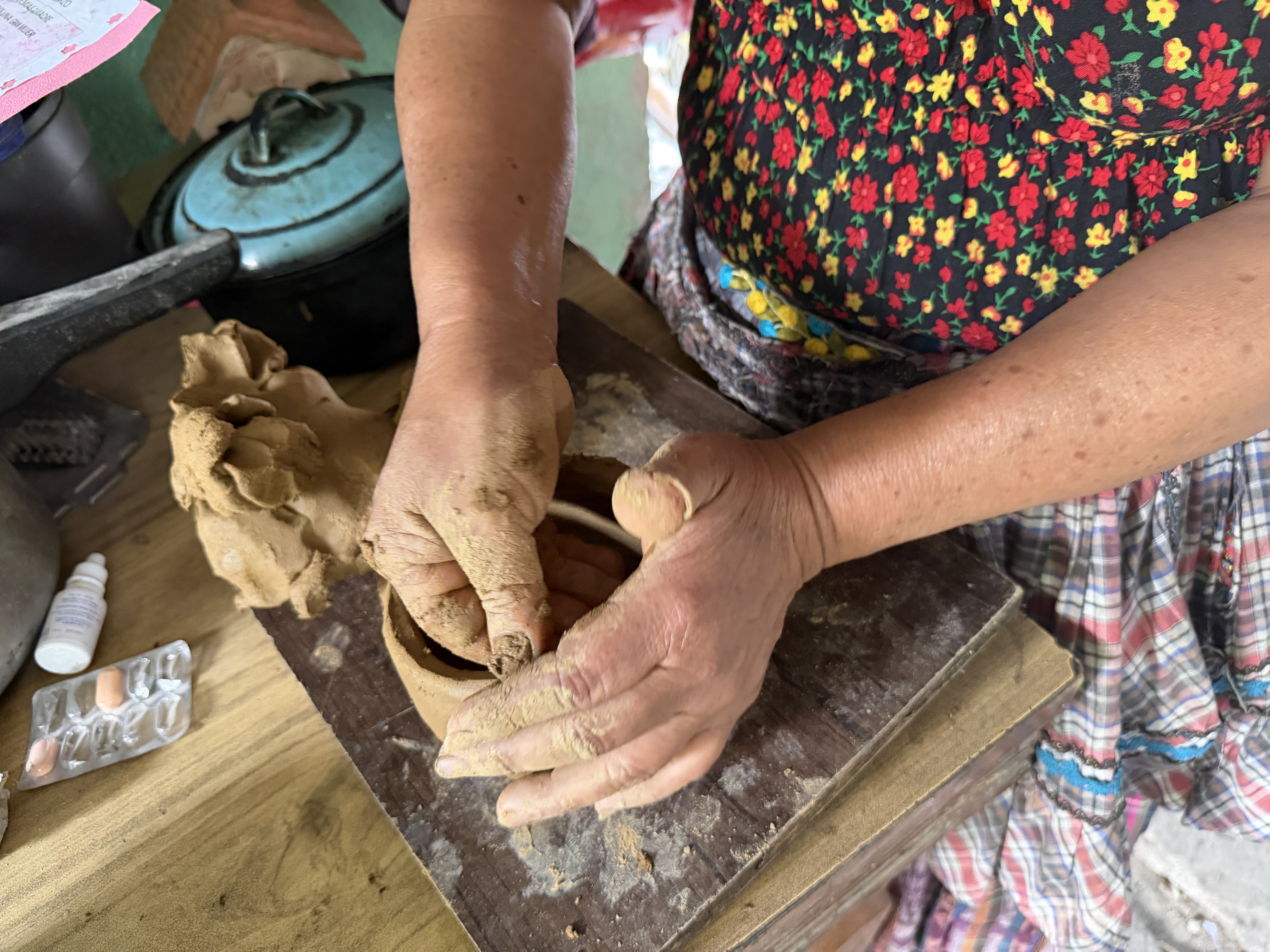
Photo: Mayela Sánchez García.
From drainage to destruction
The change was slow, like a tide that rises without you noticing. First came the drainage systems. Then, the trucks. The city’s trash found its final destination in Chinautla. "There was nowhere else to dump it, so they dumped it on us," she says. That’s how the tragedy began: the rivers turned into channels of waste, the banks became covered in gray crusts, and the odors became unbearable, especially during the rainy season. "The river carries all the trash from Zone 3. It smells awful. There’s no clean clay anymore; we can’t dig it up as we used to."
The 1976 earthquake left a mark on the town’s memory, but it was systematic neglect that ultimately disfigured the landscape. The municipal government, she says, moved from Santa Cruz to Zone 6, and since then the town has been left without any real representation. "There’s no mayor here. They come here to put up their campaign posters, they hold office, but they’re never here. They’ve never taken us into account," she laments.
Women who resist
In the face of institutional silence, associations, collectives, and struggles emerged. Among them was the Chinautla Women’s Association. "We organized because if we didn’t, we would have been left with nothing. The clay was running out, the sand miners were advancing, and the river was washing everything away. The women here don’t go to the capital to work. They make pottery at home and take care of their children. If we ran out of clay, we’d have no life left."
In 2010, disaster struck with full force. Two rivers, Las Vacas and Chinautla, overflowed due to the accumulation of sand that had been extracted without any controls. The water swept away a bridge. The community banded together and built another one with their own hands. The municipality did not cooperate. "That bridge is in ruins, but we, the neighbors, built it. Otherwise, we’d still be cut off."
Sand mining has become their most persistent enemy. "The sand miners are wearing us down. They take out tons and tons of sand every day. Our clay is gone with them. We’re left with almost nothing. And what little remains is contaminated," he says. The damage isn’t limited to the landscape—people’s health is suffering as well.
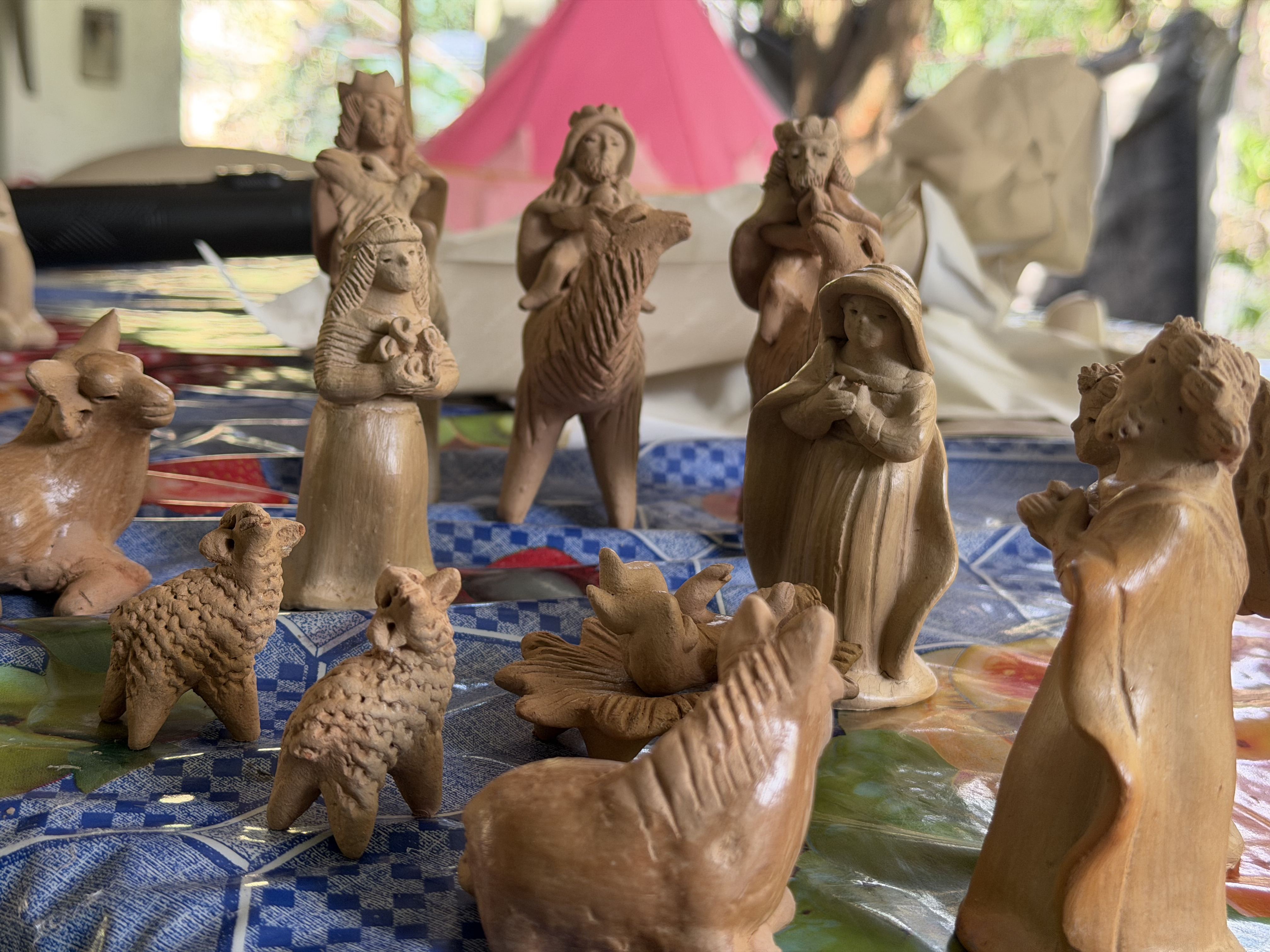
Photo: Mayela Sánchez García.
The value of words and justice
The expansion of businesses, the passivity of the authorities, and social erosion have caused divisions within the town. "Politics has planted ideas in people’s minds. There are thousands of residents, but only 500 support us. The rest don’t cooperate. They don’t understand that this isn’t about a political party—it’s about our town," she explains.
In recent years, the women’s association has joined forces with the town’s ancestral authorities. Together, they have succeeded in opening channels of dialogue with government ministries, halting the renewal of extractive licenses, and bringing the conflict to the government's attention. The 2025 ruling, handed down after years of legal battles, was a ray of hope amid the neglect. A court ordered the municipality to assume its environmental responsibility. For the first time, someone listened. "Thanks to that ruling, a businessman was stopped. His license hasn’t been renewed. It wasn’t like that before: you’d go to talk to them, and the ministers only thought about making a profit. Now, at least, they listen to us."
The future is uncertain. Drinking water is delivered only once every eight days. Mining permits can be renewed at any time. The river continues to carry trash. But there’s one thing doña Olga is not willing to lose: her dignity. "I advise women to get involved, to stay informed. We can’t just stay at home without knowing what politicians, businesspeople, and ministers are doing. If you get involved, you’ll find out. And once you know, you’ll fight."
When asked what Chinautla was like 50 years ago, her eyes fill with lost images: girls playing in the street, clean water flowing over stones, women shaping clay at sunset. "It was peaceful," she says. “It was ours.” Today, amid pollution and plundering, Chinautla endures thanks to women like her, who continue to shape its history with clay, memory, and courage.
Lorena Zárate
Lorena Zárate Cuevas is AIDA's Positioning Coordinator, working from Mexico. She has a degree in Communications from the Universidad Iberoamericana in Mexico, with a specialization in journalism and advertising. Lorena has significant experience in communications and public relations in environmental, social and cultural organizations. Prior to joining AIDA, she led regional communications initiatives for the World Wildlife Fund (WWF). She has collaborated in the press areas of public sector entities, such as the Secretariat of Foreign Affairs and the Secretariat of the Interior, and has worked as a co-editor in print media.