
Project
Programa de Aceleração do CrescimentoHalting the implementation of large dams in the Americas
The more we learn, the clearer it becomes that large dams are unsustainable energy sources.
From the Mexican highlands to the Amazon River basin, hydroelectric mega-projects are aggravating climate change, destroying sensitive ecosystems, and threatening human rights and indigenous cultures.
In October 2016, a research study from Washington State University found that the world’s reservoirs generate 1.3 percent of all greenhouse gases (more than the total emissions of Canada!), confirming the damage dams do to our climate.
Large dams have no place on our rapidly changing planet. In a time of intensifying droughts, many vulnerable hydropower-dependent countries are facing energy shortages. And as extreme weather events increase around the world, the inherent danger of large dams becomes more evident.
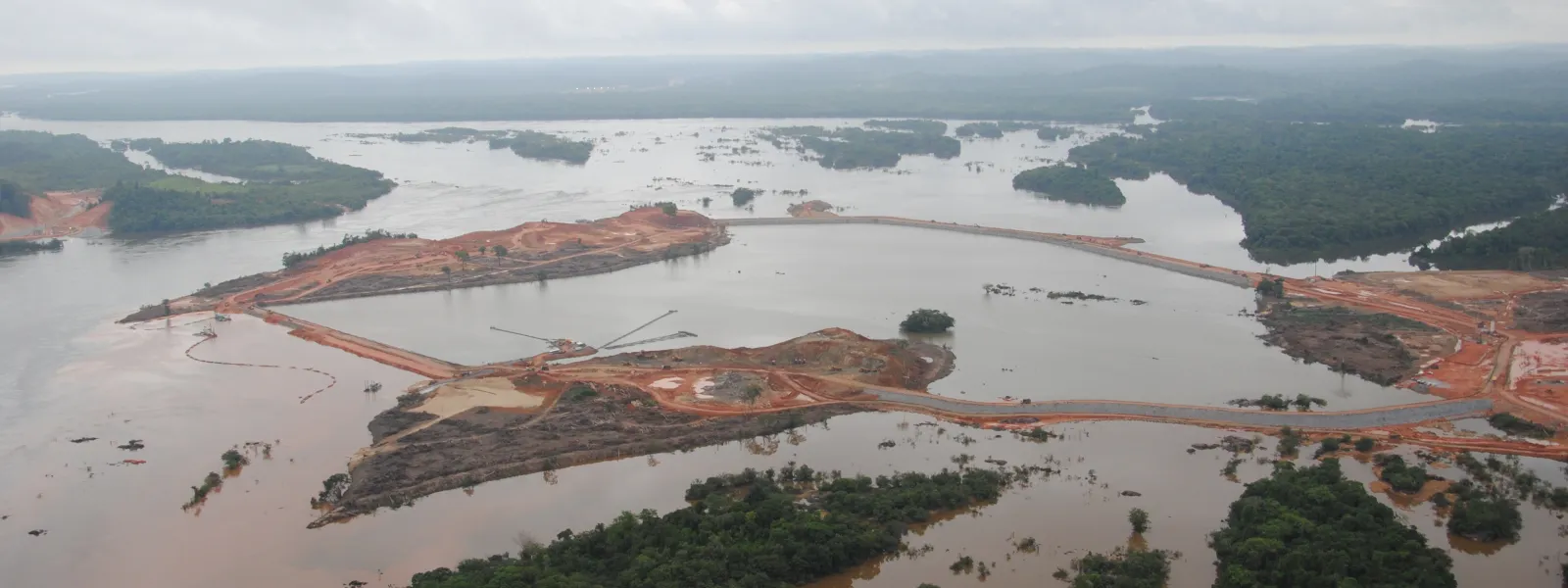
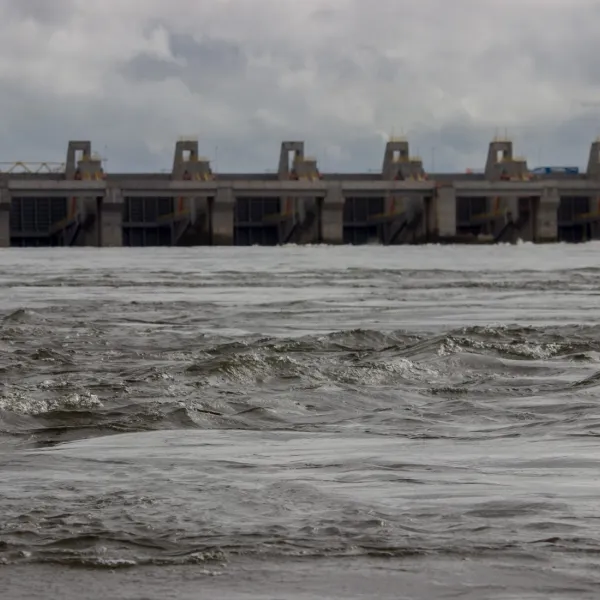
Throughout the construction of Belo Monte, the world’s third largest dam, we’ve seen firsthand the grave impacts these projects have on the ecosystems in which they’re built. We’ve witnessed the violations they impose on the rights of indigenous and riverine communities, whose culture and livelihoods are tied so closely to the natural world.
Yet, across Latin America and the world, large dams are still being promoted as “clean and green” energy sources; and are even receiving support from national and international climate initiatives.
That support is part of the reason more than 3,700 large dams are currently being planned or constructed worldwide, more than 400 of which have been proposed for the vital Amazon River Basin.
At AIDA, we’re proud to be part of a team leading the fight against large dams across Latin America and beyond.
Partners:
Related projects
If Cecil Had Lived in Costa Rica, He Might Still be Alive Today
By Camila Cossio, AIDA intern Last month Cecil, a 13-year-old African lion, was tracked and killed by a tourist from the United States. Cecil was a victim of trophy hunting, a cruel hobby that serves no conservation purpose. If Cecil had lived in Costa Rica, he might still be alive today. Costa Rica is home to many top predators, including big cats like pumas and jaguars—and the government is committed to their protection. Hunting animals for sport is illegal in Costa Rica. The Costa Rican Congress in 2012 unanimously approved an amendment to the nation’s Wildlife Conservation Law, which bans trophy hunting and the general hunting of wildlife. Costa Rica is the first country to ban hunting save for scientific studies, subsistence, and to reduce overpopulation. Hunters who fail to comply with the law may be fined up to $3,000 or jailed for up to four months. In light of Cecil’s death, many trophy hunters have argued that their actions help conservation efforts. Science, however, tells us otherwise. Natural predators, such as lions, wolves and bears, help balance natural ecosystems by killing the sickest and weakest individuals in a species. This is natural selection at its core. In contrast, trophy hunters aim to kill the most “desirable” animals – those that would look best hanging on their walls tend to be healthy top predators like Cecil. By hunting healthy predators, humans are interfering with the delicate balance of species populations. When a dominant lion like Cecil is killed, for example, it is common for a new lion to take over the pride and kill the former leader’s cubs. This pride disruption would not have occurred now had Cecil not been hunted to his death. Another kind of disruption is being seen in regard to United States wolf populations. The overhunting of red wolves led to an increase in coyote populations. As coyote populations grew, they suppressed the numbers of many smaller predators, such as foxes. Foxes prey on mammals responsible for infecting ticks with Lyme disease. It’s no coincidence that humans are currently facing the highest incidence of Lyme disease ever documented. Instances like this make it clear that predators play a vital role both for healthy animal ecosystems and for human health. Trophy hunting also creates a market for the poaching of threatened and endangered species. Organized trophy hunts imply that animal populations are “recovering” and not in danger, thus increasing the exploitation of already sensitive populations.[1] Costa Rica is a pioneer in wildlife law and wildlife protection – as evidenced by its landmark legislation, and by everyday actions I witness during my internship here in AIDA’s San José office. I see the nation’s concern reflected in the work our attorneys do to protect endangered species. And I see it on the streets, in bumper stickers bearing the image of a big cat like Cecil, captioned “Animals Have the Right of Way. Respect Them." [1] Cecil and the Myth of Conservation Through Sports Hunting, http://www.friendsofanimals.org/news/2015/august/cecil-and-myth-conservation-through-sport-hunting (accessed Aug. 5, 2015).
Read moreGod is an Environmentalist. Are You?
God is with us in the fight to defend the environment. He is the first environmentalist. In his encyclical Laudato Si, also known as the environmental encyclical, Pope Francis says, “The violence present in our hearts, wounded by sin, is also reflected in the symptoms of sickness evident in the soil, in the water, in the air, and in all forms of life.” All religions agree that divinity created the planet we share with all forms of life. Caring for this creation is one of our ancient religious duties. This sentiment has been echoed by high representatives of churches around the world, from Catholic to Muslim, Hindu to Orthodox. The planet and the beings that inhabit it are currently suffering grave environmental impacts. The contamination of oceans and rivers, climate change, soil deterioration, the extinction of species and the disappearance of forests are just some of the ills afflicting the environment. Given this bleak picture, various churches agree they must admonish believers to care for their surroundings. What did Pope Francis say? In Laudato Si, Pope Francis recounts the lessons of Juan Pablo II, who said that “the destruction of the human environment is extremely serious, not only because God has entrusted the world to us men and women, but because human life is itself a gift which must be defended from various forms of debasement.” The encyclical also recognizes the position of the Turkish Orthodox Church. “Patriarch Bartholomew has spoken in particular of the need for each of us to repent of the ways we have harmed the planet,” the text reads. The Pope also adds that Saint Francis of Assisi, who invited us to “care for all that exists,” always asked that part of his friary garden remain uncultivated, so that wild flowers and herbs could grow. Thus, those who admired them could raise their thoughts to the creator of such beauty: God. The Pope praises all who join forces in defense of the environment: “I want to recognize, encourage and thank all those striving in countless ways to guarantee the protection of the home which we share. “ In this same vein, the Conference of Bishops of South Africa stated that the “talents and involvement of all is needed to repair the damage caused by human abuse of God’s creation.” What do other religions say? Islam also encourages defending the environment. Muslim scholars have recently qualified climate change as a serious threat. The Islamic Foundation for Ecology and Environmental Science declared: “God created the world in mizan (balance), but through fasad (corruption), human beings have caused climate change, together with a range of negative effects on the environment that include deforestation, the destruction of biodiversity, and the pollution of the oceans and of water systems.” To learn how Confucianism, Hinduism, Christianity and traditional indigenous religions promote environmental defense, you can consult Ecology and Religion, a book by John Grim and Mary Evelyn Tuckner, published by Island Press in 2014. Better today than tomorrow These religious and environmental lessons are very important, especially when we come to defining moments in this fight to protect God’s creation, our planet. In December the 21st Conference of Parties of the United Nations Framework Convention on Climate Change will take place in Paris. This is the last opportunity for the nations of the world to reach a new binding agreement and avoid a global climate catastrophe. Humanity faces similar challenges with respect to energy sources, the use of fossil fuels, growing food, waste management and the protection of natural areas. The religions of the world, and their commitment to protecting the planet, give us a compelling reason to join in the fight. At AIDA we do so daily. We use the law to protect freshwater sources, the human rights of communities affected by environmental degradation, marine and coastal ecosystems, and to promote appropriate solutions to climate change. We can all do something, from changing personal habits that damage the environment, to pushing for structural solutions. These may include renouncing the use of plastic bags or telling your elected representatives you’ll only vote for people who support a rapid transition away from fossil fuels. Whatever we do, let’s do it soon! Amen.
Read more
New Zealand sets shameful emission-reduction target, completely ignores public consultation
By Natalie Jones Natalie is a legal intern on the Climate Change team at AIDA, based in Mexico City. She is a delegate to COP21 with the New Zealand Youth Delegation, and volunteers for NZ youth climate group Generation Zero. In this post, she covers an issue AIDA is following closely in Latin America—emission-reduction targets—in her native country. Last week New Zealand released its INDC, or “intended nationally determined contribution,” for the post-2020 climate deal set to be agreed upon in Paris this December. It’s not good news. An INDC is the target each country must set for its future greenhouse gas emissions—in other words, its intended contribution to the effort to reduce climate-changing pollutants to a sustainable level. At the UN climate talks, the world’s governments agreed that these targets should be nationally determined, to allow each nation to respond best to its own needs, priorities, and abilities. Because climate change is an issue we all face together, New Zealand’s announcement is relevant to people in all parts of the world, including Latin America. New Zealand is one of the world’s higher emitters: the small country emits more than three times its share of global emissions per capita. So far, however, New Zealand is failing to live up to its historic responsibility. The Government announced an emissions reduction target of 30 percent below 2005 levels by 2030. While this may sound okay – 30 is a big percentage, right? – it actually equates to a cut of just 11 percent below 1990 levels, which is not that much bigger than our already-pitiful 2020 target of 5 percent below 1990 levels. To stay in line with the international effort to limit global warming to below 2 degrees Celsius, New Zealand’s target would need to be a minimum of 40 percent below 1990 levels by 2030 – a rate accepted by the European Union and other progressive nations. Instead, the target is worse than those proposed by China, Mexico and other developing countries. To make matters worse, New Zealand has already proposed a conditional target of 10-20 percent below 1990 levels by 2020, in addition to the unconditional 5 percent target. It is likely that all the conditions attached to the 10-20 percent target will be met. So the recent announcement is essentially lowering New Zealand’s ambition by giving the country ten more years to hit the low end of its conditional target. At this critical moment in history, we can’t afford a decade of inaction. Accounting rule mischief But it doesn’t stop there. The target will remain provisional until a final deal is reached in Paris, including rules on accounting for land sector emissions and carbon markets. This means the target is even worse than it seems. New Zealand’s existing 2020 target is based on gross emissions calculated for 1990, without accounting for the lower net amount of carbon once some of it is taken up and stored by forests. But for 2020, the target does account for forests as a carbon sink. This skewed approach means New Zealand is on track to meet its 5 percent reduction target by 2020, even though actual emissions are on track to increase 36 percent since 1990. If New Zealand plans to use the same methodology for the 2030 target, which seems likely, our target would actually be a 134 percent net increase from 1990 levels. A target for the 1% What’s more, the Government has completely ignored the results of its own public consultation, which overwhelmingly called for much stronger action. Ninety-nine percent of submitters called for a target of 40 percent below 1990 levels by 2030. Over 15,000 submissions were made, and more than 4,600 of those submissions were mobilized by youth climate organization Generation Zero’s Fix Our Future campaign, which I helped run. Generation Zero spokesperson Paul Young characterized the target as being “for the 1 percent who deny the need to transition to a low carbon economy.” Failing to take responsibility for the Pacific New Zealand is a neighbour to many vulnerable Pacific Island countries, such as Samoa, the Marshall Islands, Tuvalu and Vanuatu. These countries are some of the lowest contributors to climate change, but are the first to face its devastating impacts, such as rising sea levels and more frequent and severe storms. New Zealand has a responsibility to care for its neighbours. Oxfam New Zealand called the country’s recent announcement a “slap in the face” to Pacific Island nations. A wasted opportunity Perhaps most disappointing about this announcement is the fact that New Zealand has the ability to lead the way to a thriving, zero carbon world. Currently running on more than 80 percent renewable energy, the country is in a prime position to transition to 100 percent renewable energy, shift its transport and heat needs to electricity and other clean energy sources, and absorb carbon by planting forests. Instead, New Zealand is leaving it to other countries to pick up its slack. Historically, New Zealand has used the inaction of major emitters like the US and China as an excuse for its own inaction, but that simply won’t cut it any more. What’s holding us back now is not technology, but political vision. AIDA’s work on INDCs AIDA advocates for public participation in the formation of INDCs throughout Latin America, and calls on nations to include information in their INDCs about the finance needed to meet their commitments and respond to the impacts of climate change. It is important to monitor the contributions of countries outside Latin America, particularly developed countries who have contributed the most to the problem, in order to determine whether each country is upholding their responsibility on this collective issue and to ensure political accountability for poor contributions. Find Natalie on Twitter at @nataliejonesnz.
Read more