
Project
RA Killmer_CC BY-NC-ND 2.0Protecting herbivorous fish, to secure a future for corals
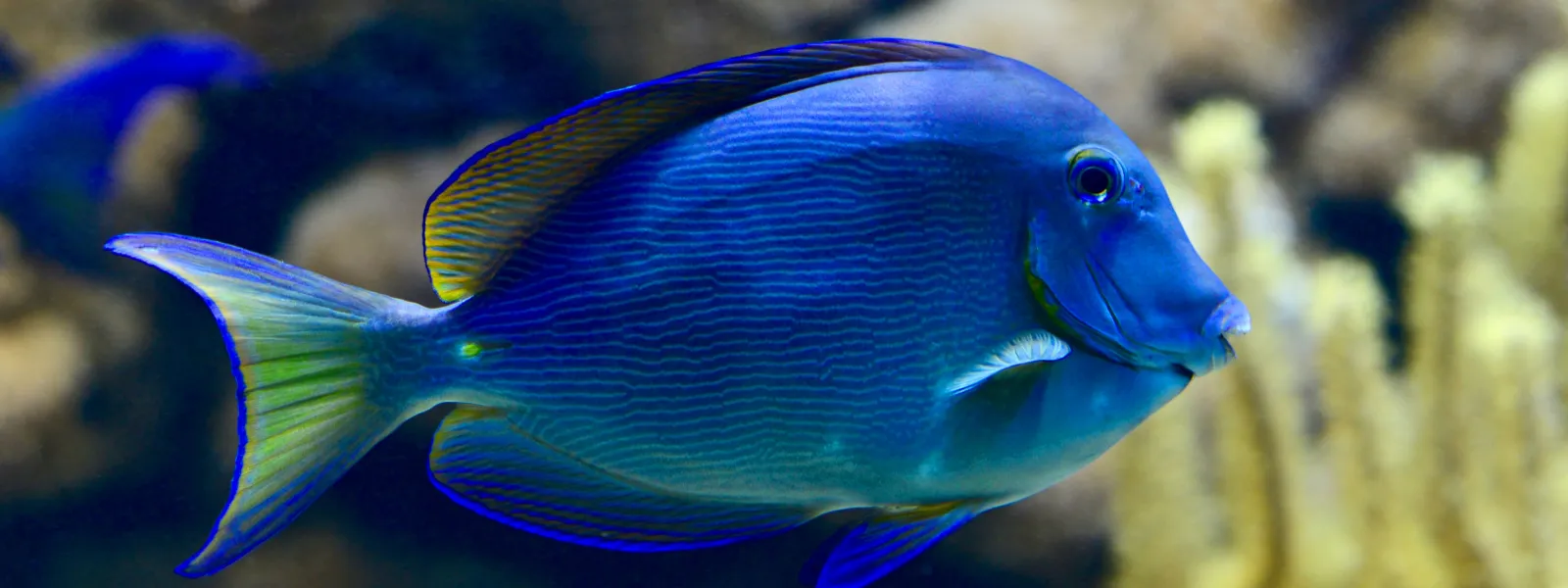
Herbivorous fish rarely go unnoticed. Their brilliant colors illuminate the reef to the delight of scuba divers. But more importantly, these iconic fish are also vital for the conservation of coral reefs.
Herbivorous fish feed on the algae that grow on corals and compete with them for light and oxygen. By eating the algae, these tiny fish play a big role in the survival of the entire ecosystem.
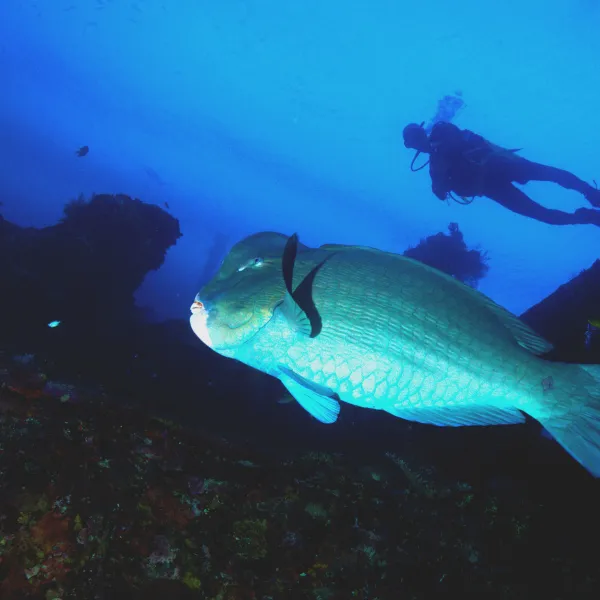
Species of these herbivorous fish include: parrotfish, which eat corals that break off the reef and excrete them as white sand; damselfish, which fend off the macro algae growth that kills coral; and surgeonfish, whose most famous representative is Dory from Finding Nemo.
But corals are quickly losing their greatest allies. Populations of herbivorous fish are dwindling, particularly in the Caribbean.
The overfishing of commercial species is driving artisanal fishermen to capture even the youngest herbivorous fish, preventing those species from replenishing their numbers.
The loss of these fish is one more threat to coral reefs, already fragile ecosystems that are increasingly vulnerable to climate change. Preserving our reefs will ensure we continue to enjoy the services they provide. Among other things, coral reefs act as fish hatcheries, natural barriers against storms and hurricanes, and the source of medicines that treat illnesses like cancer and Alzheimer’s.
Related projects
Colombian Court Orders the Suspension of Plan Colombia Spraying
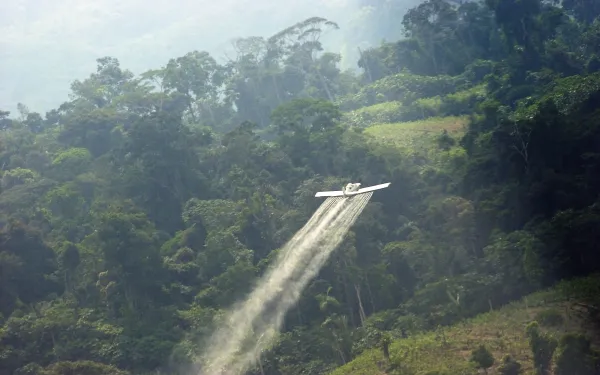
FOR IMMEDIATE RELEASE: June 26, 2003 CITING RISK TO HUMAN HEALTH AND THE ENVIRONMENT, COLOMBIAN COURT ORDERS THE SUSPENSION OF THE US-FINANCED SPRAYING OF COCA AND POPPY CROPS OAKLAND, CA/BOGOTA, COLOMBIA – A recent decision by the Superior Administrative Court of Cundinamarca, Colombia, (released to the public on June 25) declared that the aerial spraying with herbicides to eradicate coca and poppy crops violates the Colombian constitutional rights to a healthy environment, security and public health. As a result, the court ordered that the aerial spraying of potent glyphosate herbicides be suspended until the government complies with the Environmental Management Plan for the eradication program, and conducts a series of required studies intended to protect human health and the environment. This verdict supplements earlier declarations by the Colombian Constitutional Court and the State Council, which respectively ordered the suspension of spraying in indigenous territories and full compliance with the Environmental Management Plan approved by the Ministry of Environment. According to Yamile Salinas of the Colombian Ombudsman’s Office, “This ruling recognizes the potential risks that the herbicide and the manner in which it is being applied pose to human health and the environment in Colombia,” She added that, “The application of the precautionary principle is of singular importance because the Court affirms that the significant and potentially irreparable risk posed by the spraying is reason enough to suspend the fumigation program.” “The US Congress has required the State Department to evaluate environmental and health impacts of Plan Colombia. This decision by a court in Colombia must be taken into account by the US State Department,” said Anna Cederstav, staff scientist with Earthjustice and AIDA. “In light of the evidence presented and the court’s clear decision on this matter, the Department of State cannot certify to Congress that the herbicide mixture, in the manner it is being used, poses no unreasonable risks or adverse effects to humans or the environment, or that the herbicide is being used in compliance with the Environmental Management Plan for the program.” She concluded that, “It would be highly irresponsible for the United States to continue the eradication program in contravention of the Colombian court order to suspend the spraying until appropriate public health and environmental protections are in place.” “This court order formally adopts many of the requirements for environmental and human protection that the Colombian Ombudsman and Comptroller General, along with both national and international non-government organizations, have been demanding for years,” said Yamile Salinas. “This decision is a victory for both public health and the environment of Colombia.” Press Contacts: Anna Cederstav, Staff Scientist with Earthjustice and AIDA, (Oakland, CA) tel. 510-550-6700 Yamile Salinas, Colombian Ombudsman’s Office, (Bogotá, Colombia) tel. 571-314-7300 Ext. 2324
Read more
La Oroya Cannot Wait
This publication is the product of a careful analysis of official environmental monitoring reports submitted for the Doe Run multi-metal smelter to the Peruvian Ministry of Energy and Mines between 1996 and 2001. By finally filling the void in public information about contamination levels in La Oroya, this work demonstrates that the right to access information is an essential pillar of citizen participation. Only with these type of facts in hand can civil society protect itself against the powerful interests of giant mining companies like Doe Run. The reader will come to understand the severe health problems and risks suffered by the local population and particulary the children in La Oroya. But the authors go beyond this. They suggest the implementation of corrective and preventive measures that will require the participation of not only the company but also the Peruvian State. These are actions that cannot be postponed if we are to guarantee the human right to health, improve quality of life, and permit development in Peru. The authors also provide a legal analysis of environmental protection in the minerals sector, and recommendations for making this system more effective. Above all, this publication is an invitation to take meaningful and timely steps toward solving the extraordinary environmental and human health problems in La Oroya. Read and download the publication
Read more