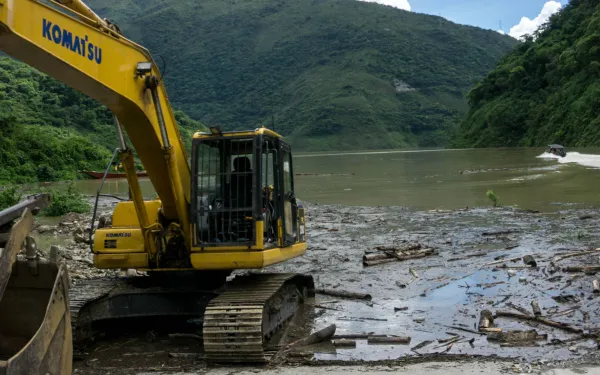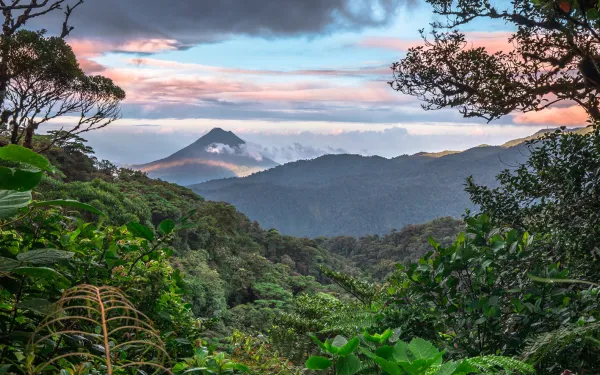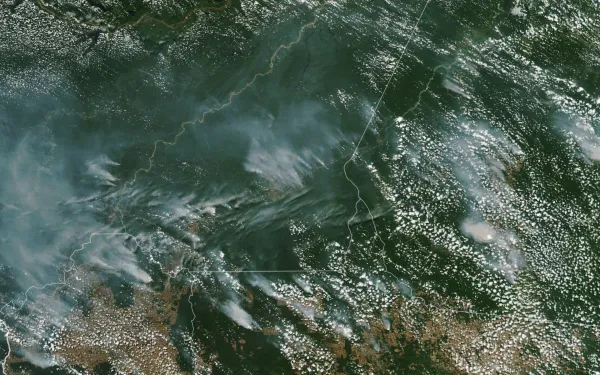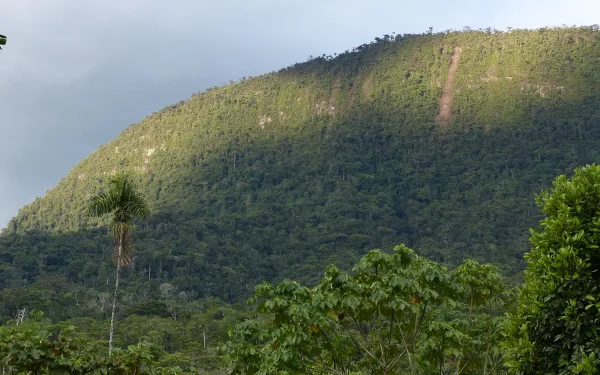
An aerial view of the Amazon jungle surrounding the Belo Monte Dam in Brazil.
Aida Publication

The False Promises of Hydropower

How dams fail to deliver the Paris Climate Agreement and UN Sustainable Development Goals A Joint Statement by Civil Society Organizations on occasion of the 2019 World Hydropower Congress in Paris, France We live in an age of urgency. Scientists have warned that we have little time to act to bring climate change under control and protect the integrity of life on our planet. Confronting the climate crisis requires creative solutions that both protect nature and respect human rights. Facing these challenges, we cannot remain silent onlookers while corporate profiteers, financiers, and their allies peddle false solutions for addressing climate change and implementing sustainable development. A flagrant example of such deception is the attempt to portray large hydroelectric dams as a ‘clean and green’ source of energy, as can be seen at the 2019 World Hydropower Congress. Organized in Paris by the industrial lobby of the International Hydropower Association (IHA) in partnership with UNESCO, the conference’s title reads, “Delivering the Paris Climate Agreement and the Sustainable Development Goals.”   Such glossy portrayals of hydroelectric dam projects—with an eye toward capturing financial incentives through mechanisms like Climate Bonds and the Green Climate Fund—conveniently ignore a long legacy of social and environmental catastrophes, economic waste and, all too often, massive corruption schemes that are the antithesis of truly sustainable development. ... A Call for Action The undersigned civil society organizations call on the members of the International Hydropower Association, governments and international financial institutions to implement the following urgent actions:  Steer priorities, investments and financial incentives away from additional hydroelectric projects and towards energy efficiency and truly sustainable renewable energy options (solar, wind and biomass and, when appropriate, micro-hydro). Special attention should be given to opportunities for technological innovation, decentralized generation and improving energy access among isolated, off-grid communities. Eliminate financial incentives for new hydroelectric projects within climate change mechanisms, such as the Green Climate Fund and Nationally Determined Contributions, and within programs to promote implementation of the UN Sustainable Development Goals (with the possible exception of micro-hydro projects). Commission independent audits of controversial existing dam projects and basin-wide cascades in terms of their social and environmental consequences, identifying steps to mitigate impacts and ensure just reparations for affected communities, based on direct consultations. When such measures are prohibitively expensive or otherwise inviable, the de-commissioning of dam projects should be promoted.  Ensure the alignment of operational procedures for existing hydroprojects with relevant territorial plans at the basin level, such as integrated water resource management and protected areas that ensure key ecological processes and the rights of local communities, based on the concepts and tools of participatory, adaptive management. Ensure that renewable energy policies and projects adopt, across the board, robust guidelines to safeguard human rights and environmental protections, such as ILO Convention 169 and the UN Principles on Business and Human Rights. No energy facilities that potentially impact the territories and livelihoods of indigenous peoples and other traditional communities should be authorized without obtaining the free, prior and informed consent of the community and ensuring the cooperative design of co-management strategies. Among the benefits of such a paradigm shift in energy strategies and development planning will be major contributions toward protecting the world’s last free-flowing rivers, vital for climate resiliency, biodiversity conservation and sustainable livelihoods.  Energy companies and governments must halt all efforts to dam the world’s remaining free-flowing rivers and concentrate instead on: i) improving efficiency and the sustainability of existing hydropower projects and cascades; and ii) investing in energy efficiency and truly sustainable renewables.  Moreover, governments must urgently promote the permanent legal protection of the world’s last free-flowing rivers, including transboundary watercourses, with due respect for the territorial rights of indigenous peoples and other traditional communities, who play fundamental roles as the guardians of healthy rivers. Read the Full Statement Here

Read more

Blog Latin America

Nature first: it’s time to build environmental consciousness

The good news is that the changes we need to make to resolve the environmental crisis are not only achievable; they are what people living on this planet actually want.

Read more

Press releases Brazil

Inter-American Commission to examine rollback of indigenous rights in Brazil

In a hearing before the Inter-American Commission on Human Rights, civil society organizations will demonstrate how measures adopted by the administration of Brazilian President Jair Bolsonaro are undoing decades of human rights protections in the country.

Read more

Blog Mexico

Clean air and climate justice: the best gifts for our children

My gift for my children this year will be to continue working for better air quality in Mexico City, and to collaboratively build a future in which climate justice is a reality.

Read more

Blog Latin America

Listening to indigenous peoples to save the planet

Indigenous peoples have lived for centuries in a much more sustainable way. They offer us, in many ways, examples and opportunities to learn again, to change and to improve.

Read more

Blog Brazil

How Brazil is threatening indigenous and environmental rights

The setback posed by the current administration has only strengthened the resistance of indigenous communities, and those of us who support them. 

Read more

Press releases Brazil

Statement on the Assassination of Dilma Ferreira Silva, leader of Brazil’s Movement of Dam-Affected Peoples

We call on Brazilian authorities and multilateral organizations to ensure that the country’s obligations regarding the protection of human rights and environmental defenders are enforced.

Read more

Blog Latin America

Conserving our water, drop by drop

Humanity needs water, and for this year’s World Water Day, celebrated March 22, we join the focus on “leaving no one behind.” 

Read more

Press releases Colombia

Organizations ask the UN to intervene in the protection of the Santurbán páramo, at risk from mining

They request that the United Nations Special Rapporteur on the Rights to Drinking Water and Sanitation prepare a report on the case, visit the site, and support the Colombian government in taking the necessary actions to protect the ecosystem.

Read more

Aida Publication

Moratoriums and bans on fracking: Comparative legislation

Countries, regions, cities and communities around the world have chosen to prohibit or place moratoriums on fracking through various legal and administrative mechanisms. 

Read more