Letter to Pope Francis on the Delicate Situation of NGOs in Bolivia
Respectfully we turn to Your Holiness, on the occasion of your upcoming visit to Bolivia, as organizations that protect the environment and human rights in the Americas. We wish to share with Your Holiness our growing concern about the severe limitations imposed upon civil society organizations (CSOs) by the Bolivian government, particularly with respect to those who defend human rights and those of Mother Earth.
We celebrate the historic effort to protect our Common Home through the publication of your Encyclical letter, Laudato Si’. It is our hope your text drives profound change in the politics, practices and beliefs of our governments, corporations, and civil society, and inspires every person to create a more just and sustainable world.
In your Encyclical letter, Your Holiness has highlighted the substantial contributions of our planet’s CSOs in putting environmental issues on the public agenda. We are deeply grateful for this recognition and we hope that Bolivian CSOs can continue playing their essential role in the promotion of and care for Mother Earth. This requires them to be able to fully exercise their work without threats from the government, even in situations in which they do not agree.
As Your Holiness understands, Bolivia has made essential contributions to the national and international recognition of the rights of Mother Earth. In 2009, the Bolivian people approved by an absolute majority their new Constitution, which recognized the right to a healthy and balanced environment for all people; consolidated the environment as a subject of rights; and upheld the rights of future generations to the same. President Evo Morales has also internationally promoted the rights of Mother Earth, the rights of indigenous peoples, and the international recognition of the human right to water. In 2010, President Morales stated, “Now it is more important to defend the rights of Mother Earth than to defend human rights, because in defending the rights of Mother Earth, we defend human rights.”[1]
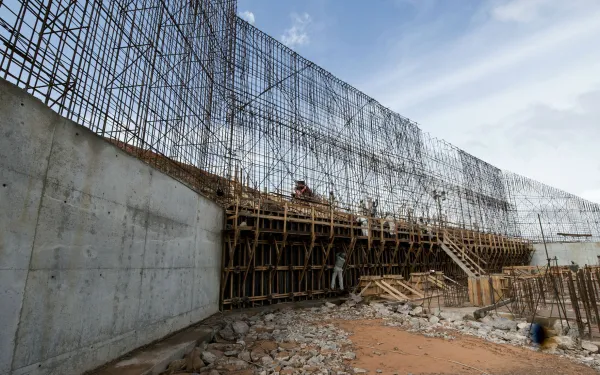
Bolivian civil society organizations, together with indigenous and peasant organizations, played a crucial role in solidifying this new constitutional framework. However, since 2011 their situation and relationship with the government has deteriorated, especially after the government’s decision to construct a highway through a National Park and Indigenous Territory (TIPNIS). This is because most of the indigenous communities of that territory, and many civil society organizations working to defend the environment and human rights, opposed the project, considering it a violation of their rights that would cause irreversible damage to the natural habitat. Since then, the government has implemented policies and actions to weaken and limit the work of the CSOs.
In 2013, the government of Evo Morales passed two laws (Act 351 and Supreme Decree 1597) that restrict and condition the functioning of CSOs to their compliance with sectoral policies of the government, that is to say, to the discretion of government actors. For example, the government can revoke the legal status of a CSO when it considers that the organization is not complying with sectoral policies of the government.[2] The Ombudsman of Bolivia submitted a claim of unconstitutionality against those laws in 2013, the outcome of which has not yet been resolved.
These laws have scared the country’s CSOs away from their work for fear of losing their legal recognition. Many have been silenced to stay in line; others have ceased operations, or have converted to other legal status to prevent harassment from the government.
Both the United Nations Human Rights Council[3] and the UN Special Rapporteur on the Rights to Freedom of Peaceful Assembly and of Association have expressed worry about Act 351 and its regulatory decree. Maina Kiai, UN Special Rapporteur, has stated that such laws “restrict the right of association in accordance with laws, standards, and international principles.”[4] The government has not yet incorporated United Nations recommendations to modify those rules.
On May 20, the government approved a law (Supreme Decree 2366) that authorizes the exploration of hydrocarbons in all of the country’s national protected areas. In June, President Morales threatened CSOs, particularly those that promote the protection of the environment, stating: “… I want to say to you: NGOs, foundations that impede the exploration of natural resources, will leave Bolivia…”[5]
Your Holiness, as you may appreciate, the situation of CSOs, or any person or institution intending to protect the environment in Bolivia, is very delicate. We therefore respectfully request that you, in your upcoming visit to the country, may use your good offices before President Evo Morales to request that his government stop pressuring CSOs, and assume a public commitment to respect, protect, and guarantee their work in recognition of the freedom of association, freedom of expression, and political and institutional pluralism essential for the sustainability of our democracies.
We are incredibly grateful for your attention, and we send our fraternal greetings in the hope that your visit and intervention can contribute to improving the protection of our Common Home in Bolivia.
We’d like to take this opportunity to express our highest consideration and great esteem.
Fundación Centro de Estudios Ecológicos de la República Argentina (Argentina)
Abogadas y Abogados para la Justicia y los Derechos Humanos, A. C. (México)
Unidad de Protección a Defensoras y Defensores de Derechos Humanos (Guatemala)
Medio Ambiente y Sociedad A.C. (México)
Frente Ciudadano en Defensa del Agua y la Vida en B.C.S. (México)
COMCAUSA AC (México)
Acción Ecológica (Chile)
Coordinadora Nacional de Derechos Humanos (Perú)
Comisión de Justicia Social de la Diócesis de Chimbote (Perú)
Instituto Peruano de Educación en Derechos Humanos y la Paz (Perú)
Ambiente y Sociedad (Colombia)
Asociación Amigos de los Parques Nacionales de Argentina (Argentina)
Centro de Estudios Mineros Colombia Punto Medio (Colombia)
Instituto Runa de Desarrollo y Estudios sobre Género (Perú)
Centro de Estudios Jurídicos e Investigación Social (Bolivia)
Fundación Ambiente y Recursos Naturales (Argentina)
Liga de Defensa del Medio Ambiente (Bolivia)
Asociación Ecologista Río Mocoretá (Argentina)
Asociación Eco Raíces (Argentina)
Fundación Myrna Mack (Guatemala)
Paz y Esperanza (Perú)
Foro del Buen Ayre (Argentina)
Asociación Ambientalista Ecolapaz (Argentina)
Asociación Ambientalista del Sur (Argentina)
Asociación Ambientalista Mayu Sumaj (Argentina)
Asociación Argentina de Abogados Ambientalistas (Argentina) Asociación Civil de Ecología Social (Argentina)
Asociación Civil Red Ambiental (Argentina)
Asociación Civil Tierra XXI (Argentina)
Asociación de Protección al Ambiente Serrano - Calamuchita (Argentina) Asociación Ecologista PIUKE (Argentina)
Asociación Lihue (Argentina)
Asociación Vecinal Moronense (Argentina)
Bios Argentina (Argentina)
Centro Ambiental Argentino – Cambiar (Argentina)
Centro Andino de Desarrollo e Investigación Ambiental (Argentina)
Centro Argentino de Meteorólogos (Argentina)
Centro de Protección a la Naturaleza (Argentina)
Comisión Interdisciplinaria de Medio Ambiente (Argentina)
Comisión Ecológica Ituzaingó (Argentina)
Continental Nea (Argentina)
Federación Amigos de la Tierra Argentina (Argentina)
Foro de los Ríos (Argentina)
Fundación Ambiente Ecológico (Argentina)
Fundación Arandu (Argentina)
Fundación Argentina de Energías Alternativas y Renovables (Argentina)
Fundación Argentina de Etoecología (Argentina)
Fundación Cullunche para la Conservación del Ambiente, la Flora y la Fauna (Argentina)
Fundación Inti Cuyum (Argentina)
Fundación Norte Ecológico (Argentina)
Fundación Orden Ecológica (Argentina)
Fundación Pacha Mama para el Medio Ambiente y Desarrollo (Argentina)
Fundación para el Desarrollo Sustentable de Eco Regiones (Argentina)
Fundación Pasos (Argentina)
Fundación Península Raulí (Argentina)
Fundación Proyectos Ambientales (Argentina)
Fundación Red Informática Ecologista (Argentina)
Grupo Ambiental para el Desarrollo (Argentina)
Grupo Ecológico Bolívar (Argentina)
Greenpeace Argentina (Argentina)
Iniciativa Radial (Argentina)
Instituto de Estudios e Investigaciones sobre Medio Ambiente (Argentina)
Fundación Jorge Esteban Roulet (Argentina)
Organización Argentina de Investigaciones Espeleológicas – Karst (Argentina)
Movimiento Transfronterizo de ONG Ambientalistas de la Triple Frontera (Argentina, Brasil, Uruguay)
Multimedios Ambiente Ecológico (Argentina)
Observatorio de Políticas Sociales y Ambientales (Argentina)
Red Eco-ambiental de Jujuy (Argentina)
Taller ecologista Rótary Internacional (Argentina)
Equipo de Reflexión, Investigación y Comunicación de la Compañía de Jesús (Honduras)
Ágora Espacio Civil (Paraguay)
Plataforma Interamericana de Derechos Humanos, Democracia y Desarrollo (Regional)
Centro de Documentación en Derechos Humanos “Segundo Montes Mozo S.J.” (Ecuador)
Fundación Étnica Integral (República Dominicana)
Corporación para el Desarrollo de Aysén (Chile)
Asociación pro Derechos Humanos (Perú)
Alianza Mexicana contra el Fracking (México)
Blue Planet Project (Internacional)
Fundación Instituto Boliviano de la Montaña (Bolivia)
Red MUQUI (Perú)
Red Regional Agua, Desarrollo y Democracia (Perú)
Asociación Interamericana para la Defensa del Ambiente (Regional)
Organización Familia Pasta de Conchos (México)
Centro de Estudios y Apoyo al Desarrollo Local (Bolivia)
GRUFIDES (Perú)
Derechos Humanos y Medio Ambiente (Perú)
Hnas. de la Misericordia de las Américas, comunidad de Argentina (Argentina)
CADEP “José María Arguedas” (Perú)
Red Latinoamericana Iglesias y Minería (Regional)
Asociación Fe y Derechos Humanos (Perú)
Food & Water Watch (EE.UU.)
Centro de Derechos Humanos de las Mujeres (México)
Grupo de Mujeres de San Cristobal Las Casas (México)
Defensa de Niñas y Niños - Internacional, Costa Rica (Costa Rica)
Movimiento Franciscano ̈Justicia y Paz ̈ Bolivia (Bolivia)
Franciscans International – Bolivia (Bolivia)
Instituto NATURA (Perú)
CooperAcción (Perú)
Consejo Latinoamericano de Iglesias CLAI. Programa Fe, Economía, Ecología y Sociedad (Regional)
Centro de Documentación e Información Bolivia (Bolivia)
Comisión Colombiana de Juristas (Colombia)
Red Uniendo Manos Perú (Perú)
Adhesiones personales
Albert Hans Argote Adrian, Cochabamba, Bolivia
Miguel Vargas Delgado, Santa Cruz, Bolivia
Ariel Pérez Castellón, Cochabamba, Bolivia
Severo Villarroel Zenzano, Oruro, Bolivia
Donald K. Anton, Australia
[1] Cfr. http://www.jornada.unam.mx/2010/04/22/mundo/024n1mun
[2] Cfr. Decreto Supremo 1597, Artículo 19, inciso g.
[3] Cfr. Human Rights Council, Final observations on the third periodic report of the Plurinational State of Bolivia, October 14 to November 1, 2013, paragraph 24 http://tbinternet.ohchr.org/Treaties/CCPR/Shared%20Documents/BOL/CCPR_C_BOL_CO_3_15635_S.doc
[4] Cfr. http://www.noticiasfides.com/g/politica/la-onu-alerta-que-ley-sobre-ong-vulnera-el-derecho-a-la-libertad-de-asociacion-en-bolivia-34609/
[5] Cfr. http://www.cambio.bo/?q=oeneg%C3%A9s-que-perjudiquen-al-estado-se-ir%C3%A1n-del-pa%C3%ADs
Read more