
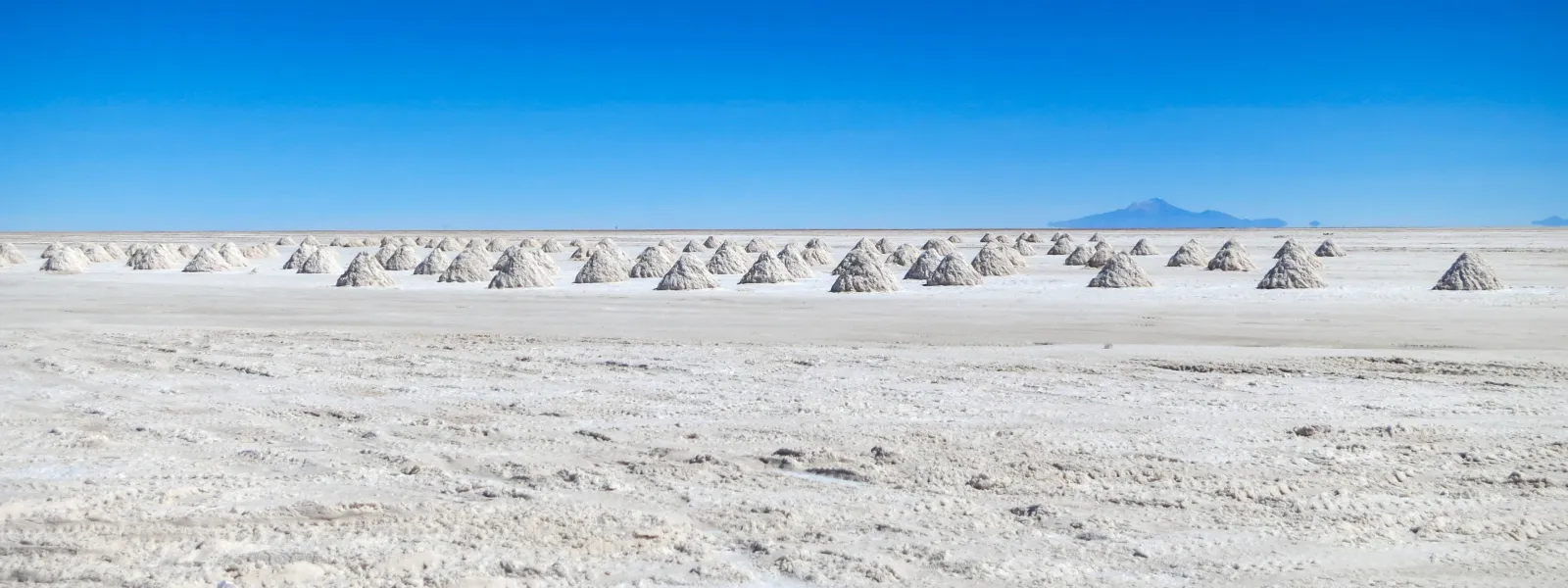
The impact of "critical" minerals in Latin America
In numerous international forums, countries in the Global North have positioned "critical" minerals—or transition minerals—such as lithium, copper, cadmium, and cobalt, among others, as one of the main solutions to the climate crisis, since they are used in the development of technologies for renewable energy generation and, consequently, to reduce or replace the use of fossil fuels.
Behind this narrative also lies the expansion of the digital economy, data infrastructure, and the military and aerospace industries.
"Critical" minerals are not scarce, nor are they found exclusively in countries of the Global South. There are proven and potential reserves of these minerals worldwide.
However, global interest in these materials has focused on Latin America, where their extraction has expanded and intensified.
This pressure has led to socio-environmental impacts that are already occurring in countries such as Argentina, Bolivia, and Chile—which account for 53% of the world’s known lithium deposits in their salt flats, extremely fragile Andean wetlands, and water-scarce regions—; in Chile and Peru, where 40% of copper mining takes place; and in the Colombian Amazon, where concessions, mining requests and the illegal extraction of “critical” minerals violate the rights of indigenous peoples.
Thus, the extraction of minerals for the transition—so-called because of their high capacity to store and conduct energy—is replicating the logic of mining extractivism that for years has degraded the environment and violated the rights of indigenous and traditional communities in Latin America. This trend jeopardizes the possibility of just energy transition processes that respond to the needs and capacities of the region’s territories.
AIDA works to raise awareness of the socio-environmental impacts of mining for the transition and to defend, through strategic litigation and international advocacy, the territories affected by this industry across the continent.
Lithium in Latin America: A growing threat
One contradiction in the energy transition model promoted by countries in the Global North is the replacement of fossil fuels with mineral resources whose extraction and processing affect communities, ecosystems, and species in Latin America.
A prime example of this inconsistency is lithium, a raw material used in the manufacture of batteries for cell phones, computers, and—most importantly—electric vehicles, as well as for storing non-conventional renewable energy, such as wind and solar power.
The usefulness of lithium has increased demand for it, but it has also obscured or downplayed the lithium industry's negative environmental and social impacts.
Learn more about lithium, where it comes from, and what its extraction entails.
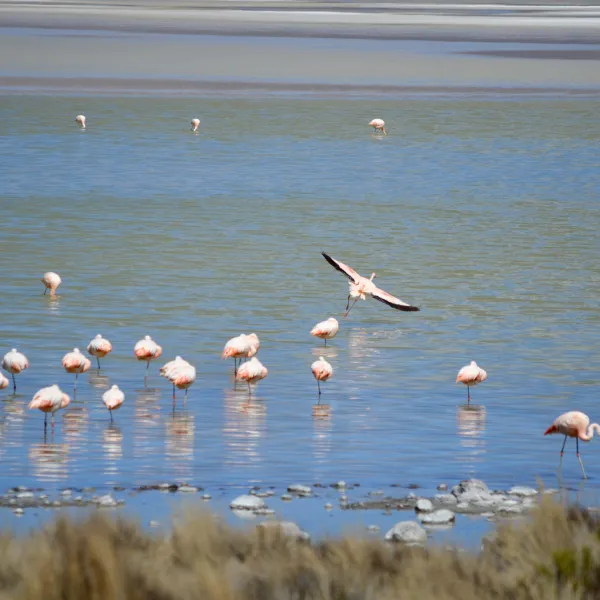
Territories at risk due to the "lithium fever"
At the heart of the expansion of mining for the energy transition in Latin America lies the Gran Atacama region, located in the central Andes, on the border among Argentina, Bolivia, and Chile. The salt flats in these countries contain 53% of the world’s lithium resources (potentially mineable material).
Dubbed "the lithium triangle" by the mining industry, this region is more than that. It is home to unique species of flora and fauna, specially adapted to extreme climatic conditions, as well as to indigenous and traditional communities that have lived there for several generations in harmony with their ecosystems.
The mining of lithium and other "critical" minerals is already affecting—or threatens to affect—complex territories and entire lives.
Learn about the realities of the Gran Atacama region and the threats posed by the "lithium fever".
International governance of "critical" minerals
Although minerals for the transition are considered essential components of efforts to move away from fossil fuels, their extraction poses significant challenges, including the need for regulatory frameworks and international standards designed to ensure respect for human rights and the rights of nature in territories of extraction.
The issue has become so important that the UN Secretary-General’s Initiative on Critical Energy Transition Minerals issued a series of recommendations and principles in September 2024 to ensure the equitable, fair, and sustainable management of these materials.
The initiative proposes seven voluntary guiding principles, based on standards, commitments, and legal obligations set forth in United Nations documents:
- Human rights must be at the core of all mineral value chains.
- The integrity of the planet, its environment and biodiversity must be safeguarded.
- Justice and equity must underpin mineral value chains.
- Development must be fostered through benefit sharing, value addition and economic diversification.
- Investments, finance and trade must be responsible and fair.
- Transparency, accountability and anti-corruption measures are necessary to ensure good governance.
- Multilateral and international cooperation must underpin global action and promote peace and security.
Due to the growing impact of mining for the transition in various territories and communities, the issue was brought before the Inter-American Commission on Human Rights for the first time in November 2024.
At a public hearing, AIDA—along with representatives from communities and partner organizations in Argentina, Bolivia, Chile, and Colombia—alerted the Commission to the major threats that the extraction of "critical" minerals poses to the rights of indigenous peoples and local communities, the right to a healthy environment, and access to environmental information, public participation, and justice.
Our work
El trabajo de AIDA contribuye a evitar que América Latina sea el epicentro de un modelo de transición energética AIDA’s work helps prevent Latin America from becoming the epicenter of an energy transition model based on extractivism, which exacerbates the inequalities, environmental degradation, and human rights violations that have historically plagued the region. Our efforts are focused on:
- Raising awareness of the socio-environmental impacts of mining for the transition in Latin America.
- Strengthening the capacity of indigenous and traditional communities to defend their territories against the new wave of extractivism.
- Advocating for legal frameworks, public policies, and international standards that regulate mineral extraction for the transition.
- Holding states, companies, and investors accountable for the damage caused in the region's territories.
- Promoting transition models that reduce demand for energy and these minerals, prioritize the protection of ecosystems critical to sustaining life, and adopt circular economy models that value nature and local ways of life.
Circular economy: An alternative from the territories
The circular economy—a model traditionally described as a combination of reduction, reuse, and recycling activities—is a tool to ensure that the energy transition does not become yet another extractive process that generates the same conflicts and socio-environmental impacts it has systematically caused. However, for this to happen, it is essential that actions in this area comprehensively integrate the territories where minerals are extracted.
The Andean salt flats, lakes, and lagoons are complex and fragile ecosystems. The communities that inhabit them safeguard ancestral wisdom that maintains the ecosystem's balance. Water, as a central element, serves as a habitat and source of life for countless species of flora and fauna. All of this—and more—is at risk as the corporate energy transition pushes for the rapid, uncontrolled extraction of ‘critical’ minerals in Andean wetlands, a process that is proceeding without respect for human rights or international environmental protection standards. It is time to ask whether the push for minerals at all costs is the transition the world needs, or whether it merely replicates the old extractive model, creating new sacrifice zones in Latin America.