
Project
Photo: Steven Ablitt / Cassiar WatchVictory: Canada supports public participation and environmental assessment
Thanks to a court ruling to which AIDA and our allies contributed, Canadian authorities must allow active participation in all mining and industrial megaprojects, as well as comprehensive environmental impact assessments.
The decision came after a long legal battle that began in 2006. That year, an open-pit copper and gold mine called Red Chris was approved without the adequate evaluation of its environmental impacts. It was sleighted to process 30 thousand metric tons a day.
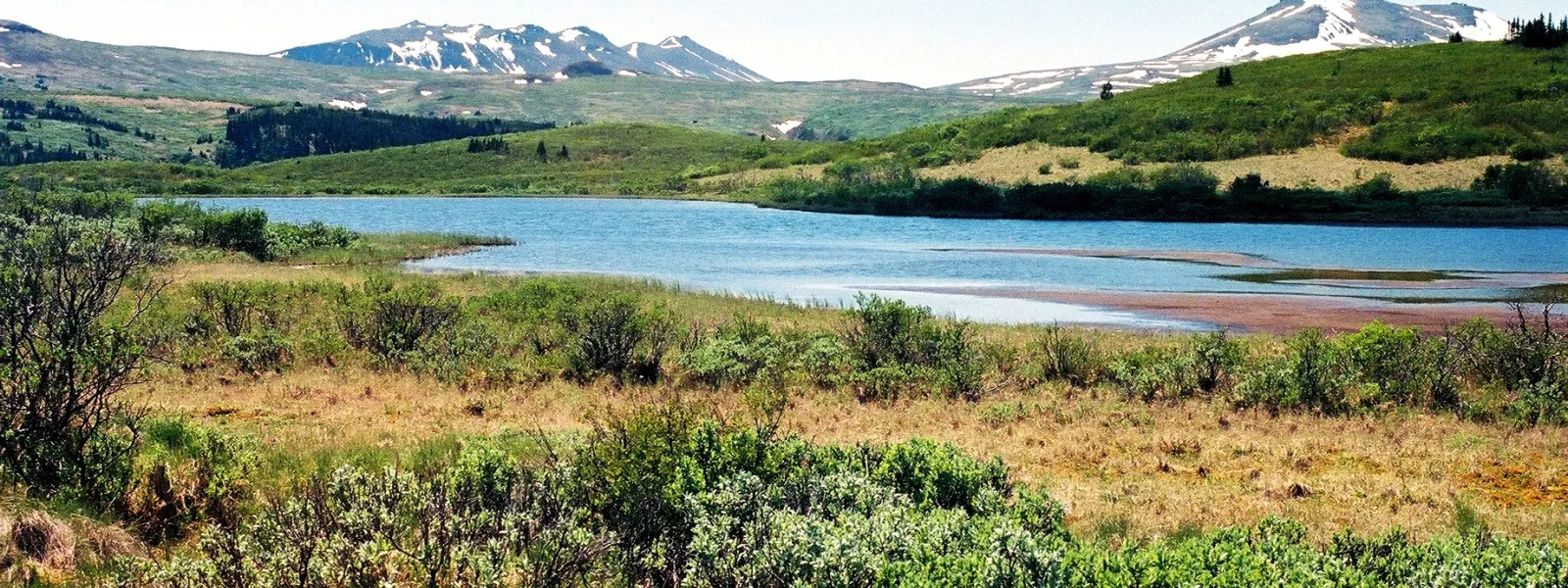
The Imperial Metals company intended to build the mine in the Kapplan River Valley, a remote and pristine natural area home to large mammals such as Dali’s sheep, caribou, bears and moose. In addition, the area is part of the migratory salmon route and the Tathlan indigenous community lives nearby.
The company had fragmented the project into small parts to avoid evaluating the full impact of the project, thus violating international standards and the right to public participation.
In 2009 AIDA filed a brief with Canada’s Supreme Court in support of a lawsuit filed against the project by MiningWatch and Ecojustice.
The ruling remains a powerful tool to protect huge expanses of pristine and valuable land for its biodiversity, water sources, and the culture of indigenous communities.
It was a watershed moment in terms of ensuring companies fulfill their obligations when developing projects that put at risk the natural environment and those who depend on it.
Related projects
Resolution provides measures to protect corals in the Colombia Caribbean
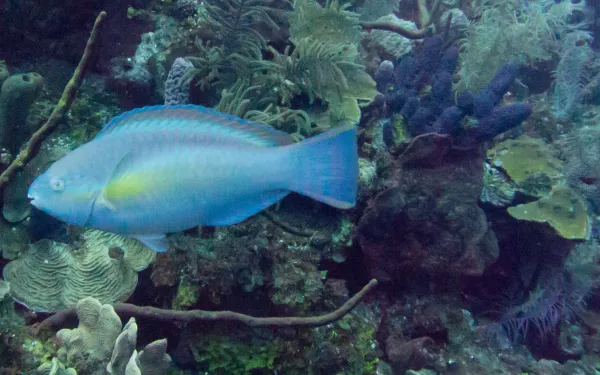
Setting a positive precedent in Colombia and an important region of the Greater Caribbean, CORALINA has prohibited the fishing and commercialization of several species of herbivorous and omnivorous fish, a measure aimed at conserving the area’s coral reef ecosystems. San Andrés, Colombia. With the objective of conserving the coral reef and beach ecosystems of the Archipelago of San Andrés, Providencia and Santa Catalina, Colombia, the region’s autonomous corporation authority emitted a resolution prohibiting the capture and commercialization of several species of herbivorous and omnivorous fish. The waters around these Caribbean islands host the greatest marine and coastal biodiversity in Colombia, with more than 2,354 marine species registered to date. “This progress towards the conservation of corals and beaches occurs after a process of more than 20 years that included environmental education, research and monitoring,” said Nacor Bolaños, coordinator of protected areas for the Corporation for the Sustainable Development of the Archipelago of San Andrés, Providencia and Santa Catalina (CORALINA). “The need to protect parrotfish and other species of herbivorous and omnivorous fish was supported by artisanal fishermen themselves and by local communities, with whom we met.” The resolution issued by the decentralized public entity protects 14 species of parrotfish, four of surgeonfish, five of butterfly fish and six species of angelfish. It completely prohibits commercial, industrial, sport, or recreational fishing of these species. It also prohibits commercial fishing using harpoons and/or similar fishing gears. It also completely restricts their commercialization, possession and storage, as well as their transfer to other areas of the country. “The resolution is of great importance because it recognizes the benefits of corals for fishing, tourism, pharmaceutical resources, and protection against the impacts of the climate crisis,” said Maria José Gonzalez-Bernat, scientific advisor to AIDA. “It also recognizes the vital role several species of fish play in keeping these ecosystems healthy.” By feeding on algae that take away light and space from corals, herbivorous fish support the survival of these fragile environments. Numerous studies have demonstrated that parrotfish contribute to the growth of corals and the creation of sand for beaches. Some omnivorous species like angelfish also help to clean algae from corals. AIDA has supported CORALINA’s initiative since its inception, providing technical, scientific and legal information; and has advocated for the inclusion in the resolution of international and regional commitments that protect these fish. The Archipelago of San Andrés, Providencia and Santa Catalina concentrates 77 percent of the surface coral areas of Colombia and houses the third largest coral reef in the world. The area was declared a UNESCO Biosphere Reserve in 2000, and borders eight nations of the Greater Caribbean: Venezuela, the Dominican Republic, Haiti, Jamaica, Honduras, Nicaragua, Costa Rica and Panama. Yet its coral coverage has deteriorated over time due to natural phenomenon and human activities, as have populations of herbivorous fish like the parrotfish. “In this sense, this regulation is an example for other countries with coral reefs along their coasts,” said Gonzalez-Bernat. “The resolution is based on scientific information and emphasizes the international legal framework that recommends the protection of corals and the fish that support their conservation.” Press contacts: Victor Quintanilla (Mexico), AIDA, [email protected], +52 155 70522107 Claudia Marcela Delgado (Colombia), CORALINA, [email protected], +57 313 8517300
Read more
What we must do to preserve the planet’s biodiversity and natural heritage
Society is at serious risk of losing our natural world and all that sustains us. Our actions are provoking mass extinction and accelerating the loss of natural resources, plants and animals. Among these actions are the growth of agriculture and livestock production, the destruction of habitats, the introduction of invasive species, the expansion of urban areas, poaching and overfishing, overpopulation and pollution. That’s according to the most complete global evaluation of biodiversity yet, recently published by scientists at the United Nations’ Intergovernmental Science-Policy Platform on Biodiversity and Ecosystem Services (IPBES). The report shows that the capacity of Earth’s ecosystems to provide benefits to people has diminished drastically over the last 70 years. That’s because, on average: global resources have diminished by 47 percent; 25 percent of flora and fauna species are in danger of extinction; and the climate crisis is driving higher temperatures and increased acidification of the ocean, which is causing coral reef coverage worldwide to shrink. What’s more, a third of all species in the ocean are being overfished. Despite these alarming statistics, we can still take the planet out of the grave situation we’ve put it in. But it will require radical changes to our approach. The diagnosis for Latin America Historically, the world has passed through five mass extinctions that have caused the loss of more than 70 percent of the Earth’s life forms. Currently, we seem to be living through the sixth. Although species extinction occurs naturally, it generally does so at a rate of about one species per million each year. The current rate far exceeds that, as at least 100 species per million are going extinct each year—and that rate is rising. Another way to visualize this global threat is by listing the countries with the most species in danger of extinction. Five countries in Latin America are in the top 10 for species loss, with Mexico topping the list at 665 threatened species (71 species of birds, 96 mammals, 98 reptiles, 181 types of fish and 219 amphibians). Mexico’s situation is largely being driven by high rates of deforestation, a practice aimed at increasing agricultural area to cover the country’s growing demand for food. In fact, Latin America and Southeast Asia have lost millions of hectares of terrestrial ecosystems and fresh water through increased livestock production and agriculture (which includes the use of fertilizers). Other countries in the region with high rates of species loss include Colombia (540 species), Ecuador (436), Brazil (413), and Peru (385). Species extinction alters and impedes the proper functioning of ecosystems, which rely on interactions between varied forms of life to produce food, manage water supply, regulate climate, and more. Big changes to ensure a better future Although life on our planet has existed for some 4 billion years, humanity has only been around 200 thousand of those; yet we’ve managed to disrupt the Earth’s natural balance. Although our actions have negatively affected the earth, this shows that we, as humans, have the ability to transform our environment. The IPBES report mentions the Aichi Biodiversity Targets as transformative actions that can protect biodiversity. One of those is the creation of natural protected areas, which have helped reduce the risk of extinction for species like mammals and amphibians. Nevertheless, the report emphasizes the need for a drastic change in the values and objectives of our governments so that decisions at the local, national, and international levels are aligned to combat the causes behind the planet’s degradation. To that end, and taking into account the UN’s Sustainable Development Goals, nations must: Expand and coordinate the global network of natural protected areas. Invest in green infrastructure. Produce food, materials, and energy in sustainable ways. Conserve and use water efficiently. Support indigenous and traditional communities, who protect many of the planet’s remaining natural resources. Adequately approach population growth and global consumption levels. Create new environmental laws and better compliance with existing ones. Slow pollution and the overexploitation of our natural resources. “People shouldn’t panic, but they should begin to make drastic changes,” said Josef Settele, an IPBES co-chair and entomologist at the Helmholtz Center for Environmental Research in Germany. “Business as usual with small adjustments won’t be enough.” Our air, water, and food depend on biodiversity—the varied forms of life on our planet and the interaction between them. Caring for this natural heritage is a shared task; it is now more important than ever.
Read more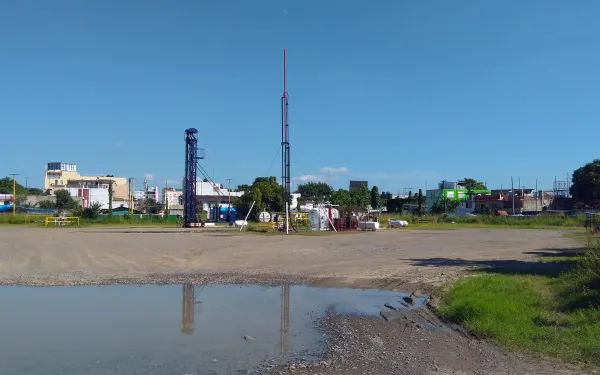
Colombia makes the right move by suspending fracking project
Citing a recent court order, Colombia’s environmental authority has suspended the licensing process for a fracking project in the Middle Magdalena Valley. The decision represents an advance in the movement to stop fracking’s expansion in Latin America. Bogotá. In an advance for the struggle against fracking’s expansion in Latin America, Colombia’s National Environmental Licensing Authority has suspended the licensing process for a fracking project in the Middle Magdalena Valley. With this decision, Colombia joins a growing list of communities, municipalities, and regions across Latin America and the world who have made progress to stop the expansion of fracking in their territories, many through the enactment of bans or moratoriums. "The Environmental Authority’s decision is a positive example for nations across Latin America and the world,” said Astrid Puentes Riaño, co-executive director of AIDA. “It’s the result of an admirable civic movement and of the use of the precautionary principle as a tool to protect human health and ecosystems, and to confront the climate crisis.” The decision to halt the process for Ecopetrol’s "APE Guane A” project is founded on the State Council’s suspension, in November 2018, of the regulatory framework for fracking in the country, citing the precautionary principle. The Interamerican Association for Environmental Defense (AIDA) supports the Council’s decision and considers the Environmental Authority’s enactment of that order to be a step in the right direction. “In the absence of existing regulations on fracking, in Colombia we have a judicial moratorium. This implies that no project may be implemented that seeks to exploit unconventional oil and gas deposits using this technique,” explained Juana Hofman, AIDA attorney. “All activities aimed at the development of fracking activities must be suspended.” In its decision, the Environmental Authority states: “… The temporary suspension of the aforementioned provisions translates to those provisions being temporarily outside the legal system, which consequently means that this Environmental Authority does not have technical regulations that allow it to verify the management measures that should be included in the Environmental Impact Study, to be analyzed within the environmental assessment procedure, and thus could not determine whether or not the granting of the environmental license required for new projects in unconventional deposits was viable.” The suspended project involves the use of hydraulic fracturing in a boggy complex located between the municipalities of Barrancabermeja and Puerto Wilches in Northeast Colombia. Fracking, or hydraulic fracturing, is an extractive technique that proves incredibly damaging for water, air quality, human health and the climate. It emits methane, a pollutant strongly associated with global warming. Due to its negative impacts on the environment and public health, fracking has been prohibited by judicial or legislative means in many municipalities, regions and nations around the world, such as Scotland, the state of New York (USA), and the province of Quebec (Canada). Global efforts to stop fracking’s expansion have largely been citizen-led and driven by concerns for the risks fracking poses to the climate, environment and public health. The Alliance for a Colombia Free from Fracking has been steadfast in their commitment to stopping fracking’s advance in Colombia, and should be congratulated for this important advance. AIDA urges the Colombian government to continue down the path of prevention and to comply with its international environmental obligations to confront the climate crisis, and to protect its land, water and communities. We urge the government to deny authorizations for fracking operations in Colombia. “Fracking is a procedure that furthers us from our climate goals, and from the energy path that all nations should be targeting” Puentes Riaño said. “Decisions like these are an invitation to seek out renewable energies that are better for our planet and our communities, not only in Colombia but around the world.” Press Contacts: Carlos Lozano Acosta (Colombia), AIDA, [email protected], +57 (300) 564 0282 Juana Hofman (Colombia), AIDA, [email protected], +57 (310) 884 6715
Read more