
Project
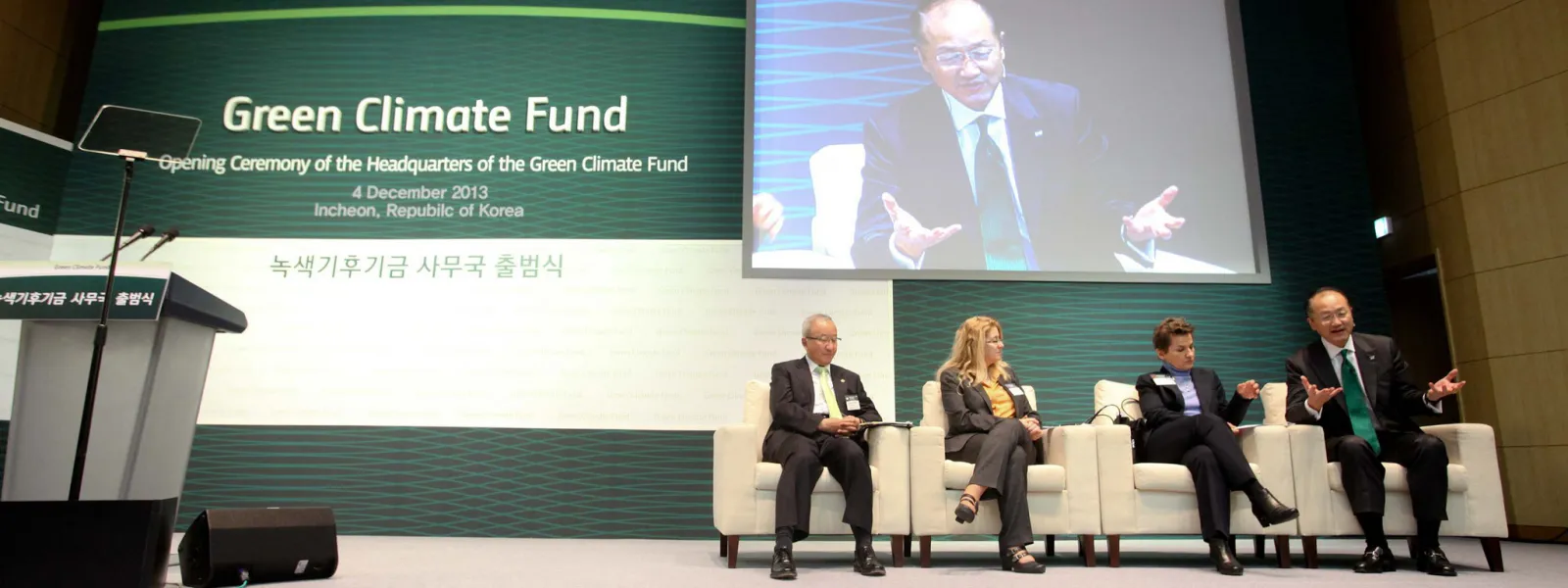
Photo: GCFAdvocating before the Green Climate Fund
The Green Climate Fund is the world's leading multilateral climate finance institution. As such, it has a key role in channelling economic resources from developed to developing nations for projects focused on mitigation and adaptation in the face of the climate crisis.
Created in 2010, within the framework of the United Nations, the fund supports a broad range of projects ranging from renewable energy and low-emissions transportation projects to the relocation of communities affected by rising seas and support to small farmers affected by drought. The assistance it provides is vital so that individuals and communities in Latin America, and other vulnerable regions, can mitigate greenhouse gas emissions and address the increasingly devastating impacts of global warming.
Climate finance provided by the Green Climate Fund is critical to ensure the transformation of current economic and energy systems towards the resilient, low-emission systems that the planet urgently needs. To enable a just transition, it’s critical to follow-up on and monitor its operations, ensuring that the Fund effectively fulfills its role and benefits the people and communities most vulnerable to climate change.
Reports
Read our recent report "Leading participatory monitoring processes through a gender justice lens for Green Climate Fund financed projects" here.
Partners:
Related projects
After the Mexico City earthquake, a call to create a better city
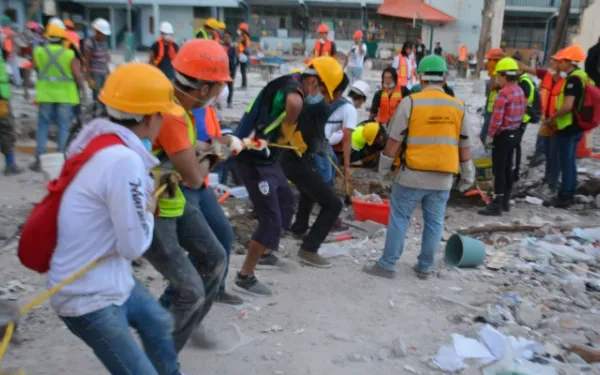
About a month ago, on September 19, a 7.1 magnitude earthquake struck near the heart of Mexico City. In the quake’s aftermath, on top of all the tears and fear and aguish, I was overcome with solidarity and love, by the signs of an awakened and united citizenry. I’ve been living here for more than 13 years, and never before have I felt so proud to call this place home. Everyone who could went out to the streets to help. It was impressive to see how we employed our professions, our skills, and our pastimes in the service of others: medicine, engineering, architecture, cooking, masonry, carpentry, psychology, therapy, advocacy, education, communications, acting, and art. Every bit of knowledge was useful in a million different ways. The support of neighbors and local businesses was essential. Restaurants and cafes provided food, drinks, and bathrooms to anyone in need. Internet networks and electricity were offered up free of charge. Thousands of people set to work in the wreckage of collapsed buildings, in collection and aid-distribution centers. We became a real, alive, awakened, tireless, connected and supportive city. With all that has happened over the last month, it is this spirit of citizenship and support that has remained with me. Friends and strangers alike were inspired to help and to share; they were proud of their actions but not seeking any spotlight. I hope we can keep this spirit alive in the months and years to come. Instead of going back to being anonymous, disconnected residents of this monstrous city, people skeptical of the unknown and afraid of the shadows, we can be more. We can reinvent ourselves, remain active and involved citizens; we can be better. It’s the least we can do to honor the people who died, and those who lost their homes and their ways of life. Only then will all this pain be for something greater. If we maintained these habits of generosity, we could drastically improve the quality of life in our city. Perhaps we would be removed from The Economist’s list of the worst cities to live in Latin America. And, most importantly, perhaps we could all live safer, more peaceful and happier lives. What if, in the face of corruption, instead of just complaining, we formed a human chain to denounce it, find solutions, and implement them? Can you imagine the difference we would make? What if, in the face of environmental pollution, we sought to better understand the causes and solutions, and demanded effective action from both the government and those responsible for the damage? What if, in the face of the irregularities of urban development—made evident by the earthquake—we supported citizen-oversight initiatives to ensure that complaints are followed up, and codes and norms are complied with? What if, in the face of inequality, we formed another human chain for the more balanced distribution of resources, to ensure they get where they’re most needed? We’ve seen what we can achieve together, and we know that we can all give more than we normally do. We know now that when there is trust and time, the greatest gift we can give is ourselves. So, a month after the earthquake, I invite you to continue being part of our human chain—for our city, our country, our region, and our planet. By becoming protagonists and finding solutions, instead of being victims and complaining, we can truly make a difference. We’ve seen that the government doesn’t cut it, and that we can do more with our own hands. For my part, I will continue my work as an environmental attorney with AIDA. But I will also commit to remaining connected to my neighbors and community, and to contributing to the reconstruction of our city. And what about you? What human chain did you join the day of the earthquake, and what connections will you choose to form and strengthen now?
Read more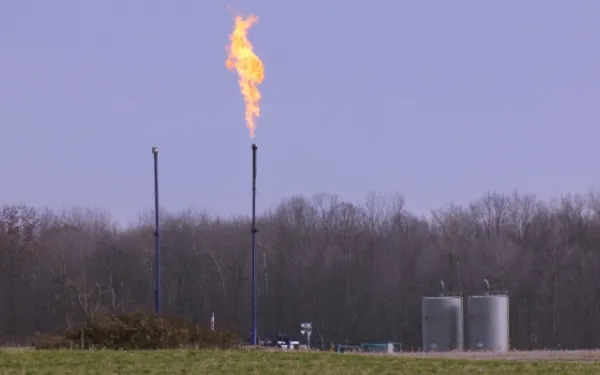
How to fight fracking with the law
Fracking is spreading rapidly through Latin America. If left to develop blindly, it could cause irreparable harm not just to the environment but also to public health. Claudia Velarde, a Bolivian environmental attorney, believes humanity and Mother Earth should not be seen as different or isolated beings. “The activities that affect the conservation of nature will have repercussions in our lives as well,” she said. This conviction led her to join AIDA’s team of attorneys earlier in 2017, to be part of our efforts to protect the environment from extractive activities like fracking and large-scale mining. For our Freshwater Protection Program, Claudia helps coordinate the work of the Latin American Alliance on Fracking, a coalition that promotes public debate, awareness, and education among civil society groups. The Alliance also supports resistance efforts by communities throughout the region. Confirmed risks The extraction of gas and oil through fracking, or hydraulic fracturing, could have a “nefarious effect” on the quality and availability of potable water. This was the conclusion of the most exhaustive study yet completed by the Environmental Protection Agency of the United States, the nation that pioneered this controversial technique. Oil and gas companies inject fracking wells with large amounts of water mixed with highly concentrated chemicals. The toxic solution fractures rocks to release trapped oil and/or gas. According to the study, the poisonous fluids leach through soil and contaminate groundwater. By contaminating water sources, fracking also affects the lives of the people, animals, plants, and entire ecosystems that depend on them. Ignoring the danger “Dependence on fossil fuels is leading us to an unprecedented environmental and climate crisis,” Claudia explained. “Fracking has serious impacts, so it’s important that people have real and complete information on the policies and procedures related to it.” One procedure that should be followed before any fracking operation is authorized is the preparation of an Environmental Impact Assessment. A proper assessment includes evaluation of possible environmental damages and identification of measures to mitigate the harms. In Latin America, corporations—rather than the governments that regulate them—prepare Environmental Impact Assessments. But often, governments of the region allow companies to skirt this procedure. In Argentina, the environmental authority granted a permit for Petrolera El Trebol to explore and exploit four oil wells conventionally (without using fracking) near Llancanelo Lagoon, a wetland of international importance. Months later, the company decided to frack the wells. Through an abbreviated process, the government authorized the change without requiring a new Environmental Impact Assessment. Faced with this dangerous reality, Argentina’s Foundation for the Environment and Natural Resources (FARN) filed a civil suit, requesting an injunction until the government’s prior authorization is invalidated. The suit argues that, in addition to violating the obligation to require a new Environmental Impact Assessment, the government also failed to respect the affected communities’ right to give their free, prior and informed consent to the project. “We’re appealing to justice to put a stop to this outrage, so the people have an opportunity to discuss, with adequate information, whether or not they approve of these types of activities that cause irremediable environmental damage,” explained Santiago Cané of FARN. “If they do accept fracking, it must be done with the utmost care, using the measures and regulations designed to avoid or mitigate damages.” AIDA is supporting FARN’s legal work with arguments based on international law. The most important is the precautionary principle, which holds that where any uncertainty exists about the risk of serious harm to the environment and human health, the most stringent precautions should be applied. “Given that there is no study with enough technical information on the possible damages of fracking, this principle should be applied to avoid the consolidation of impacts in these and other cases,” Claudia explained. Despite scientific evidence demonstrating many harmful consequences of fracking, the use of the technique is expanding throughout Latin America. Faced with this worrying trend, AIDA will continue working with our partners to find legal solutions with widespread impacts throughout the region.
Read more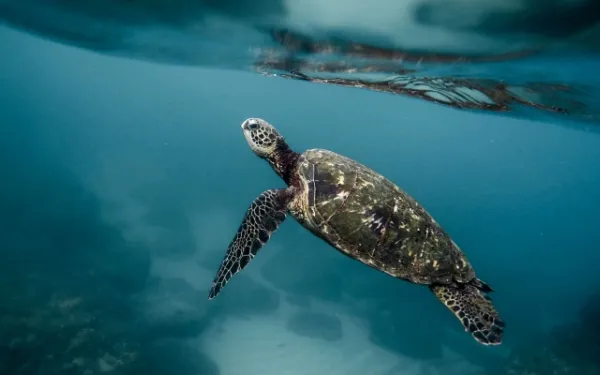
Turtles, sharks and tuna: why we’re working to protect our ocean
About a third of the world’s fisheries have crashed, and the rest are in bad shape. It’s a stark reality that affects not just our own food security, but the health and future of the many creatures that travel through the farthest reachs of our ocean. Out in the high seas, far beyond view of our coasts, sharks and whales glide through the deep blue water; a lone sea turtle pops her head up for air, catching a glimpse of the birds soaring overhead. Far from national boundaries, and protected by no country, these deep waters are rich in biodiversity—sustaining everything from corals to mammals to the fish we eat. Despite their importance, these international waters—and the life within them—are at risk. A lack of coordinated oversight has led to overfishing, illegal fishing, pollution, and habitat destruction. Marine life struggles with all these stressors—and a warming climate. A unique refuge Through their interactions with Latin America’s coasts, the high seas form rich environments called outcropping systems. Near Chile, Costa Rica, Mexico, Panama and Brazil, these nutrient-rich waters feed species of great ecological and commercial importance. Within them live the mahi mahi, yellowfin and bluefin tuna, sailfish, swordfish, and others on which the fishing industry—and therefore much of the region’s economy—depends. In fact, deep-sea fishing for tuna and similar species in the Atlantic and Pacific oceans generates more than $1.2 billion in revenue a year, according to the Inter-American Tropical Tuna Commission. In the Eastern Tropical Pacific, it’s estimated that a single hammerhead shark generates as much as $1.6 million dollars in tourism throughout its 35-year lifespan, according to a study by the University of Costa Rica. Beyond the economic value they provide to humans, the high seas also hold tremendous value for the species that depend on them. Five species of sea turtle, most of which are threatened, migrate through these waters to lay their eggs on coastal beaches. The outcropping systems also provide essential breeding grounds for blue and humpback whales. Nobody governs the high seas According to a 2014 Global Ocean Commission report, the degradation of these important ecosystems is driving the entire ocean to the point of collapse. In fact, 12 percent of the species living in the Eastern Tropical Pacific are in danger of extinction, according to the International Union for the Conservation of Nature. Current international legislation has gaps that leave these offshore waters unprotected, further endangering the marine life that lives in them, explains Gladys Martínez, AIDA’s Senior Marine Attorney. The greatest current need is to create marine protected areas, off-limits to commercial activity. We also need an authority that mandates environmental impact assessments for activities on the high seas—something that was not contemplated when the UN Convention on the Law of the Sea, the most sweeping agreement governing world oceans, was created. Our hope is that a new international treaty convened by the United Nations General Assembly will soon fill these gaps. Representatives from governments around the world have already had several successful meetings to pave the way for its negotiation. We’re working as part of the High Seas Alliance—a coalition of 32 NGOs—to ensure the voice of Latin American civil society is heard in the creation of this new treaty, which will protect the deepest reaches of our ocean far into the future.
Read more