
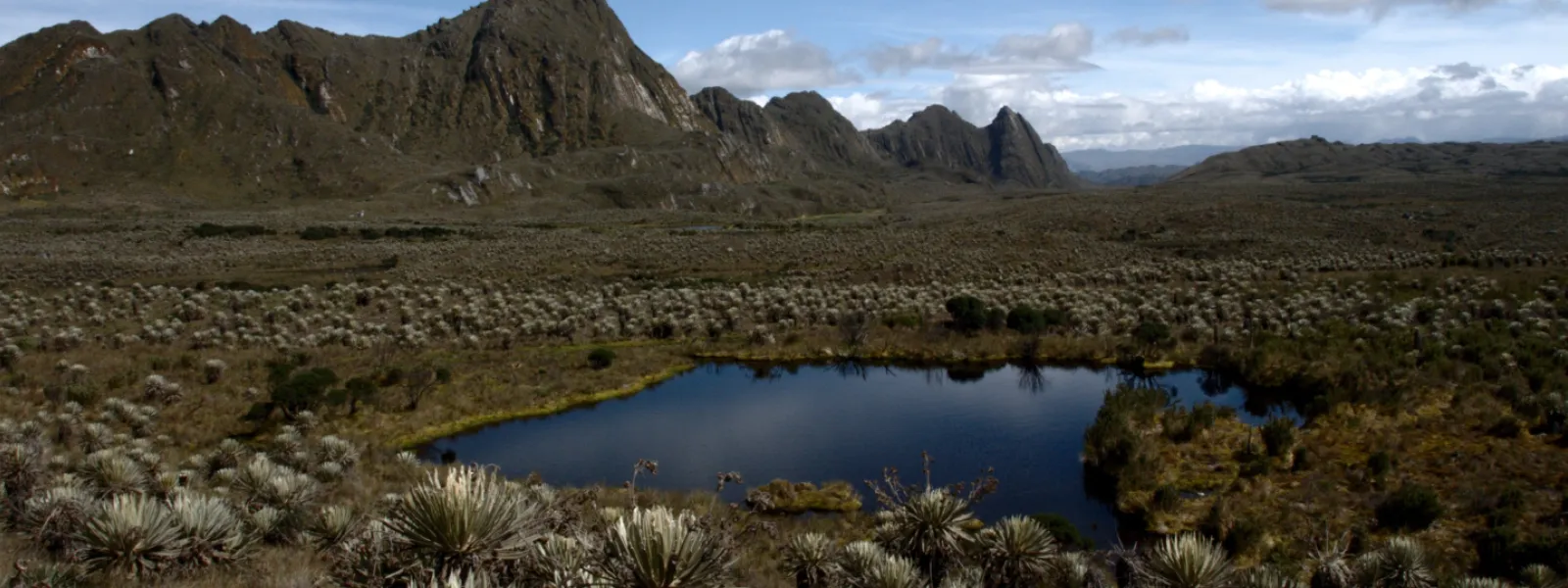
Páramos = water = life
Aztlec Flickr (Creative Commons).
Páramos are high-mountain ecosystems that capture water from fog and supply it to the lowlands. They lie between the upper limit of the Andean forest (about 3,000 meters above sea level) and the glaciers or permanent snowfields of the mountains (about 4,500 meters above sea level).
Typically, páramos can be found in tropical regions near the equator, especially along the Andes mountain range.
In Latin America, páramos cover more than 30,000 km2. South America is home to more than 80% of the world’s páramos, and Colombia accounts for 50% of them.
The páramos are not isolated; rather, they form a high-mountain system that maintains ecological connections with other biomes and ecosystems, extending beyond national borders. In the Andean region, they form a corridor known as the "string of pearls," stretching from the Cordillera de Mérida in Venezuela, across Colombia and Ecuador, to the Huancabamba Depression in northern Peru.
There, the water retained by low-altitude wetlands gradually flows downward, forming streams and rivers that flow down to the coast or the Amazon basin.
Because of their interconnectedness, the páramos also serve as natural bridges or "springboards" for the migration and dispersal of species. Their conservation, therefore, cannot be limited to specific areas; it must extend to protecting the ecological, biological, and cultural relationships they share with other ecosystems.
The importance of protecting the páramos
We must protect the páramos because they are essential to sustaining life. Among other reasons, this is because:
- They feed key watersheds, which in turn support agricultural and livestock systems that contribute to the population's food supply. They are the primary source of water for more than 85 million people. In Colombia, these ecosystems supply 70% of the freshwater consumed in major cities.
- They are home to a unique biodiversity: more than 3,370 plant species and 250 animal species. Among the endemic species found there are the frailejón (a plant with hairy leaves that trap moisture from the fog and regulate water), the Andean condor, the mountain tapir (or Andean tapir), and the spectacled bear.
- They serve as living spaces and homes for rural and indigenous communities. According to the 2018 páramo census, more than 76,000 people in Colombia live in the country’s páramo ecosystems. Furthermore, their stunning natural beauty drives nature tourism, thereby sustaining local ways of life.
- They are extraordinary natural carbon sinks and are indispensable allies in mitigating the climate crisis. They can sequester up to ten times more carbon dioxide per square meter than a tropical forest. In specific areas of a páramo, such as peat bogs, carbon sequestration can reach 2,000 metric tons.
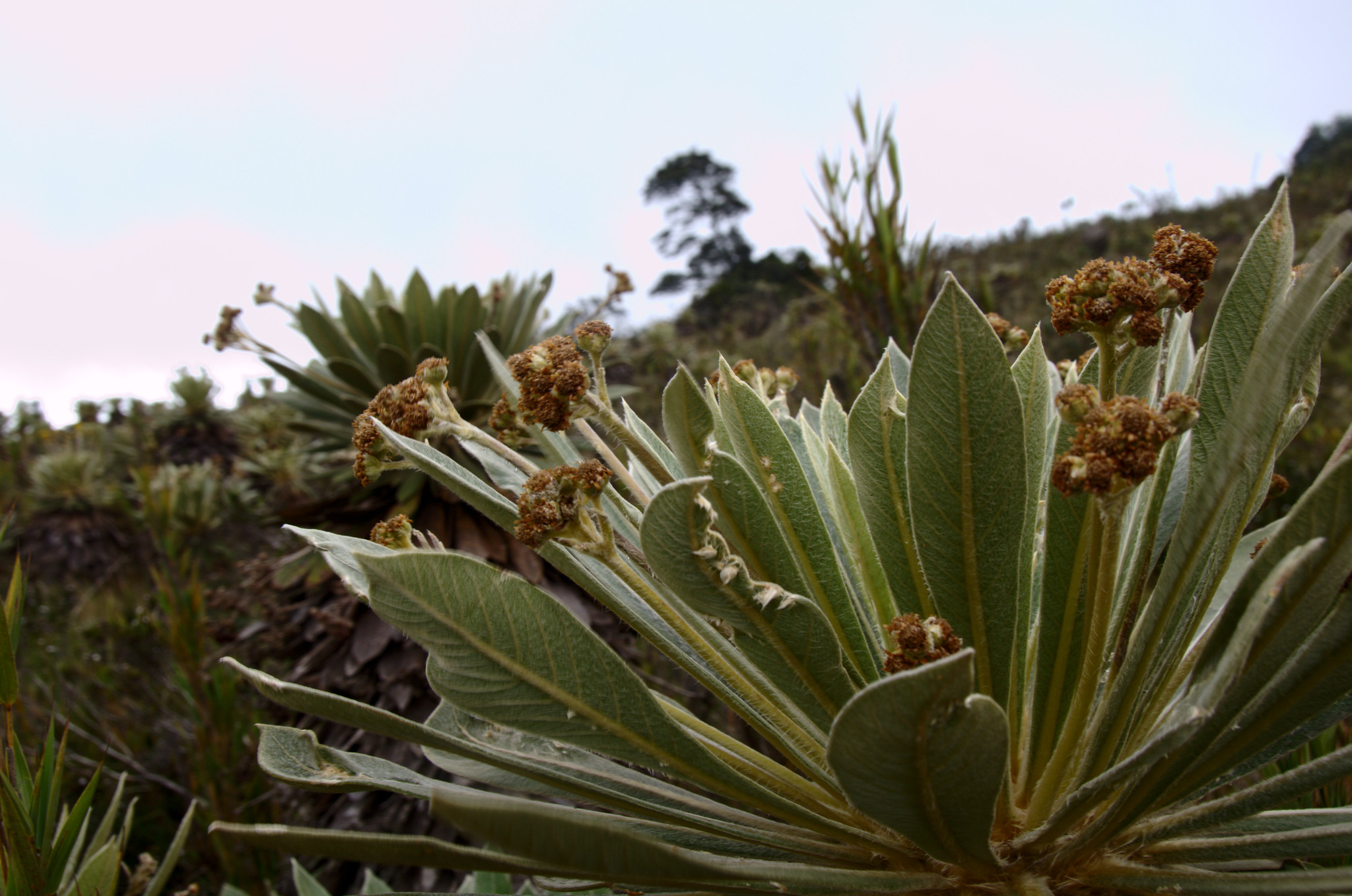
Photo: Aztlec Flickr (Creative Commons).
What threats must we protect the páramos from?
Despite their great importance, the páramos currently face several threats. One is the climate crisis, which is raising ambient temperatures; because these ecosystems are located high in the mountains, they have no cooler thermal zones to migrate to.
On the other hand, extensive livestock ranching and agriculture—particularly potato farming—affect considerable areas of páramos. Deforestation or reforestation with non-native species also endangers them, as does a lack of knowledge about their importance and characteristics.
And mining is undoubtedly one of the greatest threats to these ecosystems. Due to their geological formation, these ecosystems contain large quantities of minerals and metals, such as gold and silver. The mining industry poses serious risks to the páramos because:
- It extracts large volumes of water and builds infrastructure on wetlands, reducing their ability to regulate water flows, and can cause pollution from mercury and other toxic substances, leading to species loss and affecting water quality and availability in low-lying areas.
- Underground mining can alter groundwater flow dynamics through dewatering processes designed to prevent tunnel collapse. This can lower the water table, cause land subsidence, and dry up water sources, among other impacts.
- It removes vegetation cover and organic soil, degrading fragile ecosystems such as the páramos, weakening their role as natural carbon sinks, and releasing stored carbon.
- Its impacts can last in perpetuity—for centuries or millennia—timeframes that cannot be predicted with certainty. Tailings dams and other infrastructure (tailings piles or dumps) where mining waste ends up, for example, have effects that persist indefinitely because they were not designed to be dismantled.
Learn more about the true cost of mining in the páramos.
The iconic case of the Santurbán páramo in Colombia
The Santurbán case reflects the socio-environmental conflicts that arise from corporate efforts to establish mining operations in páramos, as well as from citizens’ efforts to protect these ecosystems and the life they sustain.
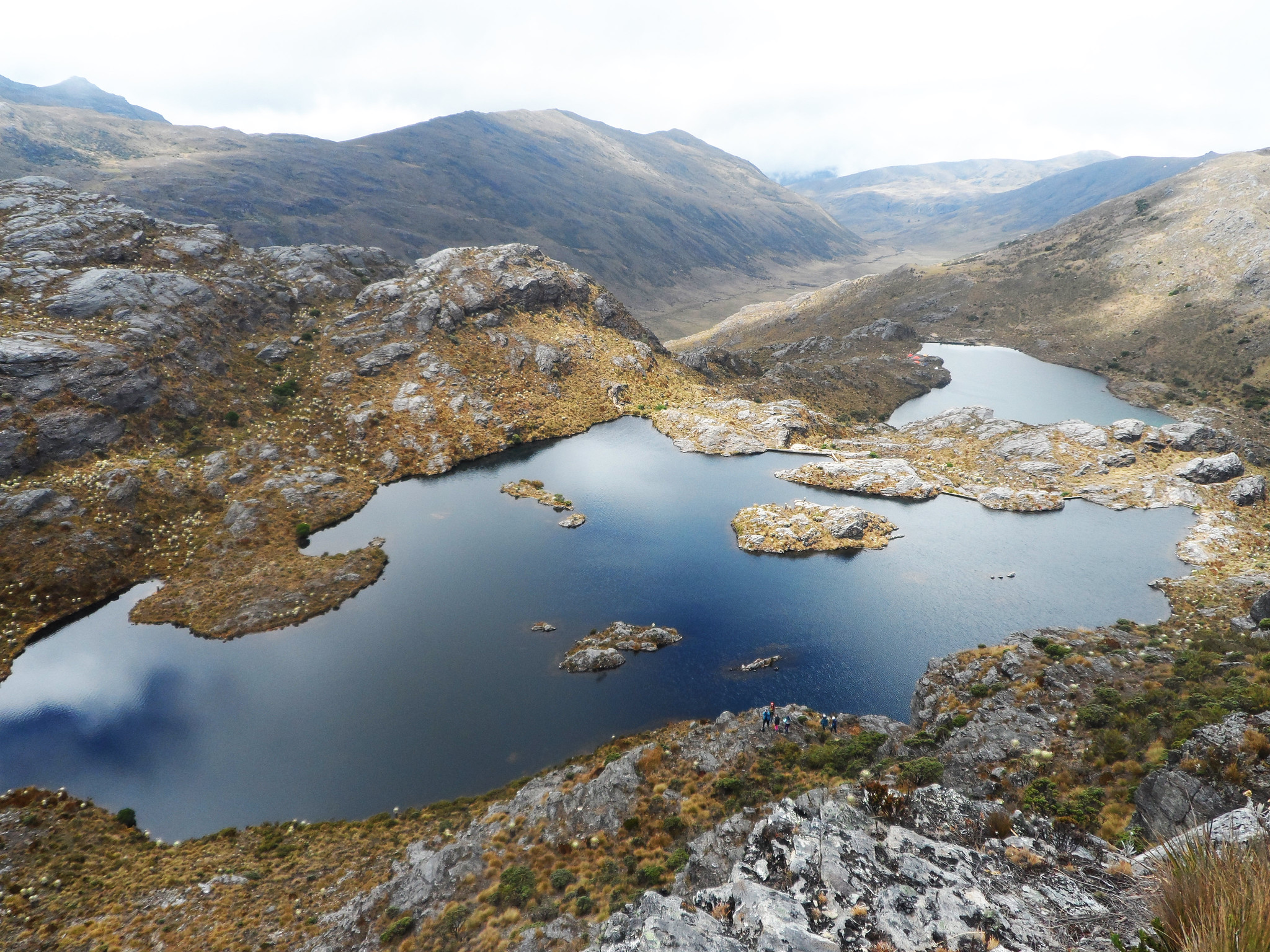
Photo: Alberto Peña Kay.
Located in the heart of the Eastern Cordillera of the Colombian Andes, in the departments of Santander and Norte de Santander, the Santurbán páramo covers 129,743 hectares and is home to 57 lagoons, 457 plant species, and 293 vertebrate species.
Santurbán is home to mineral deposits—primarily gold, but also silver and copper—that have attracted foreign mining conglomerates for decades, which have sought to establish large-scale projects in the ecosystem, threatening to degrade it.
This has raised concerns among the population that relies on the Santurbán water sources—more than two million people—who have mobilized to defend water, their land, and life.
The Committee for the Defense of Water and the Santurbán Páramo has led these efforts. This coalition of environmental advocates, supported by AIDA and other civil society organizations, has thwarted the mining industry’s ongoing attempts. The defense of Santurbán has included litigation and national and international advocacy.
Learn more about the effort to protect the Santurbán páramo.
Protecting Latin America's páramos
As with Santurbán in Colombia, indigenous peoples, rural communities, and citizens in other countries in the region are using legal strategies to protect the Andean páramos.
Also in Colombia, rural communities in Cajamarca, in the department of Tolima, succeeded in rejecting the La Colosa mining project—which would have involved gold mining in the Los Nevados páramo region—through a public referendum. They are currently defending the referendum's validity and the páramo demarcation in court.
In Ecuador, the Kichwa Saraguro indigenous people are pursuing legal action to protect more than 27,000 hectares of the Fierro Urku páramo, which were granted as mining concessions for gold, silver, and copper without prior consultation. At the same time, they are demanding compliance with a protective order that suspended the Loma Larga mining project in the Quimsacocha páramo until prior consultation is guaranteed and environmental impact studies are conducted.
In partnership with communities and allied organizations, AIDA works to protect the páramos and other ecosystems that sustain life in Latin America.
Victor Quintanilla Sangüeza

Victor Quintanilla Sangüeza is AIDA's Content Coordinator, working from Mexico. He is a Bolivian freelance communications specialist and journalist. He earned a Bachelor of Science in Social Communication from the Universidad Mayor de San Andrés in La Paz, Bolivia. Victor also holds a master's degree and a PhD in communication from the Universidad Iberoamericana Ciudad de México. He has worked in print and television media, as well as in corporate communication in the public and private sectors. Victor is also a researcher in the field of journalism and technology studies.