
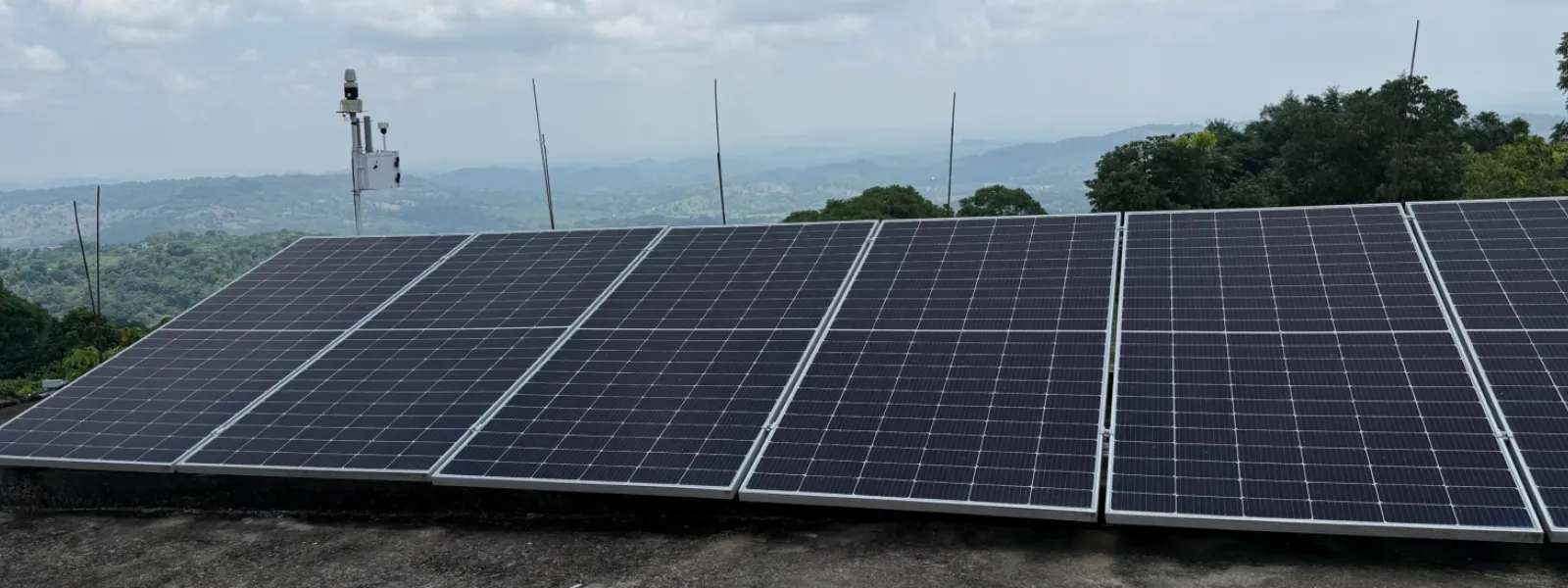
Self-generation: How to democratize access to energy
Mayela Sánchez García.
In the traditional and dominant model, electricity is generated by large power plants and distributed through extensive grids that make up an electric power system. These activities are the exclusive domain of large electric companies, whether privately or government-owned.
Therefore, the current energy system, based on fossil fuels—coal, natural gas, and oil—is not only one of the main causes of the global climate crisis, but it is also inequitable because it is concentrated in the hands of a few, in addition to limiting access to resources and public participation in decision-making.
This requires that the energy transition involves not only a shift in the energy mix but also the creation of a new energy system that—among other things—enables democratized access to energy from clean, renewable sources.
Energy self-generation, as a decentralized production model, is an opportunity to move in that direction.
What does democratic access to energy mean?
Energy is necessary for people to have access to better food, clean water, job opportunities, education, and other rights. Therefore, energy is also a right and a prerequisite for ensuring the enjoyment of other human rights.
Energy democracy is both a principle and a movement that seeks to ensure that energy decisions—how it is generated, who generates it, and who benefits from it—are in the hands of the people rather than concentrated in the hands of large corporations or elites, prioritizing the use of clean and renewable energy sources as well as decentralized systems, with a focus on social justice.
Therefore, democratic access to energy entails:
- Community control of energy resources.
- Citizen participation in energy planning.
- Equitable distribution of benefits.
This contrasts with traditional centralized systems—often monopolistic—that have led to inequities, such as communities paying high electricity rates or suffering the impacts of large-scale electricity generation, yet having no say in the decisions that affect them.
In Latin America, the active involvement of indigenous, rural, and traditional communities in energy projects is seen as a cornerstone for achieving a socially and environmentally just transition, closing energy access gaps, and strengthening energy democracy.
In this regard, energy self-generation embodies energy democracy, as it allows entire communities to make their own energy decisions and reclaim control over key links in the electricity value chain, such as generation and management.
What is energy self-generation?
Self-generation is a decentralized model of electricity production that relies on locally available clean and renewable energy sources (such as solar, hydropower, or wind). This approach is used in projects that are often small-scale and can be used individually or collectively to meet energy needs in urban or rural areas, including those far from distribution grids.
It is a model that enables progress, at the local level, toward reducing greenhouse gas emissions—which exacerbate the climate crisis—without repeating the extractivist model. It recognizes the right of communities to generate their own energy to meet their needs and, at the same time, helps reduce energy poverty and dependence on centralized power grids.
Energy self-generation can take two forms:
- Distributed generation: A small-scale self-generation system connected to nearby distribution grids to feed surplus energy into the grid.
- Off-grid systems: A closed-loop self-generation system disconnected from distribution grids.
In this model, users are no longer passive participants but instead play an active role in generating and managing energy wherever they are. A self-generating individual or community both produces and consumes energy.
Examples of energy self-generation in Latin America
Across the continent, success stories in implementing the self-generation model are strengthening the regional movement for energy democratization. Here are a few examples:
- Mexico - "Energy for the Yeknemilis (Good Living)." A community initiative implemented in the Northeastern Highlands of Puebla to promote local energy sovereignty through the installation of photovoltaic systems in community spaces.
- Colombia - Community solar project on Isla Fuerte. Installation of a solar microgrid with batteries (150 kW peak and 348 kWh of storage), not connected to the National Interconnected System, capable of providing continuous electricity to the 250 households on the Caribbean island.
- Brazil - Percília e Lúcio Renewable Energy Cooperative. A community initiative founded by the NGO Revolusolar and developed by residents of the Morro da Babilônia and Chapéu Mangueira favelas in Rio de Janeiro. Solar panels were installed there, reducing electricity rates by more than 50%.
- Chile - Curicó Electric Power Supply Cooperative. A community-based initiative operating in the Maule Region that installs solar panels to supply electricity to rural grids and community facilities.
Challenges for energy self-generation
Despite the progress made, the widespread and effective implementation of this model faces significant challenges on the continent. The main ones are:
- Inadequate regulation (complex or insufficient). Often, a country’s domestic regulations make it difficult or impossible to implement such schemes. This is due to limitations on the number of megawatts (MW) that can be generated, complex contractual requirements, or a lack of appropriate legal structures.
- Limited financing. Many low-income households cannot afford the upfront cost of solar panels or other technologies. Government support or loans for these projects are scarce. The risk is that self-generation will be concentrated among those with the financial means to implement it, thereby excluding the segments of the population most affected by energy poverty.
- Inefficient electrical infrastructure. Local grids often lack the capacity or technical capabilities to integrate energy generated by decentralized sources, limiting the ability to take advantage of surplus energy feed-in. Furthermore, the need for storage systems to address the variability of renewable energy sources, as well as the lack of grid backup, increases project costs.
Energy self-generation: A solid path toward a just transition
The pursuit of equitable access to energy through tools such as energy self-generation is consistent with the need to ensure that the energy transition puts people at the center and prioritizes improving their living conditions as its ultimate goal.
Electricity generation models designed by and for communities are an important means of ensuring access to affordable, reliable, sustainable, and modern energy for everyone.
Because discussing a just energy transition means reclaiming energy as a tool to meet human needs in the context of inequities and finite resources.
Learn more about a just energy transition in Latin America.
Victor Quintanilla Sangüeza

Victor Quintanilla Sangüeza is AIDA's Content Coordinator, working from Mexico. He is a Bolivian freelance communications specialist and journalist. He earned a Bachelor of Science in Social Communication from the Universidad Mayor de San Andrés in La Paz, Bolivia. Victor also holds a master's degree and a PhD in communication from the Universidad Iberoamericana Ciudad de México. He has worked in print and television media, as well as in corporate communication in the public and private sectors. Victor is also a researcher in the field of journalism and technology studies.