
The importance of the “how” in the energy transition
Shutterstock.
Of the global carbon dioxide (CO2) emissions from fossil fuels, one of the main causes of the climate crisis, nearly half come from coal use.
Latin America is no stranger to the problem because it participates in both coal burning and the extraction of the mineral, which, after export, is used as a fossil fuel source in other parts of the world.
In this context, the closure of coal-fired power plants—as is happening in Chile—is both great news and an opportunity to steer the energy transition toward justice.
But in a just energy transition, the "how" matters: every step toward defossilization must ensure energy systems based on non-conventional renewable sources, respect for the environment and human rights, and responsible closure and exit processes.
Thus, the Chilean case, which we explain below, is an important example of why the region needs to implement responsible decarbonization.
When decarbonization causes more pollution
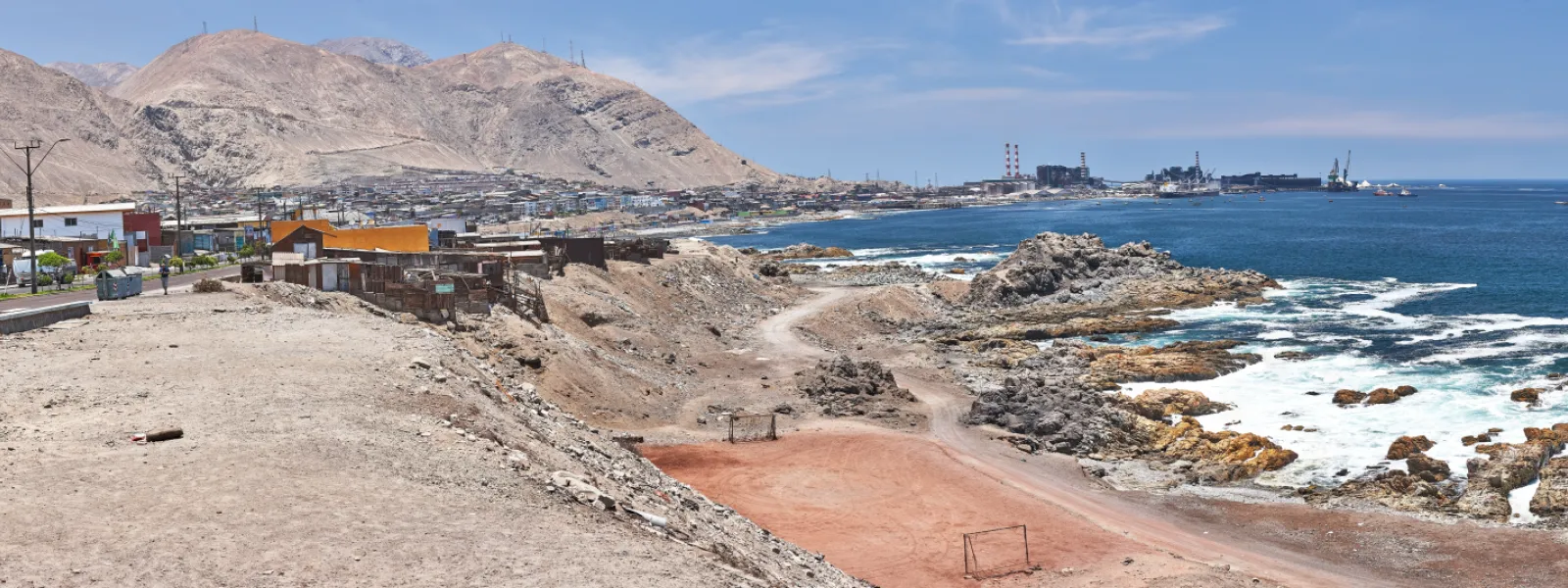
In early 2024, AES Andes SA closed the Norgener thermoelectric power plant in Tocopilla, a coastal city in northern Chile.
As part of the closure process, the company rapidly burned the 94,000 tons of coal it had stored at the plant, affecting a city already saturated with pollution and publicly recognized as an environmental sacrifice zone.
The population of Tocopilla was exposed to potential health effects, including impacts on the respiratory system, increased risk of heart attacks, and—in children—perinatal disorders, developmental disorders, and impaired lung function, among others.
The forced burning of coal was authorized by the National Electricity Coordinator (CNE)—the agency responsible for managing the various energy sources that enter the national electricity system—and displaced the use of renewable energy.
To stop the burning, AIDA, Greenpeace, and Chile Sustentable, together with local communities, filed an appeal with the Santiago Court of Appeals to halt it, but the court's decision came after the coal had already been burned. Furthermore, the court ruled that the case should be reviewed by a specialized court in a more lengthy proceeding.
A bad precedent for Chile and for the continent
By authorizing the burning of the remaining coal from the Norgener thermoelectric plant, the National Electricity Coordinator made an exception to the law governing the order of energy dispatch. Shortly thereafter, in September 2024, the agency issued an internal procedure to order the early closure of power plants.
Although it is an attempt to streamline the closure process, the measure opens the door for other companies with coal-fired power plants in the process of closing to replicate what happened at Norgener: burn their remaining coal under the argument of “emptying stock” and generate energy that enters the national electricity system with priority, once again displacing energy from renewable sources.
In Chile, the National Electricity Coordinator decides which unit dispatches its energy to the system at any given time based on a criterion of increasing economic merit, according to which the energy with the lowest variable cost enters first. However, the internal procedure stipulates—without sufficient regulatory backing—that the agency may authorize dispatching energy outside economic order so that coal-fired power plants consume their remaining fuel before closing.
In response, AIDA, Greenpeace, Chile Sustentable, and MUZOSARE (Women in Sacrifice Zones in Resistance) filed a complaint on February 6, 2026, with the Superintendency of Electricity and Fuels against the Coordinator and his advisors for approving and implementing the measure.
The complaint represents an opportunity to do things right: for the sector's regulatory body to ensure that the planning for the closure of thermoelectric power plants does not end up rewarding poor coal inventory management at the expense of communities' health and a just energy transition.
What the energy transition needs
In 2019, the Chilean government committed to closing all coal-fired power plants in the country by 2040. Since that public announcement, the timeline has been accelerated. But the urgency of decarbonization should not be used to favor companies operating thermoelectric plants or to harm communities near polluting industries.
Doing so weakens Chile's climate leadership and sets a bad example for any decarbonization process in the region.
In a just energy transition, companies along the entire coal and other fossil fuel supply chain have an obligation to ensure the responsible closure and exit of their operations.
The energy transition is not merely a change in technologies; it is an opportunity to rethink energy and development models and to correct injustices. This requires clear and appropriate rules that promote energy system security, competition, and a healthy environment.
Victor Quintanilla Sangüeza

Victor Quintanilla Sangüeza is AIDA's Content Coordinator, working from Mexico. He is a Bolivian freelance communications specialist and journalist. He earned a Bachelor of Science in Social Communication from the Universidad Mayor de San Andrés in La Paz, Bolivia. Victor also holds a master's degree and a PhD in communication from the Universidad Iberoamericana Ciudad de México. He has worked in print and television media, as well as in corporate communication in the public and private sectors. Victor is also a researcher in the field of journalism and technology studies.