
Guatemala
Guatemala
Voices for the Motagua River: Nazario Pascual, an artery of the Poqomam people
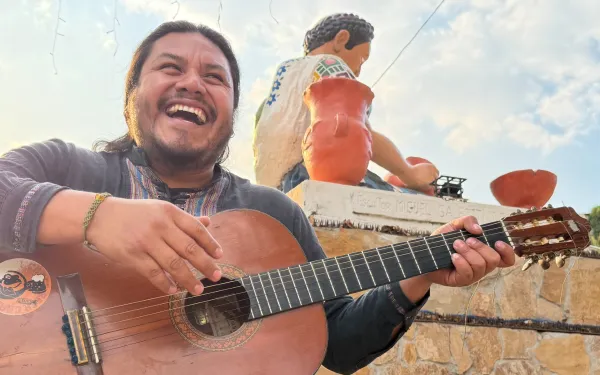
Stories of courage, dignity, and resistance for life in the face of pollution in Guatemala’s longest river.Nazario Pascual needs no embellishments to define himself: "I am a Poqomam warrior who uses music and sung poetry to plant a little seed in people’s minds. I am an artery of the Poqomam people."A musician, cultural promoter, and independent producer, Nazario lives in Santa Cruz Chinautla, a community affected by pollution in the Motagua River. From there, he sings in Poqomam so that his language will not disappear, and so that the children who listen to him will grow up knowing that the river, too, has a memory.His journey began in the church pews, watching his father play. But it was an intimate moment that ignited the spark: one night, he heard his dad praying in Poqomam. "I thought, ‘Wow, God hears us in Poqomam. It’s your heritage.’ That’s where I started." The landscape that took away his childhood When Nazario talks about his childhood, he describes fruit trees, springs, and a communal washhouse where mothers washed clothes while the children played. Today, all of that is gone.The uncontrolled expansion of the capital and the diversion of stormwater to the Zone 3 landfill have turned the river into an open wound. Added to this are the sand pits that extract material without any oversight: "They’ve eaten away at a large part of the Poqomam territory. Here we call it ‘black gold.'"His family has lost their land dozens of times. When it rains in the city, the smells reach Chinautla even if not a single drop falls there. Houses are sinking, the ground is cracking, and residents are being displaced."The river is a monster coming from the city," he says. Photo: Mayela Sánchez García. A legacy of struggle, but also of weariness Nazario inherited his father’s conviction to protest. He took part in demonstrations, organized meetings, and, together with others, built a retaining wall under the red bridge with community support. But he also bears the weight of so many years: "At first there were 17 of us at the protests, then 12, then 7, and now barely 4."An aunt told him straight out: "Don’t try to be a folk hero." The remark made him reflect on the limits of commitment… and on the need for new forms of resistance. Seeds that sing Nazario found that new path in music. He formed a band with his cousins and later began working with children. Together, they write lyrics about the river, compose melodies, and sing in Poqomam. That’s how "Mamut" was born—one of the songs sung in the community today."Getting children and young people involved is the small contribution I’m trying to make,” he explains. “They’re the ones who will remain here." Photo: Mayela Sánchez García. A message that endures Nazario knows the problem is bigger than he is. The Motagua River carries trash that ends up in the Caribbean, affecting entire communities. But he also believes that local struggles have power."It’s understandable to go to work—because we have to—but we shouldn’t be indifferent to what’s happening in the town."He fears that the real plan of the polluting and extractive industries is to wipe the Poqomam people off the map. But he dreams of a different story:"I imagine Chinautla with the river stabilized, children growing up in a dignified environment, knowing their rights and fighting for them." The pulse of a community His voice is a blend of pain and hope. He speaks of losses—of his father, of the land, of the river—but also of music, of living languages, and of children singing along to his songs."I am an artery of the Poqomam people," he repeats.And like any artery, he beats to keep his community alive.
Read more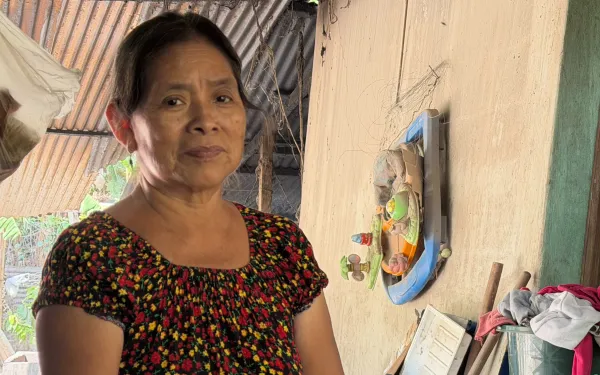
Voices for the Motagua River: Olga Vázquez, hands that shape hope
Stories of courage, dignity, and resistance for life in the face of pollution in Guatemala’s longest river.For generations, clay was the heart of Santa Cruz Chinautla. It emerged from the earth as a daily gift, was shaped by patient hands, and transformed into pots, jugs, whistles, and comales that were taken to the markets in the capital.There, between the river and the wood-fired kilns, doña Olga Noemí Vázquez grew up. From childhood, she learned the art of pottery from her mother. Today, at nearly sixty years old, she continues to work with clay, but the craft is no longer the same. Clay is scarce, the river smells like sewage, and her hands crack from the chemicals carried by the polluted water.Doña Olga fondly recalls how she first got into pottery. "I learned it when I was ten years old. My mom taught me. I wanted to make different shapes and styles, because sometimes tourists would bring different figurines, and here we’d try to imitate them," she says from the small workshop she’s set up in her home. Every piece she creates is an act of remembrance, a way to resist oblivion and the loss of the landscape and her livelihood.He also recalls that in the past, the town's inhabitants didn't go to the capital to work. "We made our living right here. We grew vegetables, güisquiles, and corn. Everything was produced right here. And we made a living from clay. Today, it’s not like that anymore." Photo: Mayela Sánchez García. From drainage to destruction The change was slow, like a tide that rises without you noticing. First came the drainage systems. Then, the trucks. The city’s trash found its final destination in Chinautla. "There was nowhere else to dump it, so they dumped it on us," she says. That’s how the tragedy began: the rivers turned into channels of waste, the banks became covered in gray crusts, and the odors became unbearable, especially during the rainy season. "The river carries all the trash from Zone 3. It smells awful. There’s no clean clay anymore; we can’t dig it up as we used to."The 1976 earthquake left a mark on the town’s memory, but it was systematic neglect that ultimately disfigured the landscape. The municipal government, she says, moved from Santa Cruz to Zone 6, and since then the town has been left without any real representation. "There’s no mayor here. They come here to put up their campaign posters, they hold office, but they’re never here. They’ve never taken us into account," she laments. Women who resist In the face of institutional silence, associations, collectives, and struggles emerged. Among them was the Chinautla Women’s Association. "We organized because if we didn’t, we would have been left with nothing. The clay was running out, the sand miners were advancing, and the river was washing everything away. The women here don’t go to the capital to work. They make pottery at home and take care of their children. If we ran out of clay, we’d have no life left."In 2010, disaster struck with full force. Two rivers, Las Vacas and Chinautla, overflowed due to the accumulation of sand that had been extracted without any controls. The water swept away a bridge. The community banded together and built another one with their own hands. The municipality did not cooperate. "That bridge is in ruins, but we, the neighbors, built it. Otherwise, we’d still be cut off."Sand mining has become their most persistent enemy. "The sand miners are wearing us down. They take out tons and tons of sand every day. Our clay is gone with them. We’re left with almost nothing. And what little remains is contaminated," he says. The damage isn’t limited to the landscape—people’s health is suffering as well. Photo: Mayela Sánchez García. The value of words and justice The expansion of businesses, the passivity of the authorities, and social erosion have caused divisions within the town. "Politics has planted ideas in people’s minds. There are thousands of residents, but only 500 support us. The rest don’t cooperate. They don’t understand that this isn’t about a political party—it’s about our town," she explains.In recent years, the women’s association has joined forces with the town’s ancestral authorities. Together, they have succeeded in opening channels of dialogue with government ministries, halting the renewal of extractive licenses, and bringing the conflict to the government's attention. The 2025 ruling, handed down after years of legal battles, was a ray of hope amid the neglect. A court ordered the municipality to assume its environmental responsibility. For the first time, someone listened. "Thanks to that ruling, a businessman was stopped. His license hasn’t been renewed. It wasn’t like that before: you’d go to talk to them, and the ministers only thought about making a profit. Now, at least, they listen to us."The future is uncertain. Drinking water is delivered only once every eight days. Mining permits can be renewed at any time. The river continues to carry trash. But there’s one thing doña Olga is not willing to lose: her dignity. "I advise women to get involved, to stay informed. We can’t just stay at home without knowing what politicians, businesspeople, and ministers are doing. If you get involved, you’ll find out. And once you know, you’ll fight."When asked what Chinautla was like 50 years ago, her eyes fill with lost images: girls playing in the street, clean water flowing over stones, women shaping clay at sunset. "It was peaceful," she says. “It was ours.” Today, amid pollution and plundering, Chinautla endures thanks to women like her, who continue to shape its history with clay, memory, and courage.
Read more
Protecting the Environment Through Collaboration: A Community Science Experience
When environmental damage occurs, the first warning often comes from the people or communities directly affected. Residents living near a river are usually the first to notice waste being dumped or fish dying when the water is polluted. Similarly, who live near an open pit mine are the who see when illness becomes more common or when water begins to run scarce.One powerful way to turn lived experience into scientific evidence is through community science. This approach allows people to share, validate, and integrate local knowledge into scientific research and efforts to defend their territories.At AIDA, we believe in the power of science to advance environmental justice. That’s why we generate and apply scientific knowledge in the legal cases we support. Recently, we had the opportunity to take part in a community science initiative that helped us reflect on—and learn from—the value of this collaborative methodology and the shared knowledge it produces. Local Knowledge: A Powerful Response to Environmental Degradation In April 2024, at the request of the Poqomam Maya community of Santa Cruz Chinautla—a village near Guatemala’s capital—AIDA senior scientist Javier Oviedo and attorney Bryslie Cifuentes carried out a field visit to gather information and assess the solid waste pollution that has affected the community for years.One of their main objectives was to identify illegal dump sites on the banks of the Chinautla River. The disposal of waste and debris in this area has contaminated both the soil and waters of this tributary of the Motagua River, the longest river in Guatemala.While preparing for the trip, Javier realized the team would face several challenges. The time available would not be enough to collect all the necessary data, and the team’s limited familiarity with the area could make locating the dumpsites difficult and potentially unsafe.Then Javier had an idea: to involve members of the community in supporting the team with this task.His plan made perfect sense—after all, who better to locate the illegal dumpsites than the people who know the territory best? Beyond that, by witnessing the impacts of pollution firsthand, community members could also appreciate the importance of documenting these issues.I spoke with Javier about how this idea came about, and he shared the following: Beyond seeking support from community members, this approach was rooted in a recognition of the irreplaceable value of their knowledge as residents of their territory. How the Work Was Carried Out Javier’s idea was that, with the help of an accessible and easy-to-use mobile app, community members could send information about illegal landfills directly to the AIDA Science team, who would then validate and analyze the data.To make this possible, the team designed a form specifying the data they needed to collect: the location of the landfill, its dimensions, the type of waste identified, associated social issues, and other relevant details.In Chinautla, two community residents, along with authorities from the Poqomam Maya village, visited several landfills they had previously identified with Javier and Bryslie. During these visits, Javier showed them how to use the app and fill out the form. Later, one of the residents continued the process independently.Thanks to this collaborative effort, data was collected on 10 of the most critical illegal dumpsites. While this does not capture all of them—unfortunately, many more exist—this sample allowed the team to estimate the extent of waste and debris pollution in the community and to illustrate how poor management has exacerbated the problem.The information gathered was crucial in highlighting the severity of the pollution, demonstrating the continued use of illegal dumping, and exposing the municipal authorities’ failure to meet their legal obligations regarding waste management.This evidence formed the basis for the lawsuit the community filed against the municipality of Chinautla in October 2024, citing the lack of measures to address river and soil contamination caused by inadequate waste management and illegal landfills. In June 2025, an appeals court ordered the municipality to take action to address the serious environmental crisis affecting the community. Lessons Learned from the Experience According to Javier, involving the people of Chinautla in a knowledge-building process led to mutual learning.For community members, it meant acquiring new technological skills. For the AIDA team, it prompted new questions about how to move knowledge-sharing with a community beyond simple collaboration.Javier summarized his learnings in three points: At AIDA, science is a core part of our work and a key element of the strategic litigation we pursue to protect and defend a healthy environment across Latin America. Involving the communities we support in this process broadens our perspective, allowing us to integrate their knowledge and experiences into the science we seek to build.
Read more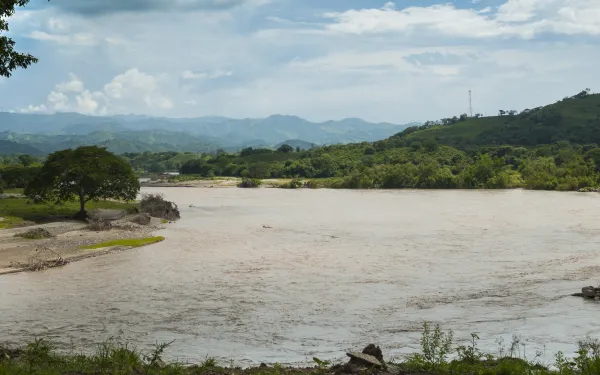
Motagua River: A story of contamination and a call for justice
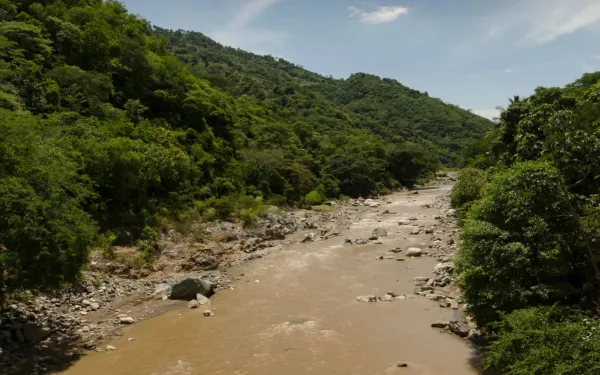
The Motagua River, Guatemala's largest river, is severely polluted with sewage, solid waste, and other types of waste.It flows into the Caribbean Sea, so contamination reaches those waters, as well as the Mesoamerican Barrier Reef System - the world's largest transboundary reef - and the Honduran coast, causing unquantifiable social and environmental damage.Polluting activities occur throughout the river basin, including sub-basins and micro-basins.In general terms, the contamination has deteriorated the health and violated the right to water, development and a healthy environment of all the people living in the basin.The contamination of the Motagua is a problem that has been going on for decades and requires urgent long-term measures that contribute to the sanitation and integrated management of the river basin.Where is the Motagua River?The Motagua River is one of the main rivers in Guatemala. With a length of 486 km, it crosses 96 municipalities and 14 departments of the country. It originates in Quiché, a department located in the northwest, and flows into the Caribbean Sea.It is at its mouth that its flow meets the Mesoamerican Reef, which extends for approximately 1,000 km and covers the territorial waters of Belize, Guatemala, Honduras and Mexico. Thus, the pollution carried by the river deteriorates the health of the reef system, which is home to the second longest barrier reef in the world.The Mesoamerican Reef protects thousands of kilometers of coastline from currents, waves and storms. In addition to being a breeding and feeding ground for a great diversity of species, it is a carbon dioxide sink and a detoxifier of water and air. The ecological and economic health of the entire South Atlantic area depends on its conservation.In addition, pollution from the Motagua River reaches the coast of Honduras and spreads to Amatique Bay, located along the eastern coast of Guatemala and Belize. This is clearly a transboundary problem.Where does the pollution in of the Motagua River come from?The largest volume of contamination of the Motagua River comes from Guatemala City, the capital of the country, mainly through the waters of the Las Vacas River, which receives a large amount of solid waste from the Chinautla River, as well as sewage that is discharged into its waters on a daily basis.Solid waste from the Chinautla River, which flows through the municipality of the same name, comes from a landfill located in Zone 3 of the capital. Any small landslide in this landfill generates waste that is automatically dumped into the river at any time of the year.The pollution that the Chinautla river carries also consists of a large amount of sewage, generated by at least 500,000 people living in the northern part of Guatemala City, which does not receive any previous cleaning treatment.In the municipality of Chinautla there are numerous illegal landfills. In addition, many private vehicles and collection trucks dump waste on the banks of the Chinautla and Las Vacas rivers.According to data from the Integrated Environmental Management of the Motagua River Basin project, financed by the United Nations Development Program (UNDP), it is estimated that 66% of urban solid waste in Guatemala is not collected and there is no guarantee that the remaining 34% is properly disposed of. In addition, of the total number of landfills in the country, 88.32% are illegal or do not have municipal authorization.Most of the waste is dumped in streams and/or on surfaces that are susceptible to dragging, ending up in one way or another in water sources, such as the Motagua basin.In other words, the main source of contamination of the Motagua River is the poor management of solid waste and water resources in the country; the lack of compliance with existing regulations on wastewater discharge, disposal and treatment of waste and solid waste; as well as the lack of a water law.Who is affected by the contamination of the Motagua River?The contamination of the Motagua River affects the entire population of Guatemala. In the lower basin, it directly affects people dedicated to fishing, who have seen their catches reduced.And, by harming tourism in the Caribbean, it also affects the communities that depend on tourism for their livelihoods.As a basin-wide problem, the contamination of the Motagua affects those living in the main sub-basins and micro-basins of the river, including the indigenous communities of the Mayan Poqomam people in the cities of Chuarrancho and Chinautla.In Chinautla, the contamination affects the living conditions, health, environment, water sources, economy and culture of more than 18,000 people.The restoration of the Motagua River is crucial to improve the quality of life of at least 30% of the Guatemalan population, as well as those affected in neighboring countries.Actions to rescue the Motagua River from contaminationIn the face of the serious degradation of Guatemala's largest river basin, the damage to key ecosystems such as the Mesoamerican Reef, and the human rights violations that pollution generates, urgent measures are required, among them:Verify compliance with environmental and municipal regulations, as well as prevent and halt environmental damage at the source through regulation, monitoring, supervision and oversight of activities that affect the rights of the inhabitants of the Motagua River basin.Strengthen regulations related to wastewater disposal and solid waste management so that they are implemented in a timely manner through complete treatment systems in the municipalities of the basin.Initiate actions to enable the socio-environmental restoration of affected ecosystems throughout the basin, including political, legislative and administrative measures to strengthen the legal system and allocate sufficient financial resources to ensure the protection of waters and territories.
Read more
Organisations demand justice in criminalization case against Rigoberto Juárez, ancestral authority and environmental and human rights defender of Guatemala
Organisations dedicated to the protection of human rights defenders, and national and international organisations working on the promotion and protection of human rights and indigenous peoples rights, express our concern over the criminalization process against Rigoberto Juárez, ancestral authority, environmental and human rights defender, and general coordinator of the Plurinational Ancestral Government of the Original Nations Mayas Akateka, Chuj, Q’anjob’al y Popti’.The judicial process against Rigoberto began in 2015 due to his role as a mediator and ancestral authority in a land conflict within the Q'anjob'al territory, specifically in the Ixquisis micro-region. This conflict arose from the indigenous Maya community's resistance to the poorly implemented and unconsulted hydroelectric projects by Energía y Renovación S.A., financed by BID Invest.The judicial process lacked an intercultural and differentiated approach. Additionally, the decisions made in the second instance and by the cassation court have ignored the factual and legal arguments presented by the defense regarding Rigoberto Juárez's role as an ancestral authority, which involved, at the community's request, assuming a mediator role in the high-conflict situation.From the perspective of the signing organizations, this judicial process has been used as a reprisal mechanism against the human rights defender’s legitimate human rights work. In particular, due to his crucial role in bringing visibility to, and reporting on, the Ixquisis case through a complaint submitted to the Independent Consultation and Investigation Mechanism (MICI) of the Inter-American Development Bank. Evidence of this can be found in the temporal overlaps of this process with crucial moments of the complaint filed with the MICI.In view of this concerning situation, we request judicial authorities to consider the arguments submitted by the legal defense of Rigoberto Juárez in the amparo action filed on 22 August and to make a decision that takes into account the specific guarantees of Rigoberto Juárez as an ancestral authority and as an environmental and human rights defender. Likewise, we call on international human rights institutions to urge the State of Guatemala to resolve the case of Rigoberto in accordance with their international obligations, and to prevent and address the serious trend of criminalization of indigenous authorities exercising their rights and responsibilities. Signed by:International Platform against ImpunityProtection International MesoaméricaInteramerican Association for Environmental Defense (AIDA)Franciscans InternationalRed Nacional por la Defensa de la Soberanía Alimentaria en Guatemala (REDSAG)Bank Information CenterInternational Service for Human RightsFront Line DefendersNISGUA (Network in Solidarity with the People of Guatemala)ASERJUSP. Marco Tulio Recinos Torres. CPPS.Center for International Environmental Law (CIEL)María Eugenia Solís GarcíaAlba Cecilia del Rosario Mérida PiedrasantaPress contact:Víctor Quintanilla (Mexico), AIDA, [email protected], +521 5570522107
Read more
Indigenous victory as development bank withdraws investment and drafts exit plan following rights violation in Guatemala
In a historic advance, the Inter-American Development Bank has designed a responsible exit plan to accompany their divestment from two controversial large dams in the Yichk'isis micro-region of Guatemala. Affected Mayan communities celebrate the decision, a response to their 2018 complaint, while acknowledging that the Bank has several challenges left to confront. Washington, DC, U.S.A. The Inter-American Development Bank (IDB) announced its decision to withdraw financing from the San Mateo and San Andrés hydroelectric projects, run by the company Energía y Renovación S.A. in the micro-region of Yichk'isis (Ixquisis) in northern Guatemala. The Bank designed a responsible exit and institutional strengthening plan to address the weaknesses the case revealed. The Bank’s decision stems from a complaint affected Mayan communities filed in 2018 before the IDB Group's Independent Consultation and Investigation Mechanism (MICI, for it’s Spanish initials). In resolving the complaint, the accountability office concluded that IDB Invest failed to comply with the bank’s operational policies and safeguards in the framework of project financing, and opened the possibility of a withdrawal of investment. "It’s an opportunity for the bank to take into account the lessons learned from the case: among them the relevance of understanding the local contexts of projects, the socio-cultural dynamics of the populations that will be directly affected, and the local perspective of development to determine the viability of the financing," says Liliana Avila, senior attorney of the Human Rights and Environment Program of the Interamerican Association for Environmental Defense (AIDA). "It is also an opportunity for the bank to strengthen the monitoring and supervision of the projects it supports in order to prevent non-compliance.” The divestment was finalized in October 2021, when IDB Invest and Energía y Renovación S.A. signed settlement agreements. Notably, this is the first time that the IDB Group, as a result of a complaint, has drawn up a plan to make its exit responsible. However, there are still challenges and pending issues that the financial institution must address in the process of exiting hydroelectric projects. "In order to prepare the responsible exit plan, IDB Invest must carry out consultation processes with the affected communities, which will largely define the plan's capacity to effectively address and offer viable solutions to the damages recognized in the MICI report, such as the increase in conflict, the lack of knowledge of the existence of indigenous peoples and their rights, the effects on ancestral cultural heritage, the differentiated impacts on women and the lack of prevention and consequent environmental degradation," said Carolina Juaneda, of the Bank Information Center. "If these issues are not addressed and included in the responsible exit plan, all this effort will not have been worthwhile since, ultimately, it will not lead to any improvement or reconstitution of living conditions for the affected people and the environment." The action plan proposed by the entity establishes that IDB Invest will create a transition plan translated into the native languages of the affected communities, as well as a gender-differentiated impact assessment, and an investment to promote financial inclusion and women's empowerment in the area. In addition, the plan contains actions to address MICI's recommendations for structural changes at the institutional level. In this regard, the bank plans to strengthen the environmental and social safeguards unit of IDB Invest in the area of indigenous peoples, as well as to establish a zero tolerance policy for gender-based violence, which will be included in the contractual conditions of operations approved by the bank. Existing protocols will include tools to follow up on acts of violence associated with projects financed by IDB Invest. Regarding the categorization of projects, an update will be made so that the internal supervision classification will be modified to a higher one when circumstances are identified that raise the risks and impacts of a project after its financing was approved. "The bank's responsibility in the investment process and in the non-compliance with its social and environmental safeguards is evident; therefore, it must promote during the exit process the effectiveness of the actions in a participatory manner, free of manipulation and in an inclusive manner with the community to reduce the risks of re-victimization and violation of the affected population," indicates Mara Bocaletti, Director of the International Platform against Impunity. "This experience is a first step to maximize the benefits in the territories so as to make amends for the damage caused." The communities submitted their complaint to MICI in August 2018 with the accompaniment of AIDA, the International Platform against Impunity and the Plurinational Ancestral Government of the Akateko, Chuj, Q'anjob'al and Popti' Native Nations. In it, they requested that IDB Invest withdraw its investment due to the damage that the implementation of the projects has caused to the environment, indigenous peoples and women of Ixquisis. In September 2021, the IDB Group Board of Directors approved the MICI report, which concluded that IDB Invest failed to comply with its own operational policies and safeguards for at least five reasons: 1) validating an inadequate characterization of the affected population, which denied the existence of indigenous peoples; 2) failing to verify the completion of an identification of gender-differentiated impacts on women; 3) failing to ensure that the client made an adequate identification and management of environmental impacts; 4) failing to ensure that the communities were properly informed and consulted; and 5) failing to carry out adequate monitoring of local conflict risks that could be generated in the area because of the projects. "The MICI report confirms that IDB Invest failed to comply with its policies, generating adverse impacts on the lives of the communities. The company Energía y Renovación did not act with due diligence in the framework of its operations and, on the contrary, has implemented strategies contrary to the respect of human rights. Currently, several indigenous authorities and human rights defenders are criminalized, making undeniable the continued risk for the communities," says Rigoberto Juárez, General Coordinator of the Plurinational Ancestral Government. "Given this evidence, it’s important that IDB Invest guarantee actions aimed at repairing the damages caused to the communities in the framework of the financing of these projects, and more strongly recognize its responsibility." press contacts: Victor Quintanilla (México), AIDA, [email protected], +521 5570522107 Camila Castellanos, Plataforma Internacional contra la Impunidad, [email protected]
Read more
The day that the indigenous struggle bore fruit in Guatemala
September 22, 2021 will be an iconic date for the men and women of the micro-region of Yich K'isis (Ixquisis), Guatemala, whose lives were abruptly changed by the construction of the San Mateo and San Andres hydroelectric dams, financed by IDB Invest. On that day, the IDB Group's Independent Consultation and Investigation Mechanism (MICI) upheld most of their claims, contained in the complaint they filed three years ago. Their final report acknowledges that the bank failed to verify the information about the affected population provided by the company responsible for the projects, which ignored the presence of indigenous peoples in the area. It also points out the failure to consider the differentiated impacts that women would experience in any of the project implementation phases, overlooking the role that the local rivers play in their daily lives and in their ways of inhabiting the territory. On the environmental issue, essential to indigenous peoples' ways of life, MICI also establishes non-compliance, recognizing that "IDB Invest did not ensure that the projects properly identified and delimited critical habitats and internationally recognized zones, nor that risks and impacts were established." In terms of access to information for the communities, the bank "failed to comply with its own operational policies, as no meaningful consultation with the communities took place in the development of the projects," the document reads. The indigenous men and women of Ixquisis see the report as recognition of what they’ve been denouncing for years. Along with its conclusions, MICI also makes a series of recommendations aimed at correcting the mistakes made by the bank in the San Mateo and San Andres projects, as well as avoiding repeating them in other cases. In its last recommendation, the accountability mechanism establishes, for the first time in the IDB's history, the possibility for the bank to responsibly withdraw from projects it finances. For the communities of Ixquisis, this recommendation represents the best hope for the restoration of their lives, abruptly transformed by the arrival of the projects. Indeed, ever since the complaint process began, the communities have been demanding the cessation of project funding. They consider it unsustainable that projects that fail to recognize their existence, and cause so much damage to their territory, some of it irreparable, should be financed by an international institution whose main mandate is to promote development. In the scenarios in which they were able to express their feelings to bank and MICI officials, their request was heard: the bank cannot continue financing projects that have impacted their lives in such severe and unjust ways, and its exit must be responsible. This means that the bank’s withdrawal must be based on a plan built with the effective participation of the communities and must contemplate all the damages caused in relation to social dynamics, the increased conflict in the region, the failure to acknowledge the existence of indigenous peoples and their rights, the affects on the ancestral cultural heritage, the differentiated impacts on women, and the lack of prevention and consequent environmental degradation. The bank must now propose an action plan to comply with MICI’s report, a mission that is undoubtedly transcendental. The bank now has the historic opportunity to correct its mistakes and legitimize its actions, honor its institutional mandate to promote development, respect and recognize indigenous peoples, and contribute to making the Ixquisis micro-region a place where indigenous men and women can once again develop their life in harmony with nature, and alongside their community.
Read more