
Project
Alberto Peña Kay
Protecting the Santurban páramo from mining's damage
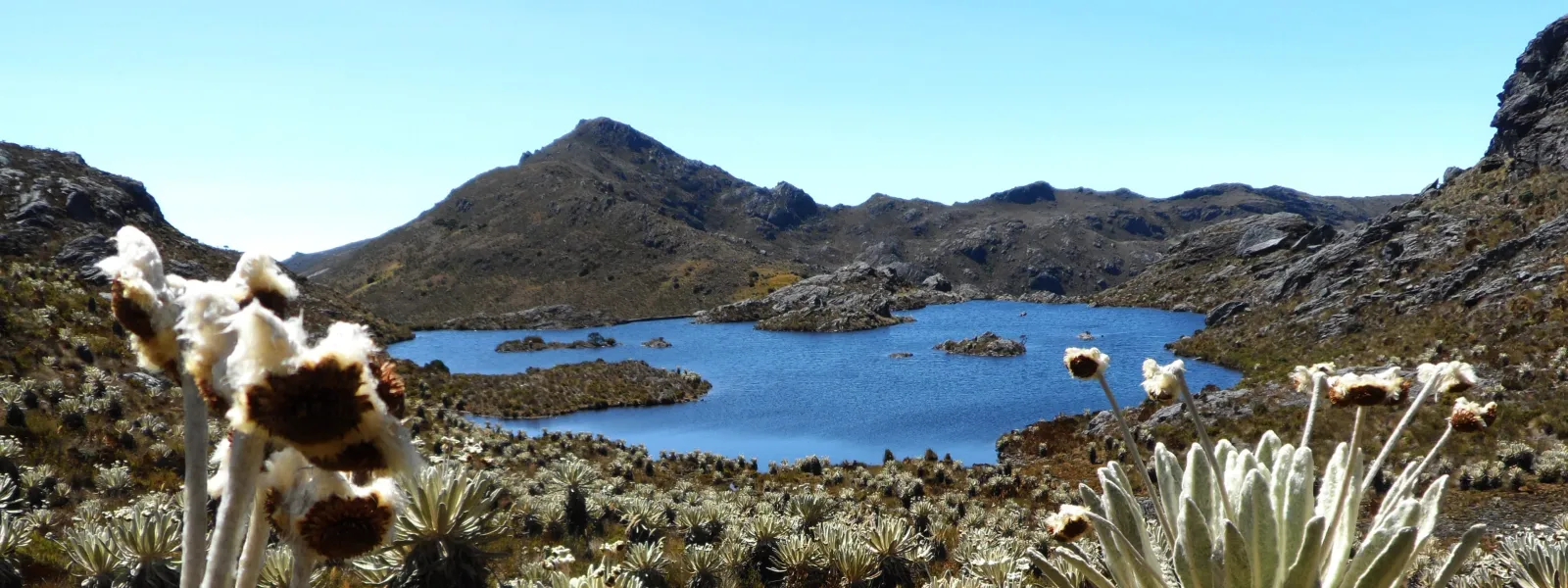
In the Andean region, high-mountain ecosystems known as páramos capture water from the fog and supply it to the lowlands. One such ecosystem is the Santurbán páramo, which provides fresh water to more than two million people in Colombia.
Santurbán, like the other páramos on the continent, also captures large amounts of carbon, making it a key ally in mitigating the climate crisis. It is also a refuge for hundreds of endangered species, including the iconic spectacled bear.
The land in and around the páramo contains gold and other minerals. This has put Santurbán in the spotlight of the multinational mining industry, which for decades has sought to establish large-scale projects in the ecosystem that threaten to degrade it.
The Committee for the Defense of Water and the Santurbán Páramo—a coalition of environmental advocates—has thwarted these ongoing attempts, with support from AIDA and other civil society organizations.
Background
The Santurbán páramo is located in the heart of the Eastern Cordillera of the Colombian Andes, in the departments of Santander and Norte de Santander, at an elevation ranging from 2,200 to 4,290 meters above sea level.
It covers an area of 129,743 hectares and is home to 57 lakes. It serves as a habitat for 457 plant species and 293 species of vertebrate fauna.
There are mineral deposits in Santurbán, primarily gold, but also silver and copper. This explains the region’s mining tradition, particularly in the part of the páramo located in Santander, in the province of Soto Norte. The communities in the area have built their culture and identity around gold mining, which is mainly artisanal and small-scale.
But since the 1990s, the gold deposits in the páramo have also attracted foreign mining conglomerates seeking to develop large-scale projects. This has raised concerns among the population that relies on the Santurbán water sources, who have mobilized in defense of water, their land, and life.
Although national and international regulations prohibit mining in páramos, the Colombian government has granted mining concessions to transnational corporations in Santurbán.
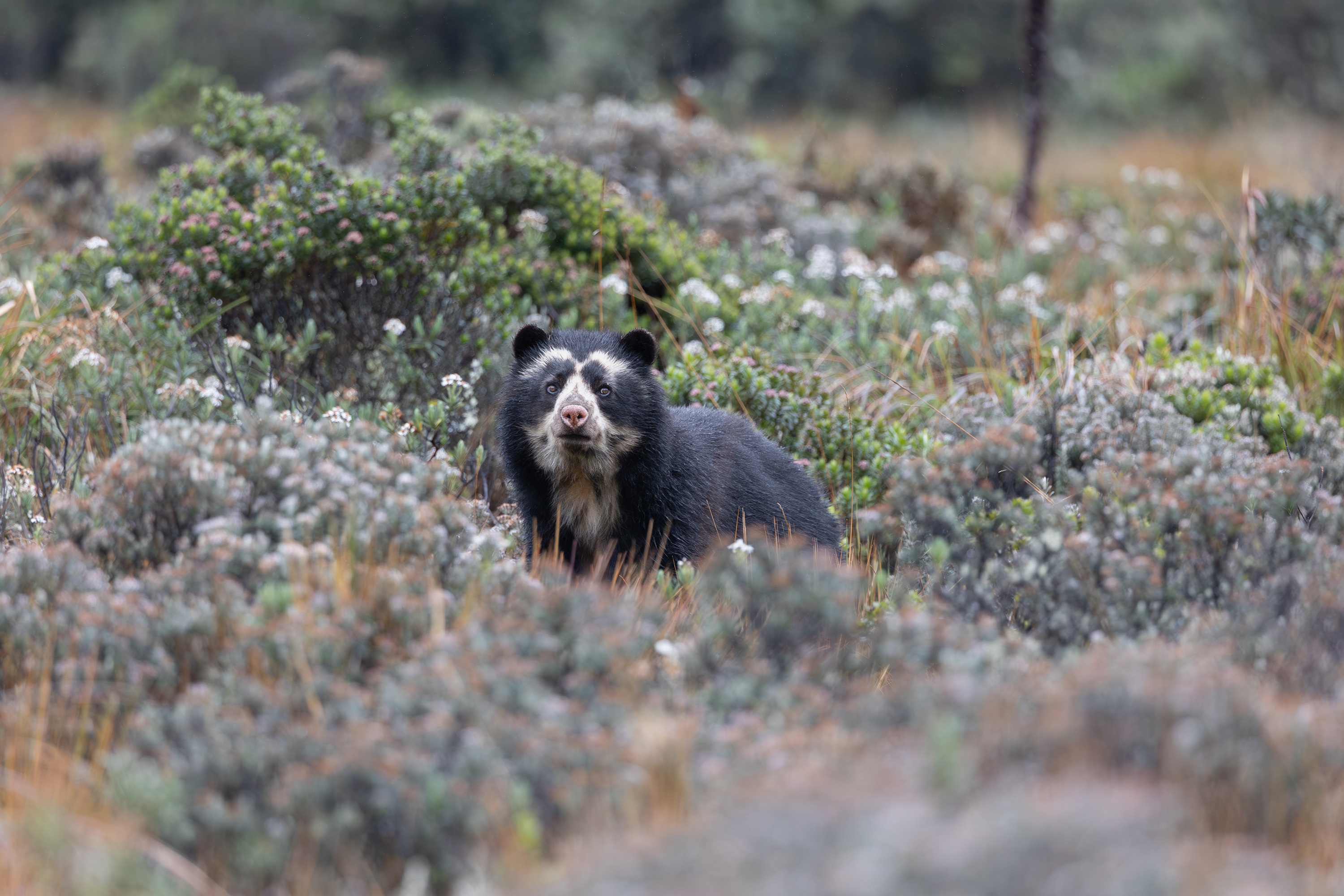
Photo: Keishpixl / Pixabay.
The long struggle to protect the páramo
One of the companies that sought to develop large-scale mining in Santurbán is Eco Oro Minerals Corp.—formerly Greystar Resources—a Canadian company that intended to establish the Angostura open-pit mine there to extract gold and silver. Between 1994 and 1995, the company acquired its mining titles and conducted exploration. And in 2010, it applied for a mining permit.
That was the year AIDA became involved in defending the ecosystem, supporting the Committee for the Defense of Water and the Santurbán Páramo. Our legal work helped convince the Colombian government to deny the mine an environmental permit in May 2011.
In January 2013, the government designated a portion of the páramo (11,700 hectares) as a Regional Natural Park. That year—together with the committee and partner organizations—we carried out a campaign and advocacy efforts to urge the government to recognize the entire Santurbán area as a páramo ecosystem through a delimitation based on scientific criteria. In December 2014, the Ministry of the Environment established a delimitation that protected 76% of the páramo (98,954 hectares).
Furthermore, as a result of a litigation supported by AIDA, in February 2016, Colombia’s highest court reaffirmed that mining in páramos is prohibited.
That same year, in December, the International Finance Corporation (IFC), the World Bank Group’s private sector arm, decided to divest from Eco Oro Minerals. This achievement was the result of a process that began in 2012, when the committee—advised and supported by AIDA and international partner organizations—filed a complaint before an independent accountability mechanism, which concluded that the IFC’s investment in the Angostura project failed to take into account the project’s social and environmental impacts, thereby contradicting the financial institution’s internal policies.
Also in 2016, Eco Oro Minerals filed an arbitration claim against the Colombian government with the International Centre for Settlement of Investment Disputes (ICSID), arguing that it had been adversely affected by government decisions aimed at protecting the country’s páramos, including the delimitation of Santurbán.
In 2017, the Constitutional Court invalidated the delimitation because the affected communities were not consulted. The high court ordered that a participatory delimitation be carried out.
And that year, a new threat to Santurbán emerged when the Canadian multinational Aris Mining applied for an environmental permit for Soto Norte, a gold mining project located near the páramo. Following citizen protests and technical objections, in October 2020, the National Environmental Licensing Authority shelved the project.
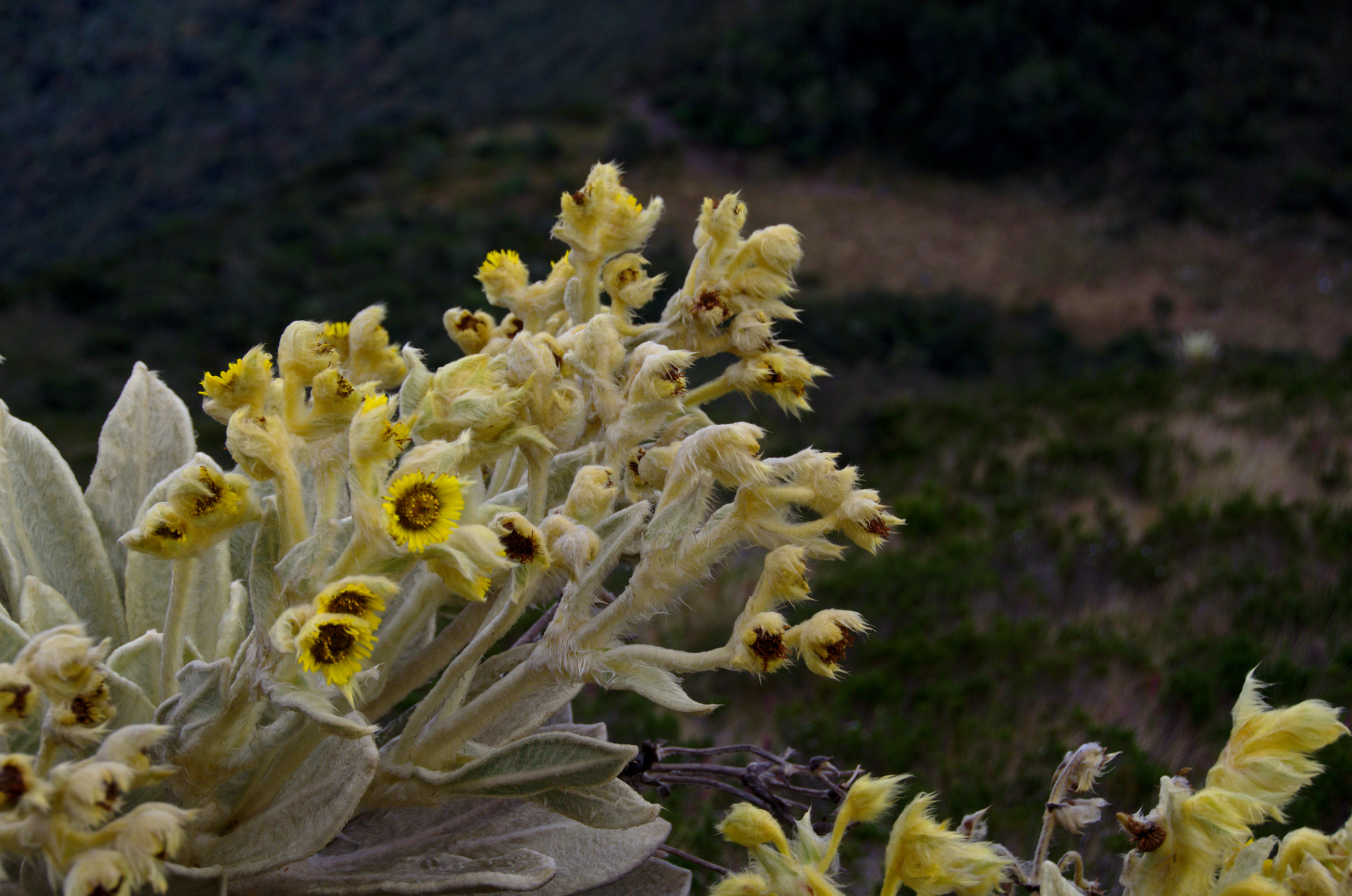
Photo: Aztlec.
Current situation
In March 2025, the Colombian government designated the western flank of the Santurbán massif as a temporary renewable natural resource reserve area, delimiting and protecting an area of 75,344.65 hectares. This resulted in a two-year suspension of the Soto Norte project. However, Aris Mining's contract to formalize Calimineros' small-scale mining activities through the purchase and processing of mineralized material remains in effect.
In addition, the Canadian mining company continues to move the project forward. In September 2025, it released its prefeasibility study, revising the mine’s original design.
Meanwhile, members of the Committee for the Defense of Water and the Santurbán Páramo face threats and stigmatization because of their work. In March 2025, UN Special Rapporteurs and the Working Group on Business and Human Rights denounced these incidents in communications sent to the governments of Colombia, Canada, and the United Arab Emirates, as well as to the companies Aris Mining and MDC Industry Holding Company LLC, the former co-owner of the Soto Norte project.
Regarding the arbitration claim filed by Eco Oro Minerals, in July 2024, ICSID ruled in favor of the Colombian government and rejected the Canadian company’s claim for USD 1.1 billion in compensation.
Concerning the delimitation of Santurbán, in July 2026, the Ministry of the Environment issued a resolution introducing the concept of "progressive delimitation." On that basis, the government proposes to progressively demarcate the páramo, covering 29,199 hectares across 19 municipalities—those where the participatory agreements required by the Constitutional Court in its 2017 ruling have already been finalized. It also proposes two measures on the creation and expansion of reserves to restrict mining in the ecosystem.
Learn more about the impacts of mining on the páramos of Latin America (in Spanish).
Partners:
Related projects
Latest News
Protecting the Colombian páramos: It’s more than just rules
By Carlos Lozano, legal advisor, AIDA,@CLozanoAcosta The consensus in Colombia is that páramo ecosystems are important and must be protected. These high-altitude wetlands are a source of clean water for over two million people. They play a key role in combating climate change, and they host a wealth of strategic biopersity. Half of the world’s páramos are found in Colombia, where they provide the country with 70% of its potable water [1]. Colombia’s print media, for the most part, has shown support for protecting the páramos, backed by a critical mass of congruent public opinion. Progress has been made to conserve the páramos with new regulations and public policies, but challenges remain. Hampering the conservation efforts are the poor implementation of regulations, local community protests, persuasive mining interests and, most recently, a national agrarian strike [2]. National laws incorporate provisions to protect the páramos, including a prohibition of mining activities, among other things. Unfortunately, Colombia’s Constitutional Court recently ruled against reforms to the Mining Code (Law 1382 of 2010) that included a provision expressly forbidding mining in the páramos. Despite this setback, there is a series of domestic rules that, when interpreted as a whole, retain the prohibition on mining. Other legal safeguards exist in the country’s judicial system. The Colombian Constitution, for example, makes general references to environmental protection in articles 8, 58, 79, 80, 333 and 334. The law for the National Environment System (Law 99 of 1993) states that páramo areas are subject to special protection and that human consumption of páramo water is prevalent. The Constitutional Court also has said that the zones banned from mining in the country are not limited to national parks (case C-339 of 2002), and the National Development Plan (Law 1450 of 2011) stipulates that páramo ecosystems cannot be used for further agricultural activities, the exploration or exploitation of oil and minerals or for the construction of oil refineries. What is more, Colombia is obliged to protect the páramo through binding international laws including conventions on biological persity, wetlands of international importance (Ramsar) and climate change. All of these make strong arguments for the protection of the páramos. In spite of the clear legal framework in place to protect the páramos, a nationwide debate is underway as to what defines the páramos and where its official boundaries lie. The discussion was settled with a scientific territorial demarcation drawn up by the Humboldt Institute, initially mapped at a scale of 1:100,000 and then with some areas at a scale of 1:25,000 in accordance with the National Development Plan. The cartography is a serious and rigorous work, so much so that it won an award of excellence from Colombia’s Alejandro Ángel Escobar Foundation for its significant and meaningful contribution to science. The National Development Plan law states that the delimitation should be adopted as part of a legal administrative act so that it becomes a mandatory standard. There are no legal arguments preventing the proper demarcation from being adopted as soon as possible. It’s likely that a strict demarcation of the páramos would have social and economic impacts on the local community. But these do not outweigh the potential harm that could result as a consequence of allowing high-impact activities like mining in the páramos. A particular harm would be the disruption of clean water supplies. Moreover, a weaker demarcation that allows the continuation of local economic activities (including mining and agriculture) not only harms the environment but also fails to recognize the importance of these pristine ecosystems. The course of action we recommend for Colombia is: i) To adopt the demarcation of the Humboldt Institute mapped at as detailed a scale as possible, according to the National Development Plan law; ii) To work with local communities, making a gradual and concerted effort to properly implement and enforce the requirements of the demarcation, including the cessationof industrial activities and iii) Employ mechanisms to compensate for the demarcation’s impacts, including effective economic and industrial restructuring where necessary. [1] ALEXANDER VON HUMBOLDT BIOLOGICAL RESOURCES RESEARCH INSTITUTE. Andean Páramo Project: The Great Book of the Páramo, page 61. [2] Since August, some sectors of the Colombian farming community have mobilized in protest against the impact of free trade agreements on local food production: http://www.bbc.co.uk/news/world-latin-america-23829482. The strike has caused a sharp drop in the popularity of President Juan Manuel Santos and with it, his chances for re-election. Some analysts argue that with the current situation governance is weak. That means sectors like mining have a strong incentive to lobby the government to gain concessions. It could also lead to the implementation of an unsatisfactory páramo demarcation.
Read moreThe declaration of Santurbán as a Regional Natural Park is a start toward complying with the prohibition on mining in páramos
FOR IMMEDIATE RELEASE February 7, 2013 Media contacts: Astrid Puentes Riaño, AIDA Co-Director, [email protected], +52-55 5212-0141 Paulo Bacca, AIDA Legal Advisor, [email protected], +57-1 232-4246 The declaration of Santurbán as a Regional Natural Park is a start toward complying with the prohibition on mining in páramos AIDA supports the decision and urges the Ministry of Environment to guarantee the protection of all páramo ecosystems. Bogotá, Colombia. The Interamerican Association for Environmental Defense (AIDA) welcomed the declaration of a portion of the Santurbán páramo in the Colombian departments of Santander and Norte de Santander as a Regional Natural Park. The measure, taken in January, reaffirms the prohibition on mining activities in Colombia’s páramo ecosystems, a move that helps improve the protection of these sensitive wetlands and critical carbon sinks. AIDA expressed its support for the creation of the park in a letter to the Ministry of Environment and Sustainable Development, the Alexander Von Humboldt Institute and the Autonomous Regional Corporation for the Defense of the Bucaramanga Plateau (CDMB) of Colombia, confirming that this act is congruent with the prohibition on mining in the region. It also reminded the government that this does not mean mining can be permitted in other parts of the páramo. The park declaration encompasses 11,700 of the 92,000 hectares of the páramo, and was proposed to the CDMB board of directors by Environment Minister Juan Gabriel Uribe based on a technical report issued by the Von Humboldt Institute. “At AIDA, we have spent more than five years highlighting the national and international obligation of the state to protect páramos. Although creation of the park is a good first step, we insist that the government comply with the law and ensure mining will be prohibited in the entire ecosystem”, said Paulo Bacca, a lawyer at the NGO. AIDA has worked to create and enforce the prohibition on mining in páramos, providing feedback on the Mining Code and related bills, and by following paradigmatic cases like Santurbán. It is a positive step that the Ministry of Environment, in accordance with constitutional and international commitments, has denied the environmental license requested by the Canadian company Greystar Resources Ltd. (now Eco Oro Minerals Corp.) to develop the Angostura gold mine in the heart of the páramo. “This issue goes beyond the legal arena. It is a matter of national security and the quality of life for Colombians given that the páramos are essential for the supply of 70% of drinking water, biodiversity conservation, climate change mitigation and even power generation”, said Astrid Puentes Riaño, co-executive director of AIDA. To prevent the lack of territorial demarcation from being used as justification for allowing mining projects in páramo areas, AIDA urges the Ministry of Environment to immediately make use of the new mapping of páramos provided to it by the Von Humboldt Institute a few months ago. The use of that mapping can help prevent mining companies from hiding behind the lack of a definition and demarcation of critical ecosystems like páramos to advance mining projects in areas where such activities clearly should not be permitted, thus furthering ecosystem and water resource protection critical to Colombian citizens. See the PDF version of the letter (Spanish only). For more information about the Angostura case and Santurbán páramo, please see: http://www.aida-americas.org/en/protecting_the_santurban_paramo_from_angostura_project
Read morePublic Hearing on the Angostura Mine Suspended: AIDA Publishes Brief Urging the Colombian Government to Protect the Páramos (Spanish Text Only)
PARA PUBLICACION INMEDIATA CONTACTO: Natalia Jiménez, [email protected] Teléfono: (+57) 310-5734176 Suspendida audiencia pública del proyecto minero Angostura: AIDA publica su intervención en la que insta al Gobierno colombiano a proteger los páramos. Marzo 8 de 2011, Bogotá, Colombia – La audiencia pública programada para el viernes 4 de marzo en la ciudad de Bucaramanga (Departamento de Santander, Colombia) por el Ministerio de Ambiente, Vivienda y Desarrollo Territorial en el proceso de licenciamiento ambiental del proyecto de gran minería de oro a cielo abierto "Angostura" fue suspendida debido a situaciones que impidieron el normal desarrollo de la misma. Por esta razón, la Asociación Interamericana para la Defensa del Ambiente, AIDA hará llegar al gobierno colombiano su escrito de intervención sobre las obligaciones internacionales y constitucionales del Estado colombiano de proteger los páramos, que no pudo presentar en la suspendida audiencia. En los próximos días, el Ministerio de Ambiente, Vivienda y Desarrollo Territorial colombiano deberá pronunciarse sobre la cancelación total de la audiencia o sobre la posibilidad de reanudarla. Estaremos atentos a dicha notificación y nos aseguraremos de que los argumentos aportados por AIDA sean conocidos abiertamente y considerados dentro del proceso de solicitud de la Licencia Ambiental al proyecto Angostura. La misión de AIDA es fortalecer la capacidad de las personas para garantizar su derecho individual y colectivo a un ambiente sano por medio del desarrollo, aplicación y cumplimiento efectivo de la legislación nacional e internacional. La protección de agua dulce es una de nuestras líneas mediante la cual buscamos proteger el derecho al agua y asegurar recursos de agua dulce adecuados para las comunidades y los ecosistemas en las Américas AIDA, 426 17th Street, Oakland, CA 94612 T. (510) 550-6753, F. (510) 550-6740 AIDA Atlixco 138, Col. Condesa, México, DF, 06140, T/F (5255) 52120141 AIDA Diagonal 40 A No 14 – 75, Tel. (57 1) 3381277, Bogotá - Colombia AIDA Costa Rica, San Pedro c/o Centro de Derecho Ambiental y de los Recursos Naturales (CEDARENA) T. (506) 22837080 E-mail: [email protected], Website: www.aida-americas.org
Read more