
Project
Alberto Peña Kay
Protecting the Santurban páramo from mining's damage
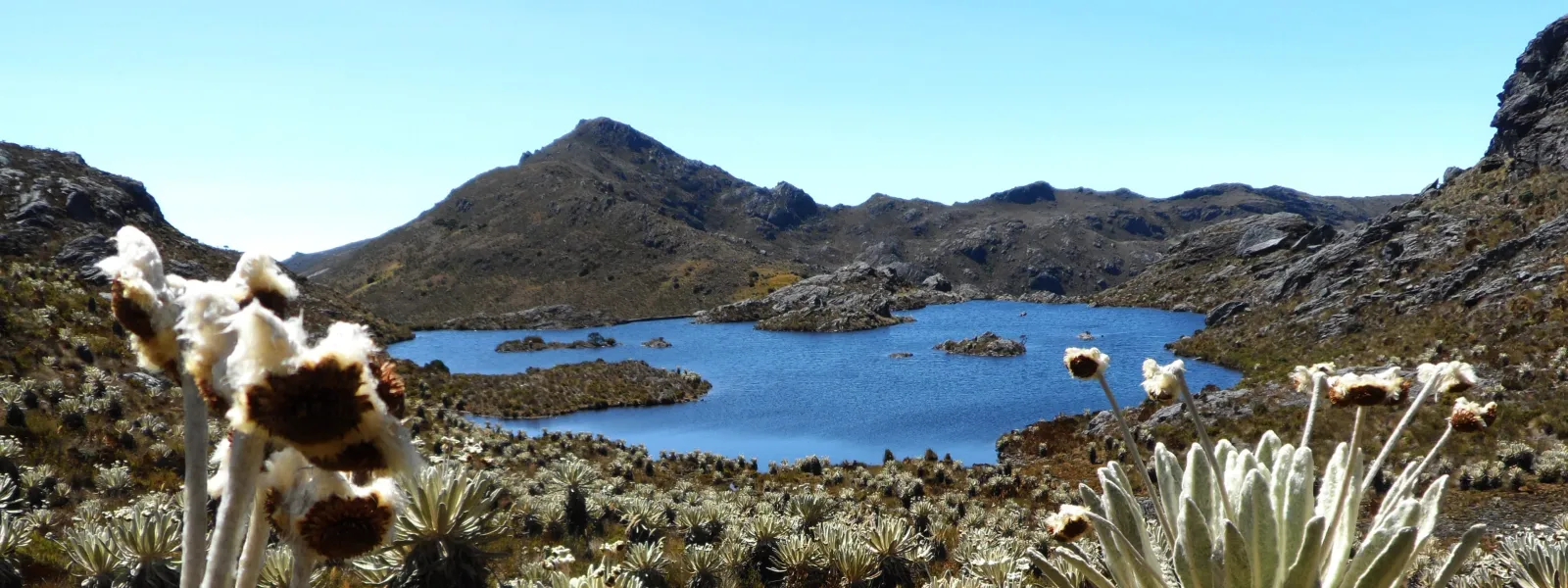
In the Andean region, high-mountain ecosystems known as páramos capture water from the fog and supply it to the lowlands. One such ecosystem is the Santurbán páramo, which provides fresh water to more than two million people in Colombia.
Santurbán, like the other páramos on the continent, also captures large amounts of carbon, making it a key ally in mitigating the climate crisis. It is also a refuge for hundreds of endangered species, including the iconic spectacled bear.
The land in and around the páramo contains gold and other minerals. This has put Santurbán in the spotlight of the multinational mining industry, which for decades has sought to establish large-scale projects in the ecosystem that threaten to degrade it.
The Committee for the Defense of Water and the Santurbán Páramo—a coalition of environmental advocates—has thwarted these ongoing attempts, with support from AIDA and other civil society organizations.
Background
The Santurbán páramo is located in the heart of the Eastern Cordillera of the Colombian Andes, in the departments of Santander and Norte de Santander, at an elevation ranging from 2,200 to 4,290 meters above sea level.
It covers an area of 129,743 hectares and is home to 57 lakes. It serves as a habitat for 457 plant species and 293 species of vertebrate fauna.
There are mineral deposits in Santurbán, primarily gold, but also silver and copper. This explains the region’s mining tradition, particularly in the part of the páramo located in Santander, in the province of Soto Norte. The communities in the area have built their culture and identity around gold mining, which is mainly artisanal and small-scale.
But since the 1990s, the gold deposits in the páramo have also attracted foreign mining conglomerates seeking to develop large-scale projects. This has raised concerns among the population that relies on the Santurbán water sources, who have mobilized in defense of water, their land, and life.
Although national and international regulations prohibit mining in páramos, the Colombian government has granted mining concessions to transnational corporations in Santurbán.
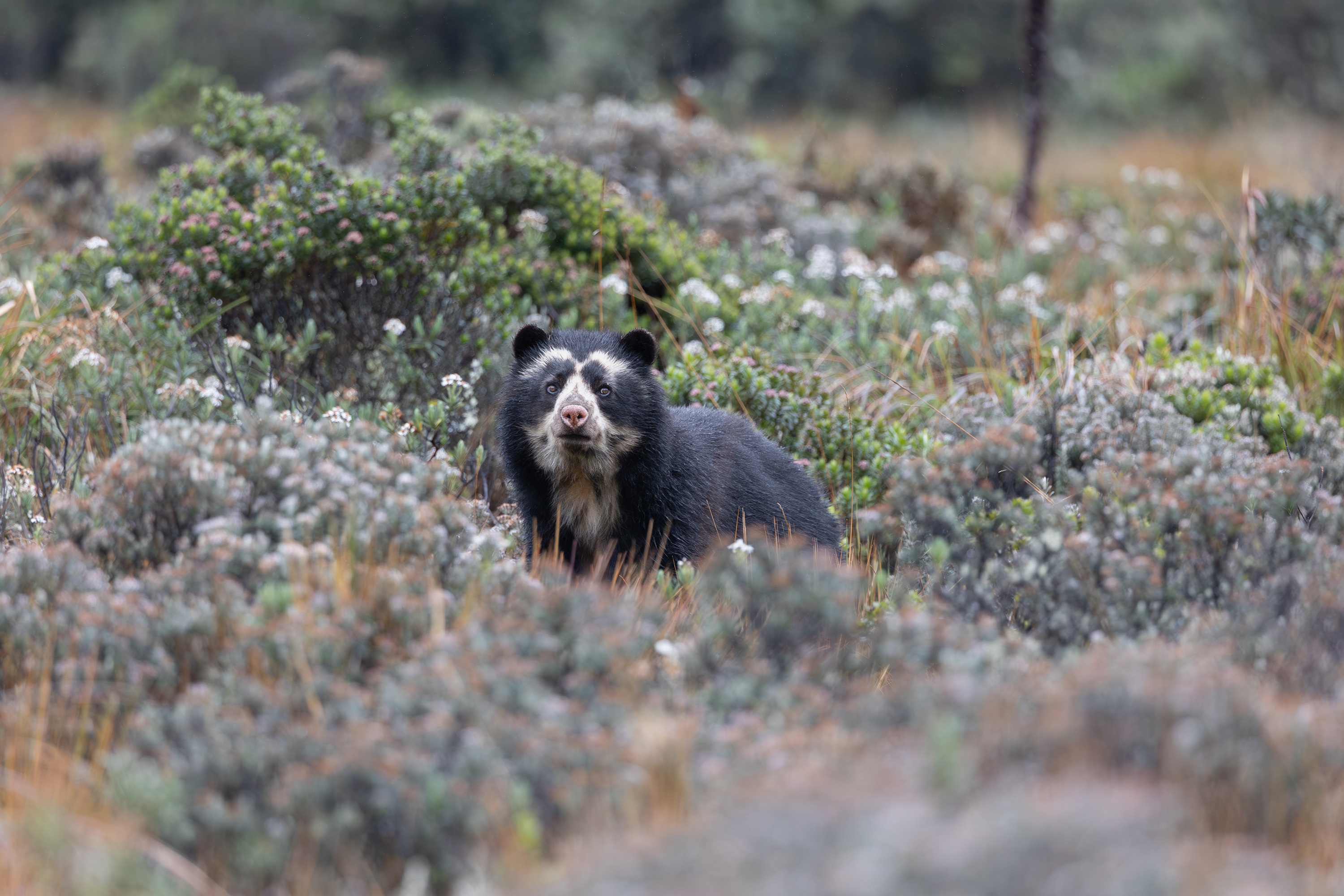
Photo: Keishpixl / Pixabay.
The long struggle to protect the páramo
One of the companies that sought to develop large-scale mining in Santurbán is Eco Oro Minerals Corp.—formerly Greystar Resources—a Canadian company that intended to establish the Angostura open-pit mine there to extract gold and silver. Between 1994 and 1995, the company acquired its mining titles and conducted exploration. And in 2010, it applied for a mining permit.
That was the year AIDA became involved in defending the ecosystem, supporting the Committee for the Defense of Water and the Santurbán Páramo. Our legal work helped convince the Colombian government to deny the mine an environmental permit in May 2011.
In January 2013, the government designated a portion of the páramo (11,700 hectares) as a Regional Natural Park. That year—together with the committee and partner organizations—we carried out a campaign and advocacy efforts to urge the government to recognize the entire Santurbán area as a páramo ecosystem through a delimitation based on scientific criteria. In December 2014, the Ministry of the Environment established a delimitation that protected 76% of the páramo (98,954 hectares).
Furthermore, as a result of a litigation supported by AIDA, in February 2016, Colombia’s highest court reaffirmed that mining in páramos is prohibited.
That same year, in December, the International Finance Corporation (IFC), the World Bank Group’s private sector arm, decided to divest from Eco Oro Minerals. This achievement was the result of a process that began in 2012, when the committee—advised and supported by AIDA and international partner organizations—filed a complaint before an independent accountability mechanism, which concluded that the IFC’s investment in the Angostura project failed to take into account the project’s social and environmental impacts, thereby contradicting the financial institution’s internal policies.
Also in 2016, Eco Oro Minerals filed an arbitration claim against the Colombian government with the International Centre for Settlement of Investment Disputes (ICSID), arguing that it had been adversely affected by government decisions aimed at protecting the country’s páramos, including the delimitation of Santurbán.
In 2017, the Constitutional Court invalidated the delimitation because the affected communities were not consulted. The high court ordered that a participatory delimitation be carried out.
And that year, a new threat to Santurbán emerged when the Canadian multinational Aris Mining applied for an environmental permit for Soto Norte, a gold mining project located near the páramo. Following citizen protests and technical objections, in October 2020, the National Environmental Licensing Authority shelved the project.
Photo: Aztlec.
Current situation
In March 2025, the Colombian government designated the western flank of the Santurbán massif as a temporary renewable natural resource reserve area, delimiting and protecting an area of 75,344.65 hectares. This resulted in a two-year suspension of the Soto Norte project. However, Aris Mining's contract to formalize Calimineros' small-scale mining activities through the purchase and processing of mineralized material remains in effect.
In addition, the Canadian mining company continues to move the project forward. In September 2025, it released its prefeasibility study, revising the mine’s original design.
Meanwhile, members of the Committee for the Defense of Water and the Santurbán Páramo face threats and stigmatization because of their work. In March 2025, UN Special Rapporteurs and the Working Group on Business and Human Rights denounced these incidents in communications sent to the governments of Colombia, Canada, and the United Arab Emirates, as well as to the companies Aris Mining and MDC Industry Holding Company LLC, the former co-owner of the Soto Norte project.
Regarding the arbitration claim filed by Eco Oro Minerals, in July 2024, ICSID ruled in favor of the Colombian government and rejected the Canadian company’s claim for USD 1.1 billion in compensation.
Concerning the delimitation of Santurbán, in July 2026, the Ministry of the Environment issued a resolution introducing the concept of "progressive delimitation." On that basis, the government proposes to progressively demarcate the páramo, covering 29,199 hectares across 19 municipalities—those where the participatory agreements required by the Constitutional Court in its 2017 ruling have already been finalized. It also proposes two measures on the creation and expansion of reserves to restrict mining in the ecosystem.
Learn more about the impacts of mining on the páramos of Latin America (in Spanish).
Partners:
Related projects
Latest News
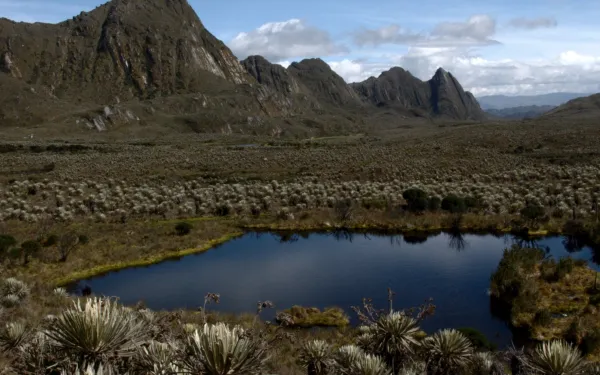
Páramos = water = life
Páramos are high-mountain ecosystems that capture water from fog and supply it to the lowlands. They lie between the upper limit of the Andean forest (about 3,000 meters above sea level) and the glaciers or permanent snowfields of the mountains (about 4,500 meters above sea level).Typically, páramos can be found in tropical regions near the equator, especially along the Andes mountain range.In Latin America, páramos cover more than 30,000 km2. South America is home to more than 80% of the world’s páramos, and Colombia accounts for 50% of them.The páramos are not isolated; rather, they form a high-mountain system that maintains ecological connections with other biomes and ecosystems, extending beyond national borders. In the Andean region, they form a corridor known as the "string of pearls," stretching from the Cordillera de Mérida in Venezuela, across Colombia and Ecuador, to the Huancabamba Depression in northern Peru.There, the water retained by low-altitude wetlands gradually flows downward, forming streams and rivers that flow down to the coast or the Amazon basin.Because of their interconnectedness, the páramos also serve as natural bridges or "springboards" for the migration and dispersal of species. Their conservation, therefore, cannot be limited to specific areas; it must extend to protecting the ecological, biological, and cultural relationships they share with other ecosystems. The importance of protecting the páramosWe must protect the páramos because they are essential to sustaining life. Among other reasons, this is because:They feed key watersheds, which in turn support agricultural and livestock systems that contribute to the population's food supply. They are the primary source of water for more than 85 million people. In Colombia, these ecosystems supply 70% of the freshwater consumed in major cities.They are home to a unique biodiversity: more than 3,370 plant species and 250 animal species. Among the endemic species found there are the frailejón (a plant with hairy leaves that trap moisture from the fog and regulate water), the Andean condor, the mountain tapir (or Andean tapir), and the spectacled bear.They serve as living spaces and homes for rural and indigenous communities. According to the 2018 páramo census, more than 76,000 people in Colombia live in the country’s páramo ecosystems. Furthermore, their stunning natural beauty drives nature tourism, thereby sustaining local ways of life.They are extraordinary natural carbon sinks and are indispensable allies in mitigating the climate crisis. They can sequester up to ten times more carbon dioxide per square meter than a tropical forest. In specific areas of a páramo, such as peat bogs, carbon sequestration can reach 2,000 metric tons. Photo: Aztlec Flickr (Creative Commons).What threats must we protect the páramos from?Despite their great importance, the páramos currently face several threats. One is the climate crisis, which is raising ambient temperatures; because these ecosystems are located high in the mountains, they have no cooler thermal zones to migrate to.On the other hand, extensive livestock ranching and agriculture—particularly potato farming—affect considerable areas of páramos. Deforestation or reforestation with non-native species also endangers them, as does a lack of knowledge about their importance and characteristics.And mining is undoubtedly one of the greatest threats to these ecosystems. Due to their geological formation, these ecosystems contain large quantities of minerals and metals, such as gold and silver. The mining industry poses serious risks to the páramos because:It extracts large volumes of water and builds infrastructure on wetlands, reducing their ability to regulate water flows, and can cause pollution from mercury and other toxic substances, leading to species loss and affecting water quality and availability in low-lying areas.Underground mining can alter groundwater flow dynamics through dewatering processes designed to prevent tunnel collapse. This can lower the water table, cause land subsidence, and dry up water sources, among other impacts.It removes vegetation cover and organic soil, degrading fragile ecosystems such as the páramos, weakening their role as natural carbon sinks, and releasing stored carbon.Its impacts can last in perpetuity—for centuries or millennia—timeframes that cannot be predicted with certainty. Tailings dams and other infrastructure (tailings piles or dumps) where mining waste ends up, for example, have effects that persist indefinitely because they were not designed to be dismantled. Learn more about the true cost of mining in the páramos. The iconic case of the Santurbán páramo in ColombiaThe Santurbán case reflects the socio-environmental conflicts that arise from corporate efforts to establish mining operations in páramos, as well as from citizens’ efforts to protect these ecosystems and the life they sustain. Photo: Alberto Peña Kay. Located in the heart of the Eastern Cordillera of the Colombian Andes, in the departments of Santander and Norte de Santander, the Santurbán páramo covers 129,743 hectares and is home to 57 lagoons, 457 plant species, and 293 vertebrate species.Santurbán is home to mineral deposits—primarily gold, but also silver and copper—that have attracted foreign mining conglomerates for decades, which have sought to establish large-scale projects in the ecosystem, threatening to degrade it.This has raised concerns among the population that relies on the Santurbán water sources—more than two million people—who have mobilized to defend water, their land, and life.The Committee for the Defense of Water and the Santurbán Páramo has led these efforts. This coalition of environmental advocates, supported by AIDA and other civil society organizations, has thwarted the mining industry’s ongoing attempts. The defense of Santurbán has included litigation and national and international advocacy. Learn more about the effort to protect the Santurbán páramo. Protecting Latin America's páramosAs with Santurbán in Colombia, indigenous peoples, rural communities, and citizens in other countries in the region are using legal strategies to protect the Andean páramos.Also in Colombia, rural communities in Cajamarca, in the department of Tolima, succeeded in rejecting the La Colosa mining project—which would have involved gold mining in the Los Nevados páramo region—through a public referendum. They are currently defending the referendum's validity and the páramo demarcation in court.In Ecuador, the Kichwa Saraguro indigenous people are pursuing legal action to protect more than 27,000 hectares of the Fierro Urku páramo, which were granted as mining concessions for gold, silver, and copper without prior consultation. At the same time, they are demanding compliance with a protective order that suspended the Loma Larga mining project in the Quimsacocha páramo until prior consultation is guaranteed and environmental impact studies are conducted.In partnership with communities and allied organizations, AIDA works to protect the páramos and other ecosystems that sustain life in Latin America.
Read more
UN experts denounce threats and stigmatization against defenders of water and the Santurbán páramo; demand protection for their work
Bucaramanga, Colombia. On March 6, 2025 the United Nations Special Rapporteurs on human rights defenders, a healthy environment, water and sanitation, and the UN Working Group on Business and Human Rights sent formal letters to the governments of Colombia, Canada, and the United Arab Emirates, as well as to the companies Aris Mining and MDC Industry Holding Company LLC to denounce the threats and stigmatization faced by the Committee for the Defence of Water and the Santurbán Páramo for defending this ecosystem threatened by mining in Colombia. To date, only the Colombian government’s reply has been made public. While harassment is not new, content has recently been disseminated on social media labeling the Committee’s spokespersons as "persona non grata", endangering their lives by claiming false connections to illegal armed groups. Committee members have warned that "every day that passes without a response from the national government and the companies legitimizes those who seek to silence us".For 16 years, the committee has worked to protect the Santurban páramo - a high altitude wetland ecosystem which provides fresh water to more than two million people. Recently, they achieved recognition of part of the páramo as a Temporary Reserve Zone, which means that large-scale mining activities will be suspended for two years.Viviana Herrera, Latin America Program Coordinator at MiningWatch Canada, said, "it speaks volumes that Canada has not yet responded to the UN experts. Canada must prioritize the environmental defenders of the Santurbán Committee and their struggle to protect water."Sebastián Abad Jara, an attorney with the Interamerican Association for Environmental Defense (AIDA), said that "through these letters, the offices of the UN recognized the committee as a coalition of rights defenders; they informed governments and companies of the clear, imminent, and specific risk to its members; and in doing so they dismantled the false narratives linking their activities to those of illegal groups."The UN agencies emphasize that Aris Mining, its subsidiary Minesa, and all companies in its supply chain associated with the Soto Norte project — such as Calimineros — have an obligation to respect and protect human rights, especially those of environmental and water defenders."Colombia is one of the most dangerous countries for those defending water and life against extractive projects, which is why immediate action by states and companies is urgently needed to stop the stigmatization and guarantee the safety of members of the committee," said Jen Moore, associate researcher at the Institute for Policy Studies (IPS).The Committee for the Defence of Water and the Santurbán Páramo, AIDA, MiningWatch Canada, IPS, Common Frontiers Canada, and the Center for International Environmental Law (CIEL) reiterate the call by United Nations experts to the governments of Colombia, Canada, and the United Arab Emirates, as well as to Aris Mining company and MDC Holding, to safeguard the lives and integrity of the committee members.In accordance with their obligations under national law, the Escazú Agreement, inter-American law and jurisprudence, and the Guiding Principles on Business and Human Rights, we also urgently call on states and companies to respond to the substance of the letters and adopt measures — with verifiable deadlines and measurable progress — to prevent companies associated with the Soto Norte project from committing human rights violations.Only the protection and strengthening of historic leadership such as that of the Santurbán Committee in Colombia will bring us closer to environmental and climate justice. The concerns raised by the offices of the UN are a reminder that protecting those who lead the struggle for water in Latin America is an imperative of state and corporate due diligence.Press contactsCommittee for the Defense of Water and the Santurbán Páramo, [email protected] Quintanilla (Mexico), AIDA, [email protected], +5215570522107Viviana Herrera, Mining Watch Canada, [email protected], +14389931264Jennifer Moore, IPS, [email protected], +12027049011
Read more
Declaration of a Temporary Reserve Area in the Santurbán Páramo is a victory for the defense of water in Latin America
Civil society organizations celebrate the measure taken by the Colombian Ministry of the Environment, which involves a two year suspension of Canadian company Aris Mining's gold mining project in the páramo.Bogotá, Colombia. The Interamerican Association for Environmental Defense (AIDA), the Institute for Policy Studies (IPS) - Mining and Trade Project, MiningWatch Canada, the Center for International Environmental Law (CIEL) and Common Frontiers Canada celebrate the Colombian Ministry of Environment and Sustainable Development’s (MADS) resolution that declares the western side of the Santurbán massif a temporary renewable natural resource reserve area. This major step strengthens the protection of one of the most emblematic high-altitude Andean wetlands, known as páramo, and its related ecosystems, which are fundamental for climate change adaptation and water security in the region for an estimated 2 million people.Resolution 0221, issued on March 3, 2025 by the Ministry of Environment and Sustainable Development (MADS), delimits and protects an area of 75,344.65 hectares, ensuring a two year provisional suspension of the Soto Norte gold mining project owned by Canadian company Aris Mining and its Colombian subsidiary, Sociedad Minera de Santander S.A.S. (Minesa), which puts Santurbán at risk. Citing the precautionary principle, the resolution prohibits the granting of “new mining concessions, special exploration and exploitation contracts, (...) as well as new environmental permits or licenses for the exploration or exploitation of minerals” in the area until the necessary technical studies are carried out toward its definitive protection. This resolution does not affect agricultural, livestock or tourism activity in the area.However, we are concerned that the resolution leaves in force the concession contract with Calimineros, which has had a subcontract with Minesa to formalize [its small-scale mining activities] since 2020, and from which Minesa promises to buy and process mineralized material. We encourage the competent authorities to suspend evaluation of its environmental license application and extension of the formalization subcontract, due to potential environmental impacts on Santurbán and because it is effectively part of the Soto Norte project.The páramo and related ecosystems are highly sensitive, recognized for their role in water regulation, carbon capture, and the conservation of endemic biodiversity. The removal of vegetation cover and the fragmentation of ecosystems that mining in Santurbán would generate could affect the ecological balance, biodiversity, and the provision of ecosystem services essential for life; acidify and reduce the amount of available fresh-water; and break the ecological interconnectivity with other biomes and ecosystems, destroying their capacity to sequester carbon and causing irreparable damage.For these reasons, we appreciate that the resolution seeks to prevent mining development in this highly sensitive and environmentally important area, preventing degradation of the watersheds that arise from Santurbán and preserving the water cycle.Sebastián Abad-Jara, an attorney for AIDA, pointed out that "by protecting Santurbán, Colombia ratifies its commitment to meet global environmental goals in terms of biodiversity, climate and wetlands, and sets a high bar for the governments of other countries where these ecosystems are similarly threatened by mining activity, such as Peru and Ecuador.""We celebrate this declaration as an important first step toward the consolidation of the western side of the Santurbán massif as a permanent reserve area, definitively protecting this important water source, vital for all who depend on it," said Jen Moore, associate fellow at IPS - Mining and Trade Project.Viviana Herrera, Latin America Program Coordinator for MiningWatch Canada, added that "this resolution is the result of the Committee for the Defence of Water and Páramo of Santurbán’s hard work, which has faced harassment and intimidation for its work in defense of the páramo, as well as disinformation campaigns about the supposed harmful effects of the resolution on agricultural activity."AIDA, IPS-Mining and Trade Project, MiningWatch Canada, CIEL and Common Frontiers Canada support the adoption of this protection measure for Santurbán. We also encourage the national and local government to carry out the necessary technical studies for its definitive protection, and to take preventive measures to avoid the cumulative environmental impacts of mining in the area given other projects that already have mining licenses. Furthermore, we reiterate the urgency of adopting measures to protect environment defenders in Colombia who stand up for the páramo.The Santurbán experience provides valuable lessons and should serve as an example to promote legislation for environmental protection in Latin America that focuses on the human right to water and the balance and integrity of fragile ecosystems, such as the páramo and other high-altitude ecosystems.#OurGoldIsWater Press contactsVictor Quintanilla (Mexico), AIDA, [email protected], +5215570522107Jennifer Moore, IPS, [email protected], +12027049011 (prensa IPS)Viviana Herrera, Mining Watch Canada, [email protected], +14389931264Alexandra Colón-Amil, CIEL, [email protected], +12024550253
Read more