
Project
Alberto Peña Kay
Protecting the Santurban páramo from mining's damage
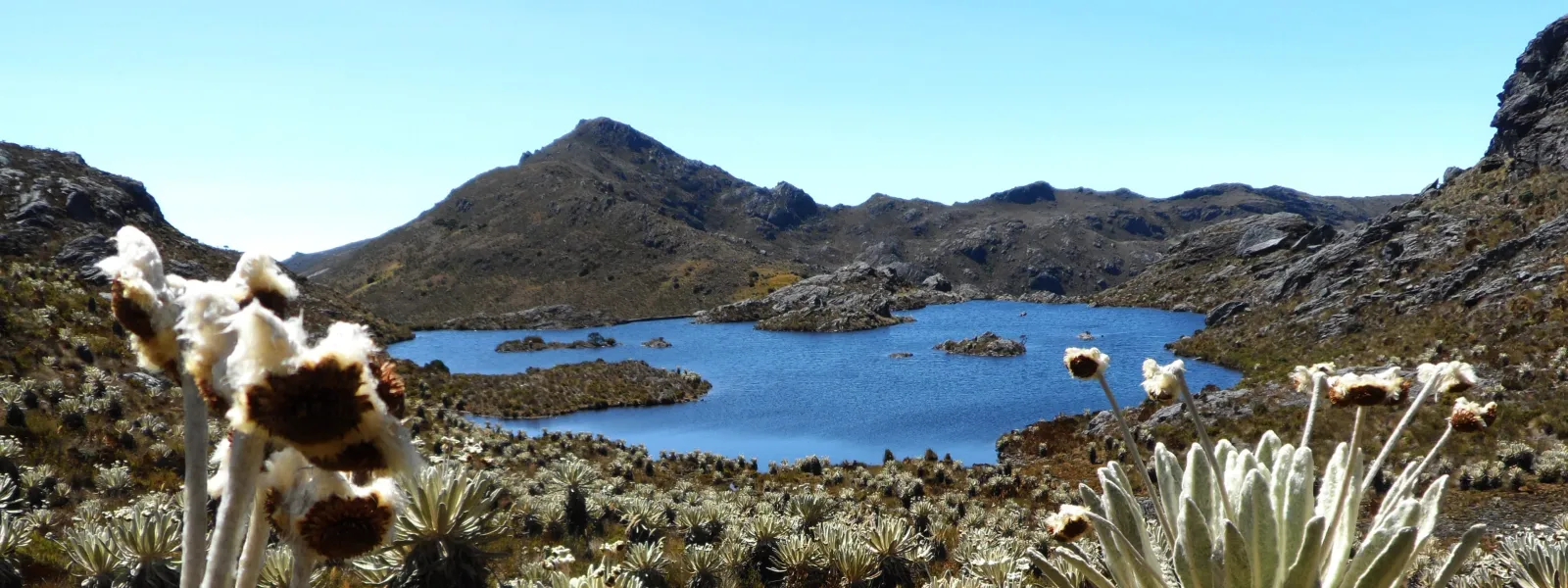
In the Andean region, high-mountain ecosystems known as páramos capture water from the fog and supply it to the lowlands. One such ecosystem is the Santurbán páramo, which provides fresh water to more than two million people in Colombia.
Santurbán, like the other páramos on the continent, also captures large amounts of carbon, making it a key ally in mitigating the climate crisis. It is also a refuge for hundreds of endangered species, including the iconic spectacled bear.
The land in and around the páramo contains gold and other minerals. This has put Santurbán in the spotlight of the multinational mining industry, which for decades has sought to establish large-scale projects in the ecosystem that threaten to degrade it.
The Committee for the Defense of Water and the Santurbán Páramo—a coalition of environmental advocates—has thwarted these ongoing attempts, with support from AIDA and other civil society organizations.
Background
The Santurbán páramo is located in the heart of the Eastern Cordillera of the Colombian Andes, in the departments of Santander and Norte de Santander, at an elevation ranging from 2,200 to 4,290 meters above sea level.
It covers an area of 129,743 hectares and is home to 57 lakes. It serves as a habitat for 457 plant species and 293 species of vertebrate fauna.
There are mineral deposits in Santurbán, primarily gold, but also silver and copper. This explains the region’s mining tradition, particularly in the part of the páramo located in Santander, in the province of Soto Norte. The communities in the area have built their culture and identity around gold mining, which is mainly artisanal and small-scale.
But since the 1990s, the gold deposits in the páramo have also attracted foreign mining conglomerates seeking to develop large-scale projects. This has raised concerns among the population that relies on the Santurbán water sources, who have mobilized in defense of water, their land, and life.
Although national and international regulations prohibit mining in páramos, the Colombian government has granted mining concessions to transnational corporations in Santurbán.
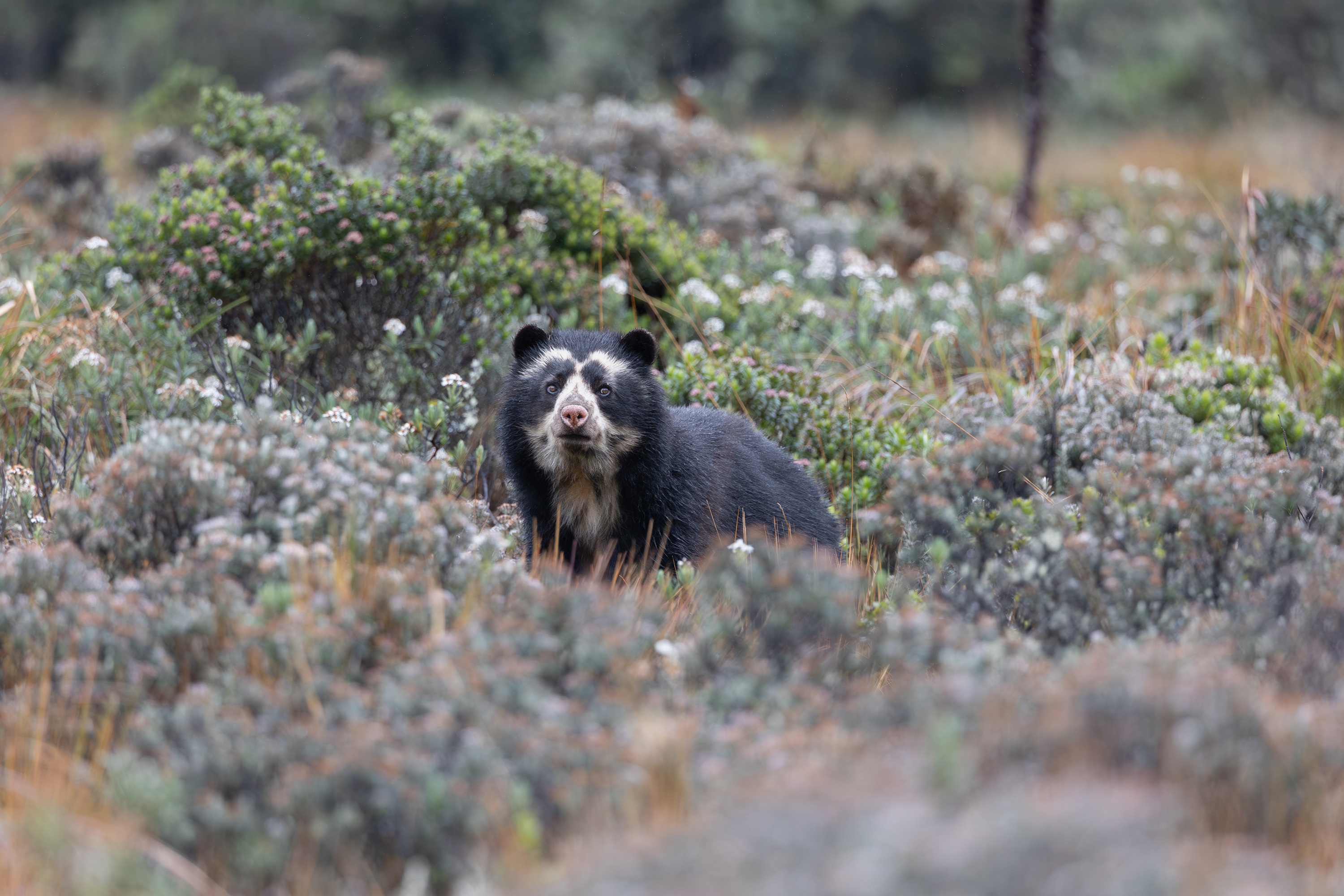
Photo: Keishpixl / Pixabay.
The long struggle to protect the páramo
One of the companies that sought to develop large-scale mining in Santurbán is Eco Oro Minerals Corp.—formerly Greystar Resources—a Canadian company that intended to establish the Angostura open-pit mine there to extract gold and silver. Between 1994 and 1995, the company acquired its mining titles and conducted exploration. And in 2010, it applied for a mining permit.
That was the year AIDA became involved in defending the ecosystem, supporting the Committee for the Defense of Water and the Santurbán Páramo. Our legal work helped convince the Colombian government to deny the mine an environmental permit in May 2011.
In January 2013, the government designated a portion of the páramo (11,700 hectares) as a Regional Natural Park. That year—together with the committee and partner organizations—we carried out a campaign and advocacy efforts to urge the government to recognize the entire Santurbán area as a páramo ecosystem through a delimitation based on scientific criteria. In December 2014, the Ministry of the Environment established a delimitation that protected 76% of the páramo (98,954 hectares).
Furthermore, as a result of a litigation supported by AIDA, in February 2016, Colombia’s highest court reaffirmed that mining in páramos is prohibited.
That same year, in December, the International Finance Corporation (IFC), the World Bank Group’s private sector arm, decided to divest from Eco Oro Minerals. This achievement was the result of a process that began in 2012, when the committee—advised and supported by AIDA and international partner organizations—filed a complaint before an independent accountability mechanism, which concluded that the IFC’s investment in the Angostura project failed to take into account the project’s social and environmental impacts, thereby contradicting the financial institution’s internal policies.
Also in 2016, Eco Oro Minerals filed an arbitration claim against the Colombian government with the International Centre for Settlement of Investment Disputes (ICSID), arguing that it had been adversely affected by government decisions aimed at protecting the country’s páramos, including the delimitation of Santurbán.
In 2017, the Constitutional Court invalidated the delimitation because the affected communities were not consulted. The high court ordered that a participatory delimitation be carried out.
And that year, a new threat to Santurbán emerged when the Canadian multinational Aris Mining applied for an environmental permit for Soto Norte, a gold mining project located near the páramo. Following citizen protests and technical objections, in October 2020, the National Environmental Licensing Authority shelved the project.
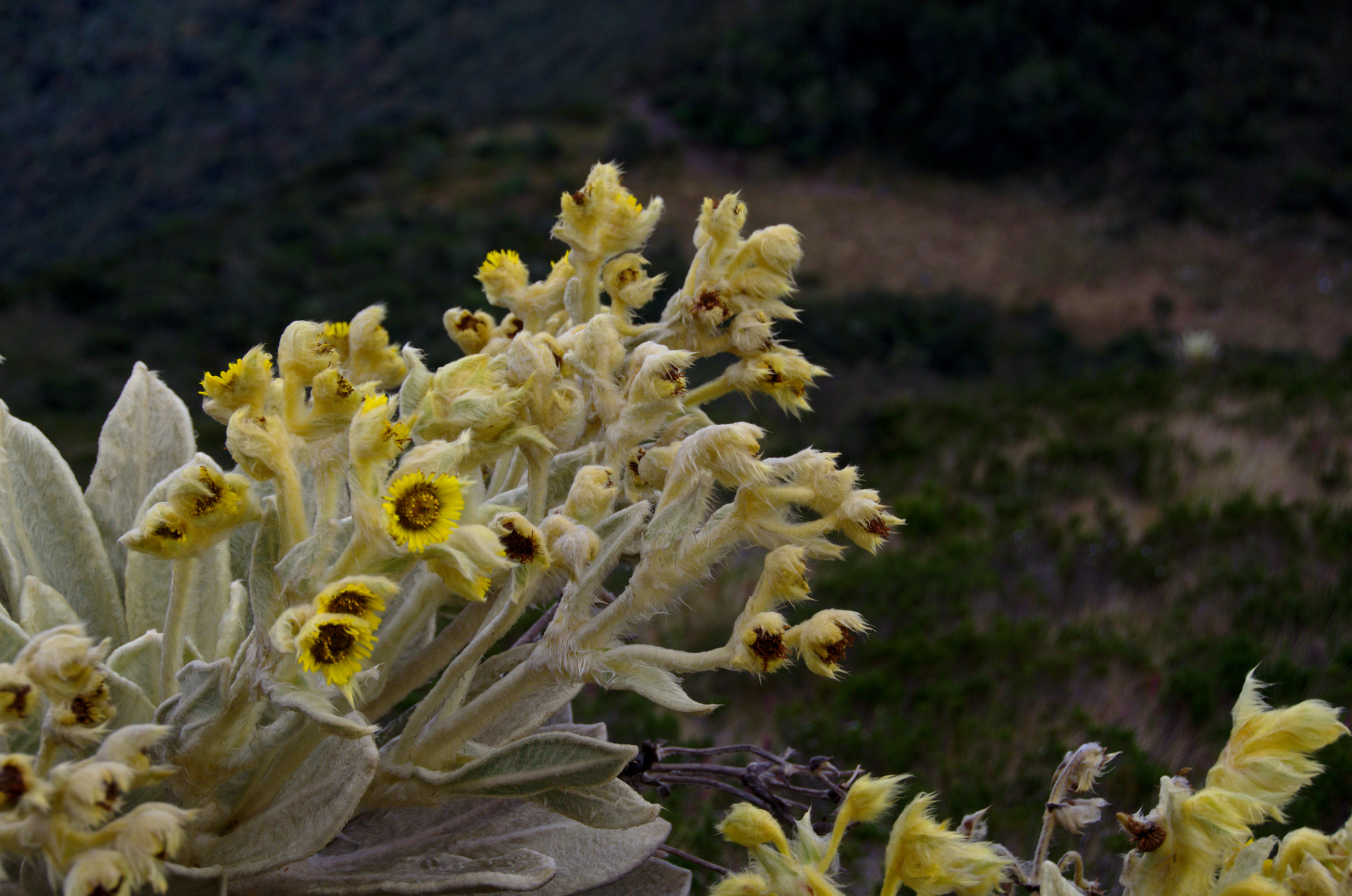
Photo: Aztlec.
Current situation
In March 2025, the Colombian government designated the western flank of the Santurbán massif as a temporary renewable natural resource reserve area, delimiting and protecting an area of 75,344.65 hectares. This resulted in a two-year suspension of the Soto Norte project. However, Aris Mining's contract to formalize Calimineros' small-scale mining activities through the purchase and processing of mineralized material remains in effect.
In addition, the Canadian mining company continues to move the project forward. In September 2025, it released its prefeasibility study, revising the mine’s original design.
Meanwhile, members of the Committee for the Defense of Water and the Santurbán Páramo face threats and stigmatization because of their work. In March 2025, UN Special Rapporteurs and the Working Group on Business and Human Rights denounced these incidents in communications sent to the governments of Colombia, Canada, and the United Arab Emirates, as well as to the companies Aris Mining and MDC Industry Holding Company LLC, the former co-owner of the Soto Norte project.
Regarding the arbitration claim filed by Eco Oro Minerals, in July 2024, ICSID ruled in favor of the Colombian government and rejected the Canadian company’s claim for USD 1.1 billion in compensation.
Concerning the delimitation of Santurbán, in July 2026, the Ministry of the Environment issued a resolution introducing the concept of "progressive delimitation." On that basis, the government proposes to progressively demarcate the páramo, covering 29,199 hectares across 19 municipalities—those where the participatory agreements required by the Constitutional Court in its 2017 ruling have already been finalized. It also proposes two measures on the creation and expansion of reserves to restrict mining in the ecosystem.
Learn more about the impacts of mining on the páramos of Latin America (in Spanish).
Partners:
Related projects
Latest News
The Colombian Government Should Reject the Angosture Mining Project in the Páramos (Spanish Text Only)
PARA PUBLICACION INMEDIATA CONTACTO: Natalia Jiménez, [email protected] Teléfono: (+57) 310-5734176 El Estado colombiano debe rechazar proyecto de gran minería de oro "Angostura" en zona de páramo Desconocería obligaciones constitucionales internacionales Marzo 4 de 2011, Bucaramanga, Colombia – Hoy, La Asociación Interamericana para la Defensa del Ambiente (AIDA) instará al gobierno colombiano a detener un proyecto de gran minería de oro y otros metales que sería un precedente perjudicial para los ecosistemas frágiles en América Latina. El proyecto de minería a cielo abierto Angostura, planeado en el páramo de Santurbán, se encuentra en proceso de aprobación por parte del Ministerio de Ambiente, Vivienda y Desarrollo Territorial colombiano. Hoy se celebra una audiencia pública en la que el Ministerio recibirá argumentos de diferentes sectores. AIDA argumentará que las obligaciones internacionales y constitucionales del Estado colombiano de proteger el ambiente, especialmente áreas de gran importancia ecológica como los páramos, impiden la autorización. "Los páramos son ecosistemas altamente frágiles y la minería a cielo abierto causaría daños graves e irreversibles," dijo Natalia Jiménez, abogada de AIDA. "De acuerdo con la Constitución Política y los Principios de Río, la Convención de Biodiversidad y la de Cambio Climático, todos ratificados por Colombia, el Estado está obligado a conservar los páramos y procurar su intangibilidad." De ser aprobado el proyecto Angostura afectaría de forma definitiva por lo menos 575 ha del páramo de Santurbán (más del 50%), pudiendo afectar un área mayor. En Colombia, como en el resto de la región Andina en los páramos se origina la mayor parte del agua dulce que consumen los habitantes. Tienen una alta capacidad de purificar el ambiente, de estabilizar los suelos y el clima, de prevenir los deslaves y los derrumbes y de contener un alto nivel de animales y plantas. En efecto, son el hábitat de especies únicas en el mundo como el oso de anteojos y el cóndor de los Andes. La Procuraduría General de Colombia, miembros del Parlamento Andino y ex ministros de ambiente, así como organizaciones y expertos ambientales se oponen a la licencia. El proyecto carece de un adecuado Estudio de Impacto Ambiental integral, pues los impactos de la mina y los de la infraestructura complementaria, se analizan en dos procesos de forma fragmentada. Por ello, AIDA también solicita que el Ministerio los unifique y analice el impacto global del proyecto. Así lo ordenan los estándares internacionales y la Corte Suprema de Canadá, país de origen de la empresa Greystar Resources Ltds. que promueve el proyecto. La misión de AIDA es fortalecer la capacidad de las personas para garantizar su derecho individual y colectivo a un ambiente sano por medio del desarrollo, aplicación y cumplimiento efectivo de la legislación nacional e internacional. La protección de agua dulce es una de nuestras líneas mediante la cual buscamos proteger el derecho al agua y asegurar recursos de agua dulce adecuados para las comunidades y los ecosistemas en las Américas. AIDA, 426 17th Street, Oakland, CA 94612 T. (510) 550-6753, F. (510) 550-6740 AIDA Atlixco 138, Col. Condesa, México, DF, 06140, T/F (5255) 52120141 AIDA Diagonal 40 A No 14 – 75, Tel. (57 1) 3381277, Bogotá - Colombia AIDA Costa Rica, San Pedro c/o Centro de Derecho Ambiental y de los Recursos Naturales (CEDARENA) T. (506) 22837080 E-mail: [email protected], Website: www.aida-americas.org
Read more