The natural wonders we could protect with the High Seas Treaty
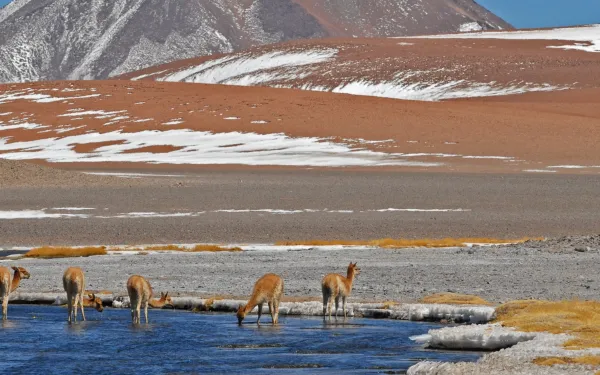
The treaty proposes the creation of marine protected areas in the high seas that would allow for the conservation and rescue of the ocean's rich biodiversity.
Read more
The treaty proposes the creation of marine protected areas in the high seas that would allow for the conservation and rescue of the ocean's rich biodiversity.
Read more
We urgently call on States and companies to respond to these communications and adopt measures to prevent human rights violations.
Read more
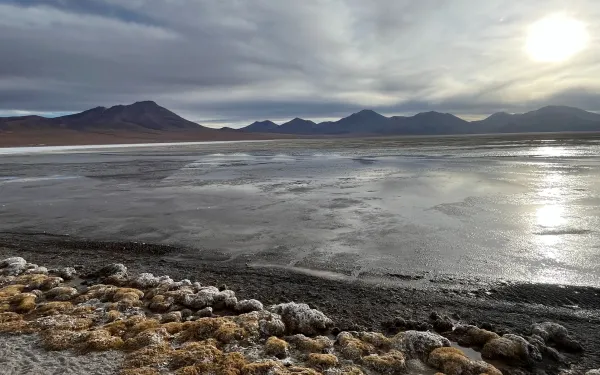
Among the various global commitments to address the current climate crisis, international governance bodies — such as the United Nations — have highlighted the need to double renewable energy production and expand electromobility to decarbonize the global energy mix, calling this process the "energy transition." However, this transition entails intensifying the extraction of minerals essential for developing these technologies. Each region of the world plays a distinct role in the supply chains of minerals used in decarbonization processes. Latin America has been identified as one of the regions with vast mineral reserves capable of fueling this transition. Yet, in this context of growing mining interest, there is a tendency to render invisible the populations who inhabit these territories, as well as the hydrogeological systems of local, regional, and global significance that exist there.Lithium is one of the minerals whose commercial demand has grown significantly in connection with progress toward energy decarbonization. It is in the Gran Atacama region — located in the border area of Argentina, Bolivia, and Chile — where the largest global reserves are found. Nevertheless, for lithium to become available, it must pass through a complex international supply chain, which includes mineral extraction, refining, production of battery electrodes, battery manufacturing, and, finally, the production of electric vehicles.This surge in mineral demand within complex global supply chains raises concerns for the region about the risk of reproducing a new cycle of extractivism, unless public policies are devised and implemented that effectively integrate environmental, social, and territorial development standards.The circular economy, closely linked to the energy transition, emerges as a key strategy to overcome the logic of the traditional linear economic model ("take–make–consume–dispose"). Its aim is to reduce pressure on territories and common goods by incorporating sustainability criteria into supply chains and promoting more rational management of extracted mineral resources.However, this vision of the circular economy — when applied to minerals for the energy transition — can also perpetuate extractivism, particularly in the Global South. Decarbonization options often require vast quantities of minerals for energy storage, extracted at the cost of high environmental and social impacts. This threatens the resilience of the ecosystems from which they are taken and poses risks to the populations that inhabit them.Given these limitations, a circular economy proposal — from the perspective of Latin American extraction zones and applied to transition minerals — should contribute to ensuring that changes in the energy mix toward technologies with lower greenhouse gas emissions (commonly referred to as the energy transition) are truly just throughout all stages of the process. This entails avoiding the creation, expansion, and/or deepening of sacrifice zones; ensuring environmental restoration; guaranteeing the protection of human rights; and securing reparation where rights have been violated. It also requires respecting biophysical boundaries and the resilience capacity of ecosystems. Read and download
Read more
Its flow flows into the Caribbean Sea, so pollution reaches those waters, as well as the Mesoamerican Reef System and the Honduran coasts.
Read more
As a reservoir of global common goods, the protection and sustainable use of the high seas is a right and an obligation of all governments.
Read more
The state has still not implemented the ordered reparations. The population lacks comprehensive health care and is once again exposed to toxic contamination.
Read more
Extracting lithium involves an enormous consumption and loss of water, which does not return to the environment because it is consumed, changed or lost.
Read more

The measure implies the suspension for two years of the gold mining project of Canadian Aris Mining in the Santurbán massif.
Read more
Emissions from the sector are expected to be reduced by up to 30% by 2030, by 80% by 2040 and to reach net zero by around 2050.
Read more