
Project
Foto: Andrés ÁngelStopping the spread of fracking in Latin America
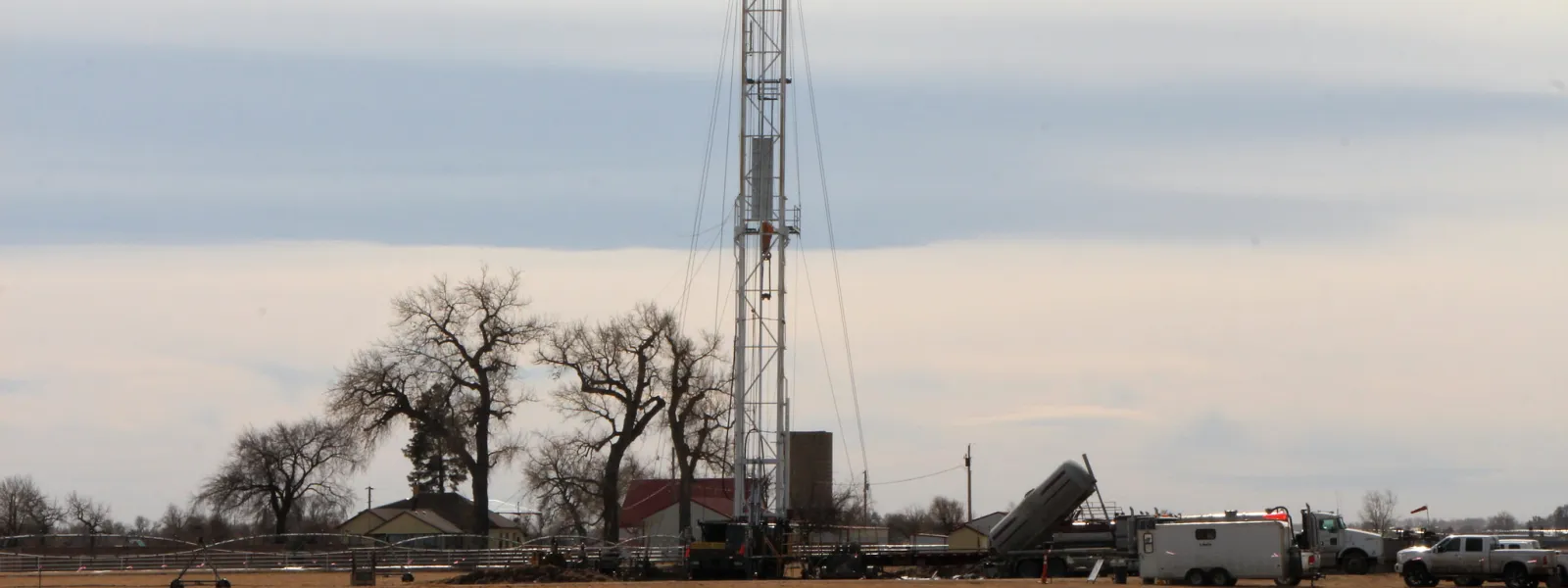
“Fracking” is short for hydraulic fracturing, a process used to extract oil and natural gas from historically inaccessible reservoirs.
Fracking is already widespread in the global North, but in Latin America, it is just beginning. Governments are opening their doors to fracking without understanding its impacts and risks, and without consulting affected communities. Many communities are organizing to prevent or stop the impacts of fracking, which affect their fundamental human rights. But in many cases they require legal and technical support.
What exactly is fracking, and what are its impacts?
A straight hole is drilled deep into the earth. Then the drill curves and bores horizontally, making an L-shaped hole. Fracking fluid—a mixture of water, chemicals, and sand—is pumped into the hole at high pressure, fracturing layers of shale rock above and below the hole. Gas or oil trapped in the rock rises to the surface along with the fracking fluid.
The chemical soup—now also contaminated with heavy metals and even radioactive elements from underground—is frequently dumped into unlined ponds. It may seep into aquifers and overflow into streams, poisoning water sources for people, agriculture, and livestock. Gas may also seep from fractured rock or from the well into aquifers; as a result, water flowing from household taps can be lit on fire. Other documented harms include exhausted freshwater supplies (for all that fracking fluid), air pollution from drill and pump rigs, large methane emissions that aggravate global warming, earthquakes, and health harms including cancer and birth defects.
AIDA’s report on fracking (available in Spanish) analyzes the viability of applying the precautionary principle as an institutional tool to prevent, avoid or stop hydraulic fracturing operations in Latin America.
Partners:

Related projects

AIDA Calls for the Effective Protection of Wetlands in the Americas
The Interamerican Association for Environmental Defense (AIDA) calls on the Member States of the Ramsar Convention to effectively protect wetlands in the Americas. The Contracting Parties of Latin America must protect and promote the wise use of coral reefs, mangroves and high Andean wetlands in their territories. To achieve this vision, we demand that the Contracting Parties engage in proper management of their wetlands, and commit to undertaking adequate assessments of environmental impact. This is particularly important in regions with tourism development, port and hydroelectric projects, and extractive industries, such as mining and hydraulic fracturing. We ask for the inclusion in the Montreux Record of several of the region’s key wetlands: Panama Bay (Panama), Marismas Nacionales and the Veracruz Reef System National Park (Mexico), as well as Otún Lagoon and the Cienaga Grande de Santa Marta (Colombia). We encourage the Contracting Parties to extend existing mechanisms of participation to ensure that civil society is included in wetlands management.
Read moreStatement by NGOs at Ramsar COP12
By World Wetland Network The non-government NGO sector and civil society greatly appreciates this opportunity to address the 12th Conference of Contracting Parties to the Ramsar Convention on wetlands. We have worked together to prepare this statement through the World Wetland Network, an international alliance of NGOs and civil society organizations, many of whom are focused on one or two wetlands in their local area. These organizations reflect their local cultures and communities and are a considerable force for Ramsar wetland conservation. All present understand the values of wetlands for life on earth. For NGOs and Civil Society groups, these values are very close to our heart, our life’s work. Sometimes even a matter of life and death. Wetlands supply us with fresh, clean water. They are essential to food security, providing water for irrigation, rice and fish to sustain us. Wetlands store carbon to mitigate climate change and reduce the impacts of disaster risk by slowing and storing floodwater. They support a wealth of plants and wildlife that make our world a richer place. Wetlands are our home, sustaining us spiritually and culturally. And we in turn are their custodians. Our stewardship ethic inspires us to work on wetland conservation through many activities: on-ground work, research, monitoring, advocacy, education and community engagement. We now know that our earth has suffered the destruction of 64% of all wetlands at the hands of human development since 1900. NGOs and Civil Society fully support the Ramsar goal to slow, stop and reverse the trend in wetlands loss and degradation world-wide. In 2014, World Wetland Network conducted a global survey of NGOs to explore their relationship with the delivery of Ramsar wetland conservation goals. 190 individuals responded from 52 counties, giving us the chance to hear the collective voice of local people. The survey findings are offered now so that Ramsar Parties can successfully deploy both government and non-government resources to ensure the greatest gain for wetlands, wildlife and people. The survey overwhelmingly showed that NGOs are committed to Ramsar and want to do more. Supporting and enabling volunteers and NGO staff to be engaged in wetland conservation requires resources, but small inputs create big outcomes, leading to better programs for Ramsar sites. Ramsar’s Communication, Education, Participation and Awareness activities require greater advocacy, technical and financial support. Many NGOs have skills that could be more actively used in this process. NGOs are concerned that some governments appear to discourage strategic Ramsar site designations. A means for civil society to highlight potential nominations would be welcomed. Some governments do not actively use Ramsar as a tool to protect wetlands. NGOs reported government inactivity, reduced financial resources and reduced involvement of public officials. NGOs are concerned about inaccurate reporting in the national Ramsar reports. Contracting parties should take responsibility to ensure accurate reporting of wetland status to inform effective decision-making. More needs to be done to enforce site protection. Based on the broad findings of our survey, the World Wetland Network offers the following recommendations for Ramsar consideration: a) Recognize that NGOs often create a longer-term and more continuous link for Ramsar sites than Government Representatives. b) Develop more structured guidance for Ramsar Parties, and National Focal Points, on how to engage civil society. c) Explore options to include more NGOs and civil society organisations in the decision-making process for Ramsar at international, regional and country levels. d) Create avenues for NGO and civil society input into reporting on the state of wetlands, Ramsar site nominations and the Montreux Record. e) Prioritize funding and support for NGOs and civil society organisations that are working on Ramsar listed wetlands. Finally, full and effective collaboration between civil society and contracting parties is critical to achieve wetland conservation at the local level. With regard to the draft resolutions for Ramsar COP12, NGOs are calling for stronger linkages to the NGO and civil society sector in DR2 – the Strategic Plan and DR 9, the CEPA program. We trust that this Ramsar COP12 meeting will help civil society, corporate sector and government partners to work together to protect, restore and promote wetlands.
Read moreThe Montreaux Record: Saving Essential Wetlands
Contamination, deforestation and accelerating urban growth pose serious threats to the health of the world’s wetlands. No tool aimed at protecting these valuable ecosystems should be wasted. The Ramsar Convention, an intergovernmental treaty, promotes national action and international cooperation for the conservation and wise use of wetlands. The 168 countries that signed the Convention inscribe ecologically essential wetlands within their boundaries on the List of Wetlands of International Importance. By doing so, nations become obligated to protect these sites. Sometimes, however, their commitment is not enough to ensure that ecosystems remain intact. For this reason, the Ramsar Convention created the Montreux Record, a tool to protect, as a manner of priority, wetlands that are or will be gravely threatened by technological development, pollution or human activity. The Record includes sites that are listed as Wetlands of International Importance. Far from being a blacklist or a negative mark for a country, the registry is an opportunity for governments to demonstrate their accountability for protecting natural resources that require urgent attention. Five primary points demonstrate the importance and effectiveness of this tool: Cooperation for Conservation By including a wetland in the Montreaux Record, a country calls attention to the importance of taking measures to conserve the ecological characteristics of the site through national and international cooperation. Prioritization The Montreaux Record is a quick way for countries to assign high priority to a wetland site and obtain the technical support and financing to conserve it. Support and Technical Advice To obtain this special protection, the government must formally solicit the Secretariat of the Ramsar Convention and complete a questionnaire with information about the wetland. If it’s determined that the inclusion of the site on the Record is necessary to promote its adequate protection, Ramsar undertakes an advisory mission to the country to provide support and technical advice on appropriate conservation actions. Points for Progress The country may request that the wetland be refused registration once the threats that lead to its inclusion are gone, if it considers that the objectives have been met and the site has regained its environmental balance. The country must request a new advisory visit to the site and complete a survey to show the progress made. Restoring Balance The support received by the Ramsar Secretariat adds to the conservation efforts the country is already developing on a national level. Thus, an at-risk wetland under international protection becomes a key site for restoring the ecological balance of the country. Throughout the Americas, various governments have opted to attract international attention for the conservation of their vulnerable wetlands: Costa Rica has included Palo Verde National Park in the Record, the United States has included Everglades National Park, and Chile has included the Carlos Anwandter Sanctuary. As part of our participation in the 12th Conference of Parties of the Ramsar Convention, taking place in Uruguay this week, AIDA will advocate for the inclusion of two threatened wetlands in the Montreaux Record: the Panama Bay Wetlands and the Veracruz Reef System, important ecological sites threatened, respectively, by urban development and port expansion.
Read more