Latin America


Session 3 of the 2022 GCF Watch International Webinar Series (part two)

Important topics around the GCF (part two) This session focused on key issues identified by CSOs during the series initial webinar. It addressed key aspects of the proposals that are presented by accredited entities to the GCF to become approved projects, including tips on how to review them. We also talked and reflected upon the critical aspects of gender and indigenous peoples at the GCF. PanelistsFlorencia Ortúzar, Interamerican Association for Environmental Defense (AIDA): Reviewing funding proposals.Liane Schalatek, Heinrich Böll Stiftung (HBS): GCF project types, approaches & relationship to false solutions.Helen Magata, Tebtebba (Indigenous Peoples' International Centre for Policy Research and Education): Indigenous Peoples at the GCF.Natalia Daza, GCF Gender Monitor for Latin America: Gender at the GCF.Moderator: Bertha Argueta, Germanwatch. Recording Presentations1. Florencia Ortúzar, AIDA: 2. Liane Schalatek, Heinrich Böll Stiftung (HBS): 3. Helen Magata, Tebtebba (Indigenous Peoples' International Centre for Policy Research and Education): 4. Natalia Daza, GCF Gender Monitor for Latin America: 

Read more

Human Rights

Lessons on protecting the right to a healthy environment

A healthy environment implies, among other things, breathing clean air, having access to clean water and quality food, and having a decent place to live. Until recently, the human right to a healthy environment was recognized only at the national level in most countries of the continent. Then, on July 28th, in a historic resolution, the United Nations voted unanimously to recognize a clean, healthy and sustainable environment as a universal human right. The decision is a significant step in the long and complex process of guaranteeing the right to a healthy environment in practice, which has been part of AIDA's story since our inception. "For nearly 25 years, we have invoked the right to a healthy environment to defend people in Latin America from environmental impacts that threaten their lives and dignity," explained Gladys Martínez de Lemos, our executive director. AIDA has always worked to highlight the link between a healthy environment and fundamental human rights such as those to integrity, life, and health. "In international law, it has taken time to assume this relationship, which for the AIDA has been undeniable from the start," added Liliana Ávila, senior attorney. "Our approach to international law begins with those affected and, based on that proximity, focuses on the communities whose rights have been most impacted by environmental degradation."   What we’ve learned As an essential part of our efforts and over the years, we have learned that: The right to a healthy environment is increasingly included in Constitutions, laws and regional justice systems. This has empowered individuals and communities to demand its defense, as well as motivated judges to integrate it into their decisions. Strategic litigation—a combination of legal, communications, social mobilization and advocacy tools—is especially important in promoting the protection of fundamental human rights. The climate crisis has exacerbated the impacts of environmental degradation on the enjoyment of human rights and cases have tripled in number. This has brought with it the need to rely more on comprehensive and less on case-by-case strategies. Despite important advances, there are still large compliance debts for the right to a healthy environment to materialize in practice. The main challenge is the lack of implementation of court rulings. At the same time, the link between a healthy environment and human rights has served a variety of purposes, including the following: Demonstrating that the right to a healthy environment and other rights essential to life are indivisible. Demanding that States comply with their international human rights obligations, especially the application of the principles of prevention and precaution. Promoting the guarantee of access rights in environmental matters such as the right to information and participation.   Our most emblematic cases While defending the right to a healthy environment is present in all our work, there are emblematic cases in which AIDA has helped establish key precedents by guaranteeing it.   Restoration of rights for residents of La Oroya, Peru Our work as an international environmental organization began in 1998 with this case. Since then, we’ve worked to demonstrate how the violation of the right to a healthy environment—due to air pollution with heavy metals from a smelter—has violated the rights to life and health of residents of the city of La Oroya, Peru. We’ve shown how the impacts have been differentiated for women, children and the elderly. And we’ve demanded that the Peruvian State take urgent measures to guarantee the rights of the affected population. In 2005, we took the case to the Inter-American Commission on Human Rights, which in September 2021 brought it before the Inter-American Court after establishing the international responsibility of the State. It will be one of the first cases to centrally address the indivisible relationship between a healthy environment and other human rights. A healthy environment as a fundamental right for human existence In November 2017, in response to a consultation made by Colombia, the Inter-American Court of Human Rights established that a healthy environment is an autonomous right, "fundamental to the existence of humanity." It also recognized the impact of climate change on the effective enjoyment of human rights, especially for the most vulnerable populations such as indigenous peoples, children and people living in extreme poverty. In the framework of the consultation, AIDA presented our observations and participated in the hearing before the Court. We demonstrated that the implementation of large infrastructure projects could affect the environment to such an extent that it would put life and personal integrity, among other human rights, at risk. Our contribution made clear the link between human rights and the environment. Access to justice for people affected by environmental damage When Veracruz residents defended the Veracruz Reef in court against damage from a port expansion, AIDA presented technical and legal evidence supporting recognition of the rights to a healthy environment and access to justice. Together, these obligate the government to allow anyone whose fundamental rights are threatened by environmental degradation the possibility of achieving justice, regardless of whether their connection to the threatened ecosystem is indirect or remote. We directly contributed to the Mexican Supreme Court’s ruling in February 2022, in which the Court determined that authorities violated the right to a healthy environment of the people of Veracruz by authorizing the port project.   "The UN's recognition of the right to a healthy environment as a universal human right is undoubtedly an impetus for the construction of new key precedents for its protection," said Daniela García, AIDA attorney. It’s also an impetus for states to strengthen their policies and legislation focused on environmental protection, as well as to enshrine this right in their legal frameworks. And it’s a tool for people and organizations that defend the environment and human rights to strengthen their work. At AIDA, we are clear about this, and we reaffirm our commitment to our mission of strengthening people's capacity to guarantee their individual and collective right to a healthy environment.  

Read more

Oceans

Ambition and urgency needed as high seas treaty negotiations near end

New York: With only one week to go in the negotiations for a new Treaty to protect two thirds of the ocean - the High Seas - civil society is raising alarm about the level of urgency and ambition towards a robust outcome for the ocean. A number of States have made public commitments to secure an ambitious Treaty at this final scheduled session, but there is concern that this is not being fully reflected in the formal negotiating room. The High Seas Alliance (HSA) expects more ambition to be shown by the United Kingdom, the European Union, Canada and the United States which have been public champions for the ocean, including at the recent UN Ocean Conference. These delegations support some progressive positions within the Treaty negotiations, but too many appear to be maintaining positions that will not result in the transformation we need for a healthy and productive ocean for current and future generations. Some states and groups are pushing for a strong outcome. CARICOM, (the Caribbean Community), the Pacific Small Islands Developing States, New Zealand, Costa Rica and Monaco are setting the pace for a speedy and effective outcome. This round of negotiations, known as IGC5, is the fifth and final scheduled meeting convened by the UN General Assembly. It is tasked with concluding a Treaty to protect Biodiversity in Areas Beyond National Jurisdiction, which includes the High Seas, and which makes up half the planet, two thirds of the ocean. For decades, the international community has struggled to reach this agreement during which time climate change and biodiversity loss have escalated. The HSA recognises that the “package” of elements under negotiation are intrinsically linked and critical to successful completion of the negotiations. “The greatest opportunity of our generation to show we are serious about protecting the global ocean is now. A strong High Seas Treaty is in reach but more ambition is needed. Governments must stick to their commitment to deliver a truly ambitious Treaty this week and finally move to taking action that will allow the ocean to recover and thrive; for marine biodiversity, Earth’s climate and the well-being of generations to come. There is no more time to waste. - Sofia Tsenikli, Senior Strategic Advisor to the HSA. QUOTES FROM MEMBER ORGANIZATIONS CANADA Susanna Fuller, VP Operations and Projects, Oceans North: "With the longest coastline in the world and as a self-declared ocean champion, Canada plays a vital role in achieving a strong Treaty. We are hoping to see Canada’s ambitions meet the urgent need for biodiversity protection and responsible management for 50% of the planet. With climate change impacts accelerating and biodiversity loss increasing, finalizing and implementing this Treaty cannot come fast enough."   LATIN AMERICA Gladys Martínez de Lemos, Executive Director,  AIDA (Interamerican Association for Environmental Defense): "Most Latin American countries have publicly stated their commitment to increase marine protected areas by 30% by 2030. This cannot be achieved without an ambitious High Seas Treaty. In addition, 70% of the areas that would not be protected need a high-level environmental impact assessment process with capacity and implementation. During all the negotiations Costa Rica has shown its commitment to a robust and ambitious Treaty. We thanked Costa Rica for its exemplary championship along these years."   SOUTH KOREA Jihyun Lee, High Seas Alliance Youth Ambassador and undergraduate student at Yonsei University, South Korea: "Youth and future generations demand a strong and meaningful High Seas Treaty that will effectively protect the ocean. We are calling in unified support for world governments to finally take bold action for our ocean."   US Lisa Speer, NRDC: “We applaud the more progressive approach of the United States, which has been a strong advocate for concluding the negotiations in a timely fashion, and for strengthening environmental assessment. However, we need the US to show more leadership to ensure that the new Treaty will result in the creation of a science-based network of fully protected areas in all areas of the High Seas, which scientists tell us is essential to reversing the decline of the ocean."   EU + UK Laura Meller, Protect the Oceans campaign, Greenpeace: "It’s deeply concerning that the European Union and UK continue to insist on maintaining a broken status quo when it comes to creating ocean sanctuaries on the High Seas at this round of negotiations. The bloc and the UK must raise their ambition in the last days of negotiations if they truly want to be global ocean champions, and ensure that a strong Treaty which has the power to create properly protected ocean sanctuaries on the High Seas is finalised this week. If they don’t, their fine words in the run up to these negotiations will be little more than empty rhetoric. The oceans are in crisis. We need ambitious, urgent, action before it’s too late."   PSID + CARICOM Travis Aten, Programme Officer, HSA: "We continue to applaud the Pacific Small Island Developing States (PSIDS) and the Caribbean Community’s (CARICOM) continued leadership during this negotiation process, notably through their support of robust and ambitious conservation positions. As islands that are surrounded by the ocean, it is clear to them that this Treaty must move beyond the current status quo and implement real change on how we manage biodiversity of the High Seas."   Fabienne McLellan, Managing Director, OceanCare: “It is encouraging to see that there is an increased spirit of urgency in the room. Many negotiators are rolling up their sleeves, aware that the world is watching to judge if the rhetoric on ocean commitments made in the lead up to this conference is translating into the Treaty text. While unfortunately some of the Treaty text elements are being watered down, it is not yet too late to make a turn around. Cementing the status-quo and the lowest common denominator is not good enough. We need an ambitious and implementable Treaty. The state of emergency of the ocean demands nothing less. NOTES Covering nearly half of the world’s surface, the High Seas—a true global commons—is only protected by a loose patchwork of poorly enforced rules that are ill-suited to address a growing onslaught of pressures to the water column and seabed below, including climate change, pollution, fishing, and emerging activities like deep-sea mining and bioprospecting. The negotiations began in 2018 and have since benefited from increased scientific and political awareness of High Seas marine life and habitats, as well as the dangers they face from human activities. For instance, until relatively recently, “High Seas” were considered to be largely devoid of life or too remote to face serious threats from overexploitation. Today, scientists have shown that they support marine systems that are vital to the global food supply, terrestrial ecology, and stability of the climate system. SPOKESPEOPLE Latin America Mariamalia Chavez (Spanish, English), [email protected] Gladys Martínez de Lemos (Spanish, English), AIDA, [email protected]  

Read more

Climate Change, Human Rights

Brazilian court reaffirms the power of litigation to strengthen climate action

In July, Brazil's high court ruled that the government has a constitutional duty to allocate the necessary economic resources to support the operation of its Climate Fund, a tool created to combat the climate crisis, which has been paralyzed in recent years. With this ruling, the Supreme Federal Court resolved the first climate litigation in its history and set an important precedent for Brazil and the world. The decision equates the Paris Agreement—which seeks to strengthen the global response to the climate emergency—with a human rights treaty, granting it a higher status than ordinary laws and other inferior norms such as Executive Branch decrees. This may give way for courts and judges in other Latin American countries to make the same recognition. "The Supreme Federal Court created a privileged framework of protection for climate change mitigation and adaptation, one that ensures one of the fundamental pillars of climate action: financing," explains Marcella Ribeiro, an AIDA attorney. "Furthermore, it made clear that the Executive Branch, by restricting resources that by law are destined for climate action, is failing to comply with international agreements and conventions on human rights to which Brazil is a party." The Brazilian Socialist Party, the Socialism and Liberty Party, the Workers’ Party and the Sustainability Network Party filed the lawsuit over the Brazilian government’s failure to provide resources to the Climate Fund in 2020, with support from the Climate Observatory and the Alana Institute. Litigation as a strategic tool The case of the Climate Fund in Brazil demonstrates that strategic climate litigation is an effective and necessary way to help the continent's governments and companies meet their climate commitments. In its most recent report, the Intergovernmental Panel on Climate Change (IPCC) highlighted that climate-related litigation is on the rise and, in some cases, has influenced the results and ambition of climate governance, understood as the way in which different actors—state, civil society, academia and the private sector—define, implement and monitor actions aimed at addressing the causes and consequences of climate change. "In the global south, Brazil is one of the countries where climate litigation is developing most strongly," highlights Javier Dávalos, AIDA senior attorney. "The country is characterized by a growing ecosystem of litigants and organizations that are taking the climate fight to court." Brazil's push for climate litigation in the region is critical because the country is home to 65 percent of the Amazon, a key ecosystem for global climate regulation and one that is at serious risk. Brazil emits the most carbon dioxide of any Latin American nation, with deforestation representing the largest source of these emissions. In this sense, it is fundamental that one of the judges who heard the Climate Fund case explicitly pointed out the large increase in deforestation in the Amazon in 2021— the highest in 15 years: more than 22 percent, and a total area of 13,235km². It is therefore essential to demand in court that the Brazilian state fulfill its obligations to protect the Amazon and the global climate. The importance of financing solutions Transitioning to a zero carbon economy and avoiding the worst physical impacts of climate change requires investing nearly $125 billion USD by 2050, according to the Net Zero Financing Roadmaps study commissioned by the United Nations High Level Champions. These resources must come from two complementary sources, private and public financing. Government financing of climate action represents a relevant public policy and thus must conform to a country's laws. In its ruling, the Brazilian Supreme Federal Court recognized the Climate Fund as the main federal instrument for financing climate action and meeting national greenhouse gas emission reduction targets. It also noted that the government kept the fund paralyzed for two years. Considering that the resources intended to fight the climate crisis seek to materialize fundamental human rights, the court concluded that the government couldn’t restrict them. "Guaranteeing the allocation of resources for climate action means setting a clear limit from which we cannot retreat," Ribeiro said. "Despite the clear violation of the Brazilian state's duties regarding the right to a healthy environment, reflected in the dismantling of environmental norms and institutions, the Brazilian Supreme Court's ruling put a brake on the erosion of the legal protection of the environment and climate in the country." Learn about this and other cases on AIDA’s Plataforma de Litigio Climático para América Latina y el Caribe.  

Read more

Climate Change, Human Rights

Session 3 of the 2022 GCF Watch International Webinar Series (part one)

Important topics around the GCF (part one) This session focused on key issues identified by CSOs during the series initial webinar. It addressed important aspects of the GCF and CSOs' engagement, including the outcomes of the latest Board meeting, the replenishment process and access to GCF finance, as well as engagement with National Designated Authorities (NDA).  panelistsErika Lennon, Center for International Environmental Law (CIEL): Key findings from B33 and what lies ahead.Mirja Stoldt, Namibia Nature Foundation (NNF): Interacting with the NDA.Andrea Rodríguez, Fundación Avina: Access to GCF finance through the accreditation processModerator: Liane Schalatek, Heinrich Böll Stiftung (HBS). Recording   Presentations1. Mirja Stoldt, Namibia Nature Foundation (NNF): 2. Andrea Rodríguez, Fundación Avina: 

Read more

Human Rights

AIDA applauds recognition of healthy environment as a universal human right

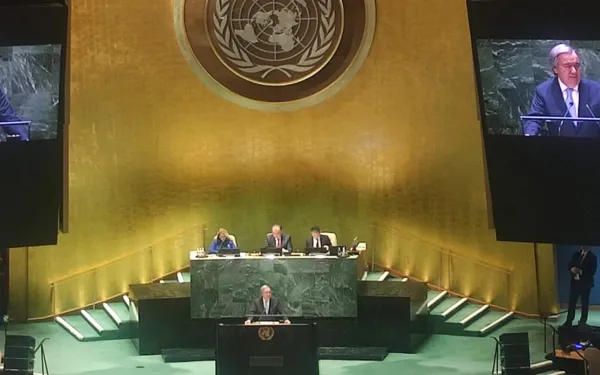
The decision adopted by the UN General Assembly is a call for States to recognize that the defense of the environment is essential for existence on the planet. The historic resolution strengthens longtime efforts to guarantee this right in practice.   New York, USA. In a landmark resolution, the UN General Assembly recognized a safe, healthy, clean and sustainable environment as a universal human right. Since this right was absent from then Universal Declaration of Human Rights in 1948, the decision marks a milestone for international human rights law. The resolution endorses language similar to that proposed in October 2021 by the UN Human Rights Council, which issued a draft resolution in June to the 193 members of the General Assembly. Sponsored by Costa Rica, Maldives, Morocco, Slovenia and Switzerland, the universal recognition of the right to a healthy environment was unanimously approved today, by a vote of 161-0. Liliana Avila, senior attorney of AIDA’s Human Rights and Environment Program, responds: "The United Nations recognition is a very important call for States to recognize that the environment involves essential elements without which our existence on the planet would not be possible. Most of the Constitutions in the continent already recognize the healthy environment as a right and citizens claim it daily through different mechanisms. The step taken today undoubtedly strengthens these efforts and advances us towards the construction of societies where this right is a reality." Gladys Martinez de Lemos, Executive Director, states: “Today marks a historic moment, one that enables citizens to demand the creation of measures to guarantee in practice a right that is now universally recognized.  At AIDA we celebrate this new tool and reaffirm our 25-year commitment to protecting a healthy environment as a fundamental human right. The UN recognition represents a hope for justice for those who suffer from environmental degradation around the world—people like the residents of La Oroya, Peru, who have for decades breathed polluted air; families in Central America, forced to migrate due to the impacts of the climate crisis; coastal communities in the Caribbean who lost their homes due to the destruction of mangroves and reefs, natural barriers against storms and hurricanes; and the thousands of environmental defenders risking their lives to protect their territories." As a regional organization, AIDA would like to highlight the fact that a Latin American nation, Costa Rica, has led the proposal for recognition before the General Assembly. Its role was key to the result we are celebrating today. We also highlight the hard work of civil society organizations, social movements, local communities and indigenous peoples to promote this recognition. A healthy environment – recognized as a right by more than 150 States around the world – is a prerequisite for the realization of other human rights. Its recognition as a universal human right can lead to more effective laws and policies, and can help to empower local communities in the protection of their territory. Press ConTACT: Victor Quintanilla (Mexico), [email protected], +525570522107  

Read more

Session 2 of the 2022 GCF Watch International Webinar Series

CSO-led monitoring and evaluation of GCF-approved projects As civil society organizations that follow on the GCF we have put a lot of attention in the review of funding proposals presented to the Board. During this session we looked further on, into the basic aspects of the implementation of the projects and programs that are approved by the Board.  PanelistsBertha Argueta, Germanwatch: The role of different actors in the implementation of projects approved by the GCF.Peter Carlson, Communications Associate of the IRM: The role of the Independent Redress Mechanism (IRM).Said Chakri, Association of Teachers of Life Sciences and Earth of Morocco (AESVT): Monitoring implementation of projects in Africa.Titi Soentoro, Aksi! for Gender, Social and Ecological Justice: Monitoring implementation of projects in Asia.Tara Daniel, Women's Environment and Development Organization (WEDO): The implementation of Gender Action Plans.Moderator: Claire Miranda, Asian Peoples' Movement on Debt and Development (APMDD). Recording Presentations1. Bertha Argueta, Germanwatch: 2. Peter Carlson, Independent Redress Mechanism (IRM):  3. Titi Soentoro, Aksi! for Gender, Social and Ecological Justice: 4. Tara Daniel, Women's Environment and Development Organization (WEDO): 

Read more

From the seabed to the high seas: How international negotiations can save the ocean's future

This event aimed to present the general characteristics of ongoing international negotiations that seek to improve the conservation and sustainable use of the oceans and their resources. Through a panel discussion, the event highlighted the obstacles, developments and expectations of negotiations related to ocean mining, fisheries subsidies, and protection of the high seas. PanelistsErnesto Fernández Monge, The Pew Charitable Trusts: Fishing subsidies.Matthew Gianni, Deep Sea Conservation Coalition (DSCC): Deep-sea mining.Mariamalia Rodríguez, High Seas Alliance: High seas treaty.Facilitator: María José Gonzalez-Bernat, Interamerican Association for Environmental Defense (AIDA). Recording Presentations1. Ernesto Fernández Monge, The Pew Charitable Trusts: 2. Matthew Gianni, Deep Sea Conservation Coalition (DSCC): 3. Mariamalia Rodríguez, High Seas Alliance: 

Read more

Examining the obstacles to energy transition in Latin America

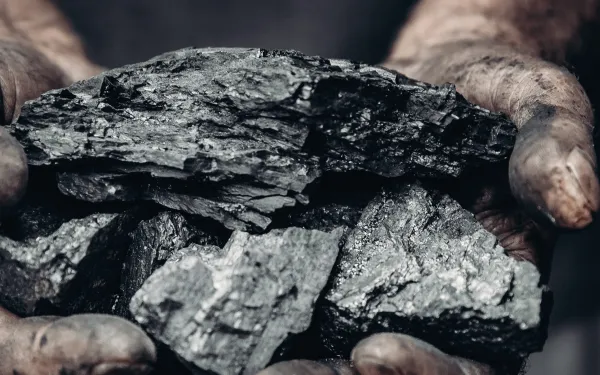
The climate crisis and its impacts on human rights require the governments of Latin America to design and implement laws, public policies, and other measures aimed at protecting the lives and integrity of their people. In the region most threatened by global warming, they must do so through mitigation, adaptation and attention to the losses and damages already caused. Given that the current energy system based on fossil fuels is the main cause of the climate crisis, as well as the inequalities that are closely linked to it, the framework for climate action in the Americas must be that of a just energy transition. The energy transition is an opportunity for the continent to abandon old energy production models characterized by large social and environmental impacts, and to move towards environmentally and climatically sustainable methods, while respecting the human rights of the communities and sectors involved.  Several countries in the region are failing to integrate this perspective. The case of Colombia exemplifies a risky trend for the region—the government is currently promoting a host of climate-aggravating projects, which deepen dependence on fossil fuels, as useful to the energy transition. Such regressive measures include: the expansion of coalmines in operation or the opening of new mines under the argument that the export of the mineral will finance the transition; and the favoring of natural gas exploitation through tax benefits and the easing of environmental permitting processes, under the false premise that gas is a clean energy source. Sounding the alarm Given the worrying panorama in Colombia, AIDA will be drafting and distributing a series of Urgent Alerts that call attention to projects, public policies and regulations that hinder a just transition, and deepen dependence on fossil fuels. They will be collective alerts, supported by other international organizations that, like AIDA, seek climate justice and work in defense of environmental and human rights. Each alert will be sent to the national authorities in charge of the measure in question. Geared toward promoting reflections on how to advance in the just energy transition, each alert will include public policy and regulatory recommendations based on the State's international obligations and commitments on climate, environmental and human rights issues. In each case, the message is clear—by continuing with the promotion, extraction and use of gas and coal, the Colombian State would be failing to comply with these obligations. The first alert calls attention to the potential definitive diversion of the Bruno stream in the department of La Guajira to expand production at and revenue from El Cerrejón, the largest open-pit coal mine in Latin America and one of the ten largest in the world. The project not only implies an increase in greenhouse gas emissions—coal is responsible for 44 percent of global carbon dioxide emissions—but is also a threat to the rights to water, food security and health of the Wayuu indigenous communities that depend on the stream. A regional scope The measures adopted by the Colombian State may well reflect the situation in other countries of the region, or be replicated in them. Several alerts will refer to the exploitation of hydrocarbons through fracking, a controversial technique advancing blindly in Colombia and other Latin American countries. Another will warn of the use of hydrogen, promoted as a viable and clean energy alternative. In Colombia there is already a public policy route to advance with its implementation and two pilot projects underway. Hydrogen production results from burning coal or gas at high temperatures. Recent studies warn that this requires capturing and storing carbon dioxide, so the alternative depends on being able to store carbon indefinitely and avoid leakage into the atmosphere. In addition, hydrogen production is energy-intensive and involves the emission of gases during the heating and pressurization process, as well as the use of natural gas as fuel. As a region, we cannot afford to delay the energy transition and the achievement of climate justice, both urgent and necessary goals, with options that will only tie us more and more to fossil fuels and to an energy system that only intensifies social inequalities and environmental degradation.    

Read more

Oceans, Human Rights

AIDA celebrates WTO agreement to curb harmful fisheries subsidies

We consider the agreement a "crucial step" for the sustainability of fishery resources in the short, medium and long term, as well as for ensuring food security and the livelihoods of coastal communities.   Geneva, Switzerland. As an environmental organization that has closely followed the negotiations to limit global fisheries subsidies, the Interamerican Association for Environmental Defense (AIDA) applauds that member countries of the World Trade Organization (WTO) reached, after more than two decades, a binding agreement to curb some harmful fisheries subsidies. It represents a fundamental step toward achieving the effective management of our fisheries resources, as well as toward ensuring global food security and the livelihoods of coastal communities. "This is a crucial step towards ensuring the sustainability of fishery resources in the short, medium and long term," said Gladys Martinez de Lemos, executive director of AIDA. "We urge the 164 member countries of the WTO to ratify the agreement as soon as possible, and to implement the necessary changes derived from it to contribute significantly to the health of marine life and the well-being of those who depend on it." It is estimated that, each year, governments spend approximately $22 billion in negative subsidies to offset costs for fuel, fishing gear and vessel improvements, among others. As a result of that support, 63 percent of fish stocks worldwide must be rebuilt and 34 percent are fished at "biologically unsustainable" levels, according to recent data. The agreement reached at the 12th WTO Ministerial Conference, held June 12-16, provides for the creation of a global framework to reduce subsidies for illegal, unreported and unregulated fishing; subsidies for fishing overexploited stocks; and subsidies for vessels fishing on the unregulated high seas. The high seas fishing provisions represent an achievement for Latin America, a region whose fishing industry is severely threatened by aggressive foreign fleets fishing inside and outside of national jurisdictions. The agreement also includes measures aimed at greater transparency and accountability in the way governments support their fisheries sector. The countries agreed to continue negotiating rules to curb subsidies that promote fishing in other countries' waters, overfishing and the overcapacity of a fleet to catch more fish than is sustainable. "This agreement is one part of the movement we need at the international level to contribute to the health of the ocean," explained Magie Rodríguez, AIDA attorney. "We have three more to go: the high seas treaty, more ambitious and rigorous standards for ocean mining, and recognition of the key role the ocean plays in the climate crisis. We will continue to work with our allies to achieve these goals.” Although negotiations on fisheries subsidies officially began in 2001, it was not until the 2017 WTO Ministerial Conference that countries committed to taking action to reach an agreement at the next conference—which was to take place in December 2020, but was suspended due to the pandemic. This commitment also responds to the fulfillment of target 14.6 of the United Nations Sustainable Development Goals. In 2021, the Ministerial Conference failed to reach an agreement, but it did reach a draft text. "This year's achievement would not have been possible without the joint efforts of many different organizations, academia, governments and the private sector," said Martinez. press contact Victor Quintanilla (Mexico), [email protected], +525570522107  

Read more