
Project
Victory: Constitutional Court Defends Right to Prior Consultation
On January 23, 2008, the Colombian Constitutional Court declared the Forest Law of 2006 to be unconstitutional and therefore, invalid, because lawmakers did not consult with indigenous, afrodescendant, and tribal communities during development of the law as required.
This decision is an advance for these Colombian communities who view many economic development projects and policies as a threat to their traditional territory and cultural identity, as well as the environment. The ruling also establishes a valuable legal precedent that can be used to bolster indigenous and tribal communities’ rights in other legal cases throughout the Americas.
The Colombian government is required by law to consult with indigenous and tribal communities regarding administrative and legislative decisions that may affect them. It is obligated to do so because the Colombian Congress previously adopted into law “Convention 169,” a treaty of the International Labour Organization that protects this right and others.
In this case, the Court decided that indigenous and tribal communities should have been consulted because the Forest Law regulates forest issues in general terms, and contains provisions that “will likely affect areas generally used by the communities, which could impact their lifestyles and their close relationships with the forests.”
The court also declared that the requirement to consult with indigenous and traditional communities cannot be replaced with the general public participation process that the government carried out regarding the Forest bill. Rather, to comply with the law, the government should inform the communities about the proposed law, explain its implications and how it could affect them, and give them opportunities to effectively state their opinions regarding the bill.
As a result of this court ruling and civil society’s call to respect the right to prior and informed consultation, the Colombian government proposed a law to regulate and enforce this fundamental right. The Ministry of Agriculture also began developing a new forest law, this time using a process that complies with prior and informed consent procedures.
The lawsuit was brought by a group of students and professors from the University of Los Andes Law School in Bogota with the support of AIDA. Social organizations including the Proceso de Comunidades Negras, the National Indigenous Organization of Colombia (ONIC) and CENSAT Agua Viva also supported the group in presenting this case.
This group also filed a second lawsuit against the Forest Law alleging that the law violated Constitutional provisions protecting the environment. However, because of the January court decision, no decision will be made on this second suit.
Related projects
Protests Challenge Hydropower Companies at Global Event in Paris
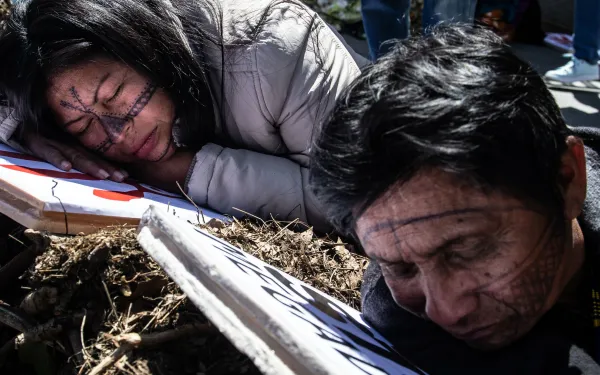
Civil society organizations denounce corporate attempts to label hydroelectric dams as “green energy,” citing human rights abuses and environmental damage. Paris, France—A coalition of activists, organizations and indigenous leaders convened a series of events this week in light of the opening of the World Hydropower Conference, calling attention to the socially and environmentally destructive nature of hydroelectric dams, as well at their climate-aggravating impacts. From May 14-16, the International Hydropower Association (IHA) is hosting its biannual World Hydropower Congress in central Paris. The industry seeks to portray hydroelectric dams as a clean source of renewable energy, which they claim are essential for delivering the Paris Climate Agreement and the United Nations’ Sustainable Development Goals. However, a broad coalition of environmental and human rights organizations, together with social movements, argue that the dam industry’s claims amount to greenwashing, and are aimed at capturing new sources of finance from institutions like the Green Climate Fund. They point to numerous cases where hydropower projects have provoked disastrous consequences for people and the environment. Citing mounting scientific evidence that dams are a significant source of greenhouse gases—CO2and, particularly, methane—civil society groups also highlight the role of dams in aggravating climate change. A joint statement signed by more than 250 civil society groups from 70 countries calls attention to the false promises of hydropower and the urgent need for truly sustainable energy solutions. It is available in five languages. These and other issues—including the impacts of hydroelectric dams on natural and cultural heritage sites—were debated by scientists, activists and representatives of affected communities from Brazil, Colombia, Myanmar and Turkey in a parallel event to the IHA Congress, held at the Town Hall of the 6thArrondissement of Paris on May 13. The conference was organized by the NGOs Planète Amazone, GegenStrömung / CounterCurrent, Rivers without Boundaries, International Rivers, and AIDA. Myint Zaw, an activist and researcher from Myanmar who was awarded the 2015 Goldman Prize, was one of the speakers at the conference. “The food security of millions of people is threatened by dam projects planned for the Irrawaddy River that would impact important farmlands needed for rice production along the river and in delta region,” Zaw said. During Tuesday’s opening of the World Hydropower Congress, representatives of indigenous communities, social movements and non-governmental organizations protested together with activists from Extinction Rebellion in front of the Espace Grande Arche in La Défense. A focus of the protest was to call attention to the growing number of human rights and environmental activists murdered in dam-related conflicts. “Miguel Ángel Pabón Pabón disappeared as a result of his activism against the Hidrosogamoso Dam in Colombia, which has continued despite severe human rights violations,“ said Juan Pablo Soler from Movimiento Ríos Vívos of Colombia, mentioning one of many defenders lost. In Gabon, the Kingélé and Tchimbélé dams are adversely affecting populations living beside rivers. “During heavy rains, some villages are flooded when reservoirs overflow. Rivers turn into lakes, water becomes polluted and fish die intoxicated. There is no structure to help us on the ground, nor does the government hear our complaints, which is why we look abroad to issue a distress call,” proclaimed Assossa, a Pigmy leader. Three representatives of the Munduruku people from the Brazilian Amazon—Chief Arnaldo Kabá, Alessandra Korap and Candido Waro Munduruku—participated in both the parallel conference and the protest. After the protest, the Munduruku attempted to hand deliver a letter to the corporate headquarters of Électricité de France (EDF), majority-controlled by the French government. EDF is involved in the controversial Sinop dam on the Teles Pires River, a tributary of the Tapajos, and has contributed to studies that promote the São Luiz do Tapajós mega-dam, which would flood Munduruku territory. EDF representatives refused to speak with the Munduruku leaders. “EDF invades our territory, destroys our rivers, our territory and our sacred places. And when we come here to deliver a letter to this huge company, we’re barred,” stated Alessandra Munduruku. “We’re sad, but we’re determined to continue our struggle to defend our territory.” Press Contacts: Gert-Peter Bruch, Planète Amazone, [email protected] (French, English), + 33 (0)7 81 23 92 91 Brent Millikan, International Rivers, [email protected] (English, Portuguese), +55 61 8153-7009 Thilo F. Papacek, GegenStrömung – CounterCurrent / Forum Umwelt und Entwicklung, [email protected] (German, Portuguese, Spanish, English), ++49 151 412 145 19 Eugene Simonov, Rivers without Boundaries, [email protected](Russian, English, Chinese), +79 (0) 165 491 22 Resources: Further information about the parallel event from May 13: http://www.transrivers.org/2019/2634/ The joint statement, available in Chinese, English, Portuguese, Russian and Spanish can be downloaded here: https://drive.google.com/open?id=1pgS3YHm4zy5_LFSSjRe0KH-DMK773DQI Link to the Munduruku letter of protest to EDF: Électricité de France (Portuguese and English):https://drive.google.com/file/d/1TxqIiOuJDxNUI2YKPtUBrE_wucJLFl-E/view?usp=sharing Press photos available free of charge (Credit: Todd Southgate): https://tinyurl.com/y34b2g7u Clip reel of protest at opening of IHA Congress and Munduruku attempt to deliver letter at IHA headquarters: https://youtu.be/9BrI3AqVnXE Fact sheet from CounterCurrent on hydroelectric dams and UN Sustainable Development: tinyurl.com/y6mbjqj2
Read more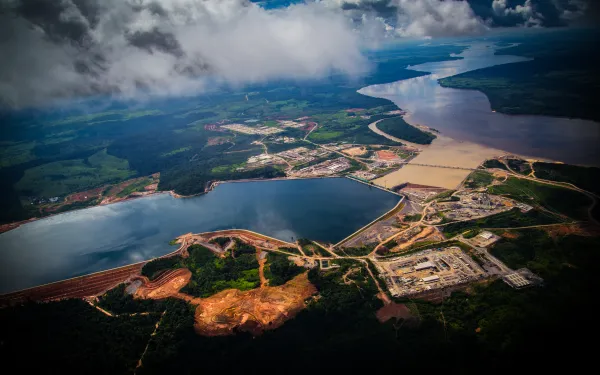
The False Promises of Hydropower
How dams fail to deliver the Paris Climate Agreement and UN Sustainable Development Goals A Joint Statement by Civil Society Organizations on occasion of the 2019 World Hydropower Congress in Paris, France We live in an age of urgency. Scientists have warned that we have little time to act to bring climate change under control and protect the integrity of life on our planet. Confronting the climate crisis requires creative solutions that both protect nature and respect human rights. Facing these challenges, we cannot remain silent onlookers while corporate profiteers, financiers, and their allies peddle false solutions for addressing climate change and implementing sustainable development. A flagrant example of such deception is the attempt to portray large hydroelectric dams as a ‘clean and green’ source of energy, as can be seen at the 2019 World Hydropower Congress. Organized in Paris by the industrial lobby of the International Hydropower Association (IHA) in partnership with UNESCO, the conference’s title reads, “Delivering the Paris Climate Agreement and the Sustainable Development Goals.” Such glossy portrayals of hydroelectric dam projects—with an eye toward capturing financial incentives through mechanisms like Climate Bonds and the Green Climate Fund—conveniently ignore a long legacy of social and environmental catastrophes, economic waste and, all too often, massive corruption schemes that are the antithesis of truly sustainable development. ... A Call for Action The undersigned civil society organizations call on the members of the International Hydropower Association, governments and international financial institutions to implement the following urgent actions: Steer priorities, investments and financial incentives away from additional hydroelectric projects and towards energy efficiency and truly sustainable renewable energy options (solar, wind and biomass and, when appropriate, micro-hydro). Special attention should be given to opportunities for technological innovation, decentralized generation and improving energy access among isolated, off-grid communities. Eliminate financial incentives for new hydroelectric projects within climate change mechanisms, such as the Green Climate Fund and Nationally Determined Contributions, and within programs to promote implementation of the UN Sustainable Development Goals (with the possible exception of micro-hydro projects). Commission independent audits of controversial existing dam projects and basin-wide cascades in terms of their social and environmental consequences, identifying steps to mitigate impacts and ensure just reparations for affected communities, based on direct consultations. When such measures are prohibitively expensive or otherwise inviable, the de-commissioning of dam projects should be promoted. Ensure the alignment of operational procedures for existing hydroprojects with relevant territorial plans at the basin level, such as integrated water resource management and protected areas that ensure key ecological processes and the rights of local communities, based on the concepts and tools of participatory, adaptive management. Ensure that renewable energy policies and projects adopt, across the board, robust guidelines to safeguard human rights and environmental protections, such as ILO Convention 169 and the UN Principles on Business and Human Rights. No energy facilities that potentially impact the territories and livelihoods of indigenous peoples and other traditional communities should be authorized without obtaining the free, prior and informed consent of the community and ensuring the cooperative design of co-management strategies. Among the benefits of such a paradigm shift in energy strategies and development planning will be major contributions toward protecting the world’s last free-flowing rivers, vital for climate resiliency, biodiversity conservation and sustainable livelihoods. Energy companies and governments must halt all efforts to dam the world’s remaining free-flowing rivers and concentrate instead on: i) improving efficiency and the sustainability of existing hydropower projects and cascades; and ii) investing in energy efficiency and truly sustainable renewables. Moreover, governments must urgently promote the permanent legal protection of the world’s last free-flowing rivers, including transboundary watercourses, with due respect for the territorial rights of indigenous peoples and other traditional communities, who play fundamental roles as the guardians of healthy rivers. Read the Full Statement Here
Read more
Nature first: it’s time to build environmental consciousness
Speaking in front of more than 500 people was a unique and beautiful experience, above all for the reason I came together with such an amazing group of people. We were seven diverse individuals with two powerful things in common: our love for the natural environment and our work to preserve it. We were in Santiago, Chile as part of the conference, “Nature first: a new deal with the environment.” The great interest the audience had in the event filled me with such joy, as did the opportunity to speak beside my colleagues from The Naturalists, a series of interviews in which professionals from distinct environmental professions were invited to speak about what being a naturalist implies in the modern world. The video series and this event was put on by Ladera Sur, an online platform and community built around nature, the environment, the outdoors, travel, and much more. It was Ladera Sur that introduced us as 20thCentury Naturalists, a great honor and an even greater obligation. But what does “nature first,” a title with such urgency, really mean? It means that, for too long, nature has been subsidizing our technological advancements and even our quality of life. We live in a world in which those who have the means can do practically anything. Perhaps some of us have stopped to think about tomorrow, and how it may be difficult for our children or grandchildren to enjoy even the simplest things in life. But the time has come to reorganize our priorities. We have neither the time, nor the credit, to continue borrowing from nature. Before proceeding with any potentially harmful project or activity, we first must demonstrate that the activity would not hurt the health of the planet. Only after assuring that is it worth asking whether a project is also good business, or if it will make our lives easier or more comfortable. This is not the position of an eco-terrorist, nor is it counter to economic development. It’s simply looking ahead at the reality of a living on a sick planet—a planet on whose health we depend. The good news is that the changes we need to make to resolve the environmental crisis are not only achievable; they are what people living on this planet actually want. A world with low emissions is a cleaner and more just world; a world driven by renewables means less pollution and more equitable access to energy; a world with more protected natural areas is a greener, healthier, more verdant world; it is rich in biodiversity and has a greater capacity to provide clean air and water. See the complete video of the conference below.
Read more