
Project
Victory: Constitutional Court Defends Right to Prior Consultation
On January 23, 2008, the Colombian Constitutional Court declared the Forest Law of 2006 to be unconstitutional and therefore, invalid, because lawmakers did not consult with indigenous, afrodescendant, and tribal communities during development of the law as required.
This decision is an advance for these Colombian communities who view many economic development projects and policies as a threat to their traditional territory and cultural identity, as well as the environment. The ruling also establishes a valuable legal precedent that can be used to bolster indigenous and tribal communities’ rights in other legal cases throughout the Americas.
The Colombian government is required by law to consult with indigenous and tribal communities regarding administrative and legislative decisions that may affect them. It is obligated to do so because the Colombian Congress previously adopted into law “Convention 169,” a treaty of the International Labour Organization that protects this right and others.
In this case, the Court decided that indigenous and tribal communities should have been consulted because the Forest Law regulates forest issues in general terms, and contains provisions that “will likely affect areas generally used by the communities, which could impact their lifestyles and their close relationships with the forests.”
The court also declared that the requirement to consult with indigenous and traditional communities cannot be replaced with the general public participation process that the government carried out regarding the Forest bill. Rather, to comply with the law, the government should inform the communities about the proposed law, explain its implications and how it could affect them, and give them opportunities to effectively state their opinions regarding the bill.
As a result of this court ruling and civil society’s call to respect the right to prior and informed consultation, the Colombian government proposed a law to regulate and enforce this fundamental right. The Ministry of Agriculture also began developing a new forest law, this time using a process that complies with prior and informed consent procedures.
The lawsuit was brought by a group of students and professors from the University of Los Andes Law School in Bogota with the support of AIDA. Social organizations including the Proceso de Comunidades Negras, the National Indigenous Organization of Colombia (ONIC) and CENSAT Agua Viva also supported the group in presenting this case.
This group also filed a second lawsuit against the Forest Law alleging that the law violated Constitutional provisions protecting the environment. However, because of the January court decision, no decision will be made on this second suit.
Related projects
A victory for climate justice: Colombia includes climate obligations in environmental impact studies
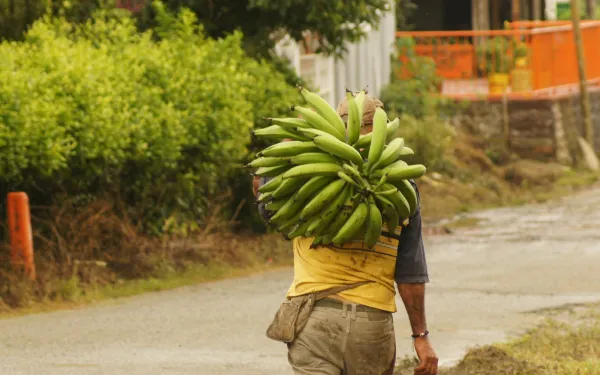
In Colombia, a case that began as a requirement for the coal sector ultimately became a regulation applicable to all projects requiring an environmental permit.This refers to the publication of the General Methodology for the Preparation and Submission of Environmental Studies, a regulatory "master key" that requires quantifying greenhouse gas (GHG) emissions and including climate mitigation and adaptation measures in mining, hydrocarbon, energy, and infrastructure projects, among others.Colombia's Ministry of Environment and Sustainable Development published this methodology in late July 2026, in compliance with a 2023 ruling by the Council of State.This important resolution was the result of a compliance action filed by a coalition led by AIDA and also comprising the "José Alvear Restrepo" Lawyers’ Collective (CAJAR), Censat Agua Viva, the Center for Research and Popular Education (CINEP), POLEN Transiciones Justas, the University of Magdalena, and researchers.The new methodology for environmental studies represents a major step forward in protecting the right to a healthy environment and ensuring the right to a healthy climate through preventive measures.It also marks a victory for climate litigation in the region, demonstrating that the Colombian government failed to fulfill specific climate commitments and securing a ruling ordering one of the competent authorities to take concrete actions for proper climate management.Other countries in the region may replicate the strategy employed and the precedent set. A three-year path toward climate justiceIn May 2023, AIDA led a coalition of civil society organizations, think tanks, researchers, and a university that filed a compliance action with the Administrative Court of Cundinamarca. The goal was to demand compliance with laws related to addressing the climate crisis in the coal sector.In Colombia, neither environmental regulations nor climate change management regulations address GHG mitigation or the climate impacts generated by the coal sector, despite the significance of coal projects in the country and their role in exacerbating the climate crisis.Colombia is by a wide margin the largest coal producer and exporter in Latin America. In 2024, it accounted for 87.67% of regional production and 99.84% of exports, playing a significant role in its trade balance and its rail and port infrastructure. Furthermore, it ranks third in the region in terms of final consumption (24.52%), and in the last 12 months, nearly 5% of the country’s electricity was generated from coal.But without specific regulations, environmental authorities lack the tools to establish effective measures to prevent, mitigate, and manage the climate impacts of coal industry activity.The Administrative Court of Cundinamarca ruled in the coalition's favor in the first instance. The Council of State—the country’s highest authority on administrative matters—upheld the ruling on second instance. Consequently, it ordered the Ministry of Environment and Sustainable Development to comply with the obligations outlined in Law 1931 of 2018, which establishes the minimum actions the country must take to honor its international climate commitments.And this is where the case went beyond its initial objective: the ruling established a specific obligation for the ministry to regulate the consideration of climate impacts not only in coal sector projects but in all projects requiring an environmental permit. In other words, it includes the mining, hydrocarbons, energy, and infrastructure sectors, among others.This entails, among other things, quantifying GHG emissions from these projects and assessing how environmental offset measures can help Colombia meet its climate commitments under the United Nations Framework Convention on Climate Change.The ruling also ordered the government agency to issue a resolution adopting the Mandatory Emissions Report, which would require major greenhouse gas emitters to report their total emissions annually on a disaggregated basis. Similarly, it ordered the agency to issue the environmental sector’s climate change management plan and coordinate actions with territorial climate change plans. A significant and reproducible rulingThe Ministry of the Environment’s publication of the methodology for environmental studies marks a milestone in environmental permitting by incorporating specific procedures to ensure environmental impact studies account for the climate impacts generated by projects seeking permits.It also focuses on environmental permitting and human rights, considers indirect emissions, and introduces new guidelines for assessing projects' environmental impacts.In addition, it sets a regulatory precedent that demonstrates, in practice, the climate unfeasibility of new coal mining and burning projects.In short, it is a regulatory instrument that seeks to close gaps in environmental permitting processes and strengthen the assessment of shortcomings associated with the climate impacts of certain projects, particularly in the coal sector. It incorporates a human rights perspective—a first within an environmental permitting process.Its scope is ambitious: stricter technical and climate management requirements would raise the compliance costs of coal-fired projects—making them more expensive than cleaner alternatives—and could support strategies to phase out coal as part of the country’s efforts to meet its climate obligations.The orders contained in the Council of State’s ruling do not end with the publication of the methodology. Other orders also seek to incorporate specific guidelines for climate change management.Among these is the Mandatory Emissions Report, a key tool for establishing processes to monitor, verify, and control the mitigation actions implemented by major greenhouse gas emitters. However, the ministry has published only a draft resolution adopting this instrument, which, if confirmed, would represent a unique regulatory advancement in the region with strong potential for replication.In other words, the Council of State’s ruling sets a very important precedent for the region for two reasons: it demonstrates that strategic litigation can lead to concrete regulatory actions to address the climate crisis, and it highlights the need to update regulatory frameworks to incorporate specific measures for climate change mitigation and adaptation in specific sectors and procedures.Therefore, it will be important to design strategies that allow both the litigation approach and the results achieved during implementation to be replicated in other countries in the region.
Read more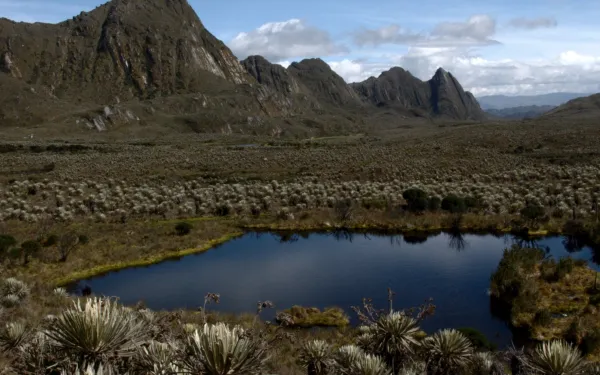
Páramos = water = life
Páramos are high-mountain ecosystems that capture water from fog and supply it to the lowlands. They lie between the upper limit of the Andean forest (about 3,000 meters above sea level) and the glaciers or permanent snowfields of the mountains (about 4,500 meters above sea level).Typically, páramos can be found in tropical regions near the equator, especially along the Andes mountain range.In Latin America, páramos cover more than 30,000 km2. South America is home to more than 80% of the world’s páramos, and Colombia accounts for 50% of them.The páramos are not isolated; rather, they form a high-mountain system that maintains ecological connections with other biomes and ecosystems, extending beyond national borders. In the Andean region, they form a corridor known as the "string of pearls," stretching from the Cordillera de Mérida in Venezuela, across Colombia and Ecuador, to the Huancabamba Depression in northern Peru.There, the water retained by low-altitude wetlands gradually flows downward, forming streams and rivers that flow down to the coast or the Amazon basin.Because of their interconnectedness, the páramos also serve as natural bridges or "springboards" for the migration and dispersal of species. Their conservation, therefore, cannot be limited to specific areas; it must extend to protecting the ecological, biological, and cultural relationships they share with other ecosystems. The importance of protecting the páramosWe must protect the páramos because they are essential to sustaining life. Among other reasons, this is because:They feed key watersheds, which in turn support agricultural and livestock systems that contribute to the population's food supply. They are the primary source of water for more than 85 million people. In Colombia, these ecosystems supply 70% of the freshwater consumed in major cities.They are home to a unique biodiversity: more than 3,370 plant species and 250 animal species. Among the endemic species found there are the frailejón (a plant with hairy leaves that trap moisture from the fog and regulate water), the Andean condor, the mountain tapir (or Andean tapir), and the spectacled bear.They serve as living spaces and homes for rural and indigenous communities. According to the 2018 páramo census, more than 76,000 people in Colombia live in the country’s páramo ecosystems. Furthermore, their stunning natural beauty drives nature tourism, thereby sustaining local ways of life.They are extraordinary natural carbon sinks and are indispensable allies in mitigating the climate crisis. They can sequester up to ten times more carbon dioxide per square meter than a tropical forest. In specific areas of a páramo, such as peat bogs, carbon sequestration can reach 2,000 metric tons. Photo: Aztlec Flickr (Creative Commons).What threats must we protect the páramos from?Despite their great importance, the páramos currently face several threats. One is the climate crisis, which is raising ambient temperatures; because these ecosystems are located high in the mountains, they have no cooler thermal zones to migrate to.On the other hand, extensive livestock ranching and agriculture—particularly potato farming—affect considerable areas of páramos. Deforestation or reforestation with non-native species also endangers them, as does a lack of knowledge about their importance and characteristics.And mining is undoubtedly one of the greatest threats to these ecosystems. Due to their geological formation, these ecosystems contain large quantities of minerals and metals, such as gold and silver. The mining industry poses serious risks to the páramos because:It extracts large volumes of water and builds infrastructure on wetlands, reducing their ability to regulate water flows, and can cause pollution from mercury and other toxic substances, leading to species loss and affecting water quality and availability in low-lying areas.Underground mining can alter groundwater flow dynamics through dewatering processes designed to prevent tunnel collapse. This can lower the water table, cause land subsidence, and dry up water sources, among other impacts.It removes vegetation cover and organic soil, degrading fragile ecosystems such as the páramos, weakening their role as natural carbon sinks, and releasing stored carbon.Its impacts can last in perpetuity—for centuries or millennia—timeframes that cannot be predicted with certainty. Tailings dams and other infrastructure (tailings piles or dumps) where mining waste ends up, for example, have effects that persist indefinitely because they were not designed to be dismantled. Learn more about the true cost of mining in the páramos. The iconic case of the Santurbán páramo in ColombiaThe Santurbán case reflects the socio-environmental conflicts that arise from corporate efforts to establish mining operations in páramos, as well as from citizens’ efforts to protect these ecosystems and the life they sustain. Photo: Alberto Peña Kay. Located in the heart of the Eastern Cordillera of the Colombian Andes, in the departments of Santander and Norte de Santander, the Santurbán páramo covers 129,743 hectares and is home to 57 lagoons, 457 plant species, and 293 vertebrate species.Santurbán is home to mineral deposits—primarily gold, but also silver and copper—that have attracted foreign mining conglomerates for decades, which have sought to establish large-scale projects in the ecosystem, threatening to degrade it.This has raised concerns among the population that relies on the Santurbán water sources—more than two million people—who have mobilized to defend water, their land, and life.The Committee for the Defense of Water and the Santurbán Páramo has led these efforts. This coalition of environmental advocates, supported by AIDA and other civil society organizations, has thwarted the mining industry’s ongoing attempts. The defense of Santurbán has included litigation and national and international advocacy. Learn more about the effort to protect the Santurbán páramo. Protecting Latin America's páramosAs with Santurbán in Colombia, indigenous peoples, rural communities, and citizens in other countries in the region are using legal strategies to protect the Andean páramos.Also in Colombia, rural communities in Cajamarca, in the department of Tolima, succeeded in rejecting the La Colosa mining project—which would have involved gold mining in the Los Nevados páramo region—through a public referendum. They are currently defending the referendum's validity and the páramo demarcation in court.In Ecuador, the Kichwa Saraguro indigenous people are pursuing legal action to protect more than 27,000 hectares of the Fierro Urku páramo, which were granted as mining concessions for gold, silver, and copper without prior consultation. At the same time, they are demanding compliance with a protective order that suspended the Loma Larga mining project in the Quimsacocha páramo until prior consultation is guaranteed and environmental impact studies are conducted.In partnership with communities and allied organizations, AIDA works to protect the páramos and other ecosystems that sustain life in Latin America.
Read more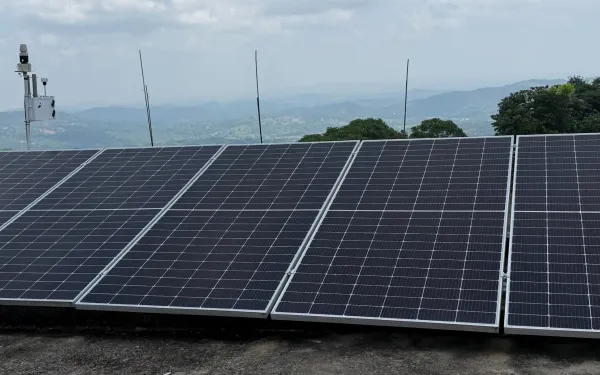
Self-generation: How to democratize access to energy
In the traditional and dominant model, electricity is generated by large power plants and distributed through extensive grids that make up an electric power system. These activities are the exclusive domain of large electric companies, whether privately or government-owned.Therefore, the current energy system, based on fossil fuels—coal, natural gas, and oil—is not only one of the main causes of the global climate crisis, but it is also inequitable because it is concentrated in the hands of a few, in addition to limiting access to resources and public participation in decision-making.This requires that the energy transition involves not only a shift in the energy mix but also the creation of a new energy system that—among other things—enables democratized access to energy from clean, renewable sources.Energy self-generation, as a decentralized production model, is an opportunity to move in that direction. What does democratic access to energy mean?Energy is necessary for people to have access to better food, clean water, job opportunities, education, and other rights. Therefore, energy is also a right and a prerequisite for ensuring the enjoyment of other human rights.Energy democracy is both a principle and a movement that seeks to ensure that energy decisions—how it is generated, who generates it, and who benefits from it—are in the hands of the people rather than concentrated in the hands of large corporations or elites, prioritizing the use of clean and renewable energy sources as well as decentralized systems, with a focus on social justice.Therefore, democratic access to energy entails:Community control of energy resources.Citizen participation in energy planning.Equitable distribution of benefits. This contrasts with traditional centralized systems—often monopolistic—that have led to inequities, such as communities paying high electricity rates or suffering the impacts of large-scale electricity generation, yet having no say in the decisions that affect them.In Latin America, the active involvement of indigenous, rural, and traditional communities in energy projects is seen as a cornerstone for achieving a socially and environmentally just transition, closing energy access gaps, and strengthening energy democracy.In this regard, energy self-generation embodies energy democracy, as it allows entire communities to make their own energy decisions and reclaim control over key links in the electricity value chain, such as generation and management. What is energy self-generation?Self-generation is a decentralized model of electricity production that relies on locally available clean and renewable energy sources (such as solar, hydropower, or wind). This approach is used in projects that are often small-scale and can be used individually or collectively to meet energy needs in urban or rural areas, including those far from distribution grids.It is a model that enables progress, at the local level, toward reducing greenhouse gas emissions—which exacerbate the climate crisis—without repeating the extractivist model. It recognizes the right of communities to generate their own energy to meet their needs and, at the same time, helps reduce energy poverty and dependence on centralized power grids.Energy self-generation can take two forms:Distributed generation: A small-scale self-generation system connected to nearby distribution grids to feed surplus energy into the grid.Off-grid systems: A closed-loop self-generation system disconnected from distribution grids. In this model, users are no longer passive participants but instead play an active role in generating and managing energy wherever they are. A self-generating individual or community both produces and consumes energy. Examples of energy self-generation in Latin AmericaAcross the continent, success stories in implementing the self-generation model are strengthening the regional movement for energy democratization. Here are a few examples:Mexico - "Energy for the Yeknemilis (Good Living)." A community initiative implemented in the Northeastern Highlands of Puebla to promote local energy sovereignty through the installation of photovoltaic systems in community spaces.Colombia - Community solar project on Isla Fuerte. Installation of a solar microgrid with batteries (150 kW peak and 348 kWh of storage), not connected to the National Interconnected System, capable of providing continuous electricity to the 250 households on the Caribbean island.Brazil - Percília e Lúcio Renewable Energy Cooperative. A community initiative founded by the NGO Revolusolar and developed by residents of the Morro da Babilônia and Chapéu Mangueira favelas in Rio de Janeiro. Solar panels were installed there, reducing electricity rates by more than 50%.Chile - Curicó Electric Power Supply Cooperative. A community-based initiative operating in the Maule Region that installs solar panels to supply electricity to rural grids and community facilities. Challenges for energy self-generationDespite the progress made, the widespread and effective implementation of this model faces significant challenges on the continent. The main ones are:Inadequate regulation (complex or insufficient). Often, a country’s domestic regulations make it difficult or impossible to implement such schemes. This is due to limitations on the number of megawatts (MW) that can be generated, complex contractual requirements, or a lack of appropriate legal structures.Limited financing. Many low-income households cannot afford the upfront cost of solar panels or other technologies. Government support or loans for these projects are scarce. The risk is that self-generation will be concentrated among those with the financial means to implement it, thereby excluding the segments of the population most affected by energy poverty.Inefficient electrical infrastructure. Local grids often lack the capacity or technical capabilities to integrate energy generated by decentralized sources, limiting the ability to take advantage of surplus energy feed-in. Furthermore, the need for storage systems to address the variability of renewable energy sources, as well as the lack of grid backup, increases project costs. Energy self-generation: A solid path toward a just transitionThe pursuit of equitable access to energy through tools such as energy self-generation is consistent with the need to ensure that the energy transition puts people at the center and prioritizes improving their living conditions as its ultimate goal.Electricity generation models designed by and for communities are an important means of ensuring access to affordable, reliable, sustainable, and modern energy for everyone.Because discussing a just energy transition means reclaiming energy as a tool to meet human needs in the context of inequities and finite resources. Learn more about a just energy transition in Latin America.
Read more