
How much water is used to produce energy?
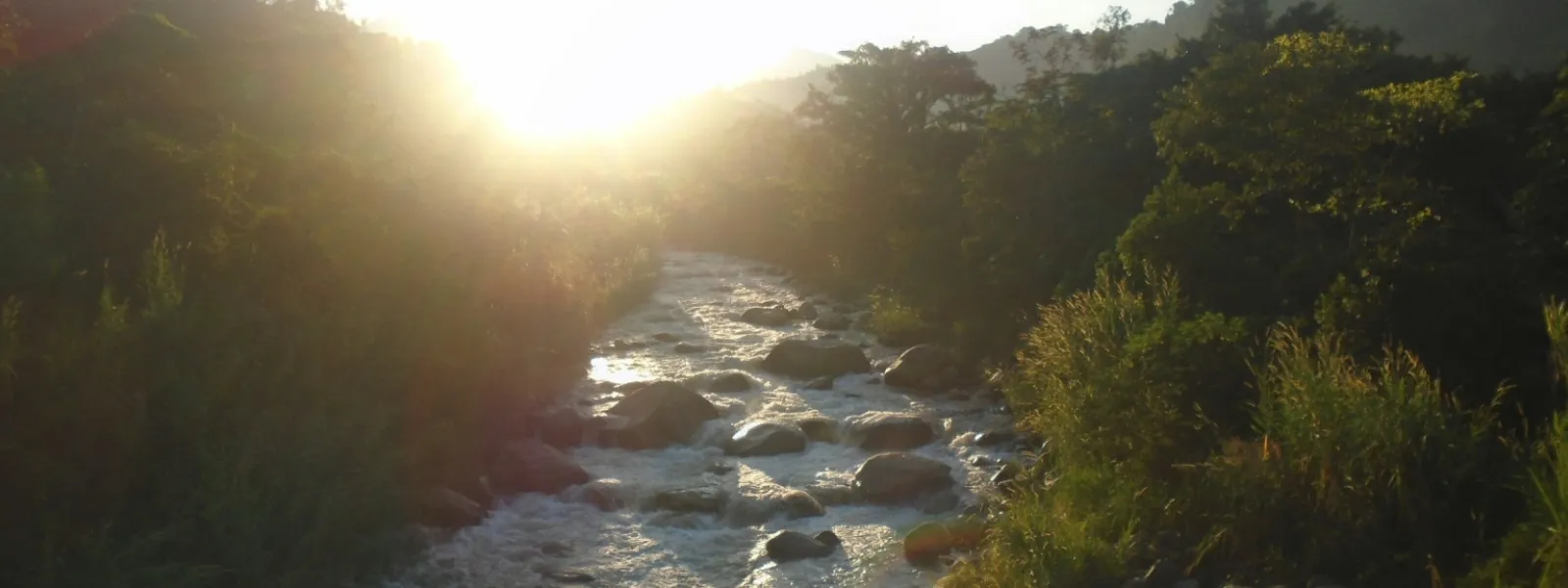
Kendyr Quintanilla / Unsplash.
Water and energy go hand in hand.
Processes such as gas extraction, oil refining, and hydroelectric power plant operations all require water. Thus, as energy demand increases, so does the need for water to generate it.
This leads to environmental and social impacts, including the depletion of water sources and the pollution of rivers, lakes, and other bodies of water.
Understanding the connection between water and energy production gives us a broader perspective on what our water consumption entails.
Conserving water also means reducing our energy consumption, exploring more sustainable energy generation options, and demanding that energy be produced in a clean and fair manner.
The water footprint of energy
Water is essential for energy production. But not all sources consume the same amount of water, so their environmental impact varies.
To generate 1 megawatt—enough to power 1,000 homes for one hour—here is how many liters of water are consumed by different sources of electricity:
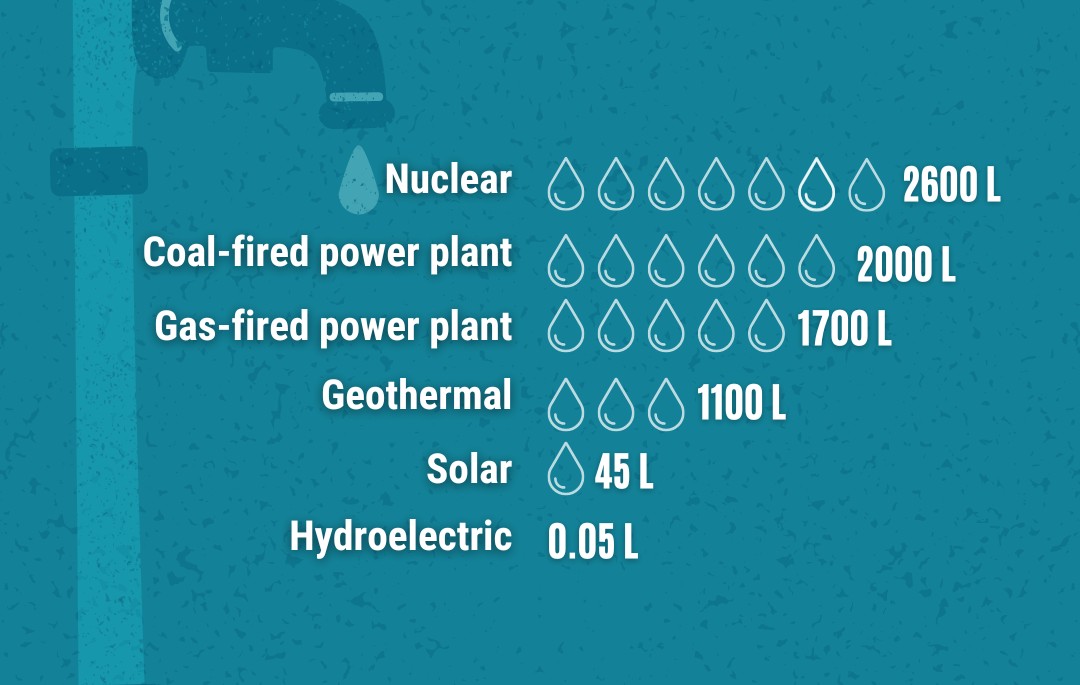
But water use goes beyond that. In addition to electricity generation, the energy sector uses freshwater—with various socio-environmental impacts—in its various production processes:
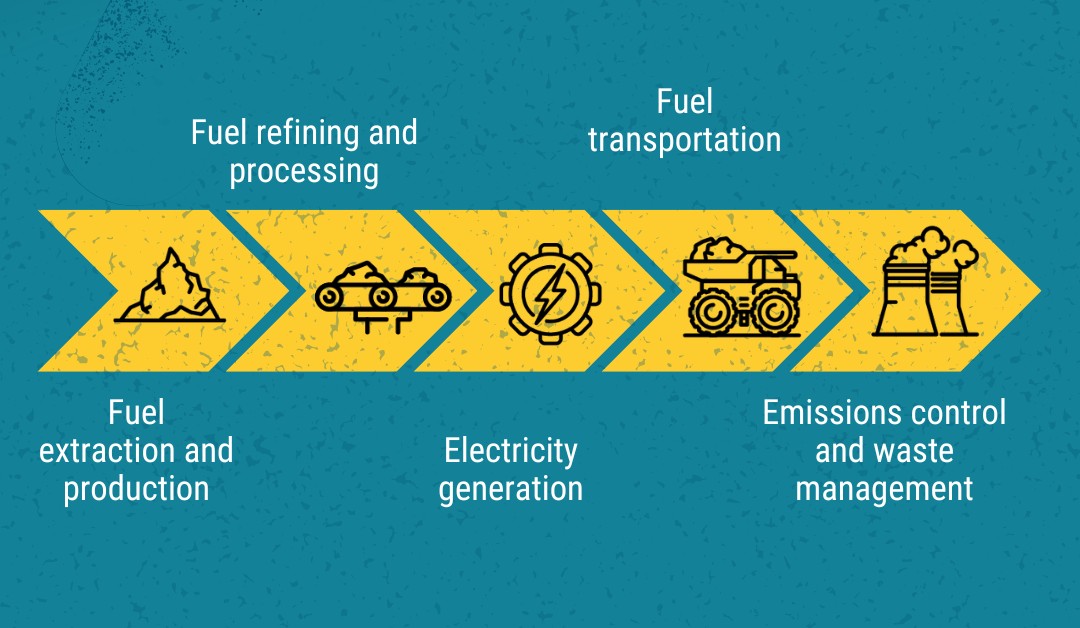
Conventional thermoelectric power plants
In these plants, water is heated to high temperatures—by burning coal, gas, or oil—to produce steam, which drives turbines to generate electricity.
Water is also used in thermal power plants to cool the power-generating units.
Hydroelectric power plants
They use the force of water to drive turbines that generate electricity. By damming or diverting the natural flow of rivers, streams, and lakes, they fragment habitats, leading to the displacement and decline of species. They also impact water quality.
Furthermore, they cause the forced displacement of communities living near water sources and who depend on them.
Fuel extraction and production
Water is used in coal mining and in drilling wells for oil and gas. In many cases, these processes generate wastewater.
Water is also needed to refine oil and gas before they can be used as fuels.
Coal mining
In addition to using water to extract the mineral, it can be used—along with chemicals—to remove sulfur and impurities before combustion.
Coal mining using explosives generates debris that can contaminate local water sources and even block them.
Coal can be transported to the power plant using a method that pumps the finely ground coal mixed with water through pipes.
Hydraulic fracturing (fracking)
In this technique, a mixture consisting of more than 90% water, along with chemicals and sand, is injected at high pressure into underground rock formations to fracture them and access the oil or gas they contain.
The wastewater from this mixture remains underground and can contaminate the groundwater that feeds nearby aquifers.
Renewable energy
Solar photovoltaic and wind power do not use water to operate, but they require supplies and materials whose production requires water.
A notable example is lithium, which is used to manufacture the batteries that store the energy generated by these sources. Its extraction involves massive water consumption from salt flats, one of its primary sources:
- 2,000 liters of water for every ton of lithium produced in evaporation ponds.
- Water is used to extract lithium carbonate and separate it from the remaining compound.
- Water is lost during brine pumping.
Understanding how much water is needed to generate the energy we use gives us a broader perspective on the water our energy consumption entails.
Reducing our energy needs and promoting sustainable and equitable energy production are also ways to conserve water.
If you'd like to learn more about this topic, here is a list of the sources we consulted:
- "How It Works: Water for Electricity", Union of Concerned Scientists.
- "El uso del agua: una planta de energía termoeléctrica", USGS.
- "¿Por qué la termoeléctrica no es energía limpia?", J. Soto, Greenpeace.
- "How much water does the typical hydraulically fractured well require?", U.S. Geological Survey.
- "Hydraulic Fracturing and its Impact on Water Resources", Water Footprint Calculator.
- "The intensification of the water footprint of hydraulic fracturing", Science Advances.
- "Efectos del represamiento de ríos en países de América Latina y el Caribe sobre la biodiversidad, el agua, la alimentación y la energía", A. Stehr, CEPAL.
- "Las represas y su impacto en la naturaleza", WWF.
- "¿Qué es el litio, para qué sirve y de dónde se extrae en la Argentina?", Florencia Ballarino, Chequeado.
- "El impacto de la minería de litio en los Humedales Altoandinos", Wetlands International.
- "'Triángulo de litio: la amenaza a los salares de Bolivia, Chile y Argentina", Rodolfo Chisleanchi, Mongabay Latam.
Data on water consumption in electricity generation obtained from:
- "A simple model to help understand water use at power plants", A. Delgado y H. J. Herzog, MIT.
- "How it Works: Water for Natural Gas", Union of Concerned Scientists.
- "Hidropower Explained", U.S. Energy Information Administration.
- "How it Works: Water for Nuclear", Union of Concerned Scientists.
- "Geothermal Energu Factsheet", University of Michigan.
- "Life cycle water use for electricity generation: a review and harmonization of literature estimates", J. Meldrum y otros, Environmental Research Letters.
Mayela Sánchez García

Mayela Sánchez García is AIDA's digital community specialist, working from Mexico. She is a graduate in Journalism and Media Studies from the Instituto Tecnológico y de Estudios Superiores de Monterrey in Mexico. Mayela has significant experience as a journalist focused on social and human rights issues. She has worked in print and digital media, and has experience in podcast production.