

Project
Victory: Constitutional Court Defends Right to Prior Consultation
On January 23, 2008, the Colombian Constitutional Court declared the Forest Law of 2006 to be unconstitutional and therefore, invalid, because lawmakers did not consult with indigenous, afrodescendant, and tribal communities during development of the law as required.
This decision is an advance for these Colombian communities who view many economic development projects and policies as a threat to their traditional territory and cultural identity, as well as the environment. The ruling also establishes a valuable legal precedent that can be used to bolster indigenous and tribal communities’ rights in other legal cases throughout the Americas.
The Colombian government is required by law to consult with indigenous and tribal communities regarding administrative and legislative decisions that may affect them. It is obligated to do so because the Colombian Congress previously adopted into law “Convention 169,” a treaty of the International Labour Organization that protects this right and others.
In this case, the Court decided that indigenous and tribal communities should have been consulted because the Forest Law regulates forest issues in general terms, and contains provisions that “will likely affect areas generally used by the communities, which could impact their lifestyles and their close relationships with the forests.”
The court also declared that the requirement to consult with indigenous and traditional communities cannot be replaced with the general public participation process that the government carried out regarding the Forest bill. Rather, to comply with the law, the government should inform the communities about the proposed law, explain its implications and how it could affect them, and give them opportunities to effectively state their opinions regarding the bill.
As a result of this court ruling and civil society’s call to respect the right to prior and informed consultation, the Colombian government proposed a law to regulate and enforce this fundamental right. The Ministry of Agriculture also began developing a new forest law, this time using a process that complies with prior and informed consent procedures.
The lawsuit was brought by a group of students and professors from the University of Los Andes Law School in Bogota with the support of AIDA. Social organizations including the Proceso de Comunidades Negras, the National Indigenous Organization of Colombia (ONIC) and CENSAT Agua Viva also supported the group in presenting this case.
This group also filed a second lawsuit against the Forest Law alleging that the law violated Constitutional provisions protecting the environment. However, because of the January court decision, no decision will be made on this second suit.
Related projects

Santa Marta and the End of Fossil Fuels: From “Yes” to “How”
The First International Conference on the Transition Beyond Fossil Fuels has concluded in Santa Marta, Colombia. And all signs point to this initiative being here to stay.Many aspects deserve attention in this process launched by Colombia and the Netherlands. Are we witnessing the first step toward a new era?While the world is still processing what has happened and awaits the official report from the co-hosting countries in the coming months, we offer an early analysis. The OriginsThe Santa Marta conference was a response to the frustration caused by three decades of international climate negotiations—at the successive Conferences of the Parties (COP) to the United Nations Framework Convention on Climate Change (UNFCCC)—failing to directly address the primary and undisputed cause of the climate crisis: fossil fuels. And it was about time.Since 1992, the international community has negotiated emissions targets and market mechanisms without ever facing the elephant in the room. The words "oil," "coal," and "fuels" do not appear in the Paris Agreement. It wasn’t until 2021, at the Glasgow COP, that fossil fuels were acknowledged for the first time as causing climate change, but only a gradual reduction in coal was called for. In 2023, in Dubai, the greatest progress was made: the phrase "transitioning away from fossil fuels." And in 2025, in Belém, not even that could be maintained. But at least that frustration helped spark the Santa Marta conference, which was precisely the opposite: 57 countries representing a third of global GDP sat down to discuss how to phase out fossil fuels, not whether to do so. If it amounts to nothing more, this conference was at least a relief, a sign of sanity in a world that sometimes is truly hard to understand.And the discussion wasn't just about the "what," but also the "how," which includes justice. The official summary document circulated by the host countries discusses territorial plans for a just transition, labor restructuring with the participation of workers and communities, direct access to financing for indigenous peoples, and explicit prevention of "new forms of extractive dependency." Decentralized and community-based energy systems are mentioned as concrete examples of sustainable production.At AIDA, we believe this is a fundamental condition: without justice, there can be no viable transition. It is not merely an ethical or legal imperative; it is also a practical one. When the transition is carried out without involving communities, without safeguarding people and territories, and without a fair distribution of burdens and benefits, it generates resistance that can hinder the projects themselves. The evidence in Latin America speaks for itself.In times when humanity is going through such darkness, it is hard to be optimistic. Perhaps in this case, there are reasons to be so. A war that, paradoxically, shows the way forwardWith the war in the Middle East as a backdrop, the Santa Marta conference took on an unprecedented sense of urgency: the disruption to oil and gas supplies that it has caused puts us in a unique situation. Overnight, between 20 and 25% of the world’s oil and gas flow was cut off, wreaking havoc across the globe: skyrocketing living costs, blackouts, and faltering economies. A conflict in one specific part of the world is affecting nearly every economy on the planet.And that shifted the tone of the conversation. The transition is no longer framed solely as a climate or environmental necessity, but as a matter of security and sovereignty. The war demonstrated that relying on fossil fuels makes us tremendously vulnerable. It is time to recognize that the climate emergency and economic stability are on the same side—they are not at odds.Fatih Birol, director of the International Energy Agency, stated from Santa Marta that the war "has broken fossil fuel markets beyond repair," referring to the metaphor of the broken vase. This is not merely an environmentalist position; it is a global assessment. The Revitalization of Santa MartaIn addition to its content, the way the Santa Marta conference unfolded was also surprising and could be considered a breakthrough in climate diplomacy.The fossil fuel lobby was explicitly excluded. Countries that have historically blocked any progress were not invited. And the format of the high-level segment broke with traditional dynamics: instead of the computer-read statements that characterize COPs, ministers and delegates sat in small circles under Chatham House rules, without screens, alongside representatives of civil society and indigenous peoples under the same conditions. It didn’t happen at the end, when no one is listening anymore, but rather by setting the tone from the very beginning.Tzeporah Berman, chair of the initiative to establish the Fossil Fuel Non-Proliferation Treaty, described the experience as "watching a dam break": "All that accumulated experience, knowledge, and passion suddenly translates into concrete steps to phase out polluting fuels." Science at the WheelAmong the concrete outcomes, the launch of the Scientific Panel for Global Energy Transition (SPGET) stands out. In the early years of climate negotiations, science led the way: COPs opened with an update on the latest scientific findings, and decisions were built upon that foundation. Over time, this approach eroded. Countries with fossil fuel interests gradually diluted scientific warnings and introduced what was openly called “false solutions” at the Santa Marta conference—such as carbon capture and offsets—to justify continued extraction. The conference set out to put science back in the driver’s seat.The Intergovernmental Panel on Climate Change (IPCC) continues to produce essential reports, but it has limitations that the SPGET can address. It publishes reports every seven years, a slow process for a crisis that is accelerating. Its summaries for policymakers—which, in practice, are read by governments—are negotiated line by line with government representatives, including those from countries with fossil fuel interests, diluting the conclusions. And the IPCC is not authorized to make policy recommendations to countries. Carlos Nobre, one of the founders of the SPGET, recounted that he once sought to include information on the risks facing the Amazon in an IPCC summary, but a representative from his own country rejected it.The SPGET is completely independent. No government can veto its findings, and it will produce annual updates with concrete policy recommendations to support countries in developing roadmaps aligned with the 1.5°C goal. In terms of its structure, it is co-chaired by a Cameroonian economist (Vera Songwe), a German economist (Ottmar Edenhofer), and a Brazilian energy engineer (Gilberto Jannuzzi). If it works as promised, it could become the scientific arm that the transition needs. Continuity and Structure: A Commitment to the FutureThe Santa Marta conference was not a one-off event, but rather the start of a structured process. To begin with, a second conference has already been confirmed for 2027, co-hosted by Tuvalu and Ireland, cementing the commitment to North-South collaboration. With this in mind, three permanent working groups have been established that will continue their work until the Tuvalu conference.The first line of work will support countries in developing national transition roadmaps aligned with their climate commitments under the Paris Agreement. There are concrete examples: France presented its own roadmap to phase out fossil fuels from its energy mix by 2050—the first proposal of its kind submitted by a developed country. But the plan has been criticized by civil society. It does not address the remediation of territories damaged by decades of extraction, nor does it account for the new pressures that its electrification model could exert on the Global South, from which the vast majority of the minerals needed for batteries, grids, and renewable energy come.Colombia, for its part, presented its own plan at the academic pre-conference, with data showing that the transition would become economically viable starting in 2040.Unlike the Nationally Determined Contributions (NDCs), these roadmaps address fossil fuel production. The NDCs focus on reducing emissions, but they do not commit to closing coal mines or power plants or ending tenders for fossil fuel extraction. However, NDCs also have something that roadmaps lack: legal standing, as they are part of the Paris Agreement. Thus, the promise lies in integrating roadmaps into NDCs, which would result in concrete and binding transition commitments. But, as the French case shows, if the roadmaps do not incorporate the remediation of affected territories or the supply chains that electrification demands, there is a risk of ending up with binding commitments that reinforce an unequal transition rather than correcting it.The second ongoing line of work will address financial barriers—debt, fossil fuel subsidies, and access to capital—with support from IISD, a research center specializing in subsidy policies and climate finance. And the third will seek ways to decarbonize international trade by connecting fossil fuel-producing and -consuming countries so they can work together on the transition, with support from the Organization for Economic Co-operation and Development (OECD).In addition, there is the Scientific Panel (SPGET), which will provide the technical foundation for the entire process, and a permanent coordination group between the current co-hosts (Colombia and the Netherlands) and the future co-hosts (Tuvalu and Ireland) to ensure continuity. Everything that emerges from these lines of work will inform the official UN climate negotiations, including COP31, scheduled for November of this year in Turkey.Although there are no binding agreements to show for it, we already have concrete working mechanisms in place among the countries committed to moving forward, including supporting institutions, clear mandates, a second conference to review progress, and a commitment to influence official UN negotiations. It’s a good start, with a structure that sustains itself. What Remains to Be ResolvedThere is one issue that cuts across all of the above: timelines and urgency. We have only just begun discussing roadmaps to phase out fossil fuels, but their implementation should have begun 40 years ago. That delay should set the tone for everything that lies ahead.One area where the Santa Marta conference fell particularly short is financing. The issue—debt, fiscal space, subsidies, and the international financial architecture—was discussed at length, but this failed to translate into clear signals. For a process aimed at coordinating the global phase-out of fossil fuels, the absence of a financial roadmap is a serious limitation.This is nothing new, nor is it a matter of charity. The principle of common but differentiated responsibilities, enshrined in the UNFCCC itself, establishes that the countries that contributed most to the climate crisis must support those that contributed least and are suffering the most. On this basis, climate finance targets have been set, currently amounting to USD 300 billion annually by 2035, as agreed at COP29. But most of that financing comes in the form of loans, which means that countries in the Global South are taking on debt to solve a problem they did not create. The North’s climate debt to the South paradoxically becomes the South’s financial debt to the North. Thus, a just transition is not possible. And the Santa Marta conference failed to make any progress on this issue.Another structural barrier that was addressed in Santa Marta but still requires further work is the investor-state dispute settlement (ISDS) mechanism, which allows fossil fuel corporations to sue governments for adopting climate measures. At least $100 billion in compensation has been awarded to companies through international arbitration tribunals. ISDS was included in the official summary of the Santa Marta conference, but with lukewarm language. As long as governments can be sued for billions for closing a coal mine, the transition will not move forward—not for lack of will, but out of fear of lawsuits.Nor was the debate over natural gas as a "transition" fuel resolved. The official document acknowledges that "there were differing perspectives regarding the role of transition fuels and technologies"—a step forward achieved thanks to pressure from civil society, given the number of countries that openly promote gas as a solution. But gas is a fossil fuel, and methane leaks from it exacerbate global warming. Presenting it as a "transition" fuel only deepens dependence and delays the transition.Finally, an analysis from Latin America reveals a significant practical inconsistency: the gap between what countries say and what they do. The Mexican government actively participated in the conference while also establishing a committee to assess the viability of "sustainable" fracking. The Brazilian government, guardian of the Amazon, continues to auction off oil wells. And Colombia, host of the conference, announced that it seeks to expand the extractive frontier in the Caribbean Sea. It seems that different branches of the same government are acting with entirely contradictory objectives. The problem is that this undermines the credibility of the process, which is crucial for a coalition such as the one being sought.That said, perhaps it was too much to expect that the first conference of its kind—which sought and succeeded in laying the groundwork for a new process—would provide all the answers to the crisis of our times. The Santa Marta conference served to identify the problems, establish lines of action, and build trust. The next step cannot wait much longer. By the 2027 conference in Tuvalu, there should be no unresolved issues left, especially regarding financing. A plan without financing, no matter how good or well thought out it may be, cannot get off the ground. From a Coal Port to a Sinking Island The conference in Santa Marta, a major coal port in Colombia, has come to a close, and the next stop is Tuvalu, a small Pacific island nation facing an existential threat from rising sea levels. The route is symbolic: from a country that exports coal to one that is disappearing due to the global warming caused by burning that very coal. That these two nations are now working together to lay the groundwork for a change in course is precisely what we need: to acknowledge the past and look to the future with solidarity.The First International Conference on the Transition Beyond Fossil Fuels could go down in history as the cornerstone of a new era. Let’s keep building on this foundation.
Read more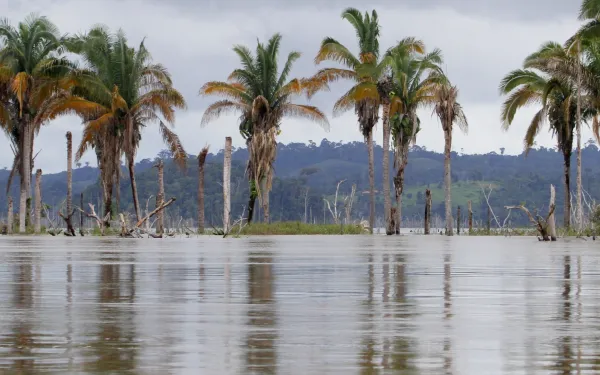
Ten years of Belo Monte: The time for justice has come
Ten years after its inauguration, the Belo Monte Hydroelectric Plant (UHE) in Pará returns to the center of public debate, this time under the scrutiny of the Inter-American Human Rights System. More than an anniversary, this milestone reinforces the urgency of an effective institutional response:justice cannot continue to be postponed.The case, currently pending before the Inter-American Commission on Human Rights (IACHR), brings together a substantial body of evidence regarding human rights violations associated with the Belo Monte UHE. Filed by a coalition of civil society organizations, including the Inter-American Association for the Defense of the Environment (AIDA), Global Justice, Coordenação das Organizações Indígenas da Amazônia Brasileira (COIAB), Movimento Xingu Vivo para Sempre (MXVPS), and the Conselho Indigenista Missionário (CIMI), the petition consolidates allegations of violations of the rights to life, health, prior consultation, and a healthy environment. The case is at an advanced stage of review and could soon be referred to the Inter-American Court of Human Rights.A decade on, the socio-environmental impacts remain significant and largely unmitigated. The Volta Grande do Xingu—a stretch of approximately 130 km directly affected by the artificial reduction in river flow—represents the project’s most serious liability. The alteration of the hydrological regime, compounded by extreme events associated with climate change, has compromised local ecosystems, disrupted the reproductive cycle of species, reduced navigability, and threatened the food and water security of populations that depend directly on the river.Indigenous communities, riverine populations, and artisanal fishers face the ongoing deterioration of their ways of life, including reduced fish availability and impacts on fishing livelihoods. Additional harms include inadequate resettlements, increased violence, mental health impacts, and threats to cultural practices and traditional ways of life.Unlike the debates that characterized the project’s implementation phase, today’s discussion is shaped by the climate emergency and new international regulatory standards. Advisory Opinion OC-32 of the Inter-American Court of Human Rights provides clear guidelines on states’ obligations to protect human rights in the face of the climate crisis, recognizing the right to a healthy environment as a foundational principle. In this context, the Belo Monte Hydroelectric Plant case is a significant test of how energy development, environmental protection, and the rights of local populations can—and must—be reconciled.The organizations monitoring the case highlight non-compliance with precautionary measures issued by the Commission as a key reason to advance to the Court. The legal merit of the case, combined with its international significance, positions the case as ready for adjudication."More than a decade after the start of the Belo Monte hydroelectric project, the impacts on the Xingu River continue and are worsening, exacerbated by pressure for new projects and the climate crisis. The communities remain mobilized for justice and confident in the Inter-American Commission’s efforts to bring the case before the Court—the final step to ensure full reparations and the protection of the territory and its ways of life," said Marcella Torres, legal coordinator of AIDA’s Human Rights Program.According to Melisanda Trentin, coordinator of Socio-Environmental and Climate Justice at Justiça Global, the Belo Sun mining project is moving forward in the Volta Grande do Xingu region with consultation flaws identical to those of the Belo Monte project. “What is at stake in the region is the accumulation of harm and violations of human and environmental rights. A river with reduced flow, communities facing food insecurity and altered ways of life, and now a new project that repeats the same violations denounced in the Inter-American System for over 10 years,” she points out.For the signatory organizations, the ten-year mark represents a critical window for justice. The Belo Monte case is no longer an isolated episode— it stands as a benchmark for the concrete application of environmental justice in the Amazon, amid growing climate pressure and demands for state accountability.ABOUT - Belo Monte is the fourth-largest hydroelectric power plant in the world, built on the Xingu River in the state of Pará, in the heart of the Amazon. With an installed capacity of 11,233 MW, it was inaugurated on May 5, 2016. Its operation diverts 80% of the Xingu River’s flow through a canal 500 meters wide and 75 km long. The flooded area between the canal and the reservoir covers 516 km², larger than the city of Chicago, of which 400 km² was native forest.#JutiçaNoXingu See the statement from the petitioners in the Belo Monte case before the IACHR Read what the petitioning organizations in the case have to say:Coordination of Indigenous Organizations of the Brazilian Amazon (COIAB)"There is no legal certainty without respect for the inherent rights of indigenous peoples. In the Amazon, this defense goes beyond the legal realm: it is a commitment to life, to the integrity of territories, and to the planet’s climate balance. The harm that the construction of the Belo Monte Dam has caused to indigenous populations and the environment has become a reality and is irreversible. COIAB’s Legal Advisory Office works to ensure that the Constitution, international treaties, and the self-determination of indigenous peoples are effectively respected at all levels of decision-making," states Gabriele Baré, coordinator of COIAB’s Legal Advisory Office.Movimento Xingu Vivo Para Sempre "Belo Monte uprooted people from the riverbanks and scattered the Xingu people far and wide, away from the river, their community, and the daily life they knew and loved. The riverine dwellers ceased to be who they were; the fisherwomen ceased to be who they were; they became nothing, many of them wandering the outskirts of cities. These people lost their identity and, with it, their soul. All that remained was emptiness and loneliness. The impact of the loss of their way of life cannot be compensated, but it must be acknowledged so that some form of redress can be made," says Ana Laide Barbosa, an educator with the Xingu Vivo para Sempre Movement.Observatory of Isolated Indigenous Peoples (OPI)"The construction of the Belo Monte hydroelectric dam has exacerbated threats and pressures on the indigenous peoples of the Middle Xingu region in a manner similar to what occurred during the dictatorship with the opening of the Trans-Amazonian Highway in the same region. Recently contacted peoples such as the Parakanã and the Arara have suffered from alarming rates of invasions and illegal deforestation on their lands, and the refuge of the isolated indigenous groups of Ituna Itatá has become one of the most deforested areas in Brazil. At the same time, the diversion of the Xingu River’s waters causes ecocidal damage to the indigenous peoples of Volta Grande; and harmful impact compensation policies have had disintegrating and ethnocidal effects on nearly all the peoples. “For all these reasons, the hydroelectric dam has become yet another example of the colonial relationship established by the Brazilian state with the Amazonian peoples and a debt of reparation that must be acknowledged and addressed," says Helena Palmquist, deputy coordinator of the Observatory of Isolated and Recently Contacted Indigenous Peoples (OPI).
Read more
Let's talk about project closure and responsible exit
No mining, fossil fuel extraction or power generation project lasts forever. Their useful life is determined by internal factors, such as the quantity of resource reserves, and external factors, such as declining demand or financial problems.But no matter how long a project lasts or how it is affected, its promoters—whether public or private—must provide for a closure and responsible exit process that considers the natural environment and affected communities, and that is desired and promoted by all stakeholders.This issue is even more relevant in the context of actions needed to address the climate crisis, largely related to the energy transition, which generally implies the substitution of fossil fuel extraction and use projects, as well as the promotion of low-emission renewable energies associated with mineral extraction. In both scenarios, closure and exit issues are of great importance.In the first, it is necessary to incorporate concrete and enforceable commitments to close down and move on from existing projects. In the second, these requirements should be built in from the planning and pre-feasibility stages and should also be included in the environmental impact assessments and subsequent stages.In all projects, the role of the promoters is essential. Likewise, the obligation of the state to supervise and monitor is of great importance in order to protect and guarantee the rights of those who may be affected. In some cases, the responsible exit also includes other key actors that are part of the value and supply chains of the projects: investors, financiers, insurers, suppliers, distributors and buyers, among others.Therefore, the discussion of project closure and responsible exit is essential to environmental protection and climate management in Latin America.What do we mean by project closure and exit?All mining and energy projects have different phases in their life cycle: initiation, planning, execution, monitoring and control, closure, and post-closure. In turn, they have supply and value chains that, as we have said, involve actors from different sectors.In this context, closure refers to the stage of a project in which it ceases to operate and is terminated. Exit, on the other hand, refers to the decision and subsequent process in which the different actors in the project's value and supply chain, in their own roles, completely disengage from the project. What does it mean for a closing and exit process to be responsible?There is currently no consensus on the definition and scope of responsible exit and fair project closure processes. Sometimes these terms are used indiscriminately, which can lead to confusion about the responsibilities of the actors involved and the scope of the processes to be carried out. However, there are elements that allow these concepts to be explained precisely:Responsible and fair project closure is a planned, upfront process that should be considered from the earliest stages of a project and continually updated as the project evolves. Responsible closure ensures a planned, coordinated and participatory cessation of activities and dismantling, and guarantees the right to a healthy environment.The planning and development of a closure plan should focus on risk management as well as impact prevention and mitigation. This will ensure a responsible closure in which the affected areas can be readapted and made safe for both nature and communities, while allowing the ecosystems to recover their functions.The general obligation of the project developer is to properly identify the impacts that the project may cause and to adequately and timely comply with the measures approved by the State in its environmental management instruments.The main obligation of the State (in addition to its general regulatory duty) is to supervise and monitor the project to verify compliance with the developer's obligations and to prevent environmental and/or social damage.The role of other actors in the value and supply chain is to act with due diligence, to use their influence to encourage the promoter to comply with its obligations and, in the event of non-compliance, to act within their role and influence to ensure that the necessary corrective measures are taken.Responsible and fair exit refers to the process undertaken by the various actors in the value and supply chain when they decide to fully divest from a project, considering the responsibilities inherent in their role, which include fulfilling their obligations with respect to human rights and due diligence. In Latin America, there has been important progress in regulating aspects related to the permitting, commissioning and implementation of mining and energy projects. However, experience has shown that there are significant challenges in ensuring that the closure and exit processes are responsible for the ecosystems and communities involved.To learn more about this issue, see our report Closure and Responsible Exit. A requirement for environmental and climate justice in Latin America (in Spanish).In the following video, we explain the main findings of the report, which documents and analyzes cases in several countries across the continent:
Read more