
Project
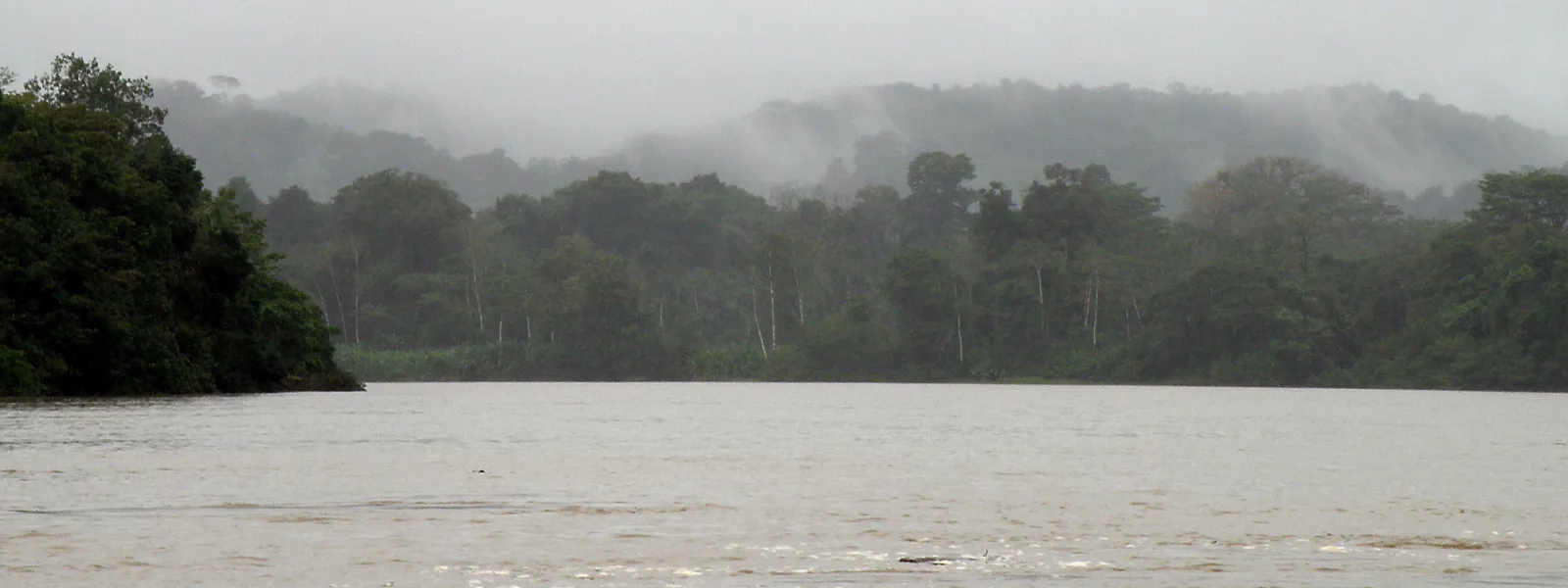
Photo: Thomas Jundt / CC BY-NCVictory: Crucitas gold mine cancelled for environmental harm
In Costa Rica, for the first time, a high-level court cancelled a large-scale mining project for the first time because it violated national laws and threatened the health of the environment. AIDA played an important role in establishing this precedent.
The company, Industrias Infinito, with the support of the previous government, planned to construct an open-pit gold mine in an incredibly biodiverse area near San Juan River, which forms the country’s border with Nicaragua.
The construction and operation of the mine threatened not just the environment but the cultural survival of 32 communities whose way of life depends on tourism and sport fishing in the area.
The fight to stop Crucitas began in 2008 when AIDA warned the Costa Rican government about potential international law violations and environmental impacts that had to be considered before allowing for the project’s implementation. We recommended suspending all work on the project until legal compliance and the protection of the environment and human health were guaranteed.
In November 2010, the Costa Rican Contentious Administrative Court cancelled the project’s concession, reiterating the importance of complying with legal standards when approving projects.
Though the company appealed the ruling, an appeals court later rejected their request and the Crucitas gold mine was cancelled for good.
We congratulate the national NGOs who worked on this case, especially the Environmental and Natural Resources Law Center (CEDARENA), for their tireless efforts in defense of the environment and human rights.
It is our hope that the precedent established in the case will be replicated in nations across Latin America.
Partners:
Related projects
Geneva Conference must give clarity to climate finance
Negotiations for a new climate agreement, initiated last December during the United Nations Framework Convention on Climate Change (COP 20) in Lima, Peru, will continue this week in Geneva, Switzerland. Delegates there will work on detailing the various elements to be included in the negotiating text of the new climate agreement, including climate finance. Climate finance is a key factor in enabling developing countries to confront climate change effectively. "We hope the Geneva session concludes with a negotiating text that provides clarity for predictable and sustainable financing," said Andrea Rodriguez, attorney with the Interamerican Association for Environmental Defense (AIDA). "The agreement needs to establish with certainty the sources of finance, which institutions will mobilize and manage them, and how they will be disbursed, in order to ensure that these efforts contribute to low-emission, climate-resilient development in developing countries." The Conference in Peru ended with the Lima Call for Climate Action, a document whose annexes contain the essential elements for a draft negotiating text of the new climate agreement, which will be signed later this year at COP 21 in Paris. Delegates in Geneva are expected to intensify work on those key elements, and produce a negotiating text that will have legal force under the United Nations Framework Convention on Climate Change. Given the importance of the Geneva conference, AIDA is providing climate finance recommendations for negotiators to incorporate into the draft text of the new climate agreement: Clear provisions regarding who is required to mobilize resources. Clear goals beyond 2020 for a road map towards annual public financing targets. Scaling up of resources to ensure compliance with the existing commitment to mobilize $100 million by 2020, and to allow countries to plan their climate actions. Predictable, adequate and sufficient climate finance to promote the transition to low-carbon, climate-resilient development in developing countries. 50:50 balanced allocation of resources for adaptation and mitigation actions. Definitions of climate finance and climate investment. Clarity on which climate finance institutions will operate under the convention. Recognition of the Green Climate Fund as the primary channel to mobilize resources, without the exclusion of other funds. Strengthen the mandate of the Standing Committee of Finance to enhance coordination and coherence of work between different financial institutions.
Read moreGeneva Conference must give clarity to climate finance
Negotiations for a new climate agreement, initiated last December during the United Nations Framework Convention on Climate Change (COP 20) in Lima, Peru, will continue this week in Geneva, Switzerland. Delegates there will work on detailing the various elements to be included in the negotiating text of the new climate agreement, including climate finance. Climate finance is a key factor in enabling developing countries to confront climate change effectively. "We hope the Geneva session concludes with a negotiating text that provides clarity for predictable and sustainable financing," said Andrea Rodriguez, attorney with the Interamerican Association for Environmental Defense (AIDA). "The agreement needs to establish with certainty the sources of finance, which institutions will mobilize and manage them, and how they will be disbursed, in order to ensure that these efforts contribute to low-emission, climate-resilient development in developing countries." The Conference in Peru ended with the Lima Call for Climate Action, a document whose annexes contain the essential elements for a draft negotiating text of the new climate agreement, which will be signed later this year at COP 21 in Paris. Delegates in Geneva are expected to intensify work on those key elements, and produce a negotiating text that will have legal force under the United Nations Framework Convention on Climate Change. Given the importance of the Geneva conference, AIDA is providing climate finance recommendations for negotiators to incorporate into the draft text of the new climate agreement: Clear provisions regarding who is required to mobilize resources. Clear goals beyond 2020 for a road map towards annual public financing targets. Scaling up of resources to ensure compliance with the existing commitment to mobilize $100 million by 2020, and to allow countries to plan their climate actions. Predictable, adequate and sufficient climate finance to promote the transition to low-carbon, climate-resilient development in developing countries. 50:50 balanced allocation of resources for adaptation and mitigation actions. Definitions of climate finance and climate investment. Clarity on which climate finance institutions will operate under the convention. Recognition of the Green Climate Fund as the primary channel to mobilize resources, without the exclusion of other funds. Strengthen the mandate of the Standing Committee of Finance to enhance coordination and coherence of work between different financial institutions.
Read more
5 Reasons to Donate to AIDA
We all must leave a legacy, my grandfather said. For him – beyond being loving husbands and wives, committed parents, responsible children, faithful friends and fulfilled workers – that means contributing something to the benefit of humankind. The wise words of my grandfather guide my professional life. In nine years of working with AIDA, I have had the great pleasure of seeing progress made on cases we’ve worked on throughout Latin America. These successes give me the energy to go the extra mile whenever necessary. Many times, however, I’ve felt the frustration of seeing so many people and places that need our help, and not having the financial or human resources to do so. If you agree that there is nothing more valuable than contributing to building a better world, and a more habitable place for future generations, then I have a suggestion for you: Please support AIDA’s work by making a donation! 5 Reasons to Support Our Work To enable you to make an informed decision, here are five reasons why supporting our work is an excellent idea: We are an international nonprofit organization with more than 15 years of experience in service to one fundamental mission: to use the law to protect the environment of the Americas, with a focus on Latin America. "Protecting our right to a healthy environment" is the motto that guides our actions. We are a group of Latin American attorneys who work with commitment. Our experience enables us to develop strategies before international bodies and organizations to ensure that the States comply with their environmental and human rights obligations. We work in partnership with national organizations, strengthening and complimenting their efforts. We firmly believe in public participation and capacity building to achieve greater impact and results over the long term. We share our knowledge with the partners and communities with whom we closely work. We take the great care when investing our funds. We work efficiently and effectively. We carefully select cases that will set a legal precedent and serve as an example for environmental defense in the countries of the region. Our work has a global impact, today and in the future. We work for the common good of all people: protecting vital resources like clean air and clean water. We consider our donors an integral part of our team. Without your contribution, it would not be possible for us to provide free legal assistance to communities fighting to defend their natural environment and protect their basic rights. With your support We will continue ensuring the protection of marine and coastal resources, the preservation of fresh water, effective responses to climate change, and the human right to a healthy environment. Helping us is simple and safe: You can do it right here! THANK YOU for believing in our work!
Read more