
Project
Alberto Peña Kay
Cuidando al Páramo de Santurbán de los daños de la mineria
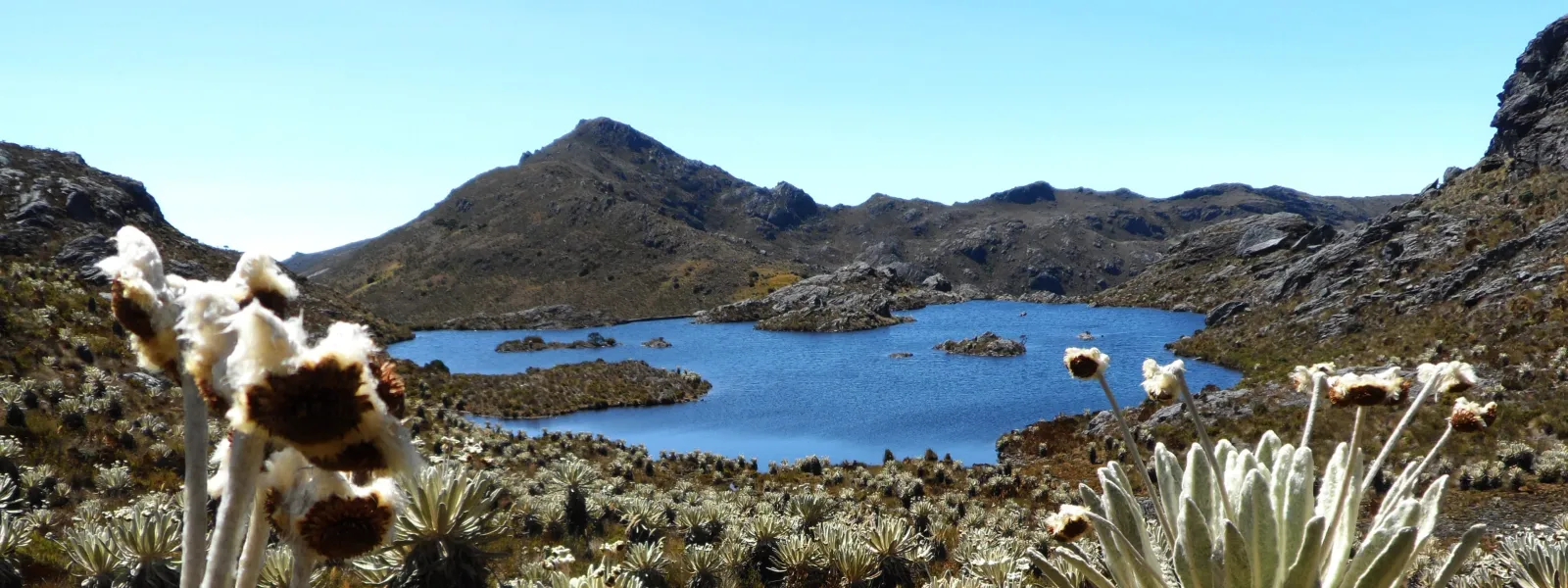
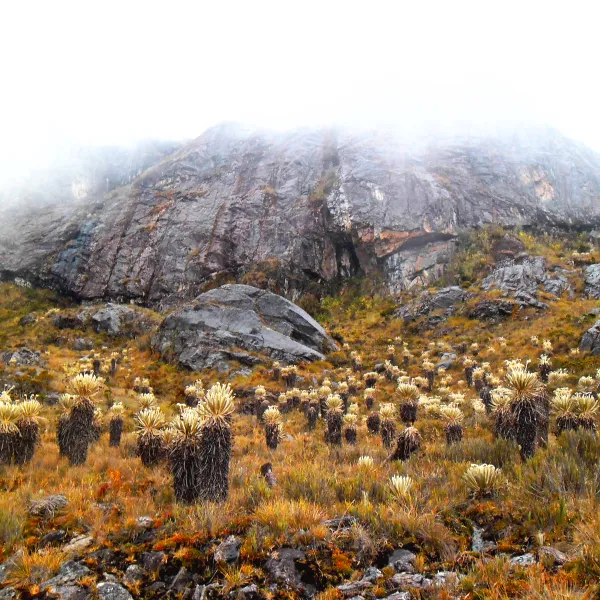
En la región andina, ecosistemas de alta montaña, llamados páramos, capturan agua de la niebla y la suministran a tierras bajas. Uno de ellos es el páramo de Santurbán, que abastece de agua dulce a más de dos millones de personas en Colombia.
Santurbán, como los otros páramos del continente, también captura grandes cantidades de carbono, siendo así un aliado clave para la mitigación de la crisis climática. Es además refugio para cientos de especies amenazadas, incluyendo al icónico oso de anteojos.
La tierra en y alrededor del páramo contiene oro y otros minerales. Ello ha puesto a Santurbán en la mira de la industria minera multinacional que, por décadas, ha buscado instalar proyectos de gran escala en el ecosistema que amenazan con degradarlo.
El Comité para la Defensa del Agua y el Páramo de Santurbán —una coalición de personas defensoras ambientales— ha frenado estos intentos continuos, apoyado por AIDA y otras organizaciones de la sociedad civil.
Antecedentes
El páramo de Santurbán está en medio de la cordillera Oriental de los Andes colombianos, en los departamentos de Santander y Norte de Santander, a una altura que va de los 2.200 a los 4.290 metros sobre el nivel del mar.
Comprende una superficie de 129.743 hectáreas, en las que alberga 57 lagunas. Es hábitat de 457 especies de plantas y de 293 de fauna vertebrada.
En Santurbán existen yacimientos mineros, sobre todo de oro, pero también de plata y cobre. A ello se debe la tradición minera de la región, particularmente en la parte del páramo que está en Santander, en la provincia de Soto Norte. Las comunidades de la zona han construido su cultura e identidad en torno a la extracción de oro, principalmente artesanal y de pequeña escala.
Pero los depósitos de oro en el páramo también han atraído, desde los años 90, a conglomerados mineros extranjeros que han buscado desarrollar proyectos de gran escala. Esto ha generado preocupación en la población que se abastece de las fuentes hídricas de Santurbán, quienes se han movilizado en defensa del agua, el territorio y la vida.
Pese a que normas nacionales e internacionales prohíben la minería en páramos, el gobierno colombiano ha otorgado títulos mineros a empresas transnacionales en Santurbán.

Foto: Keishpixl / Pixabay.
El largo camino de defensa del páramo
Una de las empresas que buscó desarrollar gran minería en Santurbán es Eco Oro Minerals Corp. —antes Greystar Resources—, empresa canadiense que pretendía instalar allí la mina a cielo abierto Angostura para extraer oro y plata. Entre 1994 y 1995, la empresa adquirió sus títulos mineros e hizo exploraciones. Y en 2010 solicitó el permiso de explotación minera.
Fue en ese año cuando AIDA se involucró en la defensa del ecosistema, apoyando al Comité para la Defensa del Agua y el Páramo de Santurbán. Nuestro trabajo legal contribuyó a que, en mayo de 2011, el gobierno colombiano negara la licencia ambiental a la mina.
En enero de 2013, el gobierno declaró una parte del páramo (11.700 hectáreas) como Parque Natural Regional. Ese año —junto con el comité y organizaciones aliadas—, realizamos una campaña y trabajo de incidencia para que el gobierno reconociera la totalidad de Santurbán como ecosistema de páramo mediante una delimitación con base en criterios científicos. En diciembre de 2014, el Ministerio de Ambiente realizó una delimitación que protegía el 76 % del páramo (98.954 hectáreas).
Por otro lado, fruto de un litigio apoyado por AIDA, en febrero de 2016, el más alto tribunal de Colombia reafirmó que la minería en páramos está prohibida.
Ese mismo año, en diciembre, la Corporación Financiera Internacional (CFI), brazo del Grupo del Banco Mundial para el sector privado, retiró su inversión en Eco Oro Minerals. Este logro resultó de un proceso iniciado en 2012, cuando el comité —asesorado y acompañado por AIDA y organizaciones internacionales aliadas— presentó un reclamo ante un mecanismo independiente de quejas, el cual concluyó que la inversión de la CFI en el proyecto Angostura no tomó en cuenta los impactos sociales y ambientales del mismo, contradiciendo las políticas internas de la institución financiera.
También en 2016, Eco Oro Minerals presentó una demanda de arbitraje contra el Estado colombiano ante el Centro Internacional de Arreglo de Diferencias relativas a Inversiones (CIADI) argumentando afectaciones por las decisiones estatales orientadas a la protección de los páramos del país, incluida la delimitación de Santurbán.
En 2017, la Corte Constitucional invalidó la delimitación porque no se consultó a las comunidades afectadas. El alto tribunal ordenó hacer una delimitación participativa.
Y ese año surgió una nueva amenaza para Santurbán cuando la multinacional canadiense Aris Mining solicitó el permiso ambiental para Soto Norte, un proyecto de minería de oro ubicado en las cercanías del páramo. Tras movilizaciones ciudadanas y cuestionamientos técnicos, en octubre de 2020, la Autoridad Nacional de Licencias Ambientales archivó el proyecto.
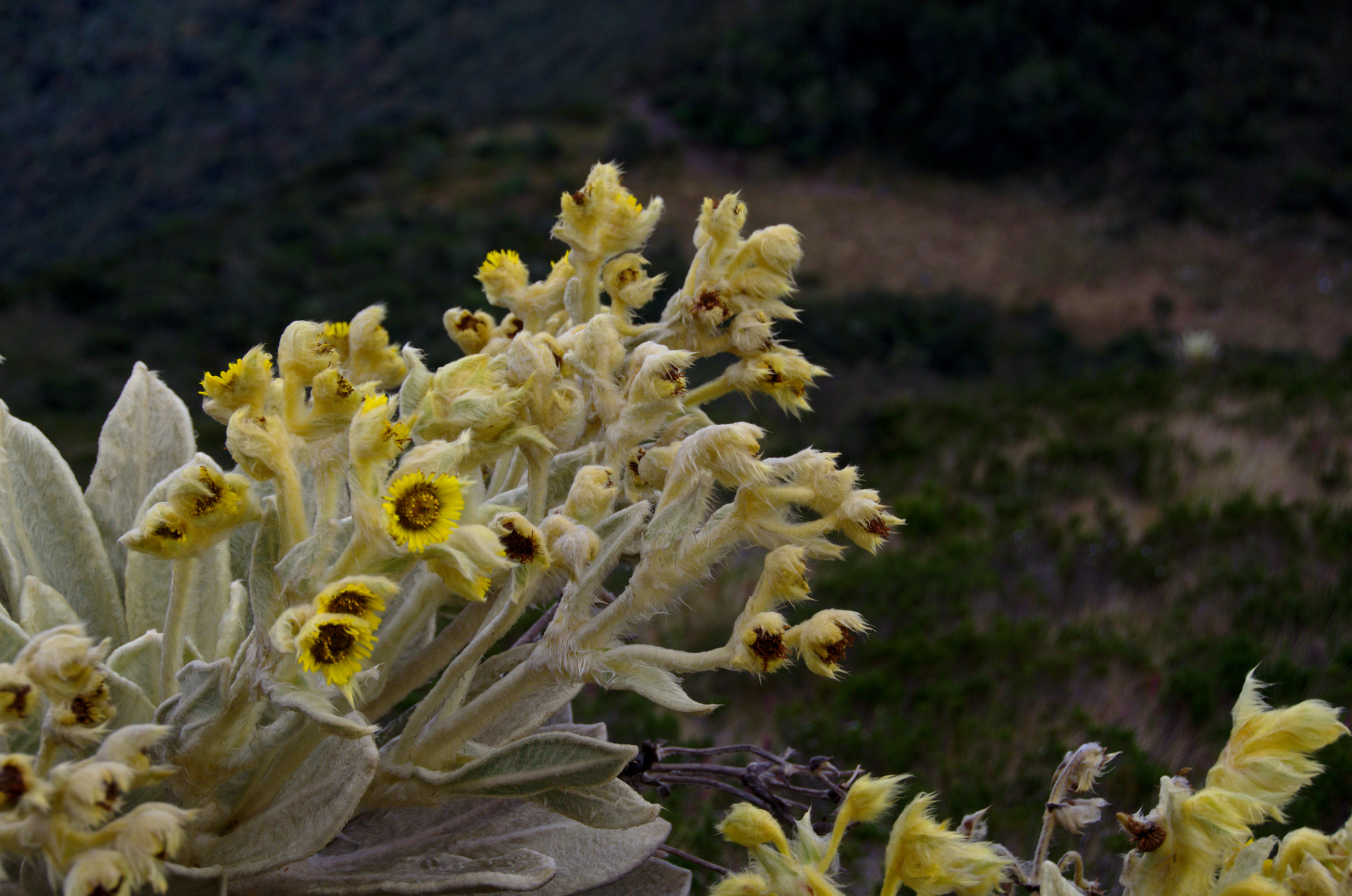
Foto: Aztlec.
Situación actual
En marzo de 2025, el gobierno colombiano declaró al costado occidental del macizo de Santurbán como zona de reserva temporal de recursos naturales renovables, delimitando y protegiendo un área de 75.344,65 hectáreas. Esto implicó la suspensión por dos años del proyecto Soto Norte. No obstante, continúa vigente el contrato que tiene Aris Mining para formalizar las actividades mineras de pequeña escala de la empresa Calimineros mediante la compra y procesamiento de material mineralizado.
Además, la minera canadiense continúa impulsando el proyecto. En septiembre de 2025, publicó su estudio de prefactibilidad, replanteando el diseño original de la mina.
De otro lado, quienes integran el Comité para la Defensa del Agua y del Páramo de Santurbán enfrentan amenazas y estigmatización por su labor. En marzo de 2025, Relatorías Especiales y el Grupo de Trabajo sobre empresas y derechos humanos de la ONU denunciaron esos hechos mediante comunicaciones enviadas a los gobiernos de Colombia, Canadá y Emiratos Árabes Unidos; así como a las empresas Aris Mining y MDC Industry Holding Company LLC, antigua copropietaria del proyecto Soto Norte.
En cuanto a la demanda de arbitraje presentada por Eco Oro Minerals, en julio de 2024, el CIADI falló a favor del Estado colombiano y rechazó el reclamo de indemnización por USD 1.100 millones presentado por la empresa canadiense.
Respecto de la delimitación de Santurbán, en julio de 2026, el Ministerio de Ambiente expidió una resolución que introduce el concepto de “delimitación progresiva”. Con esa base, el gobierno propone delimitar progresivamente el páramo, abarcando 29.199 hectáreas en 19 municipios, aquellos donde ya concluyeron los acuerdos participativos exigidos por la Corte Constitucional en su fallo de 2017. Plantea también dos medidas sobre creación y ampliación de reservas para restringir la minería en el ecosistema.
Conoce más de los impactos de la minería en los páramos de América Latina
Partners:
Proyectos relacionados
Grandes represas: Elefantes blancos, caros y hasta premiados. ¿Aprenderemos la lección?
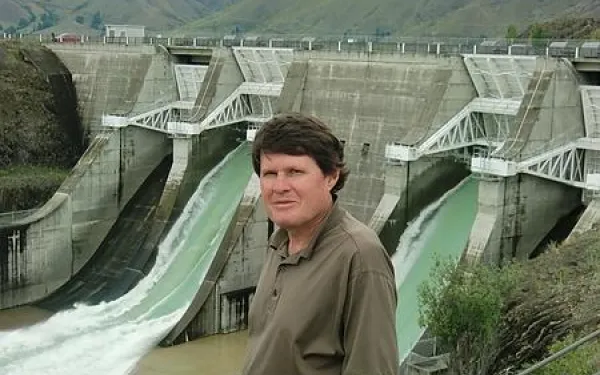
Por Astrid Puentes Riaño, codirectora ejecutiva de AIDA, @astridpuentes Cualquier tonto inteligente puede hacer cosas más grandes, más complejas y más violentas. Se necesita un toque de genialidad —y mucho coraje— para moverse en la dirección opuesta. (Albert Einstein) La semana pasada y en el marco de la Semana Mundial del Agua, Estocolmo entregó como cada año el Premio del Agua. En esta ocasión, el galardonado fue el profesor John Briscoe “por su sin igual contribución al manejo global y local del agua”. Briscoe es uno de los mayores promotores de las grandes represas en el mundo. Ha sido asesor de diferentes gobiernos, director de la oficina en Brasil del Banco Mundial y Gerente de Agua de esa institución. Al ser entrevistado sobre el premio, el ahora profesor de Harvard declaró estar sorprendido y dijo que se trata de “un reconocimiento a un grupo de personas que trabaja en manejo del agua” combinando investigación y aplicación de políticas públicas. Confieso que, al igual que Briscoe, yo también recibí con sorpresa la noticia. Me sorprendió profundamente porque Estocolmo es una ciudad que se precia de ser sustentable. Es la capital de Suecia, un país que lleva más de 40 años sin construir una gran represa, cuyos cuatro ríos principales están protegidos, y que prohíbe mayores desarrollos. Me sorprendió además que se premie al Sr. Briscoe pese a toda la evidencia científica y empírica que demuestra que las grandes represas no son un buen negocio, que causan graves daños ambientales y a las comunidades, cuyos costos superan los beneficios que brindan, y que contribuyen seriamente al cambio climático. Aclaro que se no trata de algo personal contra el Sr. Briscoe. Es mas bien un asunto de coherencia. Me desconcierta que un galardón creado para honrar las contribuciones a la conservación y protección de los recursos de agua fresca y al mejoramiento del bienestar de las personas y ecosistemas, haya laureado precisamente la promoción de las grandes represas. Me sorprende que tecnología y soluciones de energía del siglo pasado, cuya ineficiencia e inviabilidad económica se ha demostrado sistemáticamente, aún sea motivo de premios. Me preocupa además que como sociedad no hayamos aprendido la lección y estemos encaminados a seguir promoviendo masivamente este tipo de infraestructura. En AIDA llevamos más de 10 años trabajando en casos de impactos por grandes represas. Asesoramos a comunidades afectadas y ayudamos a gobiernos e instituciones internacionales a identificar mejores soluciones. En 2009, publicamos el informe Grandes Represas en América: ¿peor el remedio que la enfermedad?, el cual demuestra, a partir de cinco estudios de caso en diferentes países, que en América Latina estos proyectos ignoran las normas nacionales e internacionales, destruyen el ambiente y violan derechos humanos. Además, junto con colegas de Brasil, representamos a comunidades afectadas por la represa Belo Monte ante la Comisión Interamericana de Derechos Humanos. Es un caso triste, emblemático y una prueba sólida de lo que no debe hacerse para producir energía. Es la punta del iceberg de lo que ocurre en América Latina, donde cientos de represas —casi 100 solo en la Amazonía— están planeadas para los próximos años. El Premio del Agua 2014 también me recordó el estudio de la Universidad de Oxford ¿Deberíamos seguir construyendo más grandes represas?, publicado en marzo. En él se analizan a profundidad 245 grandes represas construidas entre 1934 y 2007 en 65 países de los cinco continentes. Los investigadores concluyen que “incluso sin contabilizar los impactos negativos en la sociedad humana y el ambiente, los costos reales de las grandes represas son demasiado altos para brindar un retorno [de inversión] positivo”. Este estudio demostró que el 96% de las grandes represas cuesta más de lo inicialmente presupuestado y que ocho de cada 10 de ellas superan el tiempo previsto de construcción. Los sobrecostos y las demoras se aplican sin importar el lugar del mundo donde se implementen, la entidad que las financia o cuándo se construyeron. Es decir que, en 70 años de desarrollo de las represas analizadas, no hemos aprendido de los errores del pasado. Pero nunca es tarde y ahora es el momento perfecto. Así lo ha demostrado otro gran gurú de la construcción de represas: el Sr. Thayer Scudder, con casi 60 años de carrera profesional. Tras haber sido un férreo defensor de los beneficios que en su criterio las grandes represas traen, en especial a las comunidades más pobres, Scudder cambió de opinión. A sus 84 años, reconoció que “las grandes represas no solo no valen lo que cuestan, sino que muchas de las que están en construcción ‘tendrían desastrosas consecuencias ambientales y socio-económicas’”. Así lo admitió hace poco según lo escrito por Jacques Leslie en su editorial del New York Times. El giro de 180º de Scudder me lleva a otra de las conclusiones del estudio de Oxford: Una de las razones por las que los costos y tiempo de construcción de las grandes represas son subvalorados es el excesivo positivismo de quienes las planean. Entiendo que las personas seamos positivas. Sin embargo, negar la realidad es otra cosa y premiar esa negación, supera los límites. Así que felicito al Sr. Briscoe por un premio que sorprendió a más de uno. Lo hago solo con la esperanza de que este premio sea el comienzo del fin de las grandes represas. El galardón otorgado la semana pasada debería ser lo último que veamos en la promoción de las grandes represas. Espero, por el contrario, que ahora y por fin tengamos la genialidad y el coraje de considerar las verdaderas oportunidades viables de energía que existen, aquellas que en el mediano y largo plazo son más baratas y que realmente podrían contribuir a solucionar las emergencias energéticas que enfrentamos. Que así sea para que el remedio no resulte peor que la enfermedad.
Leer másAfectados por contaminación ambiental en La Oroya esperan hace siete años que el Estado garantice sus derechos
En 2007, la Comisión Interamericana de Derechos Humanos (CIDH) solicitó al Estado peruano adoptar medidas cautelares en favor de esas personas. Éstas aún no han sido implementadas plenamente y la salud de los afectados continúa en deterioro. La CIDH aún no toma una decisión final sobre el caso. La Oroya, Perú. Han transcurrido siete años desde que la Comisión Interamericana de Derechos Humanos (CIDH) solicitara al Estado peruano adoptar medidas cautelares en favor de las personas afectadas por la contaminación tóxica en la ciudad de La Oroya. Las y los afectados, incluidos niños y niñas, aún no reciben toda la atención médica requerida y su salud continúa en deterioro. El 31 de agosto de 2007, la CIDH otorgó medidas cautelares en favor de 65 moradores de La Oroya cuya salud resultó afectada por altos índices de contaminación por plomo, arsénico, cadmio y dióxido de azufre, proveniente del complejo metalúrgico de la empresa Doe Run Perú. En razón de ello y dada la grave y urgente situación, la Comisión solicitó al Estado peruano realizar las acciones necesarias para que las personas afectadas reciban un diagnóstico y tratamiento médico especializado cuando se demostrara que su integridad personal o su vida están en peligro de daño irreparable. Aunque hubo avances en la atención médica a los beneficiarios de las medidas, éstos aún no han recibido la atención integral y especializada requerida. Existe además un grave riesgo de retroceso. A la fecha, la Estrategia Sanitaria de Atención a Personas Afectadas por Contaminación con Metales Pesados y otras Sustancias Químicas, la cual opera en el Centro de Salud de La Oroya, no tiene el presupuesto asegurado a partir de septiembre y para el resto del año. La Estrategia es fundamental para el cumplimiento de las medidas cautelares pues de ella depende el diagnóstico y el tratamiento médico especializado para los beneficiarios. Sin presupuesto, la continuidad del personal médico que atiende no sólo a los beneficiarios, sino a toda la población de La Oroya, es inviable. "Las medidas cautelares siguen vigentes y, tras siete años, no han sido cumplidas a cabalidad. Sin embargo, el Estado insiste en solicitar su levantamiento pese a que la salud de la población está en deterioro y riesgo constante", dijo María José Veramendi Villa, abogada de la Asociación Interamericana para la Defensa del Ambiente (AIDA). Por otro lado, la CIDH continúa estudiando la demanda presentada en 2006 por violaciones de derechos humanos del mismo grupo de personas afectadas. El caso se fundamenta en la omisión del Estado peruano de controlar adecuadamente las actividades del complejo metalúrgico y de proteger la salud y demás derechos de las personas afectadas. Lamentablemente, la situación de éstas empeora y cinco años después de haber admitido la demanda, la CIDH aún no ha tomado una decisión final. "El paso del tiempo nos afecta cada vez más. Nuestras dolencias están empeorando. Durante este tiempo, hemos perdido a muchos compañeros y hemos visto a nuestros hijos enfermarse”, afirmó uno de los afectados cuyo nombre se mantiene en reserva por seguridad. Actualmente el complejo metalúrgico está en etapa de "liquidación en marcha". Ello quiere decir que sus operaciones no se detendrán mientras se realiza su venta. Sin embargo, en mayo, el complejo tuvo que suspender sus operaciones porque sus proveedores dejaron de abastecerle de concentrados debido a los problemas económicos de la empresa. "Aunque las operaciones estén detenidas, las violaciones de derechos humanos en perjuicio de las personas ya se han consumado. Por tanto, el Estado peruano debe cumplir con sus obligaciones en materia de derechos humanos y garantizar que la empresa y sus nuevos dueños cumplan con sus obligaciones ambientales", señaló Jorge Abrego, abogado de la Asociación Pro Derechos Humanos (APRODEH).
Leer más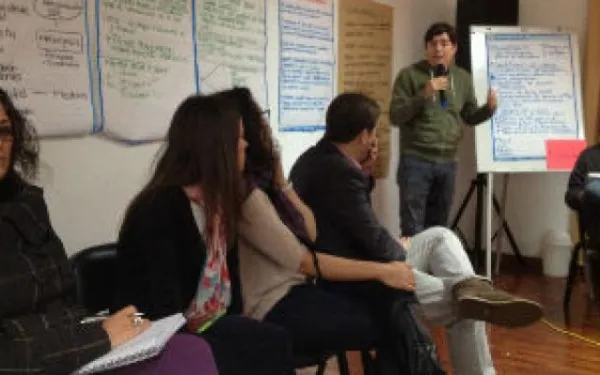
Creando lazos de cooperación para enfrentar el cambio climático
Hablar de los cambios extremos en el clima nos concierne a todos y todas y, por tanto, la lucha para hacerles frente debe ser conjunta. En AIDA partimos de esa premisa para contribuir a la obtención de respuestas efectivas al cambio climático en favor de las comunidades más vulnerables al mismo. Las decisiones al respecto son negociadas a nivel internacional. En ese sentido, la generación de espacios previos de colaboración y consenso es vital. Uno de ellos fue el taller de fortalecimiento de capacidades organizado el 8 y 9 de agosto en Lima, Perú, por AIDA y por las principales redes y organizaciones de América Latina que inciden en las negociaciones sobre cambio climático. El evento congregó a representantes del gobierno y de la ciudadanía de 11 países de la región, entre ellos a negociadores de los gobiernos de Brasil, Chile, México y Perú. Ambos sectores compartieron sus preocupaciones sobre lo que es importante resolver en aspectos como pérdidas y daños, adaptación y mitigación, financiamiento, preparación para la obtención de recursos, y el impacto del cambio climático en los derechos humanos, entre otros. "Los participantes conocieron lo que se está promoviendo en las negociaciones para asegurar que las prioridades de todos sean tomadas en cuenta y crear un lazo de colaboración entre negociadores y sociedad civil. Tratamos de abarcar la persidad de temas y de información de forma práctica para que todos estemos en la misma página", explica Andrea Rodríguez, abogada de AIDA. Asimismo, el taller creó el terreno para que gobiernos y ciudadanos continúen trabajando unidos con miras a su participación en la 20ª versión de la Conferencia de las Partes (COP), la principal sesión de negociación climática y la cual se realizará en diciembre en Lima. "El hecho de que la pelota se juegue en casa es una oportunidad para mostrar lo que se está haciendo en América Latina y para que trabajemos juntos en la elaboración del nuevo acuerdo climático, el cual será firmado en París en 2015, pero cuyo borrador saldrá de Lima", destaca Rodríguez. ¡En nuestra página de internet encontrarás videos, presentaciones y toda la información relativa al taller! También en agosto, Lima es sede de la "Semana del financiamiento climático", evento organizado por el Gobierno de Perú. En el mismo se abordan tres temas claves para la planificación y desarrollo de acciones de adaptación y mitigación del cambio climático: financiamiento proveniente del sector privado, transparencia en el uso del dinero, y preparación necesaria para acceder al mismo. Junto con organizaciones aliadas, AIDA brindó apoyo técnico al Gobierno peruano y, en el marco del evento, organizó una cena con actores involucrados en el financiamiento climático (gobiernos, inversionistas, instituciones financieras y sociedad civil) a fin de que los mismos encuentren puntos en común para colaborar y asegurar el flujo de recursos y su uso efectivo para combatir el cambio climático.
Leer más