
Project
Photo: Anna Laurie Miller / AIDAConserving the Ciénaga Grande de Santa Marta
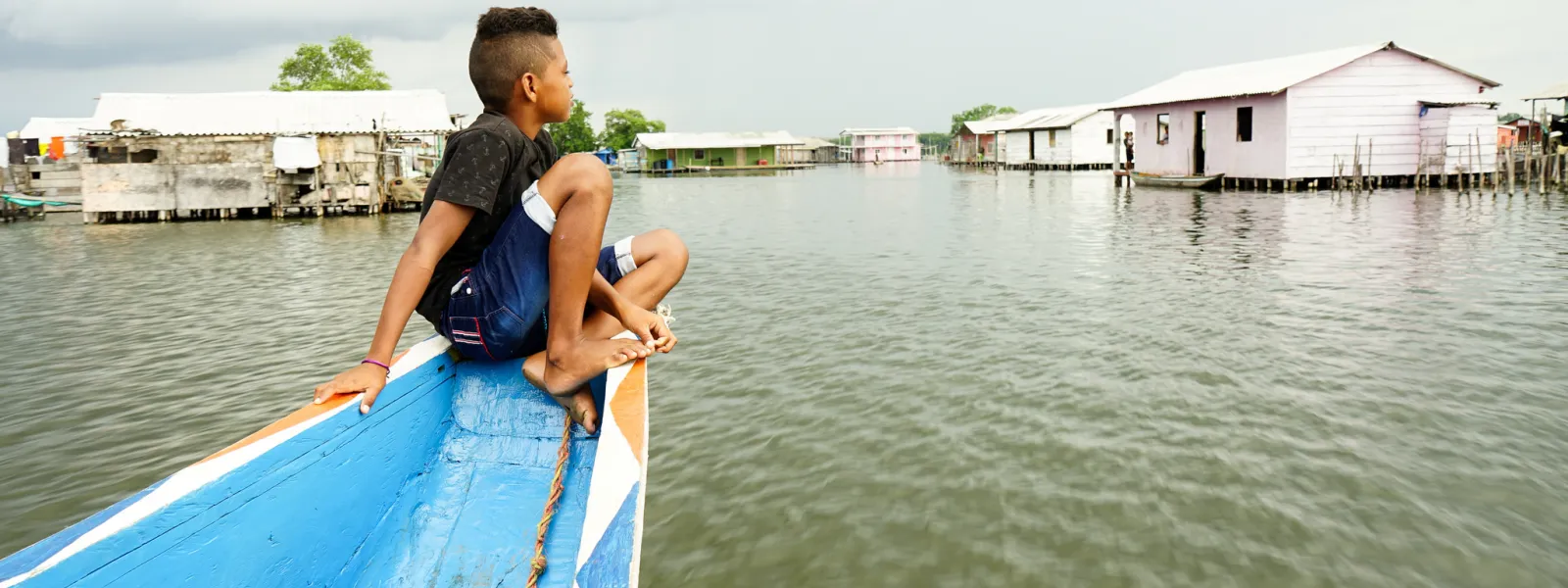
Ciénaga Grande de Santa Marta, the largest and most productive coastal wetland in Colombia, covers 45,000 hectares. At the confluence of the Magdalena River and the Caribbean Sea, the site boasts an immense variety of flora and fauna, including mammals, birds and fish. Its southern tip is a beautiful sanctuary of mangroves, swamp and amphibious forest.
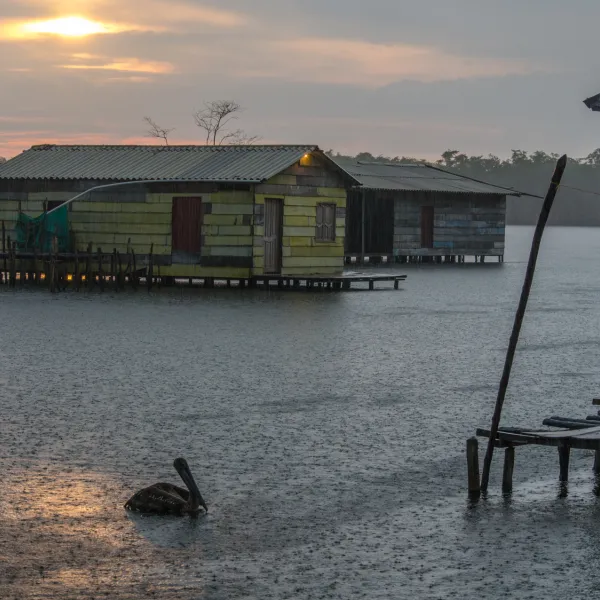
On the calm waters of the marsh stand the Ciénaga’s famous stilt villages, supported by pillars or simple wooden stakes and inhabited by local fishermen since 1800. In a place accessible only by water, many of the things we take for granted—being served a glass of water, quick access to a doctor—are considered luxuries. Residents depend on the natural world around them. Sadly, in recent years mass fish die-offs caused by the marsh’s degradation have threatened the livelihoods of 2,500 people who call the Ciénaga Grande home.
Illegal activities are destroying this vital ecosystem: intentionally set forest fires, deforestation of large tracks of land for agriculture and livestock, logging and burning of mangroves, and 27 kilometers of illegally built dikes.
This destruction not only devastates the local fishery; it also has global impact. Ciénaga Grande’s mangroves absorb large quantities of carbon dioxide from the atmosphere, aiding in the global fight against climate change.
The importance of the Ciénaga Grande has been recognized both nationally – the Sanctuary of Flora and Fauna Ciénaga Grande de Santa Marta is a national park – and internationally: UNESCO’s Man and the Biosphere program declared the lagoon a biosphere reserve; and the Ciénaga Grande is listed as a Wetland of International Importance under the Ramsar Convention, an intergovernmental treaty for the protection of wetlands.
AIDA and our partners are advocating for the Colombian government to fulfill its national and international obligations to protect the Ciénaga Grande. After all, millions of animals, the local community, and our global climate depend on it.
Partners:
Related projects
Inter-American Commission on Human Rights Examines Impacts of Large Dams in Latin America
Inter-American Commission on Human Rights Examines Impacts of Large Dams in Latin America Washington, D.C. - On November 2, 2009 the Inter-American Commission on Human Rights will hold a hearing on the impacts that large dams in Latin America have on human rights and the environment. Dam-affected peoples and non-governmental organizations (NGOs) will present information showing that Latin-American governments are building dams at great social, environmental and economic costs, often disregarding national and international laws and violating human rights. “More than a million people have already been affected by large dams in Latin America, many of whom are from indigenous and small farming communities,” said Rafael González, Board Member of the Interamerican Association for Environmental Defense (AIDA). “More than 300 new dams are being planned throughout the region, which could destroy the livelihoods of hundreds of thousands of people and harm precious ecosystems.” The over 40 national and international NGOs requesting this hearing will present findings from AIDA’s forthcoming publication, Large Dams in the Americas: Is the Cure Worse than the Disease?, to the IACHR documenting the poor track record of dam construction in the hemisphere. They will also encourage the Inter-American Commission to make recommendations to member States on how to avoid major environmental damages and human rights violations. “The granting of this hearing by the IACHR is a positive demonstration of their interest in examining the link between large dams and human rights violations,” said Astrid Puentes co-Director of AIDA. “We hope that the IACHR will begin an investigation and recommend that States strictly enforce international standards and human rights law, to avoid major environmental impacts and human rights tragedies.” The human rights impacts of large dams are numerous. Affected communities and stakeholders—mostly indigenous, fishing and farming communities—rarely have the opportunity to participate in decisions on dam developments, and frequently are subjected to intimidation, harassment and even military actions when they oppose projects. Families displaced by large dams often receive inadequate or no compensation. Equally troubling are poorly developed resettlement plans that do not account for lost livelihoods or lack of access to medical attention, fishing areas and farming land, leaving families worse off as a result. Large dams have also had profound environmental impacts. Enormous reservoirs inundate biodiverse wildlife habitats and fertile farmlands. Dams and river diversions also harm fish populations, and are the main cause for the extinction or endangerment of one-third of the world’s freshwater fish species. “We are not against development.” said Father Gabriel Espinoza, spokesperson for communities affected by the El Zapotillo dam in Mexico, and who will speak before the Inter-American Commission. “We understand that a country’s needs for energy and water should be met as a fundamental right of all peoples.” “But governments cannot proceed without consulting and providing information for local communities, according to national and international law. That would violate our fundamental freedoms and disrespect our lives, history, culture and livelihoods.” “There are often better, cheaper, and less-destructive alternatives to building a large dam, whether to meet energy or water needs, or to reduce the impacts from floods,” said Monti Aguirre of International Rivers. “Small-scale, decentralized water supplies and new renewable energy sources, as well as large-scale efficiency and conservation plans are only some of the options available. Unfortunately, governments and corporations frequently ignore these choices or dismiss them out-of-hand when a large dam project is on the table.” The World Commission on Dams, in its ground-breaking report on large dams, Dams and Development, recommends using a comprehensive, participatory process to evaluate needs for water and energy and to assess the full range of available options. The hearing is open to the public and will take place on November 2, 2009, from 5:30 to 6:15 p.m., Room Rubén Darío, 8th Floor of the OAS General Secretariat Building, 1889 F Street NW, Washington, D.C. Guidelines for press coverage of public hearings at http://www.cidh.org/Prensa/guidelinespresscoverageENGL.htm. Opportunities for interviews with presenters after the hearing. For more information on large dams in the Americas: International Rivers, Redlar
Read more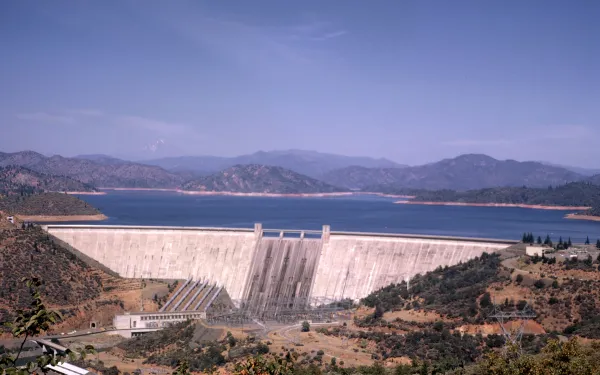
Large Dams in the Americas: Is the Cure Worse than the Disease?
"Large Dams in the Americas: Is the Cure Worse than the Disease?", analyses the problems with large dams from the perspective of human rights and international environmental law. Our objective is to promote a greater understanding of the situation, demonstrate the connection between the grave environmental impacts and human rights violations potentially caused by large dams, and to encourage a more comprehensive assessment and implementation of these projects. Through the analysis of five case studies representing different regions of Latin America, including México, Central America, the Andean region, Brazil and the Southern Cone, we describe how States and other actors are continuously causing serious impacts to the environment and ignoring multiple international laws and standards when implementing large dam projects. Among the most important impacts that this report covers, are, among others: the destruction of strategic ecosystems; the forced displacement of communities, particularly disadvantages ones such as indigenous, campesino and afro-descendent communities; the loss of food sources and livelihoods; the lack of public participation and access to information; and the contribution to and impacts from climate change. Read and download the Executive summary (in English) Read the full report (in Spanish)
Read moreInter-American Commission admits case on human rights violations in La Oroya
FOR IMMEDIATE RELEASE: August 19, 2009 IACHR Will Examine Case Against Peru for Violating the Human Rights of Residents of La Oroya, A City Extensively Contaminated by the Doe Run Peru Smelter ► According to the Inter-American Commission on Human Rights of the Organization of American States, Peru may be violating the rights to life, personal integrity, and to information and access to justice, due to toxic pollution from Doe Run Peru’s multi-metal smelter in La Oroya, Peru. ► The potential extension of an environmental management plan for the complex, announced by Peruvian President Garcia, must include effective measures to guarantee against further human rights violations. WASHINGTON, D.C. – The Inter-American Commission on Human Rights (IACHR) will examine a complaint against Peru for human rights violations in La Oroya, a Peruvian town described as one of the “most contaminated places on earth.” AIDA, Earthjustice and CEDHA submitted this case in 2006 with the local support of the Peruvian Society for Environmental Law (SPDA). In the Inter-American Commission’s recent report accepting the case, it “considers that the alleged deaths and/or health effects of the presumed victims are a consequence of acts and omissions by the State with regard to environmental pollution arising from the multi-metal complex operating in La Oroya, which if proved could constitute a violation of the rights conferred in Articles 4 [life] and 5 [personal integrity] of the American Convention.” “This claim stems from the lack of action by Peru, considering that the government has known about the impacts of the pollution on persons and the environment for at least ten years without acting to resolve the contamination problem,” states AIDA Co-Director, Astrid Puentes. “Even if some steps have been taken in La Oroya, the measures implemented have not been effective in safeguarding health and the environment, as noted by the Peruvian Constitutional Court, the Ministry of Health, and the Commission.” “This is excellent news that brings us hope that things will finally improve in La Oroya” said one of the case’s plaintiffs, whose names are confidential. In 2006 the Constitutional Court of Peru ordered actions to protect public health in the city. The “unjustified delay” in complying with this order may also constitute a violation of the human rights of access to justice and judicial guarantees. The Commission will also investigate whether Peru’s actions violate the right to access to information and freedom of expression. In addition to serious health effects, this case alleges unjustifiable limits to accessing information about the community’s environmental and human health situation and pressure toward those trying to distribute this information. The IACHR’s decision to examine the complaint coincides with negotiations between the Peruvian Government and the Doe Run Peru company, owner of the Multi-Metal Complex, over a potential extension for the complex’s Environmental Management Plan (PAMA). The effective implementation of this plan would improve environmental quality in the area. There is little certainty whether the company will ever meet its obligations for environmental controls under this Plan, as the government has already granted several extensions. The Commission will likely monitor the compliance process and consider the results in any final decision regarding the violations of human rights in Peru. The PAMA does not actually allow for extensions, and the government could fine the company for violating the Plan. If Peru does not impose fines, it would further prolong the unjustified delay of actions necessary to control the pollution in La Oroya and protect the human rights of its inhabitants,” states José Luis Capella, of SPDA. “Any future decision regarding the PAMA must include effective measures to enforce the obligations to improve health and the environment in the city already contained within the Plan.” Connected with this case, the IACHR also requested in 2007 that Peru implement urgent precautionary measures to guarantee the life and safety of La Oroya residents. These measures insist that Peru provide specialized medical evaluations and treatment for those affected by the toxic pollution. “The IACHR’s acceptance of this case is vital to protect human rights in La Oroya. It demonstrates that the severe pollution in the city has an impact, not only on the environment, but on human health, and that it affects their human rights,” stated Martin Wagner Director of the International Program of Earthjustice. “We hope the case has positive impact on the protection of human rights in La Oroya and in the region."
Read more