
Project
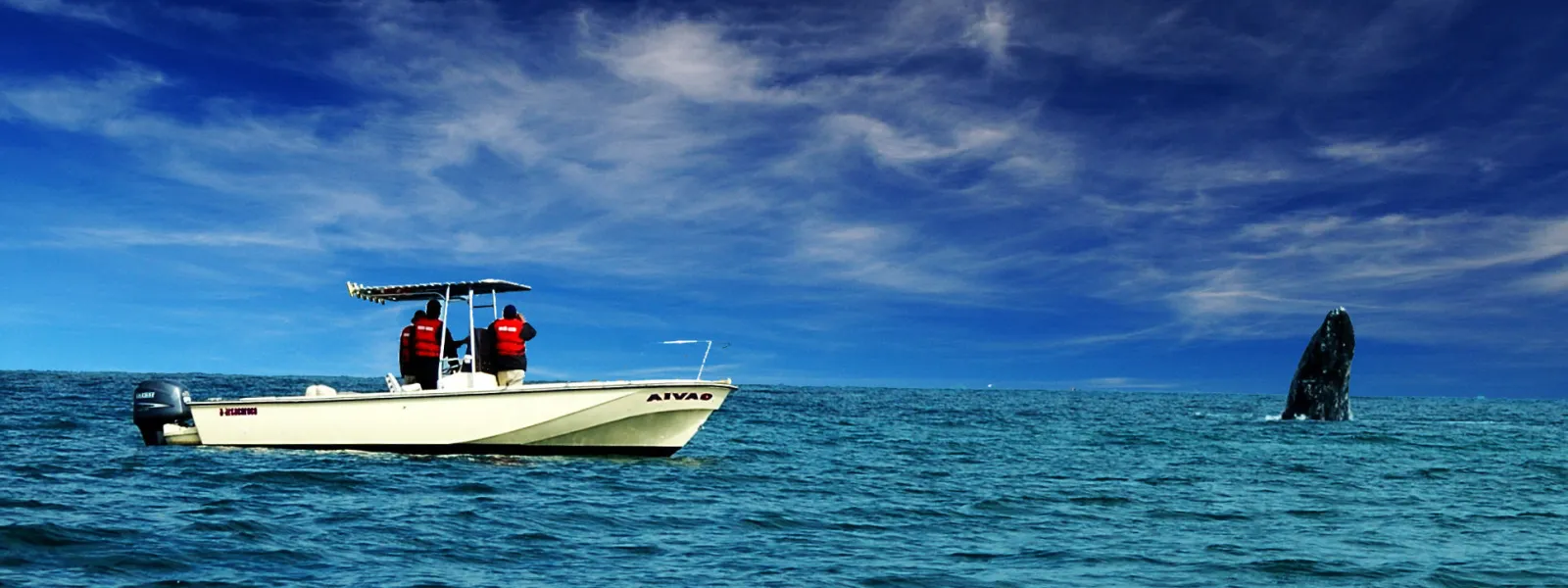
Photo: Paolo MacorigDefending Mexico's marine biodiversity from deep sea mining
Each year, thousands of grey whales arrive to give birth to their young in the shelter of Ulloa Bay in Baja California Sur. It is a key location in the specie’s annual migration.
The rich marine ecosystem is also critical to blue whales, humpback whales and other threatened species, such as the loggerhead turtle, which seek food and shelter in the bay. Additionally, it’s home to species of commercial interest, such as clams, lobsters and shrimp.
But a serious threat looms over Ulloa Bay, and the animals and people who depend on its health. The Don Diego mine is set to extract, over 50 years, 350 million tons of phosphate sand from the seabed, in an area equivalent to 60 percent of Mexico City.
The whales and sea turtles that inhabit or transit the area rely on sound to communicate and find food. Large dredging ships used to extract phosphate sand will generate an enormous buzz, altering the environment in ways that modify marine mammal behavior and even threaten species survival.
Partners:
Related projects
Canadian Supreme Court prohibits project splitting and guarantees public participation in environmental assessments (Spanish text only)
PARA PUBLICACIÓN INMEDIATA: CONTACTO: Jacob Kopas: [email protected] Teléfonos: (+57) 1-338-1277 / 320-316-0379 Corte Suprema de Canadá prohíbe fragmentar proyectos mineros y rectifica la obligatoriedad de evaluaciones de impacto ambiental integrales y con participación pública Ottawa, Canadá - En un cambio jurisprudencial fundamental, el 21 de enero la Corte Suprema de Canadá determinó que los grandes proyectos mineros están obligados a tener una evaluación de impacto ambiental comprehensiva, sin fragmentar el proyecto, y que garantice la participación pública. La sentencia concluye que las autoridades canadienses, al realizar la evaluación ambiental del proyecto minero Red Chris (un inmenso proyecto minero de oro y cobre a cielo abierto), lo fragmentaron ilegalmente impidiendo así conocer el verdadero impacto ambiental de la obra. “Celebramos enormemente esta decisión de la Corte Suprema de Canadá, que debería ser replicada por los gobiernos y las empresas mineras, especialmente las canadienses, con grandes intereses en la región”, dijo Jacob Kopas, abogado de la Asociación Interamericana para la Defensa del Ambiente (AIDA). AIDA, CELA y varias organizaciones presentaron un escrito ante la Corte, apoyando la demanda presentada por Ecojustice y otros grupos ambientalistas, resaltando entre otros, que la autorización de este proyecto también desconoce el derecho internacional ambiental. El proyecto “Red Chris” procesaría 30,000 toneladas métricas de mineral al día y arrojaría los desechos tóxicos en un área remota y prístina de la provincia de Columbia Británica, Canadá, habitada por grandes mamíferos y que es un importante sitio para la reproducción de salmón. Ante los posibles riesgos irreparables que esta mina a cielo abierto implica para esta área y sus pobladores, una evaluación comprehensiva es sin duda, un requisito esencial antes de autorizarlo. El máximo tribunal canadiense concluyó que el gobierno federal violó las normas aplicables al autorizar este proyecto de manera fragmentada, y también al impedir la participación pública activa de las comunidades y los grupos locales en la evaluación de impactos ambientales para grandes proyectos, como la minería. Estos dos elementos son esenciales dado que proyectos como la mina Red Chris no sólo interesan a los inversionistas y al gobierno, sino también a todas las comunidades locales que de múltiples maneras tienen un interés en las áreas a afectarse. “En el hemisferio hemos sido testigos de innumerables proyectos con inmensos impactos ambientales y sociales, que desafortunadamente se presentan y evalúan por partes, las minas a cielo abierto son un ejemplo reiterado, por lo que esta sentencia es vital para la región”, dijo Astrid Puentes, Co-Directora de AIDA. “Además, la decisión de la Corte está de acuerdo con normas ambientales internacionales, contribuye a prevenir daños ambientales irreparables y respeta el derecho humano a la participación pública, constituyéndose en un gran ejemplo a seguir”. ## Para mayor información ir a: www.aida-americas.org Enlace de información de otras organizaciones: www.ecojustice.ca; www.cela.ca
Read more
Environmental Defense Guide
The purpose of this publication is to promote the use of the Inter-American System of Human Rights for addressing environmental degradation that causes human rights violations. Within this guide we provide the legal strategies and arguments necessary to use the System effectively and properly. Our goal with this publication and our work in general, is to strengthen people’s capacity to defend their individual and collective right to a healthy environment through the proper development, implementation and fulfillment of domestic and international law. With the publication and widespread distribution of the English-language edition of the Guide, we hope to significantly advance this goal. Read and download the guide
Read more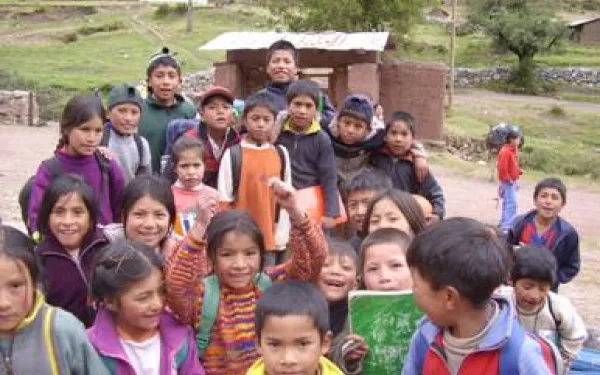
La Oroya before the Inter-American Commission on Human Rights
In an effort to compel the Peruvian government to resolve the health crisis in La Oroya, AIDA appealed to the Inter-American Commission on Human Rights (IACHR) in 2005, requesting that the Commission take urgent precautionary measures (in Spanish) to safeguard human rights. Working together with Earthjustice, CEDHA, and our Peruvian colleagues, we brought this case on behalf of more than 60 adults and children who live in La Oroya and suffer from health problems believed to be caused by the smelter’s pollution. The following year, after the government failed to heed Peruvian court mandates to clean up La Oroya, we submitted a full petition to the IACHR, asking the Commission to thoroughly evaluate the human rights situation and obligate the State of Peru to prevent the Doe Run Peru smelter from further contaminating the city. The Commission responded favorably to our efforts. In 2007, the IACHR requested that the State of Peru take precautionary measures to prevent irreversible harm to the health, integrity, and lives of the people of La Oroya. Specifically, as a first step, the Commission requested that the Peruvian government diagnose and provide specialized medical treatment to the group of people we represent. When the government was slow to comply, the Commission met with the parties again in 2008 and 2009, and successfully motivated the state to implement the measures appropriately, a process currently in progress. In August 2009, the IACHR accepted AIDA’s petition to fully evaluate the case against Peru. It based its decision on the fact that the illnesses and deaths allegedly resulting from the severe pollution constitute potential violations of the human rights to life and integrity. It also found that the State of Peru likely violated the public’s right to information when it manipulated and failed to publish important human health information. Finally, the Commission concluded that the State of Peru unjustifiably delayed compliance with the 2006 decision of the Peruvian Constitutional Tribunal, and thus may be violating citizen’s rights of access to justice and to effective domestic remedies. Now, several years after the IACHR first ordered Peru to provide precautionary measures, it is clear that the state’s efforts have been woefully inadequate. The 65 residents represented by AIDA have received spotty medical attention that falls far short of the “specialized” care that was promised, and the government’s efforts have not reduced health risks in a meaningful way. In March 2010, AIDA and its partners returned for another public hearing at the IACHR, to present evidence that the Peruvian government’s actions fail to satisfy the terms of the 2007 recommendations. Backed by findings from independent experts, AIDA argued that the medical evaluations conducted by the government were never completed and that the city is still contaminated by heavy metal pollution that causes a range of debilitating conditions, especially among children. The State denied these claims, insisting that it has taken sufficient action and the case should be closed. While we wait for a final decision on the case, AIDA will continue to pressure the Peruvian Ministry of Health to comply with its obligations, and to encourage the IACHR to maintain a spotlight on the Peruvian State until the pollution in La Oroya no longer threatens people’s fundamental human rights. Positive changes resulting from this case will not only benefit those we represent, but all residents of La Oroya. A decision from the IACHR will also create a vital precedent that can be applied in other cases throughout the hemisphere. IACHR hearing - La Oroya Follow us on Twitter: @AIDAorg "Like" our page on Facebook: https://www.facebook.com/AIDAorg
Read more