
Project
Organizing the Network for Environmental Justice in Colombia
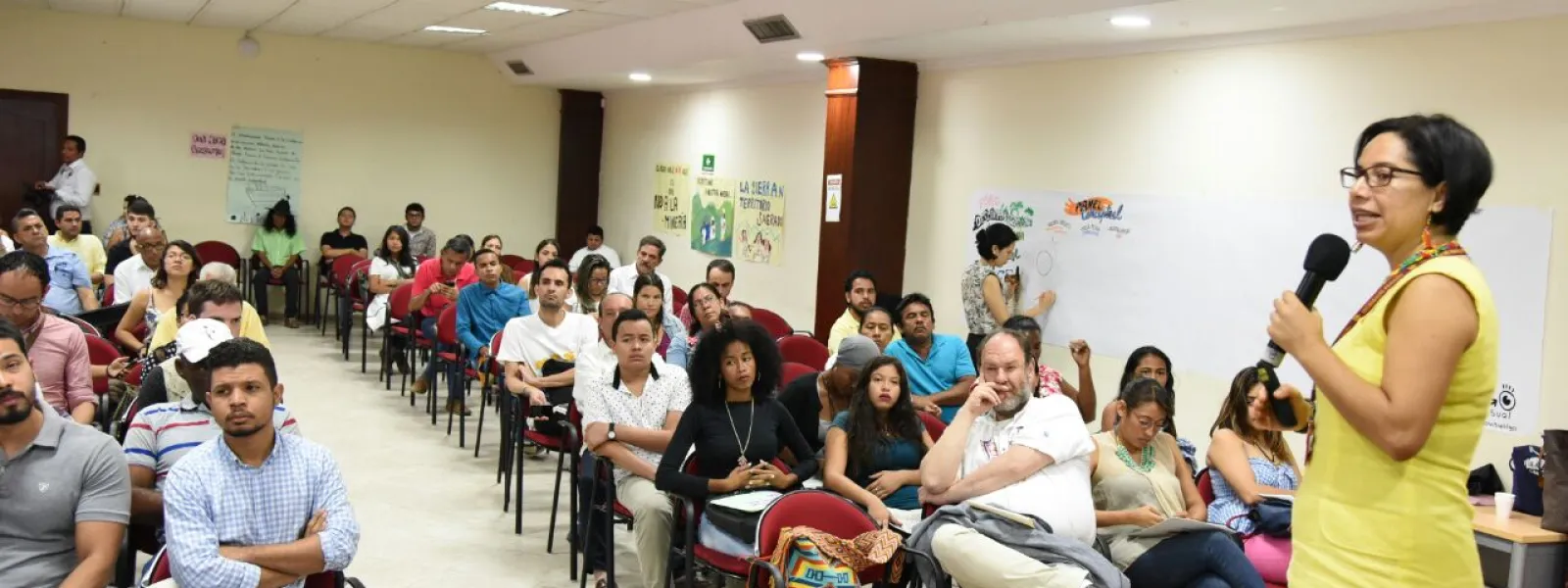
The Network for Environmental Justice in Colombia is an effort to coordinate organizations and legal resources for the protection of human rights and the environment.
The Network was founded in 2010 under the coordination of AIDA and with the help of the Latin American Institute for Alternative Society and Law, the Institute for the Study of Peace and Development, the Inter-Ecclesial Commission for Justice and Peace, and the University of Los Andes, the University of Caldas, and Del Rosario University. The network began with 79 participants and now includes more than 500 people and participating organizations.
The Network’s principal objective is to propose solutions to environmental conflicts in Colombia. It also aims to promote the fair and effective use of international and domestic environmental law, in particular, the right to a clean and healthy environment.
What does the network do?
- Facilitates the exchange of knowledge and information to implement legal strategies in precedent-setting cases. One such project was the Mandé Norte Mine, in which several members of the Network developed a legal strategy, resulting in a judicial decision that established Colombia’s need to perform an independent environmental impact assessment. Most importantly, the decision also mandated that developers obtain the consent of indigenous peoples before moving forward with any projects in their territory.
- Promotes organizational alliances, garners support, and connects legal work in defense of the environment.
- Organizes conversations, forums, and constructive debates on environmental issues.
- Provides access to legal resources including laws, court decisions, articles and legal analysis, and facilitates communication through its website and social media channels.
- Advises law students through the AIDA volunteer program. In doing so, the Network strengthens the capacity for environmental law in Colombia.
Partners:
The ABCs of "critical" or transition minerals and their role in energy production
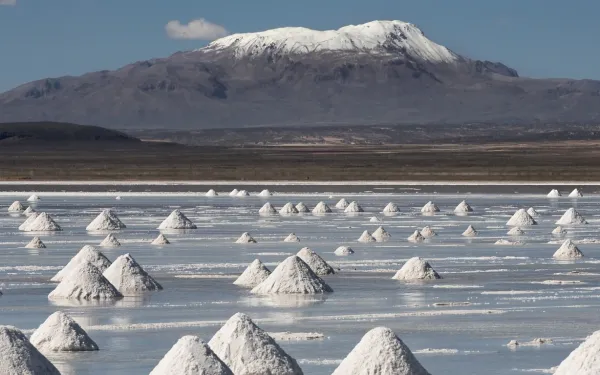
By Mayela Sánchez, David Cañas and Javier Oviedo* There is no doubt that we need to move away from fossil fuels to address the climate crisis. But what does it mean to switch to other energy sources?To make a battery or a solar panel, raw materials from nature are also used.Some of these raw materials are minerals which, due to their characteristics and in the context of the energy transition, have been descriptively named "critical" minerals or transition minerals.What are these minerals, where are they found, and how are they used?Below we answer the most important questions about these mineral resources, because it is crucial to know which natural resources will supply the new energy sources, and to ensure that their extraction respects human rights and planetary limits, so that the energy transition is just. What are "critical" or transition minerals and why are they called that?They are a group of minerals with a high capacity to store and conduct energy. Because of these properties, they are used in the development of renewable energy technologies, such as solar panels, batteries for electric mobility, or wind turbines.They are so called because they are considered strategic to the energy transition. The term "critical" refers to elements that are vital to the economy and national security, but whose supply chain is vulnerable to disruption. This means that transition minerals may be strategic minerals, but not critical in terms of security and the economy.However, given the urgency of climate action, some states and international organizations have classified transition minerals as "critical" minerals in order to promote and facilitate access to these raw materials.They are also often referred to as transition minerals because they are considered essential for the technological development of renewable energy sources, such as those mentioned above. And in the context of the energy transition, energy sources that use these minerals are the most sought-after to replace fossil energy sources. What are the most important "critical" or transition minerals?The most important transition minerals are cobalt, copper, graphite, lithium, nickel and rare earth.But there are at least 19 minerals used in various renewable energy technologies: bauxite, cadmium, cobalt, copper, chromium, tin, gallium, germanium, graphite, indium, lithium, manganese, molybdenum, nickel, selenium, silicon, tellurium, titanium, zinc, and the "rare" earth. What are "rare" earth elements and why are they so called?The "rare" earth elements are the 16 chemical elements of the lanthanoid or lanthanide group, plus Ithrium (Y), whose chemical behavior is virtually the same as that of the lanthanoids.They are Scandium, Ithrium, Lanthanum, Cerium, Praseodymium, Neodymium, Samarium, Europium, Gadolinium, Terbium, Dysprosium, Holmium, Erbium, Tullium, Iterbium and Lutetium.They are so called because when they were discovered in the 18th and 19th centuries, they were less well known than other elements considered similar, such as calcium. But the name is now outdated.Nor does the term "rare" refer to their abundance, because although they are not usually concentrated in deposits that can be exploited (so their mines are few), even the less abundant elements in this group are much more common than gold. What are "critical" or transition minerals used for? What technologies are based on them?The uses of transition minerals in the technological development of renewable energy sources are diverse:Solar technologies: bauxite, cadmium, tin, germanium, gallium, indium, selenium, silicon, tellurium, zinc.Electrical installations: copper.Wind energy: bauxite, copper, chromium, manganese, molybdenum, rare earths, zinc.Energy storage: bauxite, cobalt, copper, graphite, lithium, manganese, molybdenum, nickel, rare earths, titanium.Batteries: cobalt, graphite, lithium, manganese, nickel, rare earths. In addition, they are used in a variety of modern technologies, for example in the manufacture of displays, cell phones, computer hard drives and LED lights, among others. Where are "critical" or transition minerals found?The geography of transition minerals is broad, ranging from China to Canada, from the United States to Australia. But their extraction has been concentrated in countries of the global south.Several Latin American countries are among the top producers of various transition minerals. These materials are found in complex areas rich in biological and cultural diversity, such as the Amazon and the Andean wetlands.Argentina: lithiumBrazil: aluminum, bauxite, lithium, manganese, rare earths, titaniumBolivia: lithiumChile: copper, lithium, molybdenumColombia: nickelMexico: copper, tin, molybdenum, zincPeru: tin, molybdenum, zinc How do "critical" or transition minerals support the energy transition and decarbonization?Transition minerals are seen as indispensable links in the energy transition to decarbonization, i.e. the shift away from fossil energy sources.But the global interest in these materials also raises questions about the benefits and challenges of mining transition minerals.The issue has become so relevant that last September, the United Nations Panel on Critical Minerals for Energy Transition issued a set of recommendations and principles to ensure equitable, fair and sustainable management of these minerals.In addition, as a result of the intensification and expansion of their extraction in countries of the region, the issue was brought before the Inter-American Commission on Human Rights for the first time on November 15.In a public hearing, representatives of communities and organizations from Argentina, Bolivia, Chile and Colombia, as well as regional organizations, presented information and testimonies on the environmental and social impacts of transition mineral mining.Given the current energy transition process, it is necessary to know where the resources that will enable the technologies to achieve this transition will come from.The extraction and use of transition minerals must avoid imposing disproportionate environmental and social costs on local communities and ecosystems. *Mayela Sánchez is a digital community specialist at AIDA; David Cañas and Javier Oviedo are scientific advisors.Sources consulted:-Olivera, B., Tornel, C., Azamar, A., Minerales críticos para la transición energética. Conflictos y alternativas hacia una transformación socioecológica, Heinrich Böll Foundation Mexico City/Engenera/UAM-Unidad Xochimilco.-Science History Institute Museum & Library, “History and Future of Rare Earth Elements”.-FIMA NGO, Narratives on the extraction of critical minerals for the energy transition: Critiques from environmental and territorial justice.-Haxel, Hedrick & Orris, “Rare Earth-Elements. Critical Resources for High Technology,” 2005.-USGS 2014, “The Rare-Earth elements. Vital to modern technology and lifestyle”, 2014.-Final Report for the Inter-American Commission on Human Rights (IACHR) Thematic Hearing: Minerals for Energy Transition and its Impact on Human Rights in the Americas, 2024.
Read more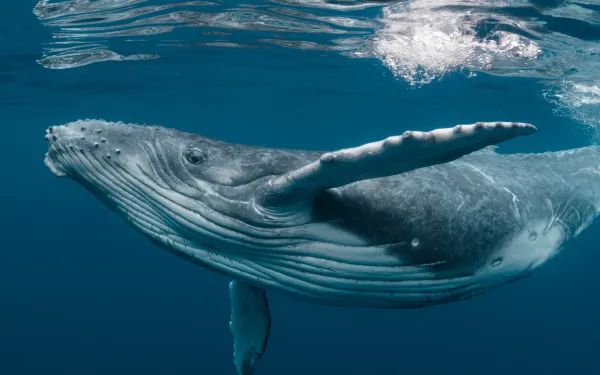
Whales and salmon farming: how does the industry impact our gentle marine giants?
Chile is by nature a country of marine mammals. Of the 94 species of cetaceans existing in the world, 43 have their habitat in the country's waters. And just over a quarter of them are found in Patagonia. But Chile is also a country of salmon, occupying the second place in the world production, surpassed only by Norway. The overlap of the salmon industry with the habitat of these emblematic marine mammals represents a significant threat to cetaceans in Chile about which not enough is known.The recent deaths of three whales in protected areas of Chile's southern seas force us to ask ourselves why they are dying and how they are affected by the growing industry with which they share their habitat.Civil society is responding. In early November 2024, Greenpeace - together with the Kawésqar community Grupos Familiares Nómadas del Mar and with the support of AIDA - filed two criminal complaints against those responsible for the deaths of humpback whales in protected areas.These lawsuits, which have already been declared admissible, represent an unprecedented milestone in the country's criminal history, as they are the first take advantage of the amendaments made to the Penal Code by Law 21,595 on Economic and Environmental Crimes to the Penal Code to file a lawsuit for possible violations committed inside protected areas.In this context, AIDA, together with Greenpeace and the NGO FIMA - historical allies in the resistance to the expansion of salmon farming in the waters of Chilean Patagonia - commissioned a scientific report entitle “Cetaceans and Salmon Farming: Challenges for the Protection of Marine Biodiversity in Chilean Patagonia.”The report is currently available in Spanish, which lays out the available information on the impacts of salmon farming on the whales and dolphins of Chilean Patagonia. The results are alarming: serious risks have been identified, in addition to a lack of data that makes it difficult to understand the magnitude and consequences of the threats.One of the most evident impacts is the incidental capture of small and large cetaceans in farming centers. There are documented cases of entanglement and deaths, although the lack of official records makes it difficult to measure the severity of the problem.Another significant threat is the Intense maritime traffic in Patagonia, largely related to the salmon industry. Although there is no official data in Chile, there is evidence of deaths and serious injuries due to collisions between boats and whales. In addition, underwater noise from boat engines affects the health and well-being of the whales and dolphins, which depend on sound for communication and orientation.In addition to these, there are other problems of the industry, whose effects on whales and dolphins have not been adequately studied, but which we should consider while the studies are being conducted. One of these is the escape of salmonids, which compete with native species for food resources and may carry diseases that could affect smaller cetaceans in particular by reducing the availability of prey that serve as food.Microplastic pollution, 40 percent of which comes from salmon farming centers, is another under-researched environmental concern in terms of its impact on cetaceans. And the excessive use of antibiotics in Chilean salmon farming, one of the highest rates in the world, could be having negative indirect effects on the ecosystems that support these marine mammals.Finally, one of the most significant environmental impacts of the salmon farming in Chilean Patagonia is the generation of hypoxia and anoxia due to the excess of organic matter in the farming centers, coming from salmon feces and uneaten food that falls to the seabed. The decomposition of this matter consumes the oxygen in the water, creating zones in the sea where life becomes difficult or impossible.We hope that this report will fill the information gap that has become uncomfortable and even untenable in light of recent whale deaths.With this evidence, even in a scenario of limited knowledge, we will be able to encourage a governmental response towards the rapid implementation of effective protection measures for whales and dolphins in Chilean waters.Chile is a country of cetaceans, and as their guardians, we must ensure that our waters are a safe space for their development and well-being. Read and download the report (in Spanish)
Read more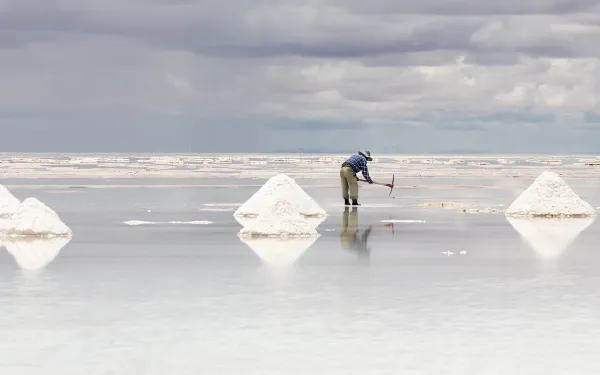
Organizations and communities alert to human rights impacts of mineral extraction for the energy transition
A public hearing before the Inter-American Commission on Human Rights will focus on the impact of the expansion and intensification of extractive operations for transition minerals like lithium and copper on communities in Latin America. Washington DC. On November 15, at a public hearing before the Inter-American Commission on Human Rights, representatives of national and regional organizations, as well as members of communities and indigenous peoples, will present updated information on how the exponential increase in the demand for and extraction of transition minerals has caused serious human rights violations as part of a transition process that is proposed only as a change in the energy matrix and is incapable of addressing inequalities in energy production and consumption, particularly in the Global South.Transition minerals like lithium, copper, cadmium, and cobalt—also called “critical” minerals—have been proposed in many global discussions as one of the main solutions to the climate crisis, as they are used in the development of technologies for the production of renewable energy, thus reducing or replacing the use of fossil fuels. A large part of these minerals are located in Latin America, in areas of great biocultural diversity.At the hearing, participants will present the main threats that mining for energy transition poses to the rights of indigenous peoples and local communities, the right to a healthy environment, access to environmental information, citizen participation, and justice. In addition, concrete cases of human rights violations in the context of mining for energy transition will be presented through testimonies.These impacts are already occurring in countries such as Argentina, Bolivia and Chile, which concentrate about 53 percent of the world's known lithium deposits in their Andean wetlands, extremely fragile ecosystems confronting water scarcity; in Chile and Peru, where 40 percent of the world’s copper is mined; and in the Colombian Amazon, where concessions, mining claims and illegal extraction of transition minerals are violating the rights of indigenous peoples.Several international organizations have spoken out about human rights abuses related to climate crisis response, particularly energy transition processes. In September, the UN Panel on Critical Minerals for Energy Transition issued a set of recommendations and voluntary principles for governments, industry and other stakeholders to ensure equitable, fair and sustainable management of these minerals. These guidelines aim to ensure that the transition to renewable energy is based on fairness and equity, and that it promotes sustainable development, respect for people, and environmental protection in developing countries.The hearing will take place during the 191st period of sessions of the Inter-American Commission. It was requested by the Due Process of Law Foundation (DPLF), the Gaia Amazonas Foundation and the organizations that are members of the the Alliance for Andean Wetlands (Alianza por los Humedales Andinos): the Interamerican Association for Environmental Defense (AIDA), a regional organization; the Fundación Ambiente y Recursos Naturales (FARN) and the PUCARÁ Assembly, of Argentina; the Centro de Documentación e Información Bolivia (CEDIB) and the Colectivo de Derechos Humanos Empodérate, of Bolivia; ONG FIMA, Defensa Ambiental and Fundación Tantí, of Chile.The hearing will be held from 9:00 a.m. to 10:30 a.m. (Washington DC time) and will be broadcast via Zoom, which requires prior registration at the following link: https://www.zoomgov.com/webinar/register/WN_dsEZdrDqSyOA8-i7ikveJQ#/registration. Quotes from representatives of organizations and communities Verónica Chávez, representative of the communities of Salinas Grandes and Laguna de Guayatayoc, Argentina:"All of us who are part of the Salinas Grande watershed are living a situation in which our rights are being affected. We hope that the IACHR can resolve this situation because it is very serious; they are damaging our territories, living beings, and nature itself." Liliana Ávila, director of the Human Rights and Environment Program at the Interamerican Association for Environmental Defense (AIDA):"The energy transition in our countries should be an opportunity to move towards more just and equitable energy production and distribution processes. The human rights framework and the role of the international protection system are fundamental in this regard. It is very important that the Inter-American Commission closely follows this process and promotes the protection of human rights." Verónica Gostissa, attorney with Asamblea Pucará of Catamarca, Argentina:"In our territory, the province of Catamarca, Argentina, we are living a serious violation of our rights, which is reflected first and foremost in the visible environmental impacts. Since 1997, lithium mining has caused significant environmental damage, including the drying up of a branch of the Trapiche River, a damage that persists to this day. Water continues to be taken from this damaged river, despite recognition of the damage by the company and government authorities. Access to public information, participation and consultation, and access to justice are also affected. For years, extractive projects have been approved without adequate procedures, and although a lawsuit filed by the Atacameños del Altiplano indigenous community resulted in a regulation, it does not meet the standards for effective indigenous consultation. In addition, more than 10 lithium projects are being developed in the same territory, the Salar del Hombre Muerto, without any cumulative and comprehensive impact assessment to date." Vivian Lagrava Flores, coordinator of the Colectivo de Derechos Humanos Empodérate, Bolivia:"Indigenous communities reject mining projects, they can even issue their resolutions and say no in the mining consultation process, but their decisions are not binding for governments. International standards are not respected, and the subjugation of territories and the imposition of mining rights are legitimized with discourses of progress and development, but it is not development from the vision of the indigenous peoples, nor from ours." Lady Sandón, representative of the Environment Unit of the Consejo de Pueblos Atacameños, Chile:"There is a lot of ignorance of the law for the native/indigenous people, which favors the state, and that is why the inhabitants of the land, by not knowing, do not enforce their guarantees. The state institutions violate the social, environmental, and cultural aspects; sometimes they use the indigenous people themselves to create divisions and to have supporters or political and mining operators who promote the change of the thinking of the genetic memory that we have as native people. I hope that we can revisit the situation of ancestral indigenous justice as a mechanism that previously established corrections so that the values and principles of ‘Buen Vivir’ are respected." Daniel Cerqueira, program director of the Due Process of Law Foundation (DPLF):"This hearing is an opportunity for the Inter-American Commission to clarify the parameters of action for both States and companies in the management of transition minerals. It is imperative to have specific obligations in this area, as human rights violations resulting from the extraction of these minerals are a reality that tends to worsen in several countries in the region." Juan Sebastian Anaya, advocacy advisor at the Gaia Amazonas Foundation (Colombia):"The indigenous governments of the Amazon exercise their territorial and environmental authority in accordance with the Law of Origin, which guides their knowledge systems and principles of relationship with the elements of the territory, such as minerals. The decarbonization of the energy matrix to maintain consumption standards in the global north should not be done at the expense of indigenous territories and the communities that protect them, govern them and make them flourish with their daily practices."Press contactsVíctor Quintanilla (Mexico), AIDA, [email protected], +52 5570522107Rocío Wischñevsky (Argentina), FARN, [email protected], +54 91159518538 Karen Arita (Mexico), DPLF, [email protected], +52 442 471 9626
Read more