Press Release


Argentina’s approval of fracking wells violates international obligations

The authorization of four fracking wells within the Vaca Muerta shale deposit poses a risk to vital water sources and violates the rights of Mapuche communities. In support of an amparo filed to invalidate the project’s approval, AIDA presented evidence detailing Argentina’s failure to comply with international environmental and human rights obligations. Mendoza, Argentina. Argentina violated international environmental and human rights obligations when it authorized the development of four fracking wells in indigenous territory.  The wells would damage vital water sources and violate the rights of Mapuche communities, AIDA explained in an amicus brief presented before the Supreme Court of Mendoza Province. The brief supports an amparo seeking to invalidate the project’s approval, filed by the Environment and Natural Resources Foundation (FARN, for its initials in Spanish). “Fracking was authorized in Mendoza without any environmental impact assessment,” explained AIDA Attorney Claudia Velarde. “In fact, the project was presented for authorization as ‘infrastructure adaptation’ and the environmental authority granted the permits in a record time of just six days.” The wells are located within Vaca Muerta, the largest non-conventional deposit of shale gas in Latin America.  Mapuche indigenous communities—recognized by the National Institute of Indigenous Affairs—live in the project area and, as such, have the right to prior consultation; operators must receive their free, prior and informed consent for any activity affecting their territory. The energy company El Trebol S.A. failed to recognize that right when assessing the project. As a result, the project’s authorization violates Convention 169 of the International Labor Organization, the United Nations Declaration on the Rights of Indigenous Peoples, and the American Declaration on the Rights of Indigenous People—all international standards recognized by Argentina. “The chemicals used in fracking can contaminate both surface and groundwater, including, in this case, those of the Llancanelo lagoon, a wetland of international importance under the Ramsar Convention, a treaty ratified by the government of Argentina,” said Velarde. “The site is a zone of passage and rest for more than 130 species of resident and migratory birds.” In addition, fracking activities require large amounts of water, while Mendoza has for years suffered from drought, a problem only aggravated by climate change. Finally, the brief emphasizes that there is neither detailed geological data of the zone nor quality information on the dynamics of the groundwater. “Faced with this scientific uncertainty, authorities have an obligation to apply the precautionary principle,” Velarde explained. “An activity as potentially harmful as fracking must be rejected unless those seeking to implement it can prove that it will not cause serious and irreversible damage to the environment.” Press contact: Victor Quintanilla (Mexico), AIDA, [email protected], +5215570522107  

Read more

Oceans

World’s first legally binding treaty to protect the high seas: Landmark UN negotiations open

New York. Treaty negotiations to conserve and protect nearly two thirds of the ocean open today at the United Nations (UN) in what is widely regarded as the greatest opportunity in a generation to turn the tide on ocean degradation and biodiversity loss. Following over a decade of discussions at the UN, the two-week Intergovernmental Conference (IGC) is the first of a series of four negotiating sessions through 2020 for a new legally-binding treaty to protect marine biodiversity in areas beyond national jurisdiction*, commonly known as the high seas. The ocean beyond 200 nautical miles (370 kilometres) from a country’s shorelines is considered international waters – “the high seas” - and is globally shared. There is no overarching law in place to safeguard its biodiversity or its vital role in provisioning services – such as generating oxygen and regulating the climate. “The high seas cover half our planet and are vital to the functioning of the whole ocean and all life on Earth. The current high seas governance system is weak, fragmented and unfit to address the threats we now face in the 21st century from climate change, illegal and overfishing, plastics pollution and habitat loss. This is an historic opportunity to protect the biodiversity and functions of the high seas through legally binding commitments” said Peggy Kalas, Coordinator of the High Seas Alliance, a partnership of 40+ non-governmental organisations and the International Union for the Conservation of Nature (IUCN).  The ocean’s key role in mitigating climate change, which includes absorbing 90% of the extra heat and 26% of the excess carbon dioxide created by human sources, has had a devastating effect on the ocean itself. Managing the multitude of other anthropogenic stressors exerted on it will increase its resilience to climate change and ocean acidification and protect unique marine ecosystems, many of which are still unexplored and undiscovered.  Because these are international waters, the conservation measures needed can only be put into place via a global treaty.  Professor Alex Rogers of Oxford University who has provided evidence to inform the UN process towards a treaty said: “The half of our planet which is high seas is protecting terrestrial life from the worst impacts of climate change. Yet we do too little to safeguard that or to protect the life within the ocean which is intrinsic to our collective survival. Protecting the biodiversity of the high seas by bringing good governance and law to the whole ocean is the single most important thing we can do to turn the tide for the blue heart of our planet.” Through the UN, states will discuss how to protect and conserve the high seas by establishing: Marine Protected Areas (MPAs): MPAs are widely acknowledged as essential for building ocean resilience, but without a treaty there is no mechanism to enable their creation on the high seas. Environmental Impact Assessments (EIAs): Although some activities are partially regulated in some areas of the high seas, there is no legal framework for conducting EIAs to guard against potential environmental harm. Benefit sharing and technological transfer: Many countries are concerned that they will not benefit from research into high seas species and will lose out on potentially vast new ocean genetic resources, such as discoveries of marine genetic resources (MGRs) that could provide new pharmaceuticals, nutraceuticals and other uses. The negotiations will also aim at improving mechanisms to build capacity and transfer technology in developing countries relating to the high seas. Gladys Martínez, senior attorney of the Interamerican Association for Environmental Defense (AIDA)’s Marine Program, said: “We’re hopeful that this intergovernmental conference will achieve important advances toward the creation of a treaty for the conservation and sustainable use of high seas biodiversity. We’re particularly pleased to see the commitment with which Latin American nations are approaching this important negotiation.”   Notes to editors: * ‘Areas beyond national jurisdiction’ means the areas of ocean outside the EEZs and continental shelves of individual states i.e. in most cases beyond 200 nautical miles offshore. It includes, as well as the high seas, the deep sea Area as defined in Part XI of the United Nations Convention on the Law of the Sea (known as UNCLOS), which is the deep seabed beyond the continental shelves of coastal States. For more information see http://highseasalliance.org The process so far: Treaty timeline Press contacts Victor Quintanilla (Mexico), [email protected], +521 5570522107 Mirella von Lindenfels (at the UN during the negotiations), + 44 7717 844 352  

Read more

Large Dams, Indigenous Rights

Guatemalan indigenous communities file complaint for dams’ damages

Affected communities have called on the Inter-American Development Bank to withdraw funding for the Pojom II and San Andrés dams for failure to comply with its operational policies. The mega-projects have damaged water sources and harmed the livelihoods of local indigenous people, particularly women. Washington, D.C.  Indigenous communities affected by Guatemala’s Pojom II and San Andrés dams have called on the Inter-American Development Bank to withdraw its investment in the mega-projects. A complaint filed before the Bank’s independent accountability mechanism explains how the serious social and environmental damages caused by the planning and construction of the dams resulted from the projects’ failure to comply with the Bank’s operational policies. The communities are represented by the Interamerican Association for Environmental Defense (AIDA), the International Platform Against Impunity, and the Plurinational Ancestral Government of Q’anjob’al, Popti, Chuj and Akateko. “The damages caused by the projects’ implementation are the result of non-compliance with the Bank’s operational policies, particularly its policies on environment and sustainability, indigenous people, gender, and information disclosure,” explained Liliana Ávila, AIDA attorney. The complaint details how the dams were authorized without adequate community consultation, and how those affected did not receive sufficient information on the risks. In addition, community members who have peacefully resisted the projects have suffered attacks, threats, and harassment; in 2017, they reported the murder of one local resident, which has yet to be resolved. The construction of the dams has also caused severe environmental damage, including water scarcity and pollution, which have affected local people’s ability to fish, grow food, and maintain their tradition lifestyle. The affected people of the microregion of Ixquisis, in the department of Huehuetenango, are primarily indigenous Mayans including the Chu, Q’anjob’al and Akateko ethnic groups. “The damages from the dams are differentially suffered by women, since they are the primary managers of water use in their homes,” said Anabella Sibrián from the International Platform Against Impunity. “The women of Ixquisis face stigmatization and live in fear of retaliation for their peaceful opposition to the projects.” The Pojom II hydroelectric plant is operated by Generadora San Mateo S.A, while San Andrés is run by Generadora San Andrés S.A. Both are subsidiaries of Promoción y Desarrollos Hídricos S.A., a Guatemalan company.  In 2013, IDB Invest, a private arm of the Inter-American Development Bank, approved loans of up to $9 million USD for the construction of Pojom II and up to $6 million USD for the San Andrés project. “We our hope that the Bank’s accountability mechanism confirms the projects have violated internal policies and thus recommends that IDB Invest withdraw its investment from these harmful mega-dams,” Ávila said. The Ixquisis communities were recently awarded the 2018 Front Line Defenders award for Human Rights Defenders at Risk for their valiant, peaceful struggle to defend their water and their territory. Find more information on the case here. Press Contact Victor Quintanilla (México), AIDA, [email protected], +521 5570522107  

Read more
Large Dams, Human Rights

Communities affected by Hidroituango dam in Colombia file complaint at IDB

In the midst of the humanitarian crisis caused by the Hidroituango dam project in the Cauca river basin, local communities request that the Inter-American Development Bank (IDB)’s accountability mechanism investigate whether the financial entity violated its environmental and social standards when investing in the project. Washington, D.C. Communities affected by the construction of the Hidroituango dam in Antioquia, Colombia, filed a complaint with the Independent Consultation and Investigation Mechanism (MICI) of the Inter-American Development Bank (IDB) at its Washington, DC headquarters today. The complaint requests that this accountability office investigate whether the IDB, through both its public and private lending arms, violated its own social and environmental standards when it invested in the project. Through the complaint, the affected communities, represented by Movimiento Ríos Vivos Antioquia, highlight that the bank did not follow its policies that investment projects must be sustainable, participatory and respectful of national legislation in the case of HidroItuango. There was no adequate environmental impact assessment, communities did not have access to participation or information, and the project occurs in a context of human rights violations and disproportionate use of force. It has also endangered the lives of thousands of people, who have had to be evacuated ad hoc due to the dam crisis. This contradicts the social and environmental standards required of IDB investments. The hydroelectric plant will be the largest in Colombia, with a 49 mile (79 km) reservoir that will flood a surface of 11,120 acres (4,500 hectares). The IDB Group has financed the project through various types of investment. In 2012, it approved a $2 million in technical cooperation for the Colombian State and in 2016, $550 million in direct investments to the company in charge of the project, Empresas Públicas de Medellín (EPM). In addition, the IDB manages a $1 billion loan package for the project, with funds from multiple institutional investors, including banks in Europe (KfW IPEX (Germany), BNP Paribas (France), BBVA y Banco Santander (Spain)), Asia (ICBC (China), Sumitomo Mitsui (Japan)), and Canada (CDPQ). The MICI responds to complaints from individuals and communities affected by IDB-financed development projects. The communities settled in the Cauca river basin and its tributaries that are affected by Hidroituango, are accompanied in the complaint process by the Center for International Environmental Law (CIEL), Interamerican Association for Environmental Defense (AIDA) and International Accountability Project (IAP). The claim comes amid a humanitarian crisis in the dam construction area and a wave of increasing violence against people who are defending their territory and water and oppose the project. What began on April 28 with the obstruction of one of the dam's tunnels has resulted in landslides, floods, and thousands of people displaced from their homes. All this has exposed the inadequate evaluation of project impacts and the poor environmental regulation under which the project was authorized on every front. The state of emergency in the area is still in effect, and neither the Colombian government or the company has ruled out the risk of the dam collapsing. The members of Movimiento Ríos Vivos have suffered multiple threats, intimidations, and rights violations. Between May 2 and 8, two of its members were killed. In addition, the region where the dam is located has been affected by historical violence and armed conflict. press contacts Isabel Zuleta, Movimiento Ríos Vivos Antioquia, +57 3217347264, [email protected] Carla García, Center for International Environmental Law, [email protected] Astrid Puentes, Interamerican Association for Environmental Defense, [email protected]             Carlos Lozano, Interamerican Association for Environmental Defense, [email protected] Alexandre Sampaio, International Accountability Project, [email protected]  

Read more

Brazil must respond to human rights violations caused by the Belo Monte Dam

In representation of communities affected by the Belo Monte Dam, we have submitted final arguments in the case against Brazil before the Inter-American Commission on Human Rights. The report presents scientific evidence of the forced displacement of indigenous and traditional communities, the mass die-off of fish, differentiated harms to men and women, and threats to the survival of local communities in the Brazilian Amazon. Washington, DC, United States and Altamira, Brazil. Furthering the formal complaint against the State of Brazil for human rights violations caused by the construction of the Belo Monte Dam, organizations representing affected communities presented their final arguments before the Inter-American Commission on Human Rights. They demonstrate the damages Belo Monte has caused to indigenous and traditional communities, and residents of Altamira, the city closest to the dam. “Human rights violations are a daily occurence for those affected by the dam, so it’s urgent that our petition before the Commission advance to sanction the government and guarantee our rights,” proclaimed Antônia Melo, coordinator of the Movimiento Xingu Vivo para Siempre, a citizens’ collective formed in the face of the dam’s implementation. The report presented before the Commission shows that the damages resulted from a severe lack of foresight and inadequate evaluation, as well as from failure to comply with the conditions for operation established by the government. The many risks denounced prior to the dam’s construction have since become long-term damages—many of which have affected men and women, and youth and the elderly, in different ways. “This report is a vital step forward for the people of the Xingu River basin, who are now closer than ever to achieving justice, forcing Brazil to respond to the violations committed, and ensuring that what happened on the Xingu never happens again,” said Astrid Puentes Riaño, co-director of the Inter-American Association for Environmental Defense (AIDA). Together with the Paraense Society for Human Rights (SDDH) and Justiça Global, AIDA represents the affected communities before the Commission. The report also documents the displacement of indigenous and traditional communities forced to leave their territories without adequate alternatives, placing their cultural survival at risk. Among the affected populations are communities dedicated to fishing, who have not yet been compensated for the loss of livelihood. The dam has caused mass die-offs of fish and, although authorities have imposed millions in fines, the report demonstrates that the underlying problem has not been resolved. Local communities now have limited use of the Xingu River as a source of food, sustenance, transportation and entertainment. The report also documents—among other serious harms—the disappearance of traditional trades, such as brickmakers and cart drivers, and of traditional cultural practices. Women, for example, have stopped giving birth in their homes and must now go to a hospital, a reality that has drastically worsened due to the oversaturation of health and education services in Altamira caused by the recent population surge. The complaint against Brazil was presented before the Commission in 2011, the year the international organism granted protective measures to indigenous people affected by the dam’s construction. The case against Brazil officially opened in December 2015. Then, last October, in a rare move designed to speed up the processing of the case, the Commission decided to unite two stages that, as a rule, are normally processed separately. Under this framework, the organizations and the State are required to present their final arguments, after which the Commission will make a decision. “We hope the Commission refers the case to the Inter-American Court of Human Rights as soon as possible, and that it recommends Brazil adopt the measures necessary to protect the life, integrity, and right to property of the indigenous and traditional communities affected by the dam,” said Raphaela Lopes, attorney at Justiça Global. “After being subject to all forms of rights violations, starting from the very beginning of this project, these communities need integral reparation; their right to free, prior and informed consent was not honored.” The Commission must now prepare a report to conclude whether or not human rights violations occurred as a result of the Belo Monte Dam, in which it may issue recommendations for remediation. If those recommendations are unfulfilled, the case may be referred to the Inter-American Court on Human Rights, which has the power to issue a ruling condemning Brazil. Belo Monte has been in operation since early 2015, though a series of judicial suspensions resulting from non-compliance with its permits means that construction has yet to be completed. Although Belo Monte has caused great harm to the people of the Xingu, Brazil now has an opportunity to avoid inflicting more damage and begin making efforts to better their quality of life. For that to happen, a prompt decision by the Commission is vital. Find more information about the case here. Press contacts: Víctor Quintanilla (México), AIDA, [email protected], +521 5570522107 Raphaela Lopes (Brasil), Justiça Global, [email protected], + 55 21 99592-7017  

Read more

Supporting Mexico’s indigenous communities in their fight against Las Cruces Dam

AIDA filed an amicus brief demonstrating the international environmental and human rights obligations the Mexican government violated by authorizing the controversial hydroelectric project. It was written in support of a lawsuit filed by the Wixárika people of Nayarit, Mexico, whose land and sacred sites would be affected by the dam. Nayarit, Mexico. The Inter-American Association for Environmental Defense (AIDA) presented an amicus brief before the First District Court of Nayarit, demonstrating the international environmental and human rights obligations the Mexican government violated by authorizing the Las Cruces hydroelectric project. The brief supports the writ of amparo filed against the project by members of the Wixárika indigenous community. "When analyzing the project, Mexican authorities failed to adequately consult affected communities and obtain their free, prior, and informed consent. Above all, they failed to respect their rights to self-determination, autonomy, territory and cultural identity, and to a healthy environment," explained AIDA attorney Camilo Thompson. "In addition, authorities overlooked the risks of damage to the San Pedro Mezquital river basin and the ecosystem it feeds: the mangrove forests of Marismas Nacionales, an internationally protected site." The hydroelectric plant, promoted by the Federal Electricity Commission, threatens ceremonial sites on which the spiritual life of the Wixárika, Náyeris-Cora, Tepehuano and Mexicanero people depend. Members of the Wixárika tribe presented the demand for protection (amparo) in mid-2017 against the authorities that endorsed the project—the Ministry of Environment and Natural Resources and the National Water Commission. AIDA’s supporting brief, presented in March, details the international obligations Mexico breached by approving the dam—those contained in the American Convention on Human Rights, the Protocol of San Salvador, Convention 169 of the International Labor Organization on indigenous and tribal peoples in independent countries, the Convention on Biological Diversity, the Ramsar Convention on Wetlands of International Importance, and the United Nations Framework Convention on Climate Change. After the request for protection was filed, the court ordered the suspension of project permits until the legal process has concluded and a decision has been made as to whether those permits are valid. Government authorities have argued that the project must continue because it is in the public interest, and that indigenous peoples can "re-organize their spiritual life in a context modified by the project’s construction." This position ignores the rights of communities, due process, and the environmental threats affecting the public interest. In order to safeguard the rights of affected communities, the court must now continue the legal process, confirm the project’s suspension, and issue the cancellation of all related permits. “The government must maintain the balance between the protection of human rights and the environment, thereby canceling the permits granted to the Las Cruces project and protecting the rights of the affected communities," Thompson said. "In this instance, Mexico has the opportunity to strengthen the global trend towards truly sustainable energy, moving away from large dam projects that emit greenhouse gases and aggravate climate change." Learn more about the case here. Press contact: Camilo Thompson, AIDA attorney, +521 9671302346, [email protected]  

Read more

Climate Change, Human Rights

Inter-American Court establishes historic precedent for the protection of human rights in the Americas

In response to a consultation made by Colombia, the Court recognized the right to a healthy environment as fundamental to human existence. They also recognized the impact of climate change on human rights. At AIDA we celebrate this decision, which strengthens the obligations of States to protect the natural environment and those who depend on it.  The Inter-American Court of Human Rights established a historic precedent for the protection of the people of the Americas in its response (Advisory Opinion) to Colombia’s consultation on the scope of States’ obligations to protect human rights from damages to the marine environment in the Greater Caribbean region. “We celebrate this decision, which will undoubtedly serve as a global example and a fundamental legal tool for those of us who work for environmental and climate justice,” said Astrid Puentes Riaño, co-executive director of AIDA. “It will also serve as an impetus for the States of the region to protect key ecosystems, such as the Guarani Aquifer, the Andes, the Amazon, the Pacific and the Greater Caribbean region.” The Court concluded that a healthy environment is an autonomous right, “fundamental to the existence of humanity,” in the first time they have developed the subject. It also recognized the impact of climate change on the effective enjoyment of human rights, particularly for the most vulnerable populations, such as indigenous peoples, children, and those living in extreme poverty. With this decision, taken in November and made public yesterday, the Court welcomed and enhanced similar recognition by organisms of the United Nations and regional courts. The Court established that the obligation of States to respect the rights to life and personal integrity, in relation to environmental protection, implies that they must: Avoid causing “significant” environmental damage in and outside their territory, for which they must regulate, supervise and monitor activities that could cause harm. Assure, among other things, the realization of effective and independent environmental impact studies, as well as mitigation and contingency plans for potential damages. Cooperate with other States and provide them with information regarding risks to their natural environment. Apply the precautionary principle to protect the rights to life and personal integrity due to serious and irrevocable environmental degradation, even when scientific uncertainty exists. Guarantee the rights to public participation, access to information related to potential environmental harms, and access to justice in decision-making that could affect the environment. In January of 2017, AIDA presented observations on Colombia’s consultation and, in March of that year, participated in a hearing before the Inter-American Court. We argued that the implementation of large infrastructure projects in the Greater Caribbean and other areas could affect the environment to such a point that they could put at risk the life and personal integrity, among other human rights, of the people living there. “The Court has taken an important step towards the protection of the oceans and other key ecosystems by incorporating international commitments to environmental protection as part of the obligation of States to protect human rights,” said Gladys Martínez, senior attorney of AIDA’s Marine Program.  Consult and download a summary of the Court decision here. Press contact: Victor Quintanilla,+521 5570522107, [email protected]  

Read more

Puerto Morelos
Coral reefs

Organizations alert authorities of threats to Puerto Morelos Reef

Mexico’s Puerto Morelos Reef National Park, a national protected area and Wetland of International Importance, is at risk due to massive and unsustainable tourism activities. Civil society organizations solicited a visit of international experts from the Ramsar Convention to evaluate the risks facing the site.  A coalition of local, national and international organizations presented an urgent alert before the Ramsar Convention, an intergovernmental treaty on wetlands, warning of the threats facing Mexico’s Puerto Morelos Reef National Park due to massive and unsustainable tourism. The Interamerican Association for Environmental Defense (AIDA)—with the support of the Mexican Center for Environmental Law (CEMDA), Voces Unidas for Puerto Morelos, the Puerto Morelos House of Culture, Flora and Fauna of Mexico, and the Center for Innovation and Investigation for Sustainable Development— solicited a visit of international experts to evaluate the risks. "Because some of the area’s tourism projects were not subjected to a rigorous environmental impact assessment, they have transformed the coastal territory, degrading and contaminating ecosystems, particularly coral reefs and mangroves," explained Sandra Moguel, regional director of CEMDA’s Southeast office. The National Park was created as a natural protected area in 1998 and was registered in 2004 as a Wetland of International Importance under the Ramsar Convention. It is a unique site due to its high biodiversity—its coral reefs provide habitat for fish, sharks, pink snails and sea turtles, while its mangroves harbor crocodiles and herons. In addition, like other wetlands, it helps prevent coastal erosion and provides breeding and feeding grounds for the area’s fish. "The site’s ecological and scenic beauty attracts tourism projects which, because they’re not properly evaluated, promote the irrational use of natural resources," said Camilo Thompson, AIDA marine attorney. "A Ramsar mission is urgently needed to evaluate the damages, propose compensation, issue recommendations on the growth of tourism and real estate, and identify alternatives to ensure the rational use of the park’s ecosystems." The Puerto Morelos Reef forms part of the Mesoamerican Reef System, considered the second largest barrier reef in the world. "Any activity carried out in the reef requires a strategic environmental assessment that considers the cumulative and synergistic impacts on the coastal wetlands, sea grasses and reefs of Puerto Morelos," Thompson added. "The Mexican State must apply the precautionary principal and ecosystem approach to confront the threats to the biodiversity of this unique site." Download the alert presented before the Ramsar Convention (in Spanish). Press Contacts: Camilo Thompson, AIDA Attorney, +521 9671302346, [email protected] Ricardo Ruiz, CEMDA, + 55 5211 2457, [email protected]

Read more

Coral reefs, Oceans

Authorization of port expansion violates Mexico's international commitments

Mexico’s approval of the Port of Veracruz expansion project violates the nation’s international environmental and human rights commitments. To highlight this conflict, AIDA filed an amicus brief supporting residents of Veracruz in their attempt to protect the Veracruz Reef System, currently threatened by the port’s expansion.   Veracruz, Mexico. In support of an amparo filed by local residents against the expansion of the Port of Veracruz, the Interamerican Association for Environmental Defense (AIDA) filed an amicus brief before Mexico’s Fifth Circuit Court with detailed information on international standards and treaties to which Mexico is party, and which the government violated upon authorizing the project. “By putting at risk the Veracruz Reef System—the largest in the Gulf of Mexico, whose protection is a matter of public interest—the government also threatens the right to a healthy environment of the people who depend on it,” explained Camilo Thompson, AIDA attorney. “The expansion project was authorized without an adequate evaluation of the impacts it would have.” Mexico granted the project’s environmental permit on November 21, 2013. Just a year earlier, it had reduced the area of the reef system, changing its boundaries to make the project viable. At the time of authorization, adequate scientific information was not available to understand how to avoid damaging the reefs and protect the services they provide to the people of Veracruz. Among their many benefits, the reefs provide income to coastal residents through fishing and tourism, and they act as a natural barrier against storms and hurricanes. Upholding these ecosystem services, local residents, advised by the Mexican Center for Environmental Law, filed an amparo against the project’s authorization, which was admitted by the court in March 2017. In their supporting brief, AIDA argues that, in authorizing the project, the government breached international obligations to protect its natural environment and the people that depend on it. Many of those obligations are outlined in treaties to which Mexico is party, including the Convention on Biological Diversity, the Ramsar Convention on Wetlands, the Inter-American Convention for the Protection and Conservation of Sea Turtles, the United Nations Framework Convention on Climate Change, and the American Convention on Human Rights. The Veracruz Reef System is a Natural Protected Area nationally, and is listed as a Wetland of International Importance under the Ramsar Convention. It serves as a refuge for many marine animals, among them endangered species of sea turtles. “The reefs of Veracruz contain a rich natural wealth that must be protected,” Thompson said. “The expansion project would destroy part of that habitat and lead to the loss of a great amount of biological diversity. It also could lead to stranded vessels, contaminating spills, and the loss of fishing resources that sustain the local economy.” Press contact: Camilo Thompson, AIDA attorney, +521 9671302346, [email protected]  

Read more

Oceans, Toxic Pollution

Salmon farms in Chilean Patagonia approved without adequate environmental evaluation

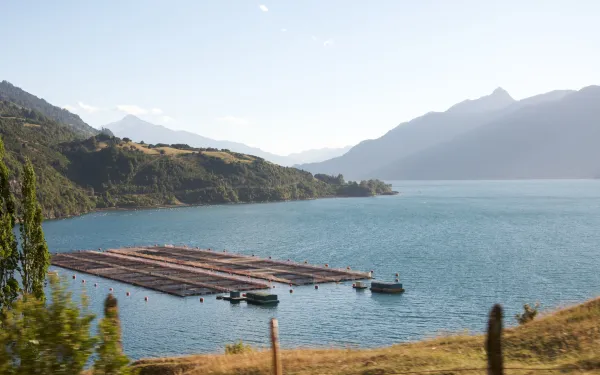
A study commissioned by the Interamerican Association for Environmental Defense found that more than half of the salmon farms currently operating in the Magallanes region of Southern Patagonia have generated a partial or total lack of oxygen in the water. Nine of those are located in naturally protected areas.  Santiago, Chile. A recent study, commissioned by the Interamerican Association for Environmental Defense (AIDA), concluded that salmon farms located in the Magallanes region of southern Patagonia were authorized without the scientific assessments needed to ensure they would do no harm to marine life. “After twenty years of development in other regions, the salmon industry now seeks to expand to the country’s last virgin coasts, without the necessary precautions,” explained Gladys Martínez, senior attorney of AIDA’s Marine Program. “This study demonstrates that neither the companies nor that State have done enough to avoid in Magallanes the severe environmental damage already perpetuated in other regions of the country.” Chilean biologist Héctor Kol produced the report for AIDA, with the support of the Waitt Foundation, analyzing 261 salmon farm projects. Of them, a little less than half have already been authorized and the rest could receive their permits in the short- and medium-term. Of the 126 authorized projects, only 35 are currently in operation. The information produced on each project includes location maps and estimations of the amount of waste being discharged into the waters. The research shows that there are large differences in the quantity of waste that the government authorized for different subsectors of the same geographic areas, without any available explanation as to why. “This demonstrates a clear lack of scientific evaluation, necessary to guarantee the aquatic environment will be able to receive and process the authorized quantity of waste,” said Florencia Ortúzar, AIDA attorney. “More than half of the projects that are currently in operation have already generated a total or partial lack of oxygen in the waters, which seriously impacts marine life. In addition, at least nine of these oxygen-depriving projects are located in natural protected areas.” On May 22, 2017, AIDA filed a complaint before the Superintendency of the Environment requesting the investigation of damages caused by salmon farms in Magallanes, and the sanctioning of the companies responsible. Consult the report here. Interactive Map of Salmon Farms here.  More information on salmon farms in Patagonia is available here. Press contact: Florencia Ortúzar, AIDA attorney, +56973353135, [email protected]  

Read more