

Project
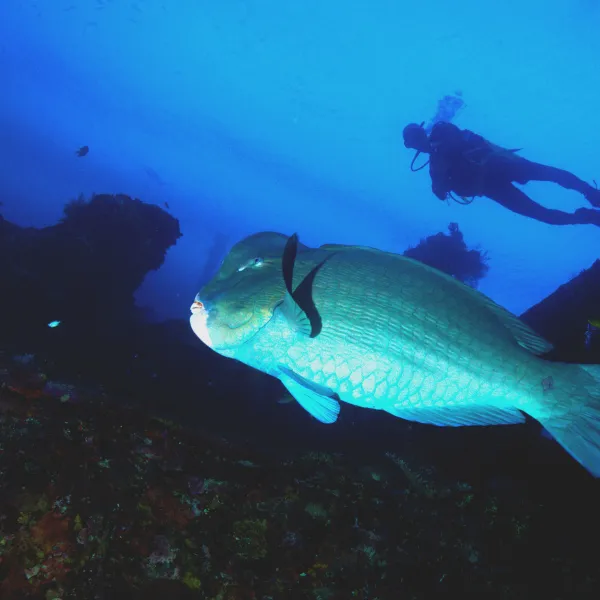
RA Killmer_CC BY-NC-ND 2.0Protecting herbivorous fish, to secure a future for corals
Herbivorous fish rarely go unnoticed. Their brilliant colors illuminate the reef to the delight of scuba divers. But more importantly, these iconic fish are also vital for the conservation of coral reefs.
Herbivorous fish feed on the algae that grow on corals and compete with them for light and oxygen. By eating the algae, these tiny fish play a big role in the survival of the entire ecosystem.
Species of these herbivorous fish include: parrotfish, which eat corals that break off the reef and excrete them as white sand; damselfish, which fend off the macro algae growth that kills coral; and surgeonfish, whose most famous representative is Dory from Finding Nemo.
But corals are quickly losing their greatest allies. Populations of herbivorous fish are dwindling, particularly in the Caribbean.
The overfishing of commercial species is driving artisanal fishermen to capture even the youngest herbivorous fish, preventing those species from replenishing their numbers.
The loss of these fish is one more threat to coral reefs, already fragile ecosystems that are increasingly vulnerable to climate change. Preserving our reefs will ensure we continue to enjoy the services they provide. Among other things, coral reefs act as fish hatcheries, natural barriers against storms and hurricanes, and the source of medicines that treat illnesses like cancer and Alzheimer’s.
Related projects
Statement on the denouncement of violence against communities in Guatemala
Communities in northwest Guatemala publicly denounced repression and intimidation following peaceful demonstrations against the presence of the National Police and Army in their territory. The people of the microregion of Ixquisis, in the department of Huehuetenango, are currently living in fear due to the improper use of criminal law against those who have expressed their opposition to the development of the Pojom I, Pojom II and San Andrés dams. Together with allied organizations, AIDA has denounced before the Inter-American Commission on Human Rights the worrying criminalization of human rights defenders who oppose the hydroelectric projects in Guatemala. As an organization that works in defense of human rights and the environment in Latin America, AIDA would like to express the following: The repression of freedom of association and expression is extremely worrisome. The risks faced by the people of Ixquisis and the increased acts of violence against them are alarming. We reject any act of violence or intimidation by private and public security forces against people exercising their individual and collective rights. We likewise condemn any campaign of disinformation, de-legitimization and stigmatization that may arise in response the communities’ peaceful demonstrations. The acts that have been denounced not only violate basic rights, but also affect social stability and the traditional lifestyle of the communities. AIDA expresses solidarity with the Peaceful Resistance of the Microregion of Ixquisis; and we support their struggle to defend land and water, and achieve environmental justice. We call on the State of Guatemala to: guarantee the full enjoyment of the communities’ human rights; protect those who defend them; carry out diligent actions to investigate recent acts of violence; ensure due process for those who defend their rights before the projects’ advancement; and evaluate the instances of force denounced by the communities. press contact Victor Quintanilla (Mexico), AIDA, [email protected], +52 5570522107
Read more
The Colombian town that’s taking on coal mining
“To leave for good is painful,” Flower Aria Rivera, 58, said with nostalgia. He doesn’t want to leave his land, his home. Doing so would mean leaving behind his identity, his story. Flower is from Boquerón, Colombia, a town of nearly 900 residents in the northwest department of Cesar. His ancestors, directly descended from Africans, were among the first inhabitants of his small town and many others in the region. They lived from raising cattle and growing rice. But that simple life is no more. The once-fertile soils of Boquerón have for more than 30 years been overtaken by large-scale coal mining operations. Since the corporations arrived, the town has been absorbed by coal and the many damages it leaves behind—like unhealthy levels of air pollution, and the depletion of water from rivers and other natural sources. The contamination had gotten so bad that, in 2010, the government ordered the mining company to relocate Boquerón’s residents. Eight years later, and that still hasn’t happened. On the contrary, new families have been arriving to Boquerón in search of the compensation that will surely be distributed when relocation finally does occur. “We want the mines to move, we want them to stop polluting our town,” said Flower, one of the most respected of the community, which has peacefully resisted despite the outbreak of skin and respiratory diseases. Flower is not a conventional leader. He speaks softly, while smiling. His deep black skin contrasts with his pure white hair. He’s sweet and calm and, above all, full of faith and hope. I met him two months ago when he participated with other leaders in a public forum co-organized by AIDA, Tierra Digna, CENSAT Agua Viva, University of Magdalena, the Environmental Justice Network of Colombia, and the Rosa Luxembourg Foundation. There, participants discussed what’s needed to enable Colombia to move its economy away from coal exploitation and toward alternative energies—those that respect the both climate and communities. “Coal has left us with nothing, only sadness,” Flower lamented. Colombia is the fourth largest coal exporter in the world. As such, the government has the ethical and moral obligation to reduce its carbon emissions, which have contributed to exacerbating the climate crisis. At AIDA, we believe in a clean energy future, and our work will continue to support the move towards a coal-free Latin America. To close, I’d like to share a poem Flower wrote. In it, he expresses longing and love for his land, and his fear of the “damned black stone.” A mi Boquerón Boquerón del alma mía Terruño de mis entrañas Estoy perdiendo mi alegría Mis costumbres y mis esperanzas Camino lento y con tristeza Con solo pensar en tu partida Historia mía, historia tuya Es como un llanto en noche buena Quisiera morirme en tus recuerdos Donde viví muchas nostalgias De amores y vivencias de este mundo Cómo te llevo Boquerón en el alma Voces de recuerdos se escuchan a lo lejos De un niño y un viejo Como añorando el pasado De Boquerón y sus hermosos tiempos Partir sin regreso es doloroso Y un diciembre sin ti es morir Como regresar después a pajuil Cuando mis zapatos se han roto Ya inerme camina un boqueronero Y la historia del tucuy, el manantial y la lomita está muriendo Hoy hasta el mismo cielo está llorando En gotas de agua convertidas en desespero Quisiera regresar a las faldas de mi madre Como cuando niño me escondía debajo de ella Escucho a lo lejos la voz del patriarca Rivera Ángel Que desde su tumba como deseando una esperanza Adiós diablito caño, palma y paralú donde di mi grito de libertad y olvidé mi esclavitud de mi raza palenquera y también de chambacú y olvidé por mis ancestros lo juro por ese cielo azul Maldita piedra negra Que hizo cambiar mi historia Un humilde pueblo llora La funesta partida de toda una vida
Read moreThe Colombian town that’s taking on coal mining
“To leave for good is painful,” Flower Aria Rivera, 58, said with nostalgia. He doesn’t want to leave his land, his home. Doing so would mean leaving behind his identity, his story. Flower is from Boquerón, Colombia, a town of nearly 900 residents in the northwest department of Cesar. His ancestors, directly descended from Africans, were among the first inhabitants of his small town and many others in the region. They lived from raising cattle and growing rice. But that simple life is no more. The once-fertile soils of Boquerón have for more than 30 years been overtaken by large-scale coal mining operations. Since the corporations arrived, the town has been absorbed by coal and the many damages it leaves behind—like unhealthy levels of air pollution, and the depletion of water from rivers and other natural sources. The contamination had gotten so bad that, in 2010, the government ordered the mining company to relocate Boquerón’s residents. Eight years later, and that still hasn’t happened. On the contrary, new families have been arriving to Boquerón in search of the compensation that will surely be distributed when relocation finally does occur. “We want the mines to move, we want them to stop polluting our town,” said Flower, one of the most respected of the community, which has peacefully resisted despite the outbreak of skin and respiratory diseases. Flower is not a conventional leader. He speaks softly, while smiling. His deep black skin contrasts with his pure white hair. He’s sweet and calm and, above all, full of faith and hope. I met him two months ago when he participated with other leaders in a public forum co-organized by AIDA, Tierra Digna, CENSAT Agua Viva, University of Magdalena, the Environmental Justice Network of Colombia, and the Rosa Luxembourg Foundation. There, participants discussed what’s needed to enable Colombia to move its economy away from coal exploitation and toward alternative energies—those that respect the both climate and communities. “Coal has left us with nothing, only sadness,” Flower lamented. Colombia is the fourth largest coal exporter in the world. As such, the government has the ethical and moral obligation to reduce its carbon emissions, which have contributed to exacerbating the climate crisis. At AIDA, we believe in a clean energy future, and our work will continue to support the move towards a coal-free Latin America. To close, I’d like to share a poem Flower wrote. In it, he expresses longing and love for his land, and his fear of the “damned black stone.” A mi Boquerón Boquerón del alma mía Terruño de mis entrañas Estoy perdiendo mi alegría Mis costumbres y mis esperanzas Camino lento y con tristeza Con solo pensar en tu partida Historia mía, historia tuya Es como un llanto en noche buena Quisiera morirme en tus recuerdos Donde viví muchas nostalgias De amores y vivencias de este mundo Cómo te llevo Boquerón en el alma Voces de recuerdos se escuchan a lo lejos De un niño y un viejo Como añorando el pasado De Boquerón y sus hermosos tiempos Partir sin regreso es doloroso Y un diciembre sin ti es morir Como regresar después a pajuil Cuando mis zapatos se han roto Ya inerme camina un boqueronero Y la historia del tucuy, el manantial y la lomita está muriendo Hoy hasta el mismo cielo está llorando En gotas de agua convertidas en desespero Quisiera regresar a las faldas de mi madre Como cuando niño me escondía debajo de ella Escucho a lo lejos la voz del patriarca Rivera Ángel Que desde su tumba como deseando una esperanza Adiós diablito caño, palma y paralú donde di mi grito de libertad y olvidé mi esclavitud de mi raza palenquera y también de chambacú y olvidé por mis ancestros lo juro por ese cielo azul Maldita piedra negra Que hizo cambiar mi historia Un humilde pueblo llora La funesta partida de toda una vida
Read more