
Project
RA Killmer_CC BY-NC-ND 2.0Protecting herbivorous fish, to secure a future for corals
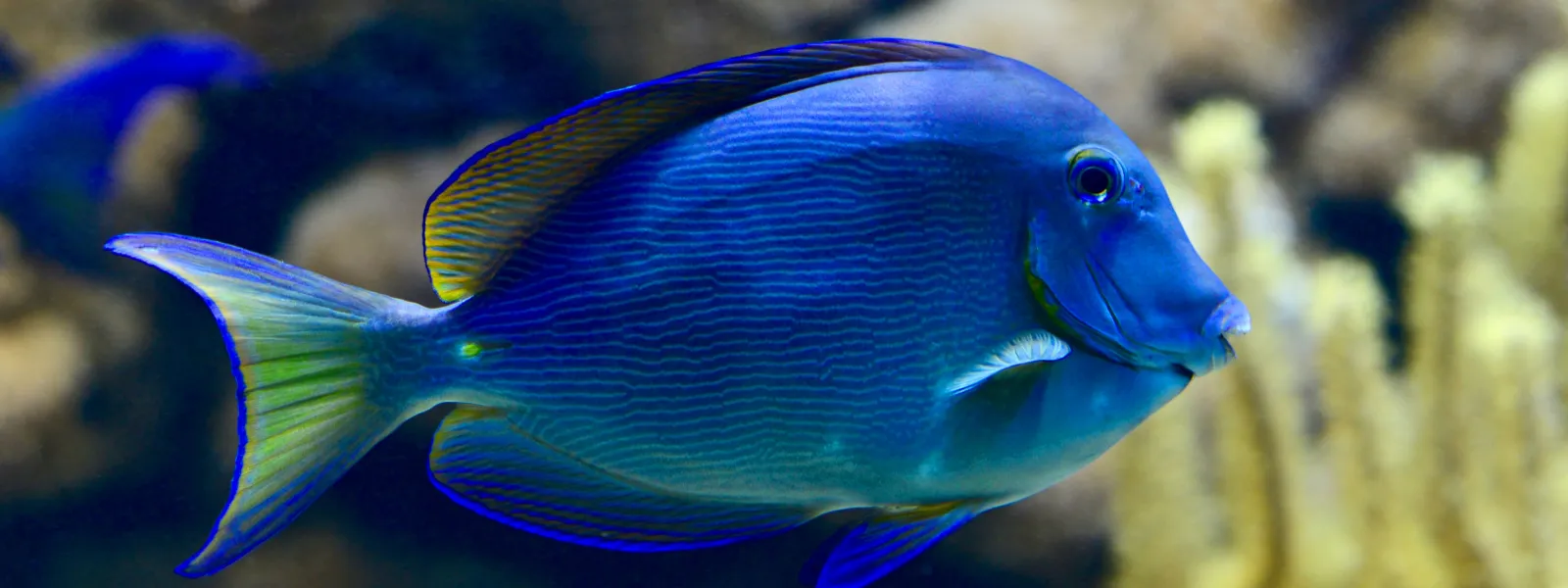
Herbivorous fish rarely go unnoticed. Their brilliant colors illuminate the reef to the delight of scuba divers. But more importantly, these iconic fish are also vital for the conservation of coral reefs.
Herbivorous fish feed on the algae that grow on corals and compete with them for light and oxygen. By eating the algae, these tiny fish play a big role in the survival of the entire ecosystem.
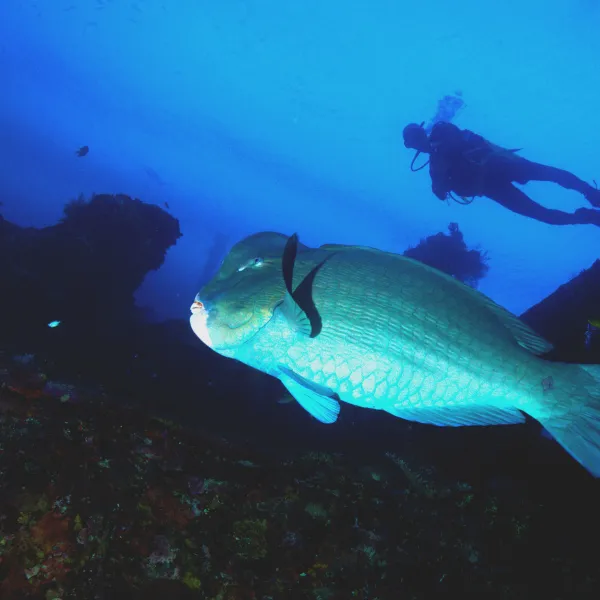
Species of these herbivorous fish include: parrotfish, which eat corals that break off the reef and excrete them as white sand; damselfish, which fend off the macro algae growth that kills coral; and surgeonfish, whose most famous representative is Dory from Finding Nemo.
But corals are quickly losing their greatest allies. Populations of herbivorous fish are dwindling, particularly in the Caribbean.
The overfishing of commercial species is driving artisanal fishermen to capture even the youngest herbivorous fish, preventing those species from replenishing their numbers.
The loss of these fish is one more threat to coral reefs, already fragile ecosystems that are increasingly vulnerable to climate change. Preserving our reefs will ensure we continue to enjoy the services they provide. Among other things, coral reefs act as fish hatcheries, natural barriers against storms and hurricanes, and the source of medicines that treat illnesses like cancer and Alzheimer’s.
Related projects
Three advances for climate and environmental justice in 2021
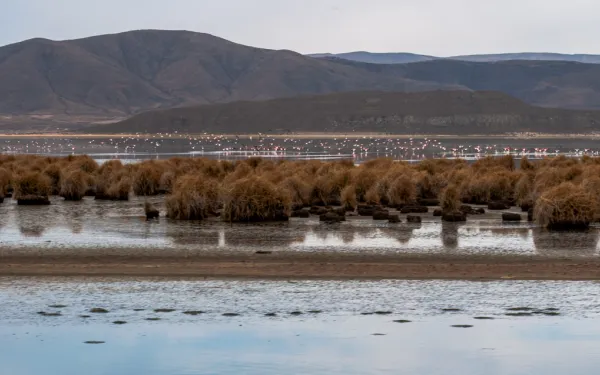
In the face of increasing environmental degradation and the climate crisis, the strength of the collective struggle shows that it’s possible to ensure a healthy environment and a sustainable future for all people. This year, AIDA made important advances on that path, hand-in-hand with communities and allies in the region. The stories below tell of achievements that bring us closer to the environmental and climate justice we urgently need and for which we work every day. They are the stories that inspire us to continue working for the future. 1. Mayan women pave the way for responsible financing In Guatemala, under our guidance and with the support of local and international allies, the struggle of the Mayan women of Ixquisis to defend their water and territory has made history. Following a complaint against the large dams being implemented in their territory, the Inter-American Development Bank’s accountability office recognized the damage the dams caused and, for the first time, acknowledged the possibility of a responsible withdrawal of its investment. leARN MORE 2. Court ruling upholds the preservation of natural protected areas The intention of large real estate developers to dismantle the Yum Balam protected area for flora and fauna in the Mexican Caribbean has hit a wall. Mexico's Supreme Court set a key legal precedent by determining that the management program, fundamental to the sustainable use of the site, is legal. AIDA helped defend Yum Balam in court and, years earlier, our attorneys helped build the management program. LEARN MORE 3. International support reaches high-Andean lakes in Bolivia Together with local communities and organizations, AIDA requested international technical support for the recovery of lakes Poopó and Uru Uru in the Bolivian highlands, which was finally formalized by the government. This support, scheduled for next year, is vital for the recuperation of these ecosystems, life-support systems for biodiversity and the indigenous and peasant communities in the area. learn more Read these stories and much more about this year's journey in our 2021 Annual Report!
Read moreThree advances for climate and environmental justice in 2021
In the face of increasing environmental degradation and the climate crisis, the strength of the collective struggle shows that it’s possible to ensure a healthy environment and a sustainable future for all people. This year, AIDA made important advances on that path, hand-in-hand with communities and allies in the region. The stories below tell of achievements that bring us closer to the environmental and climate justice we urgently need and for which we work every day. They are the stories that inspire us to continue working for the future. 1. Mayan women pave the way for responsible financing In Guatemala, under our guidance and with the support of local and international allies, the struggle of the Mayan women of Ixquisis to defend their water and territory has made history. Following a complaint against the large dams being implemented in their territory, the Inter-American Development Bank’s accountability office recognized the damage the dams caused and, for the first time, acknowledged the possibility of a responsible withdrawal of its investment. leARN MORE 2. Court ruling upholds the preservation of natural protected areas The intention of large real estate developers to dismantle the Yum Balam protected area for flora and fauna in the Mexican Caribbean has hit a wall. Mexico's Supreme Court set a key legal precedent by determining that the management program, fundamental to the sustainable use of the site, is legal. AIDA helped defend Yum Balam in court and, years earlier, our attorneys helped build the management program. LEARN MORE 3. International support reaches high-Andean lakes in Bolivia Together with local communities and organizations, AIDA requested international technical support for the recovery of lakes Poopó and Uru Uru in the Bolivian highlands, which was finally formalized by the government. This support, scheduled for next year, is vital for the recuperation of these ecosystems, life-support systems for biodiversity and the indigenous and peasant communities in the area. learn more Read these stories and much more about this year's journey in our 2021 Annual Report!
Read more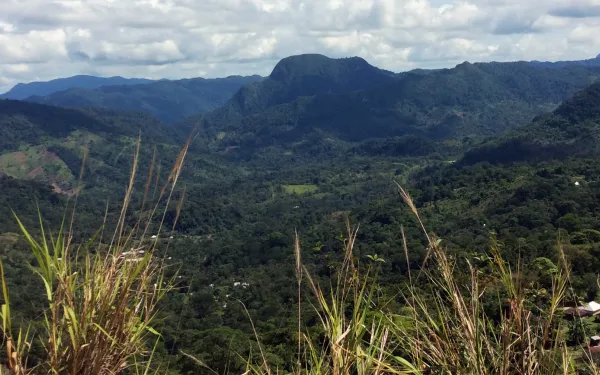
The day that the indigenous struggle bore fruit in Guatemala
September 22, 2021 will be an iconic date for the men and women of the micro-region of Yich K'isis (Ixquisis), Guatemala, whose lives were abruptly changed by the construction of the San Mateo and San Andres hydroelectric dams, financed by IDB Invest. On that day, the IDB Group's Independent Consultation and Investigation Mechanism (MICI) upheld most of their claims, contained in the complaint they filed three years ago. Their final report acknowledges that the bank failed to verify the information about the affected population provided by the company responsible for the projects, which ignored the presence of indigenous peoples in the area. It also points out the failure to consider the differentiated impacts that women would experience in any of the project implementation phases, overlooking the role that the local rivers play in their daily lives and in their ways of inhabiting the territory. On the environmental issue, essential to indigenous peoples' ways of life, MICI also establishes non-compliance, recognizing that "IDB Invest did not ensure that the projects properly identified and delimited critical habitats and internationally recognized zones, nor that risks and impacts were established." In terms of access to information for the communities, the bank "failed to comply with its own operational policies, as no meaningful consultation with the communities took place in the development of the projects," the document reads. The indigenous men and women of Ixquisis see the report as recognition of what they’ve been denouncing for years. Along with its conclusions, MICI also makes a series of recommendations aimed at correcting the mistakes made by the bank in the San Mateo and San Andres projects, as well as avoiding repeating them in other cases. In its last recommendation, the accountability mechanism establishes, for the first time in the IDB's history, the possibility for the bank to responsibly withdraw from projects it finances. For the communities of Ixquisis, this recommendation represents the best hope for the restoration of their lives, abruptly transformed by the arrival of the projects. Indeed, ever since the complaint process began, the communities have been demanding the cessation of project funding. They consider it unsustainable that projects that fail to recognize their existence, and cause so much damage to their territory, some of it irreparable, should be financed by an international institution whose main mandate is to promote development. In the scenarios in which they were able to express their feelings to bank and MICI officials, their request was heard: the bank cannot continue financing projects that have impacted their lives in such severe and unjust ways, and its exit must be responsible. This means that the bank’s withdrawal must be based on a plan built with the effective participation of the communities and must contemplate all the damages caused in relation to social dynamics, the increased conflict in the region, the failure to acknowledge the existence of indigenous peoples and their rights, the affects on the ancestral cultural heritage, the differentiated impacts on women, and the lack of prevention and consequent environmental degradation. The bank must now propose an action plan to comply with MICI’s report, a mission that is undoubtedly transcendental. The bank now has the historic opportunity to correct its mistakes and legitimize its actions, honor its institutional mandate to promote development, respect and recognize indigenous peoples, and contribute to making the Ixquisis micro-region a place where indigenous men and women can once again develop their life in harmony with nature, and alongside their community.
Read more