
Project
Alberto Peña Kay
Protecting the Santurban páramo from mining's damage
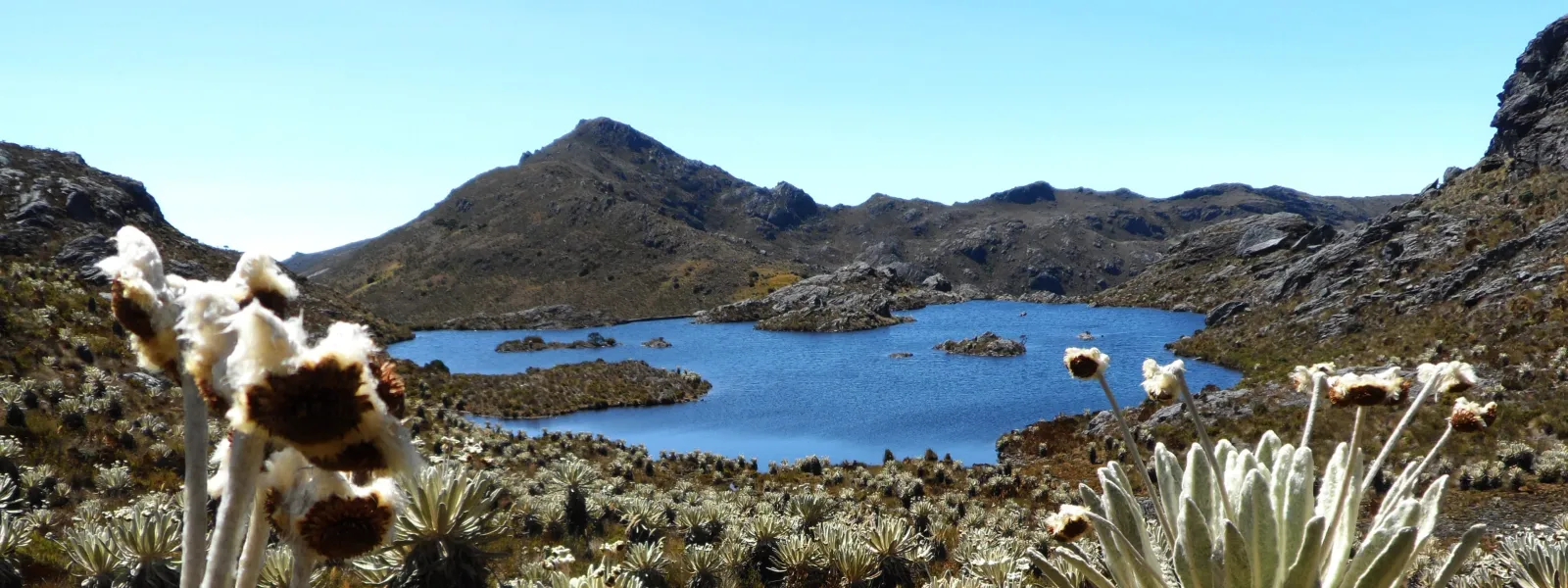
In the Andean region, high-mountain ecosystems known as páramos capture water from the fog and supply it to the lowlands. One such ecosystem is the Santurbán páramo, which provides fresh water to more than two million people in Colombia.
Santurbán, like the other páramos on the continent, also captures large amounts of carbon, making it a key ally in mitigating the climate crisis. It is also a refuge for hundreds of endangered species, including the iconic spectacled bear.
The land in and around the páramo contains gold and other minerals. This has put Santurbán in the spotlight of the multinational mining industry, which for decades has sought to establish large-scale projects in the ecosystem that threaten to degrade it.
The Committee for the Defense of Water and the Santurbán Páramo—a coalition of environmental advocates—has thwarted these ongoing attempts, with support from AIDA and other civil society organizations.
Background
The Santurbán páramo is located in the heart of the Eastern Cordillera of the Colombian Andes, in the departments of Santander and Norte de Santander, at an elevation ranging from 2,200 to 4,290 meters above sea level.
It covers an area of 129,743 hectares and is home to 57 lakes. It serves as a habitat for 457 plant species and 293 species of vertebrate fauna.
There are mineral deposits in Santurbán, primarily gold, but also silver and copper. This explains the region’s mining tradition, particularly in the part of the páramo located in Santander, in the province of Soto Norte. The communities in the area have built their culture and identity around gold mining, which is mainly artisanal and small-scale.
But since the 1990s, the gold deposits in the páramo have also attracted foreign mining conglomerates seeking to develop large-scale projects. This has raised concerns among the population that relies on the Santurbán water sources, who have mobilized in defense of water, their land, and life.
Although national and international regulations prohibit mining in páramos, the Colombian government has granted mining concessions to transnational corporations in Santurbán.
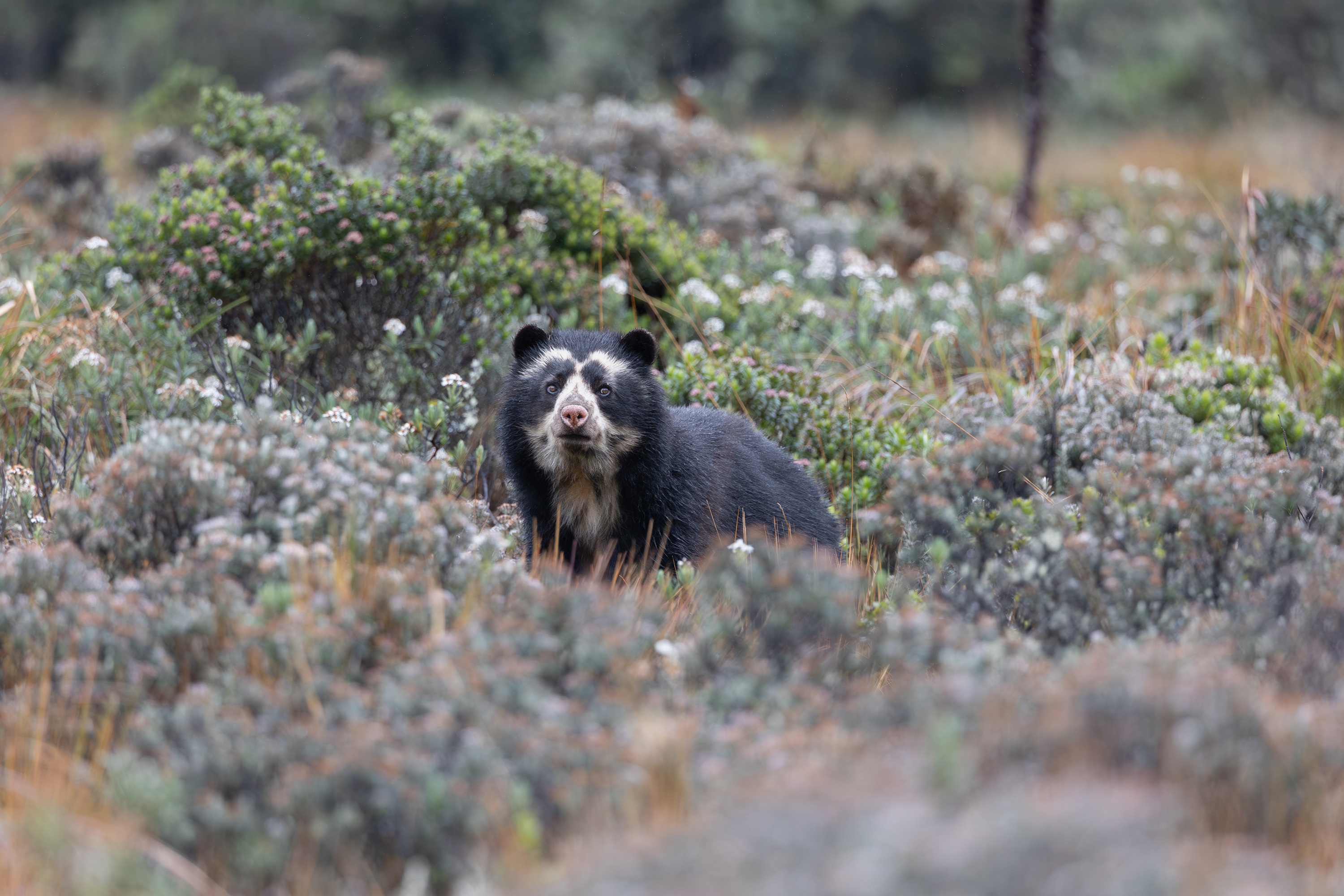
Photo: Keishpixl / Pixabay.
The long struggle to protect the páramo
One of the companies that sought to develop large-scale mining in Santurbán is Eco Oro Minerals Corp.—formerly Greystar Resources—a Canadian company that intended to establish the Angostura open-pit mine there to extract gold and silver. Between 1994 and 1995, the company acquired its mining titles and conducted exploration. And in 2010, it applied for a mining permit.
That was the year AIDA became involved in defending the ecosystem, supporting the Committee for the Defense of Water and the Santurbán Páramo. Our legal work helped convince the Colombian government to deny the mine an environmental permit in May 2011.
In January 2013, the government designated a portion of the páramo (11,700 hectares) as a Regional Natural Park. That year—together with the committee and partner organizations—we carried out a campaign and advocacy efforts to urge the government to recognize the entire Santurbán area as a páramo ecosystem through a delimitation based on scientific criteria. In December 2014, the Ministry of the Environment established a delimitation that protected 76% of the páramo (98,954 hectares).
Furthermore, as a result of a litigation supported by AIDA, in February 2016, Colombia’s highest court reaffirmed that mining in páramos is prohibited.
That same year, in December, the International Finance Corporation (IFC), the World Bank Group’s private sector arm, decided to divest from Eco Oro Minerals. This achievement was the result of a process that began in 2012, when the committee—advised and supported by AIDA and international partner organizations—filed a complaint before an independent accountability mechanism, which concluded that the IFC’s investment in the Angostura project failed to take into account the project’s social and environmental impacts, thereby contradicting the financial institution’s internal policies.
Also in 2016, Eco Oro Minerals filed an arbitration claim against the Colombian government with the International Centre for Settlement of Investment Disputes (ICSID), arguing that it had been adversely affected by government decisions aimed at protecting the country’s páramos, including the delimitation of Santurbán.
In 2017, the Constitutional Court invalidated the delimitation because the affected communities were not consulted. The high court ordered that a participatory delimitation be carried out.
And that year, a new threat to Santurbán emerged when the Canadian multinational Aris Mining applied for an environmental permit for Soto Norte, a gold mining project located near the páramo. Following citizen protests and technical objections, in October 2020, the National Environmental Licensing Authority shelved the project.
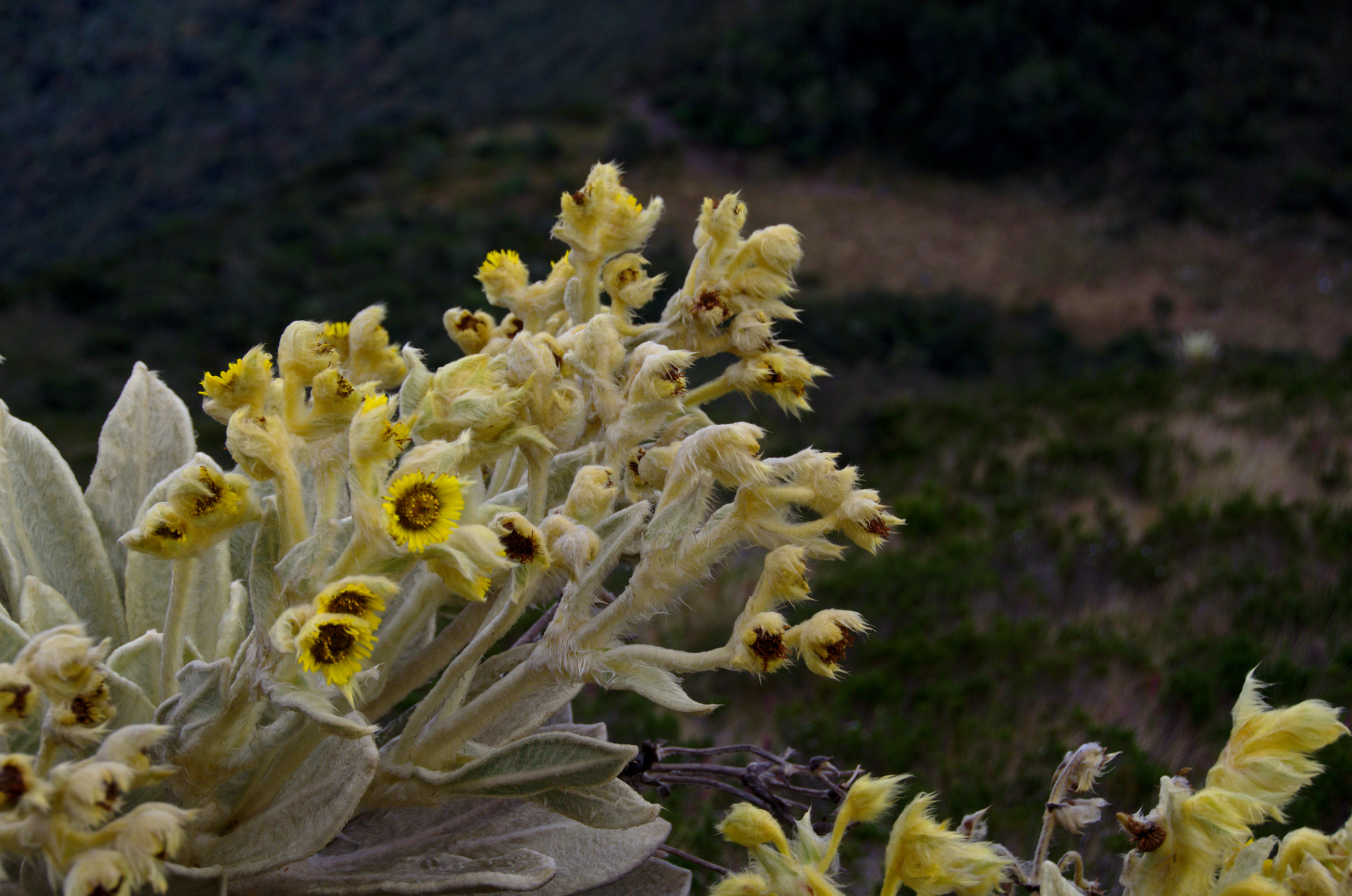
Photo: Aztlec.
Current situation
In March 2025, the Colombian government designated the western flank of the Santurbán massif as a temporary renewable natural resource reserve area, delimiting and protecting an area of 75,344.65 hectares. This resulted in a two-year suspension of the Soto Norte project. However, Aris Mining's contract to formalize Calimineros' small-scale mining activities through the purchase and processing of mineralized material remains in effect.
In addition, the Canadian mining company continues to move the project forward. In September 2025, it released its prefeasibility study, revising the mine’s original design.
Meanwhile, members of the Committee for the Defense of Water and the Santurbán Páramo face threats and stigmatization because of their work. In March 2025, UN Special Rapporteurs and the Working Group on Business and Human Rights denounced these incidents in communications sent to the governments of Colombia, Canada, and the United Arab Emirates, as well as to the companies Aris Mining and MDC Industry Holding Company LLC, the former co-owner of the Soto Norte project.
Regarding the arbitration claim filed by Eco Oro Minerals, in July 2024, ICSID ruled in favor of the Colombian government and rejected the Canadian company’s claim for USD 1.1 billion in compensation.
Concerning the delimitation of Santurbán, in July 2026, the Ministry of the Environment issued a resolution introducing the concept of "progressive delimitation." On that basis, the government proposes to progressively demarcate the páramo, covering 29,199 hectares across 19 municipalities—those where the participatory agreements required by the Constitutional Court in its 2017 ruling have already been finalized. It also proposes two measures on the creation and expansion of reserves to restrict mining in the ecosystem.
Learn more about the impacts of mining on the páramos of Latin America (in Spanish).
Partners:
Related projects
Frustration to hope: Finding the drive to continue from those you help
By María José Veramendi Villa, senior attorney, AIDA, @MaJoVeramendi I can get frustrated in my work as an environmental and human rights lawyer. It is frustrating to explain that the work we do on cases of human rights violations may not produce immediate results. It is frustrating to know that our work is a struggle that can take years to find justice for victims and induce change in state policies and our societies. It is frustrating to watch programs designed to protect human rights come under the influence of political interests. The dearth of resources for pursuing these cases is also frustrating. So too are the long waits for justice – or injustice. So what do we do when we get discouraged? My answer is to return to the origins, the basics and the very reason for our struggle and commitment: the victims. I relearned this lesson in March. On a trip to Washington D.C., I met two Brazilian fighters for the cause of their communities: Alaíde Silva and Josías Manhuary Munduruku. Alaíde had traveled for days from Buriticupu, a municipality in the northeastern state of Maranhão, and Josías from Jacareacanga, a municipality in the northern state of Pará, to participate in a hearing (in Spanish and Portuguese) before the Inter-American Commission on Human Rights. They came to present information on how Brazilian judges are continuing to use a law from the country’s 1964-85 dictatorship to violate their right to access to justice. The law is called Security Suspension. It allows the federal government to request the suspension of judicial rulings. The government has used Security Suspension to invalidate rulings that favor the rights of indigenous peoples and other communities against the development of mega-projects like the Belo Monte hydropower dam in the Amazon. The government can do this on the basis that any adverse rulings to “development” projects are threats to national security or to social and economic order. At the hearing, Josías described an imminent threat to the Munduruku indigenous community of 11,000 people in 118 villages. The Brazilian government plans to build a hydropower complex (in Spanish) on the Tapajós River and its tributaries—and has not followed a law requiring it to consult the Munduruku and to obtain their prior, free and informed consent. He said flooding from the project threatens to devastate his people’s land and the survival of their community and culture. He explained how a judge revoked a favorable court decision for his people, allowing the project to continue in open violation of their rights. “We want respect for our land, our river, our sacred sites, our cemetery. And want to be consulted!” Josías said. Alaíde spoke about a similar plight. He explained how Vale, a Brazilian mining company, is enlarging the Carajás Railroad to the detriment of 1.7 million people in 27 municipalities in Maranhão and Pará and in at least 100 indigenous, Afro-descendants, peasant and urban communities on the banks of the railway. The railroad stretches 900 kilometers from the Carajás mines in Pará to the Ponta da Madeira Maritime Terminal in Maranhão. It transports iron, manganese, copper and coal. With the expansion, Vale will duplicate 115 kilometers of the line to increase transport capacity and the flow of minerals. Alaíde said the impacts are vast. These range from the noise pollution caused by the grinding of the train wheels on the tracks and from the train horn, to the running over of people and animals, to the displacement of communities, villages and families without fair compensation. Alaíde provided details on how Vale terrorizes the population, co-opts leaders, intimidates people and spies on social movements, all in the name of meeting its own interests. As with Tapajós, Security Suspension was used to revoke a court ruling that had favored the communities. That decision had ordered Vale to suspend construction and conduct an environmental impact assessment with a detailed analysis of all the existing indigenous and Afro-descendant communities along the railroad. But with Security Suspension, this ruling was overturned with the argument that suspending the project would affect the economic interests of the state. These are just two examples of the impact of Security Suspension. There are many more instances in which the rights of communities and people have been affected by major “development” projects justified by “economic interest, public order and safety.” We hope that cases like these will expose the impact that Security Suspension has on the human rights of hundreds of people and communities, and we hope that this will drive international organizations to call on Brazil to change this legal instrument. Thanks to everyone who worked so hard to make the hearing possible. Thanks to our colleagues in Brazil without whose work and commitment Alaíde and Josías would never have been able to make the long journey. And thanks to these two Brazilian human rights fighters for a lesson that drives away the fog of frustration and allows the sun to shine again. I want to dedicate this post to my dear former colleague Joelson Cavalcante, who recently left this world to become a being of light. With him I visited the Xingu River in the Brazilian Amazon for the first time, and I will never forget his happiness and his big smile when, after a year outside his country, he could once again swim in those waters. In his memory, the fight continues.
Read more
COP20: A chance to fight climate change
The world is poised for more poverty, hunger and disease as flooding, heat waves, storms and droughts increase. This is how the newest report of the the United Nations Intergovernmental Panel on Climate Change describes humanity´s near future. That’s why AIDA is helping Latin American policymakers to influence decisions about climate change responses at the highest levels of international law. We’re building their capacity for influence by developing recommendations and disseminating information. This year Latin America has the best opportunity yet to put its needs on the international climate change agenda. In December, Lima will host the main session of climate negotiations, the 20th Conference of the Parties to the UN Framework Convention on Climate Change (COP20). The event’s mission is to advance the draft of a new binding climate agreement to be signed at the Paris climate conference in 2015. To make the most of this opportunity, AIDA is supporting policymakers – government officials, negotiators and members of international financial institutions – and civil society organizations. Our objectives are to help them participate more effectively in the climate negotiations, to educate them about options for improvements in international law, and to encourage them to create solutions and press their governments to take immediate action. In March, we took part in Climate Change: Progress and Prospects, an international forum held in the Peruvian Congress. Peru is considering creating a climate change bill, and at the event we shared our experiences in international climate finance. We highlighted the need for Latin American institutions to improve their ability to access funds for climate change adaptation and mitigation projects. We’re also advocating a commitment to long-term financing as a chief component of the new climate agreement that will be discussed at COP20. If countries know that economic resources will become and remain available, they can plan viable actions to help communities most vulnerable to climate change. In February, AIDA and our partner organizations held a webinar on the Green Climate Fund (GCF), a financial mechanism of the UN Framework Convention on Climate Change. The GCF was founded to mobilize large amounts of public and private money to support climate change responses in developing countries. AIDA is closely monitoring the GCF to make sure that its contribution is effective. Your renewed support will help us to do even more to generate effective international actions that reduce the severity of climate change. As we actively prepare for COP20 and continue our efforts to promote sustainable energy alternatives at the regional level, we will keep you informed of our progress. Thank you!
Read moreColombia’s Ministry of Environment unveils the demarcation of the Santurbán Páramo without specifying details of the measurements
With the water supply of millions of people at risk, we urge the ministry to publish details of the demarcation and ensure that this fragile ecosystem remains free of large-scale mining operations. Bogotá, Colombia. Colombia’s Ministry of Environment announced the delimitation of the Santurbán Páramo, a high-altitude wetland ecosystem that supplies water to millions of people in the country. While the ministry disclosed some aspects of the measure to the media, it has not released full details. These include the full extension of the demarcation, exact coordinates and which mining operations are inside or outside of the defined area. The ministry stated that the protected area would increase from 11,000 hectares to 42,000 hectares in the department of Santander. However, according to the Colombian Humboldt Institute’s atlas, the ecosystem has a surface area of at least 82,000 hectares in the departments of Santander and North Santander. “We do not know if the protected area covers the total area of the páramo in both departments. Nor do we know the coordinates or what mining titles will be affected. We do not even know if there is a written draft of the official decision. This seems incompatible with the right to access accurate and impartial information, as enshrined in the Colombian Constitution,” said lawyer Carlos Lozano-Acosta of the Interamerican Association for Environmental Defense (AIDA). The páramo of Santurbán supply water to nearly two million people, including the cities of Bucaramanga and Cúcuta. As is common for this ecosystem, the páramo of Santurbán has a diversity of flora and fauna and is important for storage of atmospheric carbon, helping to mitigate climate change effects. According to the law, the demarcation of this ecosystem should be formally and clearly defined in order to prevent harmful activities such as large-scale mining, which could cause irreversible damage. According to the Ministry, companies with mining concessions and environmental licenses will remain in Santurbán. The ministry said that the demarcation affects only 10 of 29 mining titles, including those of the Canadian firm Eco Oro Minerals. It did not provide any further details. Without the exact coordinates of the ecosystem, it is not possible to know precisely the extent of the demarcation and the ongoing threat that large-scale mining poses to this water source. Eco Oro has threatened to pursue legal action if the final decision affects their investment, presumably basing its arguments on the free trade agreement between Colombia and Canada that would allow the company to sue Colombia in an international tribunal. “Colombians should not pay a company for investing where it should not, much less if it threatens their water supplies. Colombian law prohibits mining in páramos. We call on Eco Oro to respect Colombians’ right to water instead of threatening legal action to protect their investment,” said Jennifer Moore of MiningWatch Canada. Kristen Genovese of the Centre for Research on Multinational Corporations (SOMO) said, “Eco Oro is not only violating Colombian law with regard to mining in the páramo, but the project is inconsistent with the social and environmental standards of the International Finance Corporation (IFC), which is financing the project. We believe that an investigation now underway regarding the IFC’s investment in Eco Oro will confirm our analysis.” According to the Ministry, the decision will not be adopted immediately, and no date has been set to implement it. “The participation of citizens in the demarcation process has not been adequate. We do not know, for example, if the Ministry used rigorous technical studies provided by the Humboldt Institute. Nor is much known about how public participation took place regarding this decision,” said Miguel Ramos of the Committee for the Defense of Water and the Santurbán Páramo. Also unknown is how Andean forest ecosystems, or cloud forests, located at altitudes of 2,200 to 2,600 meters above sea level, will be protected and managed. These are also vital to ecosystem health and water regulation. Similar to Eco Oro’s approach in Santurbán, the mining company AUX plans to carry out underground mining in these ecosystems. To date, more than 19,000 people have signed a petition (in Spanish) urging the Colombian government to protect the water of Santurbán according to scientific criteria. The government received (in Spanish) 16,000 of those signatures in November 2013. Organizations and environmentalists have also asked (in Spanish) the Colombian government to properly define the limits of the páramo ecosystem. The demarcation of Santurbán will set a precedent for protecting the country’s other páramos. Colombia is home to half of the páramos in the world, which supply water to 85% of its population. The demarcation process must take into account the minimum projected area of the páramo in the Humboldt Institute’s Atlas and its technical studies at a scale of 1:25:000. “If the Santurbán Páramo is adequately defined, it would set an important precedent for the protection of all the páramos. This would lead the way, taking another step toward respecting the right to water of all Colombians” said Carla Garcia Zendejas of the Center for International Environmental Law (CIEL). AIDA, CIEL, the Committee for the Defense of Water and the Santurbán Páramo, MiningWatch Canada and SOMO -- as allied organizations -- ask Eco Oro to refrain from threats of legal action in an attempt to influence the demarcation of the páramo, and ask the Colombian government to provide full, truthful, and impartial information about the process and final decision.
Read more