
Project
Alberto Peña Kay
Protecting the Santurban páramo from mining's damage
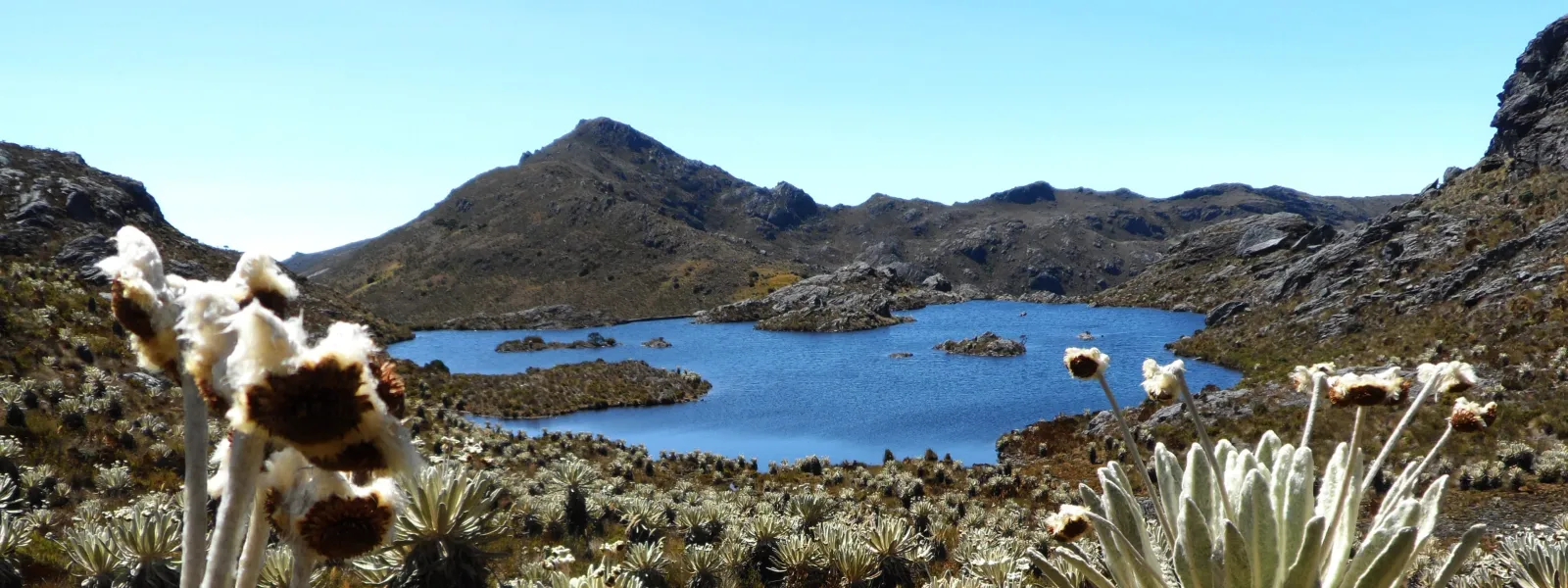
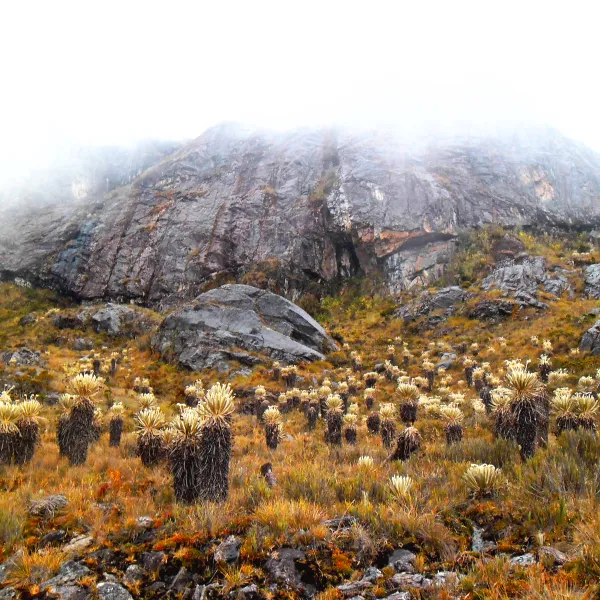
In the Andean region, high-mountain ecosystems known as páramos capture water from the fog and supply it to the lowlands. One such ecosystem is the Santurbán páramo, which provides fresh water to more than two million people in Colombia.
Santurbán, like the other páramos on the continent, also captures large amounts of carbon, making it a key ally in mitigating the climate crisis. It is also a refuge for hundreds of endangered species, including the iconic spectacled bear.
The land in and around the páramo contains gold and other minerals. This has put Santurbán in the spotlight of the multinational mining industry, which for decades has sought to establish large-scale projects in the ecosystem that threaten to degrade it.
The Committee for the Defense of Water and the Santurbán Páramo—a coalition of environmental advocates—has thwarted these ongoing attempts, with support from AIDA and other civil society organizations.
Background
The Santurbán páramo is located in the heart of the Eastern Cordillera of the Colombian Andes, in the departments of Santander and Norte de Santander, at an elevation ranging from 2,200 to 4,290 meters above sea level.
It covers an area of 129,743 hectares and is home to 57 lakes. It serves as a habitat for 457 plant species and 293 species of vertebrate fauna.
There are mineral deposits in Santurbán, primarily gold, but also silver and copper. This explains the region’s mining tradition, particularly in the part of the páramo located in Santander, in the province of Soto Norte. The communities in the area have built their culture and identity around gold mining, which is mainly artisanal and small-scale.
But since the 1990s, the gold deposits in the páramo have also attracted foreign mining conglomerates seeking to develop large-scale projects. This has raised concerns among the population that relies on the Santurbán water sources, who have mobilized in defense of water, their land, and life.
Although national and international regulations prohibit mining in páramos, the Colombian government has granted mining concessions to transnational corporations in Santurbán.
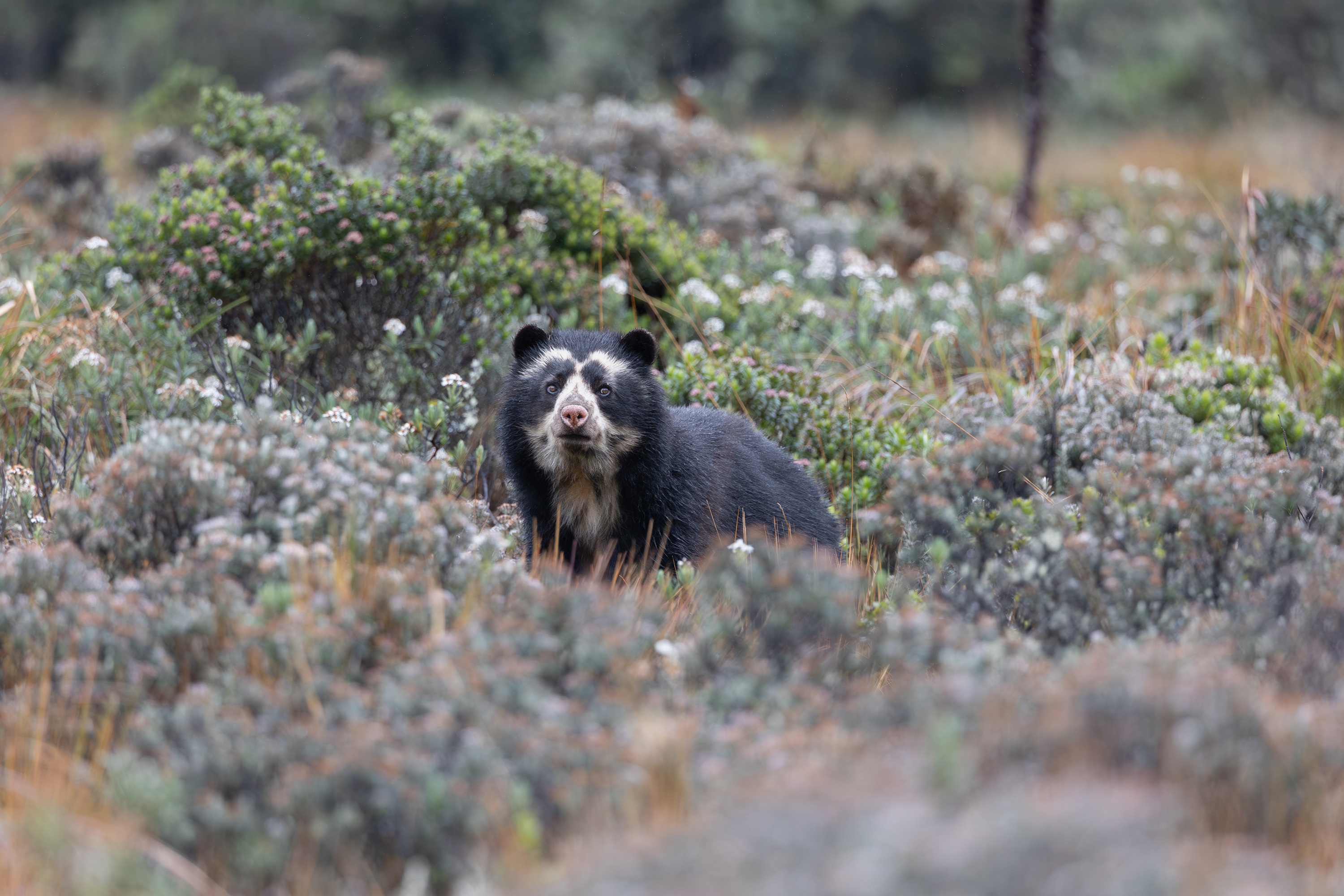
Photo: Keishpixl / Pixabay.
The long struggle to protect the páramo
One of the companies that sought to develop large-scale mining in Santurbán is Eco Oro Minerals Corp.—formerly Greystar Resources—a Canadian company that intended to establish the Angostura open-pit mine there to extract gold and silver. Between 1994 and 1995, the company acquired its mining titles and conducted exploration. And in 2010, it applied for a mining permit.
That was the year AIDA became involved in defending the ecosystem, supporting the Committee for the Defense of Water and the Santurbán Páramo. Our legal work helped convince the Colombian government to deny the mine an environmental permit in May 2011.
In January 2013, the government designated a portion of the páramo (11,700 hectares) as a Regional Natural Park. That year—together with the committee and partner organizations—we carried out a campaign and advocacy efforts to urge the government to recognize the entire Santurbán area as a páramo ecosystem through a delimitation based on scientific criteria. In December 2014, the Ministry of the Environment established a delimitation that protected 76% of the páramo (98,954 hectares).
Furthermore, as a result of a litigation supported by AIDA, in February 2016, Colombia’s highest court reaffirmed that mining in páramos is prohibited.
That same year, in December, the International Finance Corporation (IFC), the World Bank Group’s private sector arm, decided to divest from Eco Oro Minerals. This achievement was the result of a process that began in 2012, when the committee—advised and supported by AIDA and international partner organizations—filed a complaint before an independent accountability mechanism, which concluded that the IFC’s investment in the Angostura project failed to take into account the project’s social and environmental impacts, thereby contradicting the financial institution’s internal policies.
Also in 2016, Eco Oro Minerals filed an arbitration claim against the Colombian government with the International Centre for Settlement of Investment Disputes (ICSID), arguing that it had been adversely affected by government decisions aimed at protecting the country’s páramos, including the delimitation of Santurbán.
In 2017, the Constitutional Court invalidated the delimitation because the affected communities were not consulted. The high court ordered that a participatory delimitation be carried out.
And that year, a new threat to Santurbán emerged when the Canadian multinational Aris Mining applied for an environmental permit for Soto Norte, a gold mining project located near the páramo. Following citizen protests and technical objections, in October 2020, the National Environmental Licensing Authority shelved the project.
Photo: Aztlec.
Current situation
In March 2025, the Colombian government designated the western flank of the Santurbán massif as a temporary renewable natural resource reserve area, delimiting and protecting an area of 75,344.65 hectares. This resulted in a two-year suspension of the Soto Norte project. However, Aris Mining's contract to formalize Calimineros' small-scale mining activities through the purchase and processing of mineralized material remains in effect.
In addition, the Canadian mining company continues to move the project forward. In September 2025, it released its prefeasibility study, revising the mine’s original design.
Meanwhile, members of the Committee for the Defense of Water and the Santurbán Páramo face threats and stigmatization because of their work. In March 2025, UN Special Rapporteurs and the Working Group on Business and Human Rights denounced these incidents in communications sent to the governments of Colombia, Canada, and the United Arab Emirates, as well as to the companies Aris Mining and MDC Industry Holding Company LLC, the former co-owner of the Soto Norte project.
Regarding the arbitration claim filed by Eco Oro Minerals, in July 2024, ICSID ruled in favor of the Colombian government and rejected the Canadian company’s claim for USD 1.1 billion in compensation.
Concerning the delimitation of Santurbán, in July 2026, the Ministry of the Environment issued a resolution introducing the concept of "progressive delimitation." On that basis, the government proposes to progressively demarcate the páramo, covering 29,199 hectares across 19 municipalities—those where the participatory agreements required by the Constitutional Court in its 2017 ruling have already been finalized. It also proposes two measures on the creation and expansion of reserves to restrict mining in the ecosystem.
Learn more about the impacts of mining on the páramos of Latin America (in Spanish).
Partners:
Related projects
Environmental Organizations Denounce Flaws and Impacts of the Costa del Pacifico (CIP) Mega-Resort at a Public Hearing (Spanish only)
PARA PUBLICACIÓN INMEDIATA: CEMDA, WildCoast, Conselva, Greenpeace, AIDA DENUNCIAN ORGANIZACIONES AMBIENTALES IRREGULARIDADES E IMPACTOS DEL PROYECTO CIP ESCUINAPA, DURANTE LA REUNIÓN DE INFORMACIÓN *Manifestación de impacto ambiental presentada de manera fragmentada, sólo es por 93 de las 2,600 hectáreas que abarca el proyecto *Preocupa a pescadores y ONG grave impacto a la actividad pesquera de la región *El proyecto no considera de manera adecuada la planeación de servicios básicos como el agua, y podría poner en riesgo los recursos hídricos de la región La Paz, BCS a 9 de marzo, 2010 - Durante la Reunión de Información realizada por la Unidad Coordinadora de Participación Social y Transparencia (UCPAST) de la Secretaría de Medio Ambiente y Recursos Naturales (Semarnat), varias organizaciones ambientalistas denunciaron nuevamente las irregularidades e impactos no contemplados en el proyecto “Infraestructura Básica del predio CIP Escuinapa, Sinaloa” promovido por el Fondo Nacional de Fomento al Turismo (FONATUR). La Manifestación de Impacto Ambiental (MIA) del proyecto se presentó de manera fragmentada, presentando análisis de impactos individuales en lugar de manera integral. Esto minimiza los graves impactos socio-ambientales del Proyecto en su conjunto, pues la MIA presentada solamente abarca 93.48 hectáreas, de las 2,600 hectáreas que comprende el Proyecto. El Centro Integralmente Planeado (CIP) Escuinapa es uno de los proyectos más ambiciosos del actual gobierno y estará ubicado al sur de Sinaloa, dentro de Marismas Nacionales. De acuerdo con Sofía Cortina, abogada de AIDA, “El CIP se construiría alrededor de una de las zonas de humedales más prioritarias para la conservación a nivel internacional, lo que ocasionará un severo desgaste ecológico a la región y un alto impacto a la actividad pesquera en el noroeste del país”. El Proyecto contempla una capacidad de 44,200 habitaciones, 4 campos de golf, 2 marinas, un malecón marítimo del palmar, paseo de los lagos interiores, ramblas comerciales y de entretenimiento, y otros servicios. Entre otras omisiones legales, las organizaciones destacaron las observaciones y comentarios que se han generado acerca de la MIA. A pesar que se invertirían 200 millones de pesos para estudios en materia ambiental para este proyecto (según manifestó FONATUR en una presentación del proyecto en la página1 del municipio de Escuinapa) “la evaluación del proyecto está fragmentada y no se expone la totalidad de los impactos ambientales que el CIP causaría” puntualizó Cortina. La MIA no incluyó estudios detallados sobre los impactos a especies endémicas como reptiles, peces, moluscos y sobretodo, acerca de las más de 250 especies de aves, como es obligación de acuerdo con la NOM-059-SEMARNAT-2003. A la lista de omisiones, se suma que en la MIA no se señala una planeación detallada para la provisión de los servicios básicos como son el agua y la recolección de desechos sólidos, siendo este último un grave problema actual para el municipio Escuinapa ya que no cuenta con un relleno sanitario. Adicionalmente, “no se propusieron las medidas de mitigación adecuadas basadas en los criterios de la Convención Ramsar, tratado internacional para la conservación y uso racional de los humedales y sus recursos, de la cual México forma parte y es uno de los países con mayor número de humedales registrados, incluyendo Marismas Nacionales”, comentó Sandra Moguel, abogada del Centro Mexicano de Derecho Ambiental. “Este ecosistema cuenta con un valor especial para la preservación de la diversidad genética y ecológica de la región, es reconocida como hábitat del jaguar, representa alrededor del 10% del total de manglares en México y más de 90 especies de fauna de las cuales 73 se encuentran amenazadas o en peligro de extinción, y es el hábitat de una población de 20,000 aves acuáticas y refugio invernal para más de 100,000 aves acuáticas migratorias”, continuó Moguel. El CEMDA y la Asociación Interamericana para la Defensa del Ambiente (AIDA), junto con Greenpeace México, Wildcoast, Conselva y Red Manglar, presentaron en abril del 2009, una petición al Secretariado Ramsar informando del incumplimiento del Gobierno Federal en su compromiso como integrante de la Convención, de proteger los humedales mexicanos enlistados en Ramsar. Al igual que Marismas Nacionales, la laguna Huizache-Caimanero, ubicada en el municipio de Rosario, Sinaloa, es un sitio Ramsar de gran importancia para la actividad pesquera de la región y el cual es amenazado a la vez por cuatro proyectos de alto impacto. Actualmente se espera la visita de una misión de verificación internacional. Tanto pescadores de Sinaloa y Nayarit, como ONG y pobladores, han manifestado su preocupación por una posible resolución a favor del desarrollo del CIP en Escuinapa, debido a que temen la afectación a los ingresos económicos de la actividad pesquera de los lugareños por los impactos sobre el ecosistema que hasta ahora es regulada en gran parte por la existencia de los humedales y manglares de Marismas Nacionales. Por último Moguel señaló de gran importancia, la participación de las organizaciones ambientales en la Reunión Pública de Información, como ejercicio de involucramiento público en la evaluación de impacto ambiental, para el empoderamiento de la ciudadanía en la toma de decisiones respecto al uso y aprovechamiento de sus recursos naturales. PARA MAYOR INFORMACIÓN CONTACTAR: Claudia Gómez-Portugal M. Directora de Comunicación 01 (55) 55256136 / 01 (55) 52863323 [email protected] Sofìa Cortina Segovia Asesora Legal 01 (612) 1221369 [email protected]
Read moreCanadian Supreme Court prohibits project splitting and guarantees public participation in environmental assessments (Spanish text only)
PARA PUBLICACIÓN INMEDIATA: CONTACTO: Jacob Kopas: [email protected] Teléfonos: (+57) 1-338-1277 / 320-316-0379 Corte Suprema de Canadá prohíbe fragmentar proyectos mineros y rectifica la obligatoriedad de evaluaciones de impacto ambiental integrales y con participación pública Ottawa, Canadá - En un cambio jurisprudencial fundamental, el 21 de enero la Corte Suprema de Canadá determinó que los grandes proyectos mineros están obligados a tener una evaluación de impacto ambiental comprehensiva, sin fragmentar el proyecto, y que garantice la participación pública. La sentencia concluye que las autoridades canadienses, al realizar la evaluación ambiental del proyecto minero Red Chris (un inmenso proyecto minero de oro y cobre a cielo abierto), lo fragmentaron ilegalmente impidiendo así conocer el verdadero impacto ambiental de la obra. “Celebramos enormemente esta decisión de la Corte Suprema de Canadá, que debería ser replicada por los gobiernos y las empresas mineras, especialmente las canadienses, con grandes intereses en la región”, dijo Jacob Kopas, abogado de la Asociación Interamericana para la Defensa del Ambiente (AIDA). AIDA, CELA y varias organizaciones presentaron un escrito ante la Corte, apoyando la demanda presentada por Ecojustice y otros grupos ambientalistas, resaltando entre otros, que la autorización de este proyecto también desconoce el derecho internacional ambiental. El proyecto “Red Chris” procesaría 30,000 toneladas métricas de mineral al día y arrojaría los desechos tóxicos en un área remota y prístina de la provincia de Columbia Británica, Canadá, habitada por grandes mamíferos y que es un importante sitio para la reproducción de salmón. Ante los posibles riesgos irreparables que esta mina a cielo abierto implica para esta área y sus pobladores, una evaluación comprehensiva es sin duda, un requisito esencial antes de autorizarlo. El máximo tribunal canadiense concluyó que el gobierno federal violó las normas aplicables al autorizar este proyecto de manera fragmentada, y también al impedir la participación pública activa de las comunidades y los grupos locales en la evaluación de impactos ambientales para grandes proyectos, como la minería. Estos dos elementos son esenciales dado que proyectos como la mina Red Chris no sólo interesan a los inversionistas y al gobierno, sino también a todas las comunidades locales que de múltiples maneras tienen un interés en las áreas a afectarse. “En el hemisferio hemos sido testigos de innumerables proyectos con inmensos impactos ambientales y sociales, que desafortunadamente se presentan y evalúan por partes, las minas a cielo abierto son un ejemplo reiterado, por lo que esta sentencia es vital para la región”, dijo Astrid Puentes, Co-Directora de AIDA. “Además, la decisión de la Corte está de acuerdo con normas ambientales internacionales, contribuye a prevenir daños ambientales irreparables y respeta el derecho humano a la participación pública, constituyéndose en un gran ejemplo a seguir”. ## Para mayor información ir a: www.aida-americas.org Enlace de información de otras organizaciones: www.ecojustice.ca; www.cela.ca
Read more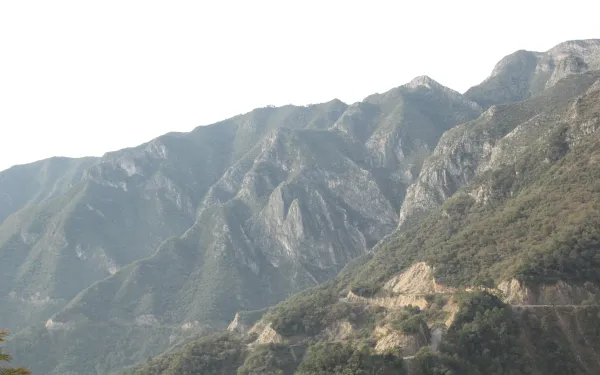
Environmental Defense Guide
The purpose of this publication is to promote the use of the Inter-American System of Human Rights for addressing environmental degradation that causes human rights violations. Within this guide we provide the legal strategies and arguments necessary to use the System effectively and properly. Our goal with this publication and our work in general, is to strengthen people’s capacity to defend their individual and collective right to a healthy environment through the proper development, implementation and fulfillment of domestic and international law. With the publication and widespread distribution of the English-language edition of the Guide, we hope to significantly advance this goal. Read and download the guide
Read more