
Project
Alberto Peña Kay
Protecting the Santurban páramo from mining's damage
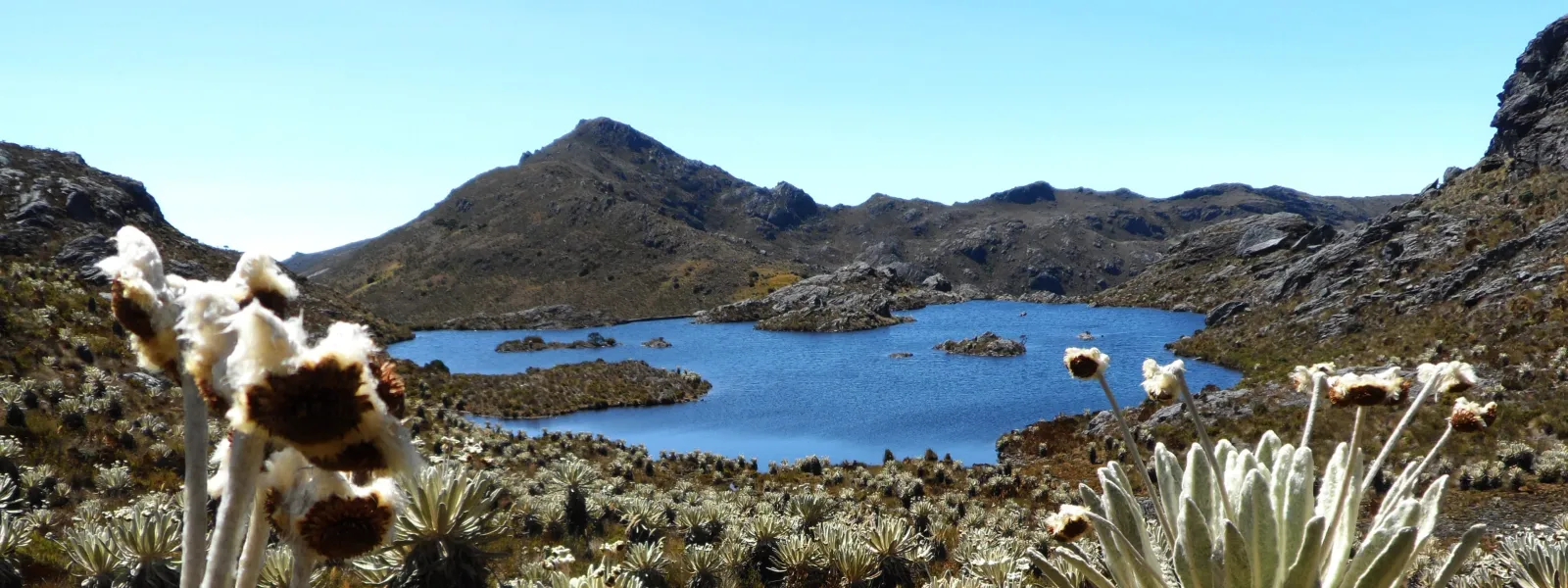
In the Andean region, high-mountain ecosystems known as páramos capture water from the fog and supply it to the lowlands. One such ecosystem is the Santurbán páramo, which provides fresh water to more than two million people in Colombia.
Santurbán, like the other páramos on the continent, also captures large amounts of carbon, making it a key ally in mitigating the climate crisis. It is also a refuge for hundreds of endangered species, including the iconic spectacled bear.
The land in and around the páramo contains gold and other minerals. This has put Santurbán in the spotlight of the multinational mining industry, which for decades has sought to establish large-scale projects in the ecosystem that threaten to degrade it.
The Committee for the Defense of Water and the Santurbán Páramo—a coalition of environmental advocates—has thwarted these ongoing attempts, with support from AIDA and other civil society organizations.
Background
The Santurbán páramo is located in the heart of the Eastern Cordillera of the Colombian Andes, in the departments of Santander and Norte de Santander, at an elevation ranging from 2,200 to 4,290 meters above sea level.
It covers an area of 129,743 hectares and is home to 57 lakes. It serves as a habitat for 457 plant species and 293 species of vertebrate fauna.
There are mineral deposits in Santurbán, primarily gold, but also silver and copper. This explains the region’s mining tradition, particularly in the part of the páramo located in Santander, in the province of Soto Norte. The communities in the area have built their culture and identity around gold mining, which is mainly artisanal and small-scale.
But since the 1990s, the gold deposits in the páramo have also attracted foreign mining conglomerates seeking to develop large-scale projects. This has raised concerns among the population that relies on the Santurbán water sources, who have mobilized in defense of water, their land, and life.
Although national and international regulations prohibit mining in páramos, the Colombian government has granted mining concessions to transnational corporations in Santurbán.

Photo: Keishpixl / Pixabay.
The long struggle to protect the páramo
One of the companies that sought to develop large-scale mining in Santurbán is Eco Oro Minerals Corp.—formerly Greystar Resources—a Canadian company that intended to establish the Angostura open-pit mine there to extract gold and silver. Between 1994 and 1995, the company acquired its mining titles and conducted exploration. And in 2010, it applied for a mining permit.
That was the year AIDA became involved in defending the ecosystem, supporting the Committee for the Defense of Water and the Santurbán Páramo. Our legal work helped convince the Colombian government to deny the mine an environmental permit in May 2011.
In January 2013, the government designated a portion of the páramo (11,700 hectares) as a Regional Natural Park. That year—together with the committee and partner organizations—we carried out a campaign and advocacy efforts to urge the government to recognize the entire Santurbán area as a páramo ecosystem through a delimitation based on scientific criteria. In December 2014, the Ministry of the Environment established a delimitation that protected 76% of the páramo (98,954 hectares).
Furthermore, as a result of a litigation supported by AIDA, in February 2016, Colombia’s highest court reaffirmed that mining in páramos is prohibited.
That same year, in December, the International Finance Corporation (IFC), the World Bank Group’s private sector arm, decided to divest from Eco Oro Minerals. This achievement was the result of a process that began in 2012, when the committee—advised and supported by AIDA and international partner organizations—filed a complaint before an independent accountability mechanism, which concluded that the IFC’s investment in the Angostura project failed to take into account the project’s social and environmental impacts, thereby contradicting the financial institution’s internal policies.
Also in 2016, Eco Oro Minerals filed an arbitration claim against the Colombian government with the International Centre for Settlement of Investment Disputes (ICSID), arguing that it had been adversely affected by government decisions aimed at protecting the country’s páramos, including the delimitation of Santurbán.
In 2017, the Constitutional Court invalidated the delimitation because the affected communities were not consulted. The high court ordered that a participatory delimitation be carried out.
And that year, a new threat to Santurbán emerged when the Canadian multinational Aris Mining applied for an environmental permit for Soto Norte, a gold mining project located near the páramo. Following citizen protests and technical objections, in October 2020, the National Environmental Licensing Authority shelved the project.
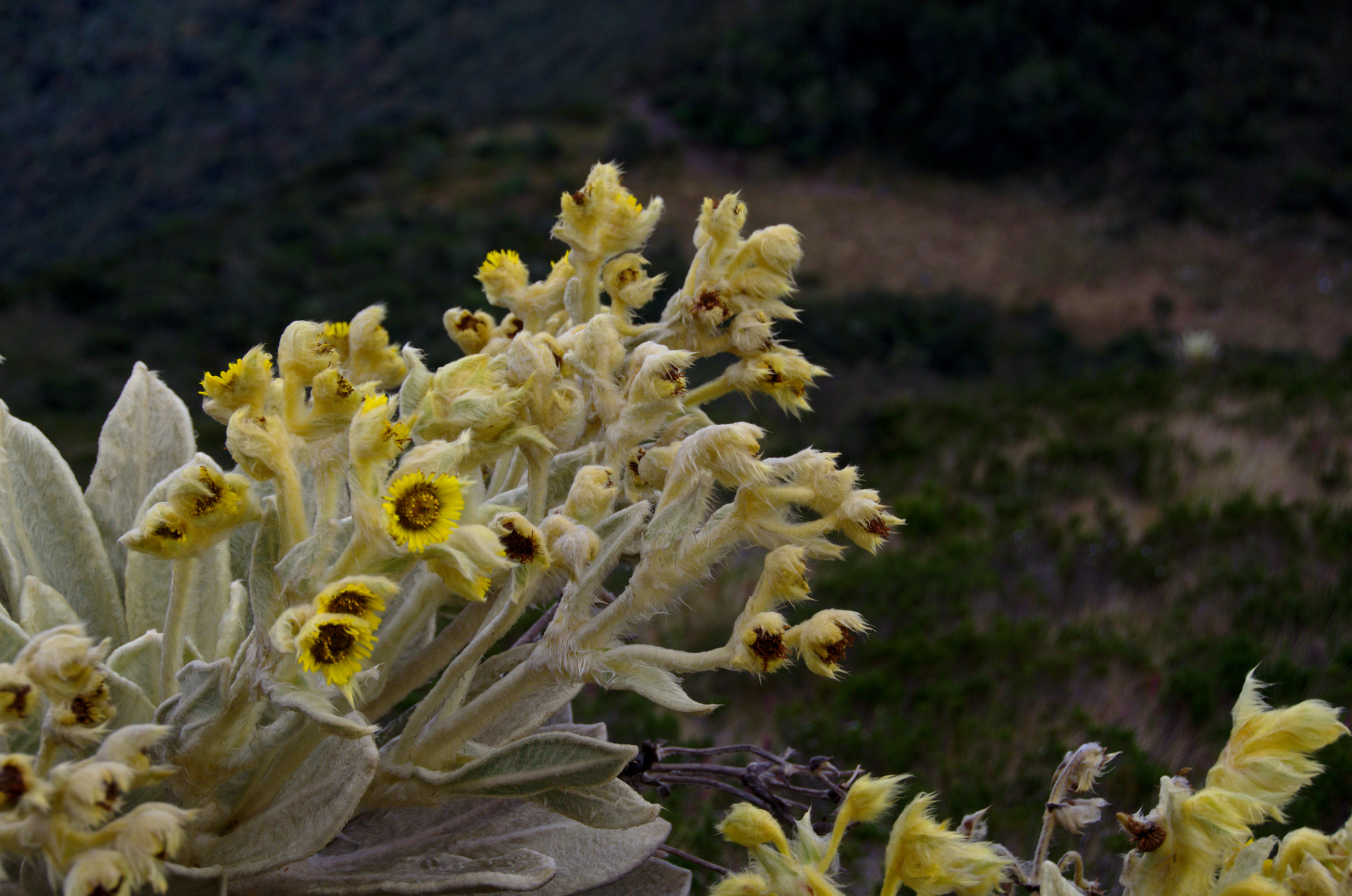
Photo: Aztlec.
Current situation
In March 2025, the Colombian government designated the western flank of the Santurbán massif as a temporary renewable natural resource reserve area, delimiting and protecting an area of 75,344.65 hectares. This resulted in a two-year suspension of the Soto Norte project. However, Aris Mining's contract to formalize Calimineros' small-scale mining activities through the purchase and processing of mineralized material remains in effect.
In addition, the Canadian mining company continues to move the project forward. In September 2025, it released its prefeasibility study, revising the mine’s original design.
Meanwhile, members of the Committee for the Defense of Water and the Santurbán Páramo face threats and stigmatization because of their work. In March 2025, UN Special Rapporteurs and the Working Group on Business and Human Rights denounced these incidents in communications sent to the governments of Colombia, Canada, and the United Arab Emirates, as well as to the companies Aris Mining and MDC Industry Holding Company LLC, the former co-owner of the Soto Norte project.
Regarding the arbitration claim filed by Eco Oro Minerals, in July 2024, ICSID ruled in favor of the Colombian government and rejected the Canadian company’s claim for USD 1.1 billion in compensation.
Concerning the delimitation of Santurbán, in July 2026, the Ministry of the Environment issued a resolution introducing the concept of "progressive delimitation." On that basis, the government proposes to progressively demarcate the páramo, covering 29,199 hectares across 19 municipalities—those where the participatory agreements required by the Constitutional Court in its 2017 ruling have already been finalized. It also proposes two measures on the creation and expansion of reserves to restrict mining in the ecosystem.
Learn more about the impacts of mining on the páramos of Latin America (in Spanish).
Partners:
Related projects
AIDA petitions Argentine court for protection of human rights in lithium mining case
In a legal brief supporting the litigation of the indigenous communities of the Puna in Argentina, we ask the Court of Justice of Catamarca to cancel the permits for two mining projects to avoid irreversible environmental impacts on the territory of the Salar del Hombre Muerto. We also ask that it order a cumulative and comprehensive environmental impact assessment that meets international standards and guarantees the participation of the communities. In support of the lawsuit filed by the Atacameños del Altiplano Indigenous Community, the Interamerican Association for Environmental Defense (AIDA) filed an amicus curiae or "friend of the court" brief before the Court of Justice of Catamarca, requesting that the national government and the government of the province of Catamarca, in accordance with their international obligations, protect the rights of local communities against the cumulative environmental impacts of lithium mining projects in the territory and watershed of the Salar del Hombre Muerto."The accumulation of lithium mining activities in the Salar del Hombre Muerto has exacerbated water stress in the province and today threatens to affect the health of indigenous communities due to the use of large quantities of water and polluting chemicals," said Yeny Rodríguez, Senior Attorney at AIDA. "In application of the principles of prevention and precaution, it is imperative that the State take measures to avoid further impacts; if it fails to do so, it may incur international liability for the damages caused."The brief provides grounds for the application of justice and for the defense of the rights to a healthy environment, to water and to the life project of the communities. The document shows that the national and provincial governments have an obligation under international treaties and standards, such as the American Convention on Human Rights, the Convention on Biological Diversity, and the Convention on Wetlands, among others, to use an environmental assessment that addresses comprehensive and cumulative impacts to authorize existing, proposed, and related mining projects.The writ was filed as part of the amparo action filed by the Atacameños del Altiplano Indigenous Community in August 2021. In it, they asked the Court of Justice of Catamarca to revoke the authorizations granted by the environmental authorities to the projects "Fénix Project Expansion" of the company Livent and "Sal de Vida" of the company Galaxy Lithium S.A., until a proper environmental impact assessment is carried out.In a decision released last March 13, the court ordered the provincial government, as a precautionary measure, to refrain from issuing new permits until a "cumulative and comprehensive" environmental impact study is conducted for all lithium mining projects being developed in the area, and to guarantee free access to information and free, prior and informed consultation with communities for all projects. However, the court did not accept the request to stop lithium mining in the area, so the socio-environmental risks remain.In this sense, in order to protect the ecosystem and not irreparably affect the life project of the indigenous peoples, AIDA presented arguments to the Court of Justice of Catamarca in support of the communities' requests:In application of the international environmental principles of prevention and precaution, revoke the permits for the projects identified in the lawsuit and for all projects in the Salar Basin until an environmental assessment is carried out in accordance with international law.Order the competent authorities to carry out a cumulative and comprehensive environmental impact assessment, respecting at all stages the right to consultation or consent, as well as the right to timely and effective environmental participation of the Atacameños del Altiplano Indigenous Community. "AIDA reiterated before the Court that the Inter-American Court of Human Rights has ruled that the Environmental Impact Assessment is the measure that guarantees the subsistence of indigenous communities in the face of the restrictions imposed by the concessions granted in their territory," said Rodríguez.The brief points out that in this case — given that lithium mining and other projects have already caused serious environmental degradation and affected the water carrying capacity of the ecosystem, in addition to jeopardizing the community's livelihood project — the state had an obligation to conduct a cumulative and comprehensive environmental impact assessment.Due to low rainfall and water evaporation, the Salar del Hombre Muerto — an Andean wetland located in northwestern Argentina, between the provinces of Catamarca and Salta — has a negative natural water balance, which has been exacerbated in the last 27 years by lithium mining. This activity requires the extraction of large quantities of brine (water with a high salt content) and fresh water (surface and groundwater).The region of the Salar Basin has been inhabited for more than 10,000 years by indigenous communities who have a special relationship with the environment that guarantees their individual and collective survival, their culture and their traditions. As a result of lithium mining, their members have had to change their traditional practices and have also suffered water shortages and significant animal losses.The Fénix mining project has diverted the Trapiche River to the point of drying up its last stretch before it reaches the salt flats. And the expansion of mining activities in the area threatens to dry up the Los Patos River as well.In the development of the projects mentioned in the lawsuit, the companies did not provide information to the communities, did not hold public hearings with their participation, and did not carry out a process of free, prior and informed consultation.Press contact:Víctor Quintanilla (Mexico), AIDA, [email protected], +521 5570522107
Read more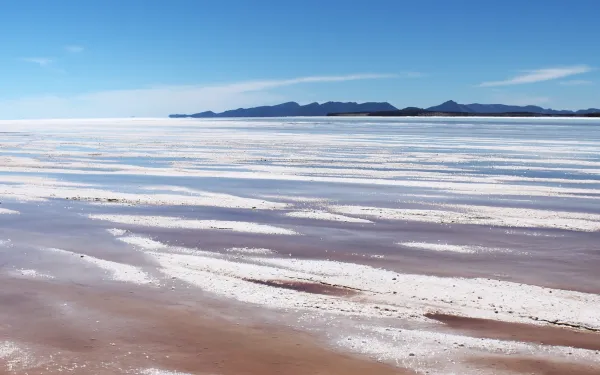
UN takes major step toward prioritizing justice regarding transition minerals
The United Nations’ Critical Energy Transition Minerals Panel issued a series of recommendations and voluntary principles aimed at ensuring equitable, fair and sustainable management of these minerals. The guidelines are aimed at governments, industry and other stakeholders in energy transition processes.This comes at a time when the global renewable energy movement, which seeks to reduce emissions that exacerbate the climate crisis, has highlighted how the environmental and social costs of transition minerals extraction fall disproportionately on local communities and ecosystems.Claudia Velarde, co-director of the Ecosystems Program of the Interamerican Association for Environmental Defense (AIDA), said: “For Latin America, the recommendations and principles are very important, since a large part of the reserves of resources essential for the energy transition are in the region, in complex territories rich in biological and cultural diversity.Significantly, the panel places human rights and justice at the center, recognizing the complexity of the energy transition and the inequality between countries in the global South that host the minerals and those in the North that need them for their own transition.To move forward with justice, the energy transition must break with the development status quo, include perspectives from the global South, respect the human rights of local communities, and recognize ecosystem boundaries.While there is still a long way to go to achieve a truly just and popular energy transition for Latin America, we hope that this contribution will be a step in that direction.” The recommendations and principles are contained in a report in which the Panel explains how the transition t to renewable energy can be based on justice and equity, promoting sustainable development, respect for people, and protection of the environment in developing countries.The Panel proposes seven voluntary guiding principles, based on standards, commitments and legal obligations established in United Nations texts:Human rights must be at the core of all mineral value chains.The integrity of the planet, its environment and biodiversity must be safeguarded.Justice and equity must underpin mineral value chains.Development must be fostered through benefit sharing, value addition and economic diversification.Investments, finance and trade must be responsible and fair.Transparency, accountability and anti-corruption measures are necessary to ensure good governance.Multilateral and international cooperation must underpin global action and promote peace and security. Read the panel report: https://www.un.org/sites/un2.un.org/files/report_sg_panel_on_critical_energy_transition_minerals_11_sept_2024.pdfLearn more about panel: https://www.un.org/en/climatechange/critical-mineralsPress contact:Víctor Quintanilla (Mexico), [email protected], +5215570522107
Read more
Transition minerals: value chains and cirularity from a Latin American perspective
The global push for renewable energy to reduce climate-aggravating emissions has revealed how the environmental and social costs of mineral extraction fall disproportionately on local communities and ecosystems. The rush for so-called “critical” minerals exacerbates the very crises it seeks to help solve, worsening ecological degradation and perpetuating socio-economic injustice in the Global South. The circular economy allows the development of new economic and governance models to overcome the linearity of the international trade system. From a Latin American perspective, the circular economy must incorporate ecological parameters to ensure the maintenance of ecosystem services and the value of raw materials, while respecting the human rights of those who depend on the ecosystems from which these raw materials are extracted. AIDA is a pioneering regional organization that uses the law and science to protect the right to a healthy environment in Latin America. Focused on strengthening the just energy transition, AIDA's work includes an emphasis on value chains and circular economy models from a Latin American perspective. The race for lithium from the perspective of place Andean wetlands are a series of highly biodiverse ecosystems that provide multiple ecosystem services. However, these ecosystems are highly fragile and are currently threatened by the climate crisis, water crisis, and mining pressures, particularly regarding lithium. The Gran Atacama, located in the high Andean wetlands of Chile, Bolivia and Argentina, is estimated to contain approximately 68 percent of global lithium reserves, in the form of brine. As such, the mining industry has renamed this region to focus on one mineral, calling it the “lithium triangle.” The reality is that the area is much more complex than just its minerals. In the Gran Atacama, local communities and indigenous peoples depend on the stability of the ecosystem for their cultural, social and economic well-being. Economic activities there are linked to agriculture, industrial employment, bureaucratic services, and tourism. Sixty percent of lithium deposits are in areas of medium, high and extremely high-water risk. At least 30 ongoing lithium mining projects in various stages of development have been identified throughout the Gran Atacama. Public opinion in these three countries has demonstrated significant concerns about the lithium mining industry and the sustainability of these activities, particularly in relation to a history of mismanagement of environmental liabilities in the past. A circular economy perspective is essential for sustainability The current climate crisis is linked to the linear nature of our current economic system and its assumption of infinite natural resources. The history of large-scale mining activities in the Global South exemplifies this perspective. The circular economy could offer a solution to create a more sustainable value chain for raw minerals and enable a just energy transition that benefits all regions of the world. However, the following points must be considered: The drivers and barriers for creating a circular economy within mining processes may vary from region to region. Building a global circular economy for lithium needs to encompass the material extraction stage more comprehensively, not only through industrial circularity activities, but also from an ecosystem and human rights perspective. The loss of natural capital in lithium-exporting countries is a major concern, not only because of material extraction, but also because of its impact on ecosystems. In Latin America, non-renewable natural capital represents 3.2 percent of total wealth, while natural capital represents 10.9 percent. Intensive extraction without recognizing environmental and human rights concerns depletes natural wealth, some of which is already used by local populations. A circular economy for raw materials must balance the extraction of minerals with the preservation of ecosystems. Economic mechanisms must be found to prevent the replacement of natural capital with technological capital, to create a truly circular economy. Tariff inequality for critical minerals, including lithium, is widespread and results in an uneven distribution of economic benefits along the value chain of raw minerals. Market rules impose low tariffs on critical raw materials, while high tariffs are applied to technology and specialized labor, neglecting the added value of natural resources. This results in lost potential to generate further profits in subsequent stages of the value chain. Economic mechanisms are needed to support ecosystem conservation, proper management and economic valuation of nature, and to address the inherent inequality and linearity of the current economic system. A circular economy proposal from territories of extraction The lithium value chain is transnational, and each region involved has different actions to take to achieve a global circular economy. Circularity in mining areas depends on the conservation of ecosystems that contain lithium and other minerals. Since raw materials are extracted from these ecosystems, our mission is to preserve them and plan the use of non-renewable resources from an ecological perspective, respecting biophysical limits and human rights. In this regard, from the perspective of the extractive regions, the proposal can be related to: Strengthening the circular economy perspective in and from extractive regions and increasing knowledge sharing with other regions, both in the global North and South. Expanding the concept of a global circular economy for lithium to include an ecosystem perspective in extraction planning, rather than focusing solely on a supply and demand perspective. Appropriate valuation of both non-renewable resources and the ecosystems in which they are located, through the exploration of environmental taxation mechanisms that could be integrated into the mining sector to: Create clear market signals about the value of natural and non-renewable resources and reduce the demand for intensive extraction of raw materials. Generate revenues to ensure a fair share of directly affected communities through benefit-sharing mechanisms and to facilitate increased investment in technologies to advance the circular economy faster and more efficiently. Ensuring timely and adequate compensation for contamination. Developing proposals for economic models that incorporate the ecosystem services and materials used or affected during lithium production. For example, implementing specific carbon pricing for mining activities and strengthening legal mechanisms based on the “producer responsibility” and “the polluter pays” principles.
Read more