
Project
Alberto Peña Kay
Protecting the Santurban páramo from mining's damage
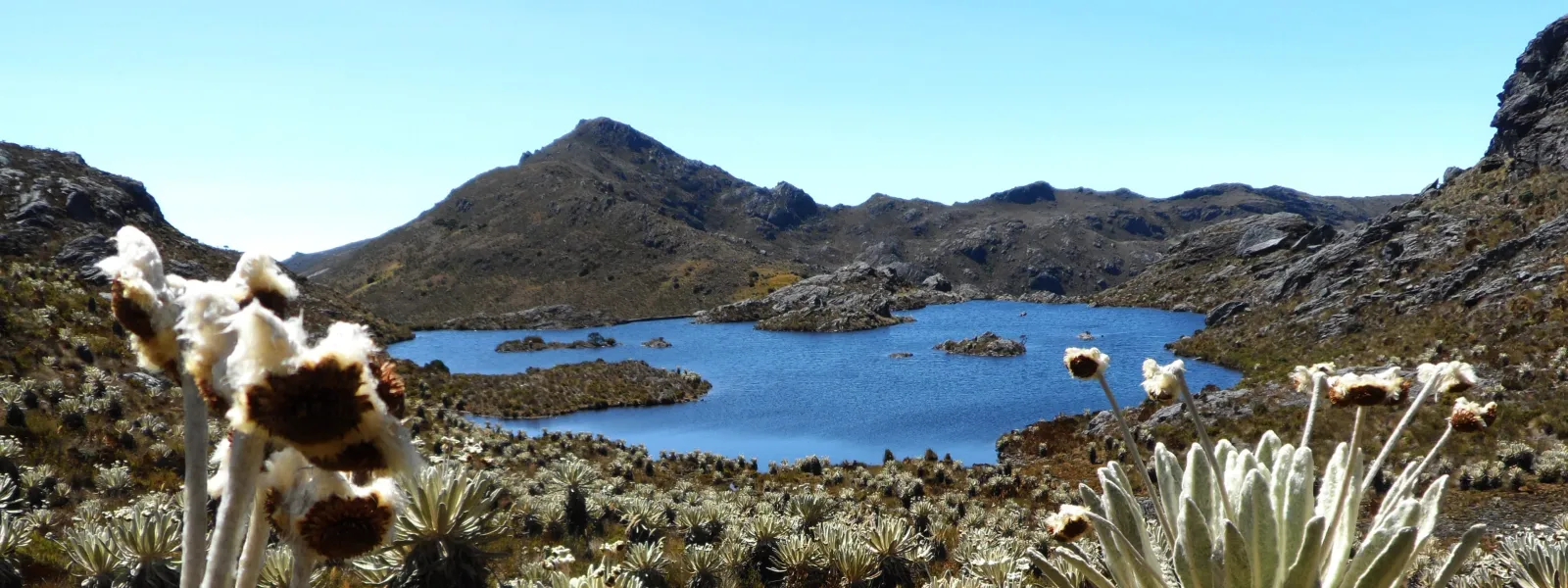
In the Andean region, high-mountain ecosystems known as páramos capture water from the fog and supply it to the lowlands. One such ecosystem is the Santurbán páramo, which provides fresh water to more than two million people in Colombia.
Santurbán, like the other páramos on the continent, also captures large amounts of carbon, making it a key ally in mitigating the climate crisis. It is also a refuge for hundreds of endangered species, including the iconic spectacled bear.
The land in and around the páramo contains gold and other minerals. This has put Santurbán in the spotlight of the multinational mining industry, which for decades has sought to establish large-scale projects in the ecosystem that threaten to degrade it.
The Committee for the Defense of Water and the Santurbán Páramo—a coalition of environmental advocates—has thwarted these ongoing attempts, with support from AIDA and other civil society organizations.
Background
The Santurbán páramo is located in the heart of the Eastern Cordillera of the Colombian Andes, in the departments of Santander and Norte de Santander, at an elevation ranging from 2,200 to 4,290 meters above sea level.
It covers an area of 129,743 hectares and is home to 57 lakes. It serves as a habitat for 457 plant species and 293 species of vertebrate fauna.
There are mineral deposits in Santurbán, primarily gold, but also silver and copper. This explains the region’s mining tradition, particularly in the part of the páramo located in Santander, in the province of Soto Norte. The communities in the area have built their culture and identity around gold mining, which is mainly artisanal and small-scale.
But since the 1990s, the gold deposits in the páramo have also attracted foreign mining conglomerates seeking to develop large-scale projects. This has raised concerns among the population that relies on the Santurbán water sources, who have mobilized in defense of water, their land, and life.
Although national and international regulations prohibit mining in páramos, the Colombian government has granted mining concessions to transnational corporations in Santurbán.

Photo: Keishpixl / Pixabay.
The long struggle to protect the páramo
One of the companies that sought to develop large-scale mining in Santurbán is Eco Oro Minerals Corp.—formerly Greystar Resources—a Canadian company that intended to establish the Angostura open-pit mine there to extract gold and silver. Between 1994 and 1995, the company acquired its mining titles and conducted exploration. And in 2010, it applied for a mining permit.
That was the year AIDA became involved in defending the ecosystem, supporting the Committee for the Defense of Water and the Santurbán Páramo. Our legal work helped convince the Colombian government to deny the mine an environmental permit in May 2011.
In January 2013, the government designated a portion of the páramo (11,700 hectares) as a Regional Natural Park. That year—together with the committee and partner organizations—we carried out a campaign and advocacy efforts to urge the government to recognize the entire Santurbán area as a páramo ecosystem through a delimitation based on scientific criteria. In December 2014, the Ministry of the Environment established a delimitation that protected 76% of the páramo (98,954 hectares).
Furthermore, as a result of a litigation supported by AIDA, in February 2016, Colombia’s highest court reaffirmed that mining in páramos is prohibited.
That same year, in December, the International Finance Corporation (IFC), the World Bank Group’s private sector arm, decided to divest from Eco Oro Minerals. This achievement was the result of a process that began in 2012, when the committee—advised and supported by AIDA and international partner organizations—filed a complaint before an independent accountability mechanism, which concluded that the IFC’s investment in the Angostura project failed to take into account the project’s social and environmental impacts, thereby contradicting the financial institution’s internal policies.
Also in 2016, Eco Oro Minerals filed an arbitration claim against the Colombian government with the International Centre for Settlement of Investment Disputes (ICSID), arguing that it had been adversely affected by government decisions aimed at protecting the country’s páramos, including the delimitation of Santurbán.
In 2017, the Constitutional Court invalidated the delimitation because the affected communities were not consulted. The high court ordered that a participatory delimitation be carried out.
And that year, a new threat to Santurbán emerged when the Canadian multinational Aris Mining applied for an environmental permit for Soto Norte, a gold mining project located near the páramo. Following citizen protests and technical objections, in October 2020, the National Environmental Licensing Authority shelved the project.
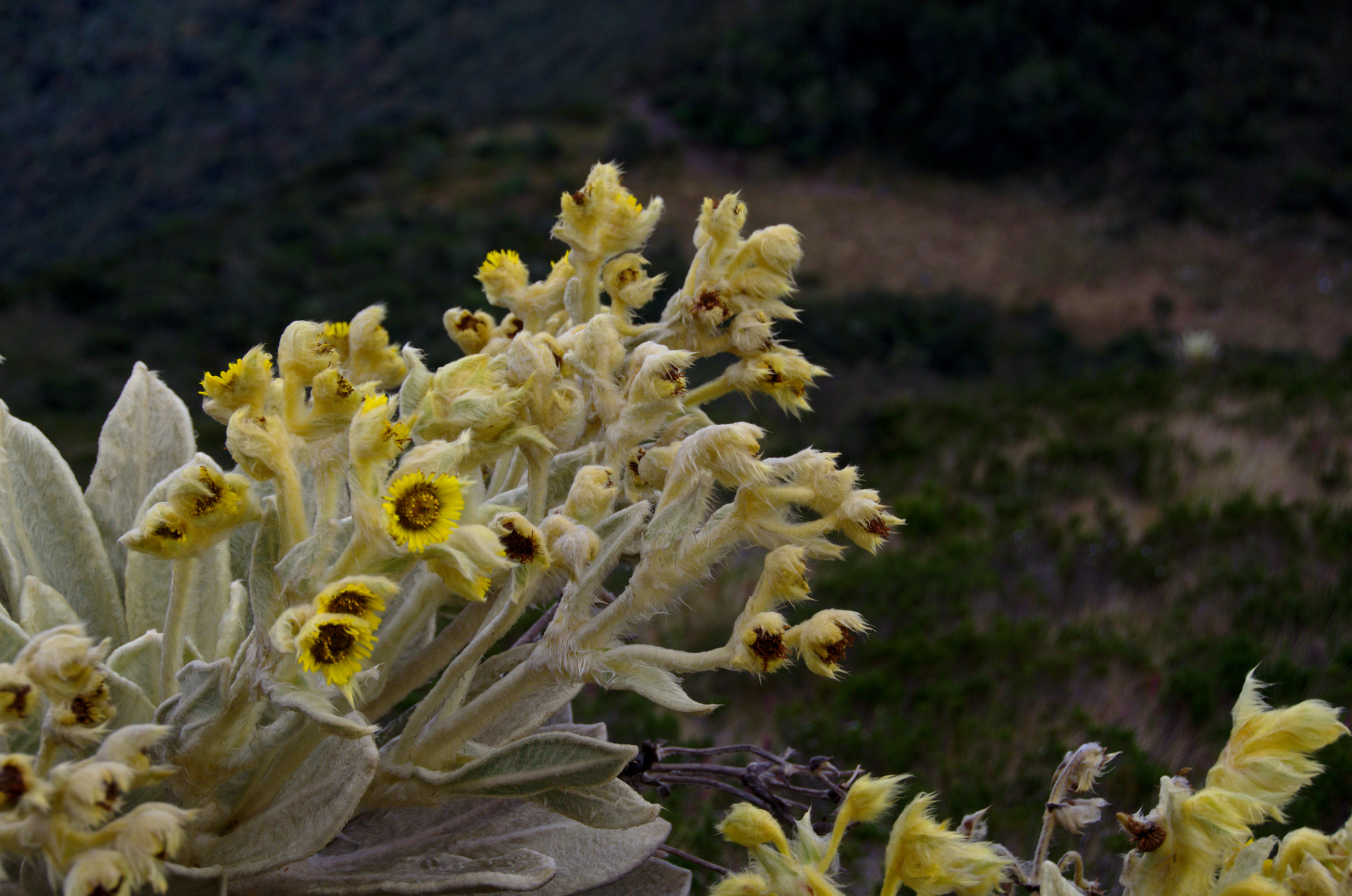
Photo: Aztlec.
Current situation
In March 2025, the Colombian government designated the western flank of the Santurbán massif as a temporary renewable natural resource reserve area, delimiting and protecting an area of 75,344.65 hectares. This resulted in a two-year suspension of the Soto Norte project. However, Aris Mining's contract to formalize Calimineros' small-scale mining activities through the purchase and processing of mineralized material remains in effect.
In addition, the Canadian mining company continues to move the project forward. In September 2025, it released its prefeasibility study, revising the mine’s original design.
Meanwhile, members of the Committee for the Defense of Water and the Santurbán Páramo face threats and stigmatization because of their work. In March 2025, UN Special Rapporteurs and the Working Group on Business and Human Rights denounced these incidents in communications sent to the governments of Colombia, Canada, and the United Arab Emirates, as well as to the companies Aris Mining and MDC Industry Holding Company LLC, the former co-owner of the Soto Norte project.
Regarding the arbitration claim filed by Eco Oro Minerals, in July 2024, ICSID ruled in favor of the Colombian government and rejected the Canadian company’s claim for USD 1.1 billion in compensation.
Concerning the delimitation of Santurbán, in July 2026, the Ministry of the Environment issued a resolution introducing the concept of "progressive delimitation." On that basis, the government proposes to progressively demarcate the páramo, covering 29,199 hectares across 19 municipalities—those where the participatory agreements required by the Constitutional Court in its 2017 ruling have already been finalized. It also proposes two measures on the creation and expansion of reserves to restrict mining in the ecosystem.
Learn more about the impacts of mining on the páramos of Latin America (in Spanish).
Partners:
Related projects
Latest News
New law banning mining in Colombia’s páramos could draw its first lawsuit
The new law that bans mining in Colombia’s páramos took years to materialize, and was the product of multiple activist campaigns, lawsuits, and pressure from civil society to preserve one of the world’s most sensitive ecosystems. Last month, Colombia’s Constitutional Court approved a law that has no precent. It bans mining and oil exploitation –effectively blocking 473 already-existing concessions– in the country’s páramos. The law is expected to impact more than 300 mining operations in 25 moorlands, according to data from the National Authority of Environmental Licenses (ANLA). One of those companies is the Canadian transnational, Eco Oro. Its Angostura mine is located within the Santurbán moorland, in the Norte de Santander and Santander departments, within an area larger than 142,000 hectares. Santurbán includes five regional parks and a variety of species in danger of extinction, such as the condor (Vultur gryphus), the chirriador (Cisttothorus apollinari), the moorland duck (Anas flavirostris) and the curí (Cavia porcellus). On its website, the company has announced that it is “developing a multi-million ounce gold-silver deposit in Colombia.” Eco Oro has already completed more than 350,000 meters of drilling and 3,000 meters of underground development, thanks to an investment by the International Financing Corporation of the World Bank. Juan Orduz, president of Eco Oro’s board of directors, said back in 2014 –before the law was approved– that the company “has invested more than 240 million dollars in the region.”“It’s no secret that we’ve had many challenges and that we will keep having them. There’s always a new source of conflict, and even then, we’re going to keep coming up with strategies to keep working in this area,” said Orduz back then, when the demarcations for mining in Colombia’s páramos were an issue of conflict. In a recent press release, Eco Oro announced that it has the option of bringing the dispute to international arbitration and seeking “monetary compensation for the damages suffered” due to the new anti-mining law. “Since the Angostura project got underway, it has been clear that páramos are constitutionally and legally protected and that this project could affect Santurbán, such that it might not be authorized,” said Carlos Lozano Acosta, an attorney with the Interamerican Association for Environmental Defense (AIDA). “States should not be sanctioned for protecting their water sources, given that they are doing so in accordance with national and international obligations.” According to data from the Institute of Biological Research Alexander Von Humboldt, half of the world’s páramos are in Colombia and are the source of 70% of the fresh water in the country, besides being an ecosystem essential for mitigating climate change. Their importance is especially acute right now, since Colombia is facing the El Niño climate phenomenon and going through one of the worst droughts in its history. Eco Oro’s critics explain that five years ago, Colombia’s Environment Ministry had denied the Angostura mine its environmental license. And now, the decision of the Constitutional Court reaffirms that decision, “finding that the right to water and the protection of the páramos (moorlands) takes precedent over the economic interests of companies trying to develop mining projects in these ecosystems.” That’s according to Miguel Ramos, from the Water Defense Committee and the Páramo of Santurbán (El Comité por la Defensa del Agua y el Páramo de Santurbán). The Committee has presented a complaint about the Angostura mining project to The World Bank, and hopes to receive a response in the next few months.
Read more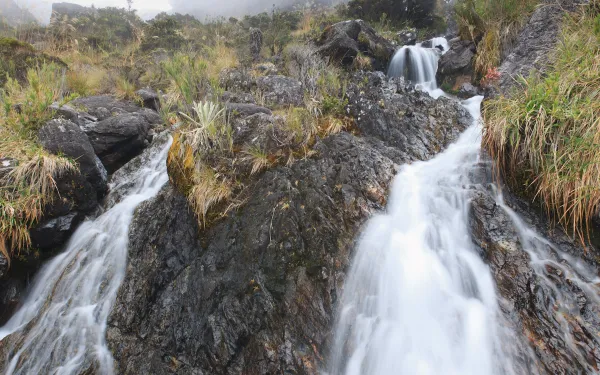
Organizations condemn Eco Oro’ threat to sue Colombia over efforts to protect páramos
The Canadian company developing the Angostura gold mine in the high-altitude wetlands, or páramo, of Santurbán, has announced that it could file an international arbitration suit against Colombia over measures to protect the páramo, which is an important source of water in the country. Washington/Ottawa/Bogotá/Bucaramanga/Ámsterdam – Civil society organizations condemn Eco Oro Minerals’ announcement that it will initiate international arbitration against the Colombian state. Eco Oro has stated its intention to sue Colombia under the investment chapter of the Canada Colombia Free Trade Agreement over measures that the Andean state has taken to protect the Santurbán páramo and páramos around the country from harmful activities such as large-scale mining. Eco Oro Minerals’ Angostura proposed gold mine in Santurbán has financial backing from the World Bank’s International Finance Corporation. The company argues that it will lose money because of the demarcation of the páramo and the recent decision from the Constitutional Court of Colombia reaffirming the prohibition against mining in all Colombian páramos. The company stated in a news release that it could bring the dispute to international arbitration and seek “monetary compensation for the damages suffered.” “Since the Angostura project got underway, it has been clear that páramos are constitutionally and legally protected and that this project could affect Santurbán, such that it might not be authorized. States should not be sanctioned for protecting their water sources, given that they are doing so in accordance with national and internacional obligations,” remarked Carlos Lozano Acosta from the Interamerican Association for Environmental Defense (AIDA). The páramos are the source of 70% of the fresh water that is consumed in Colombia and are essential for mitigating climate change. The proposed gold mine was already the subject of a complaint to the Compliance Advisor Ombudsman of the International Finance Corporation (IFC). The Committee in Defense of the Water and Páramo of Santurbán filed the complaint in 2012. The IFC is the part of the World Bank Group exclusively focused on the private sector. A report based on this investigation is expected in the coming months. “The implication and the irony of Eco Oro’s statement is that the IFC’s investment in the company could be used to litigate against member states of the World Bank. It’s time for the IFC to withdraw its investment from this company,” stated Carla García Zendejas from CIEL. “In 2011, the Colombian Ministry of the Environment denied an environmental permit for the Angostura project, demonstrating its inviability. The Constitutional Court’s decision reaffirmed this, finding that the right to water and the protection of the páramos takes precedent over the economic interests of companies trying to develop mining projects in these ecosystems,” commented Miguel Ramos from the Santurbán Committee. “Just as has we have seen in El Salvador, where the state is being sued for US$250 million for not having granted a Canadian company a mining permit when the company did not even fulfill local regulations, the international arbitration system enshrined in neoliberal investment agreements is a real threat to the sovereignty of states and peoples to decide over highly important issues, such as water,” said Jen Moore from MiningWatch Canada. The organizations call on the company to abstain from arbitration against the Colombian state and note the risk that other companies with projects in the Santurbán páramo could follow Eco Oro’s example. Find additional information here.
Read more
AIDA celebrates Court decision to protect Colombia's páramos
Colombia’s Constitutional Court on Monday declared unconstitutional an aspect of the country’s National Development Plan that permitted mining in páramos. Bogota, Colombia. The Interamerican Association for Environmental Defense (AIDA) celebrates the decision of Colombia’s Constitutional Court to ban mining in the country’s páramos. The ruling—which nullified an article of the 2014-2018 National Development Plan protecting previously granted mining licenses—is vital to the preservation of Colombia’s freshwater resources, and should serve as an example for other countries in the region. AIDA and partner organizations presented an amicus brief in support of the corresponding lawsuit, filed by the Cumbre Agraria, Campesina, Étnica y Popular. The court’s ruling brings justice to these important freshwater ecosystems and the many people that depend upon them. Although they occupy just 1.7 percent of the national territory, Colombia’s páramos provide 70 percent of its fresh water. The sensitive ecosystems are also strategic reserves of biodiversity, and act as carbon sinks essential to the mitigation of climate change. The high court’s decision is key to the protection of the Santurbán páramo, on which hundreds of thousands of people in the Bucaramanga metropolitan area depend. AIDA has long been working to defend Santurbán from large-scale mining and to provide support to affected communities. AIDA urges the Ministry of the Environment to promptly enact the court’s ruling and protect all the country's páramos from the impacts of large-scale mining operations.
Read more