
Project
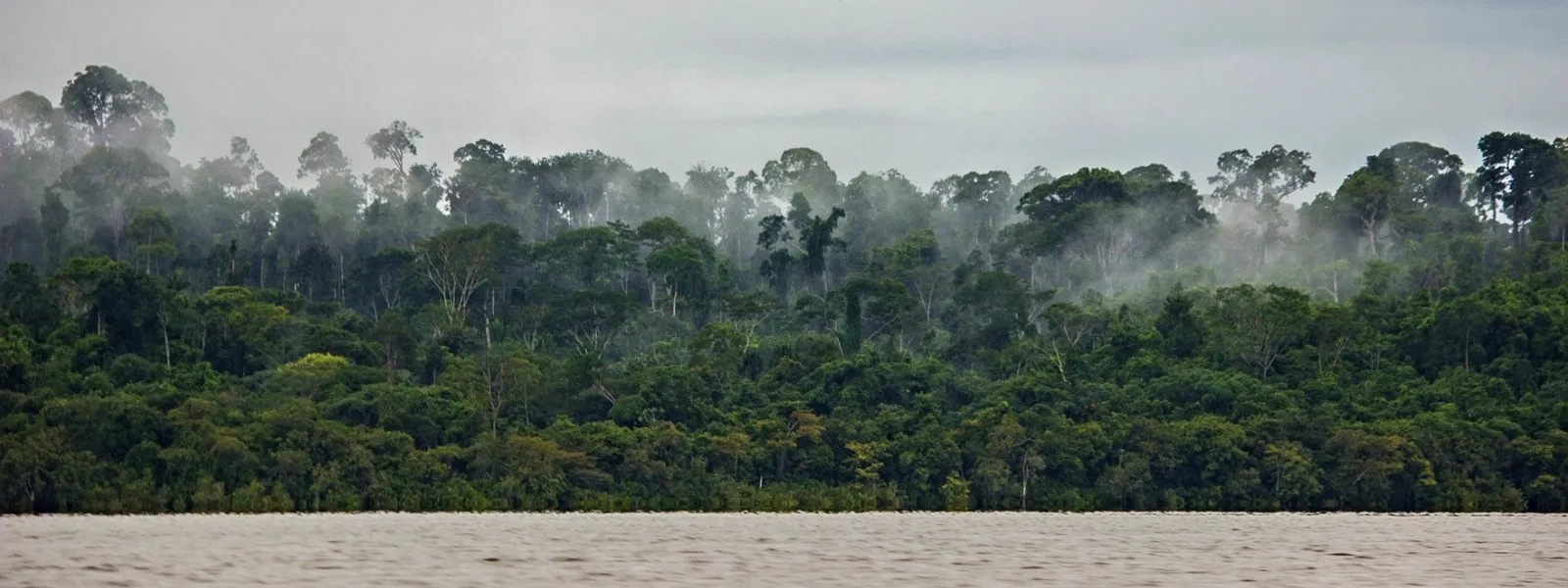
Amazon Watch / Maíra Irigaray
Seeking reparations for damages caused by the Belo Monte Dam in the Amazon
The Belo Monte Dam has caused an environmental and social disaster in the heart of the Amazon—one of the most important ecosystems on the planet.
This situation has only worsened since the hydroelectric plant began operations in 2016. The quest for justice and reparations by the affected indigenous, fishing, and riverine communities continues to this day.
In 2011, the Inter-American Commission on Human Rights (IACHR) granted them protective measures that, to date, have not been fully implemented by the Brazilian State.
Furthermore, since June of that same year, the IACHR has yet to rule on a complaint against the State regarding its international responsibility in the case.
The IACHR may refer the case to the Inter-American Court of Human Rights, which has the authority to issue a ruling condemning the Brazilian State.
Background
The Belo Monte hydroelectric plant—the fourth largest in the world by installed capacity (11,233 MW)—was built on the Xingu River in Pará, a state in northern Brazil.
It was inaugurated on May 5, 2016, with a single turbine. At that time, 80% of the river’s course was diverted, flooding 516 km² of land—an area larger than the city of Chicago. Of that area, 400 km² was native forest. The dam began operating at full capacity in November 2019.
Belo Monte was built and is operated by the Norte Energia S.A. consortium, which is composed primarily of state-owned companies. It was financed by the Brazilian Development Bank (BNDES), which provided the consortium with 25.4 billion reais (approximately US$10.16 billion), the largest investment in the bank’s history. Therefore, the BNDES is also legally responsible for the socio-environmental impacts associated with the hydroelectric plant.
Decades of harm to the environment and people
Human rights violations and degradation of the Amazon have been occurring since the project’s inception. In March 2011, Norte Energía began construction of the dam without adequate consultation and without the prior, free, and informed consent of the affected communities.
The construction caused the forced displacement of more than 40,000 people, severing social and cultural ties. The resettlement plan in Altamira—a city directly affected by the hydroelectric dam—involved housing units located on the outskirts, lacking adequate public services and decent living conditions for the relocated families, with no special provisions for those from indigenous communities.
Belo Monte's operations have caused a permanent, man-made drought in the Volta Grande (or "Great Bend") of the Xingu River, exacerbated by the historic droughts in the Amazon in 2023 and 2024. As a result, the deaths of millions of fish eggs were documented for four consecutive years (from 2021 to 2024), and for the past three years, there has been no upstream migration of fish to spawn and reproduce. Thus, artisanal fishing, the main source of protein for indigenous peoples and riverside communities, was severely affected: fish dropped from 50% to 30% of total protein consumed, replaced by processed foods. In summary, there was an environmental and humanitarian collapse that resulted in the breakdown of fishing as a traditional way of life, food insecurity, and access to drinking water for thousands of families, impoverishment, and disease.
Furthermore, the construction of the dam increased deforestation and intensified illegal logging and insecurity on indigenous and tribal lands, putting the survival of these communities at risk. Another consequence was the deepening of poverty and social conflicts, as well as the strain on health, education, and public safety systems in Altamira—a city ranked as the most violent in the country in 2017, where human trafficking and sexual violence increased. Violence was also reported against human rights defenders involved in the case.
In 2025, during the 30th UN Climate Change Conference (COP30), held in Brazil, the Federal Public Prosecutor’s Office labeled the damage caused by the Belo Monte dam as ecocide.
The search for justice and reparations
Over the years, the Federal Public Prosecutor’s Office in Pará, the Public Defender’s Office, and civil society organizations have filed dozens of legal actions in Brazilian courts to challenge the project’s various irregularities and its impacts. Most of the claims are still pending resolution, some for more than 10 years.
These efforts have failed because the national government has repeatedly overturned rulings in favor of the affected communities by invoking a mechanism that allowed a court president to suspend a judicial decision based solely on generic arguments such as "the national interest" or "economic order."
In the absence of effective responses at the national level, AIDA, together with a coalition of partner organizations, brought the case before the Inter-American Commission on Human Rights (IACHR) and, in 2010, requested precautionary measures to protect the lives, safety, and health of the affected indigenous communities.
On April 1, 2011, the IACHR granted these measures and requested that the Brazilian government suspend environmental permits and any construction work until the conditions related to prior consultation and the protection of the health and safety of the communities are met.
And on June 16, 2011 —together with the Xingu Vivo Para Sempre Movement, the Coordinating Committee of Indigenous Organizations of the Brazilian Amazon, the Diocese of Altamira, the Indigenous Missionary Council, the Pará Society for the Defense of Human Rights and Global Justice— we filed a formal complaint against the Brazilian State for its international responsibility in the violation of the human rights of the people affected in the case. The case was opened for processing in December 2015.
On August 3, 2011, the IACHR amended the precautionary measures to request, instead of the suspension of permits and construction, the protection of people living in voluntary isolation, the health of indigenous communities, and the regularization and protection of ancestral lands.
Current situation
The protective measures granted by the IACHR remain in effect, but the Brazilian government has not fully complied with them, reporting only on general actions. The communities have documented the ongoing violations of their rights. The situation that prompted the request for these measures—the risk to the lives, physical integrity, and ways of life of the communities—persists and has worsened with the hydroelectric plant operating at full capacity and the recent extreme droughts in the Amazon.
In addition to the impacts of Belo Monte, there is a risk of further social and environmental impacts from the implementation of another mining megaproject in the Volta Grande do Xingu. There, the Canadian company Belo Sun plans to build Brazil’s largest open-pit gold mine.
The combined and cumulative impacts of the dam and the mine were not assessed. The government excluded Indigenous peoples, riverine and peasant communities from the project’s environmental permitting process. Despite protests by Indigenous communities and other irregularities surrounding the project, the government of Pará formally authorized the mine in April 2026.
Like other hydroelectric dams, Belo Monte exacerbates the climate emergency by generating greenhouse gas emissions in its reservoir. And it is inefficient amid the longer, more intense droughts caused by the crisis, as it loses its ability to generate power.
The case before the Inter-American Commission
In October 2017, the IACHR announced that it would rule jointly on the admissibility (whether the case meets the requirements for admission) and the merits (whether a human rights violation actually occurred) of the international complaint against the Brazilian State.
Fifteen years after the complaint was filed, the affected communities and the organizations representing them are still awaiting this decision. If the IACHR concludes that human rights violations occurred and issues recommendations that the Brazilian State fails to comply with, it may refer the case to the Inter-American Court of Human Rights, whose rulings are binding.
A potential ruling by the international court in this case would set a regional legal precedent regarding the rights of indigenous and riverine peoples, public participation in megaprojects, and state responsibility in the context of the climate crisis—a precedent that is particularly relevant in light of the Court’s Advisory Opinion No. 32, which reaffirmed the obligations of States to protect the people and communities of the continent from the climate emergency.
Partners:
Related projects
Latest News
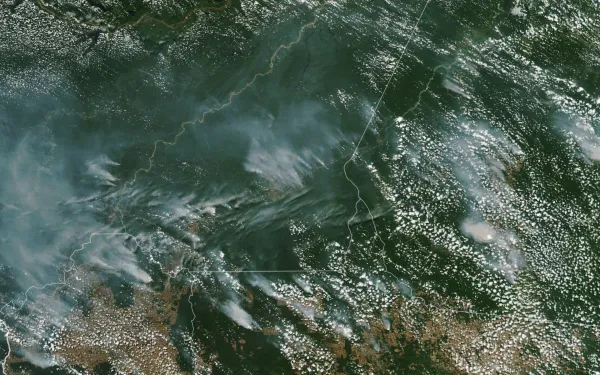
AIDA Statement on the crisis in the Amazon
AIDA expresses deep concern about the grave situation confronting the Amazon, which is being ravaged by a large number of fires in Brazil and other Amazonian countries. The consequences of these fires are devastating for the biodiversity of the area and for the communities that inhabit it, but also for the planet, which is facing a climate crisis that requires increasingly urgent and effective actions. The Amazon holds 20% of the Earth's unfrozen fresh water and is home to a quarter of the world's species. In addition, the Amazon jungle releases about 20% of the oxygen we breathe and stores 90 to 140 billion tons of carbon dioxide, regulating the global climate. The international scientific community has emphatically pointed out that the destruction of tropical forests causes 20% of greenhouse gas emissions. For this reason, the Amazon ecosystem is vital for mitigating the climate crisis. The current fires demonstrate that the Amazon is now more vulnerable than before due to a combination of factors, including increased droughts, deforestation, unsustainable use of soil and subsoil, and the increase in global temperatures. The record number of fires in the Amazon rainforest aggravates the climate crisis and with it the threat of increasingly harmful natural disasters. The policies, rhetoric and actions of Jair Bolsonaro's government have the same impact, actively dismantling due protection of the Amazon and its indigenous peoples. They irresponsibly promote the expansion of the agricultural, livestock and extractive frontier in the Amazon, resulting in increased deforestation and the consequences we are witnessing today. This worrying trend is repeated in the rest of the countries called upon to protect the Amazon basin—Bolivia, Peru, Ecuador, Colombia and Venezuela—whose governments also have not done enough to preserve the Amazon. AIDA urges the governments of the Amazon basin to adopt urgent measures to stop the fires. In addition, we call on citizens and the international community to pressure the governments of Brazil and the other countries of the region to reverse course and effectively protect the Amazon, its biodiversity, and the people who depend on it. We demand that governments take concrete actions to: Strengthen institutions and environmental norms, Immediately suspend rhetoric that encourages deforestation and the destruction of the Amazon, Stop the indiscriminate expansion of the agricultural, livestock and extractive frontier in the area, Adopt proper land use and planning, Ensure the existence and restoration of ecosystem life cycles, and Control deforestation and conserve the Amazon with the financial and technical support of multilateral international cooperation. Learn more about our work in the Amazon. PRESS CONTACT: Victor Quintanilla (México), [email protected], +5215570522107
Read more
The GCF should thoroughly assess the policies and practices of the BNDES and require conditions for its accreditation
The Board of the Green Climate Fund (GCF) is considering an application for accreditation of the Brazilian National Development Bank (BNDES, Banco Nacional de Desenvolvimento Econômico e Social). The accreditation process of the BNDES is an opportunity to strengthen the Bank’s policies and procedures designed to identify, address and remediate environmental and social impacts linked to its activities and operations. With the new administration of President Jair Bolsonaro, Brazil is suffering severe setbacks in its environmental, social and climate policies and agenda. Brazilian environmental agencies are being dismantled, while renowned and effective mechanisms such as the Amazon Fund are at risk of becoming inoperative or even eliminated. In such a context, the effectiveness of the country’s environmental and social (E&S) governance and its instruments, agencies and institutions, risks being severely undermined. In order to fulfil its mandate to promote a paradigm shift towards low-emission and climate resilient development pathways within the context of sustainable developmentthe GCF should ensure that local systems and institutions are adequately equipped to deliver the sustainability outcomes intended by the Fund. The GCF should carefully assess BNDES’ existing E&S policies and procedures and ensure that approval is conditioned upon commitments and measurable steps by the Bank, with political support from the Brazilian government, to further strengthen its policies and procedures to address following shortcomings related to: Disclosure of environmental and social (E&S) information; Design of E&S policies and monitoring tools; Human rights standards and the rights of indigenous peoples and other traditional communities; Grievance mechanism; Commitments concerning climate change. Read the full statement here
Read more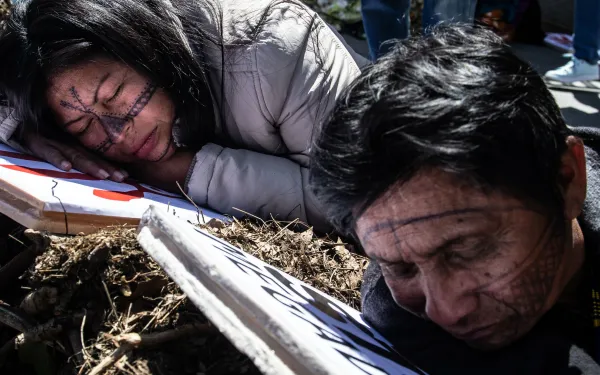
Protests Challenge Hydropower Companies at Global Event in Paris
Civil society organizations denounce corporate attempts to label hydroelectric dams as “green energy,” citing human rights abuses and environmental damage. Paris, France—A coalition of activists, organizations and indigenous leaders convened a series of events this week in light of the opening of the World Hydropower Conference, calling attention to the socially and environmentally destructive nature of hydroelectric dams, as well at their climate-aggravating impacts. From May 14-16, the International Hydropower Association (IHA) is hosting its biannual World Hydropower Congress in central Paris. The industry seeks to portray hydroelectric dams as a clean source of renewable energy, which they claim are essential for delivering the Paris Climate Agreement and the United Nations’ Sustainable Development Goals. However, a broad coalition of environmental and human rights organizations, together with social movements, argue that the dam industry’s claims amount to greenwashing, and are aimed at capturing new sources of finance from institutions like the Green Climate Fund. They point to numerous cases where hydropower projects have provoked disastrous consequences for people and the environment. Citing mounting scientific evidence that dams are a significant source of greenhouse gases—CO2and, particularly, methane—civil society groups also highlight the role of dams in aggravating climate change. A joint statement signed by more than 250 civil society groups from 70 countries calls attention to the false promises of hydropower and the urgent need for truly sustainable energy solutions. It is available in five languages. These and other issues—including the impacts of hydroelectric dams on natural and cultural heritage sites—were debated by scientists, activists and representatives of affected communities from Brazil, Colombia, Myanmar and Turkey in a parallel event to the IHA Congress, held at the Town Hall of the 6thArrondissement of Paris on May 13. The conference was organized by the NGOs Planète Amazone, GegenStrömung / CounterCurrent, Rivers without Boundaries, International Rivers, and AIDA. Myint Zaw, an activist and researcher from Myanmar who was awarded the 2015 Goldman Prize, was one of the speakers at the conference. “The food security of millions of people is threatened by dam projects planned for the Irrawaddy River that would impact important farmlands needed for rice production along the river and in delta region,” Zaw said. During Tuesday’s opening of the World Hydropower Congress, representatives of indigenous communities, social movements and non-governmental organizations protested together with activists from Extinction Rebellion in front of the Espace Grande Arche in La Défense. A focus of the protest was to call attention to the growing number of human rights and environmental activists murdered in dam-related conflicts. “Miguel Ángel Pabón Pabón disappeared as a result of his activism against the Hidrosogamoso Dam in Colombia, which has continued despite severe human rights violations,“ said Juan Pablo Soler from Movimiento Ríos Vívos of Colombia, mentioning one of many defenders lost. In Gabon, the Kingélé and Tchimbélé dams are adversely affecting populations living beside rivers. “During heavy rains, some villages are flooded when reservoirs overflow. Rivers turn into lakes, water becomes polluted and fish die intoxicated. There is no structure to help us on the ground, nor does the government hear our complaints, which is why we look abroad to issue a distress call,” proclaimed Assossa, a Pigmy leader. Three representatives of the Munduruku people from the Brazilian Amazon—Chief Arnaldo Kabá, Alessandra Korap and Candido Waro Munduruku—participated in both the parallel conference and the protest. After the protest, the Munduruku attempted to hand deliver a letter to the corporate headquarters of Électricité de France (EDF), majority-controlled by the French government. EDF is involved in the controversial Sinop dam on the Teles Pires River, a tributary of the Tapajos, and has contributed to studies that promote the São Luiz do Tapajós mega-dam, which would flood Munduruku territory. EDF representatives refused to speak with the Munduruku leaders. “EDF invades our territory, destroys our rivers, our territory and our sacred places. And when we come here to deliver a letter to this huge company, we’re barred,” stated Alessandra Munduruku. “We’re sad, but we’re determined to continue our struggle to defend our territory.” Press Contacts: Gert-Peter Bruch, Planète Amazone, [email protected] (French, English), + 33 (0)7 81 23 92 91 Brent Millikan, International Rivers, [email protected] (English, Portuguese), +55 61 8153-7009 Thilo F. Papacek, GegenStrömung – CounterCurrent / Forum Umwelt und Entwicklung, [email protected] (German, Portuguese, Spanish, English), ++49 151 412 145 19 Eugene Simonov, Rivers without Boundaries, [email protected](Russian, English, Chinese), +79 (0) 165 491 22 Resources: Further information about the parallel event from May 13: http://www.transrivers.org/2019/2634/ The joint statement, available in Chinese, English, Portuguese, Russian and Spanish can be downloaded here: https://drive.google.com/open?id=1pgS3YHm4zy5_LFSSjRe0KH-DMK773DQI Link to the Munduruku letter of protest to EDF: Électricité de France (Portuguese and English):https://drive.google.com/file/d/1TxqIiOuJDxNUI2YKPtUBrE_wucJLFl-E/view?usp=sharing Press photos available free of charge (Credit: Todd Southgate): https://tinyurl.com/y34b2g7u Clip reel of protest at opening of IHA Congress and Munduruku attempt to deliver letter at IHA headquarters: https://youtu.be/9BrI3AqVnXE Fact sheet from CounterCurrent on hydroelectric dams and UN Sustainable Development: tinyurl.com/y6mbjqj2
Read more