
Project
Foto: Andrés ÁngelStopping the spread of fracking in Latin America
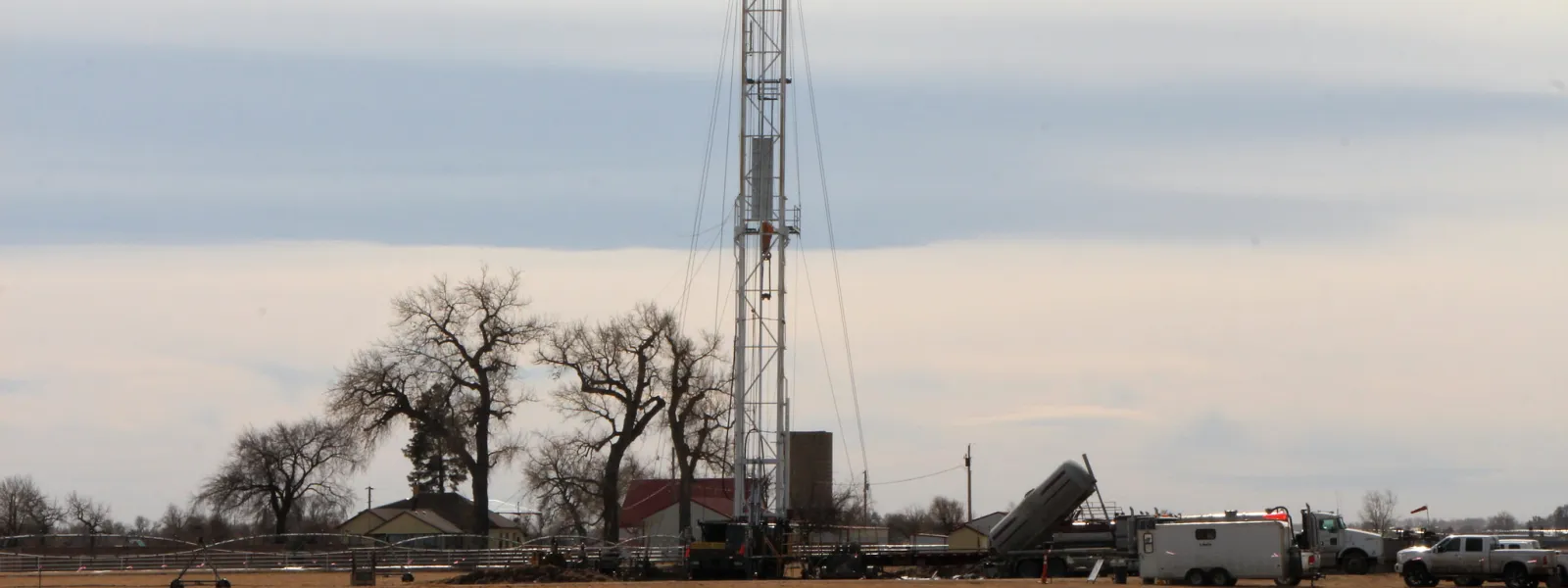
“Fracking” is short for hydraulic fracturing, a process used to extract oil and natural gas from historically inaccessible reservoirs.
Fracking is already widespread in the global North, but in Latin America, it is just beginning. Governments are opening their doors to fracking without understanding its impacts and risks, and without consulting affected communities. Many communities are organizing to prevent or stop the impacts of fracking, which affect their fundamental human rights. But in many cases they require legal and technical support.
What exactly is fracking, and what are its impacts?
A straight hole is drilled deep into the earth. Then the drill curves and bores horizontally, making an L-shaped hole. Fracking fluid—a mixture of water, chemicals, and sand—is pumped into the hole at high pressure, fracturing layers of shale rock above and below the hole. Gas or oil trapped in the rock rises to the surface along with the fracking fluid.
The chemical soup—now also contaminated with heavy metals and even radioactive elements from underground—is frequently dumped into unlined ponds. It may seep into aquifers and overflow into streams, poisoning water sources for people, agriculture, and livestock. Gas may also seep from fractured rock or from the well into aquifers; as a result, water flowing from household taps can be lit on fire. Other documented harms include exhausted freshwater supplies (for all that fracking fluid), air pollution from drill and pump rigs, large methane emissions that aggravate global warming, earthquakes, and health harms including cancer and birth defects.
AIDA’s report on fracking (available in Spanish) analyzes the viability of applying the precautionary principle as an institutional tool to prevent, avoid or stop hydraulic fracturing operations in Latin America.
Partners:

Related projects
Communities affected by Hidroituango dam in Colombia file complaint at IDB
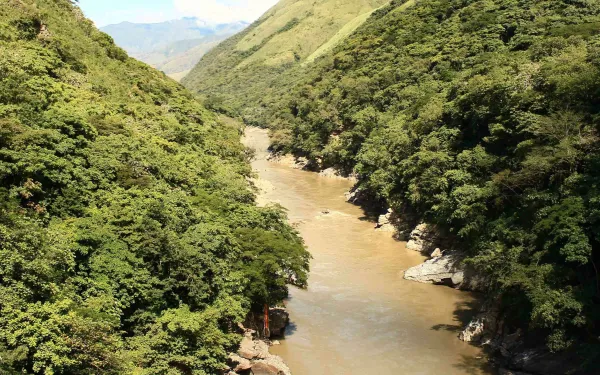
In the midst of the humanitarian crisis caused by the Hidroituango dam project in the Cauca river basin, local communities request that the Inter-American Development Bank (IDB)’s accountability mechanism investigate whether the financial entity violated its environmental and social standards when investing in the project. Washington, D.C. Communities affected by the construction of the Hidroituango dam in Antioquia, Colombia, filed a complaint with the Independent Consultation and Investigation Mechanism (MICI) of the Inter-American Development Bank (IDB) at its Washington, DC headquarters today. The complaint requests that this accountability office investigate whether the IDB, through both its public and private lending arms, violated its own social and environmental standards when it invested in the project. Through the complaint, the affected communities, represented by Movimiento Ríos Vivos Antioquia, highlight that the bank did not follow its policies that investment projects must be sustainable, participatory and respectful of national legislation in the case of HidroItuango. There was no adequate environmental impact assessment, communities did not have access to participation or information, and the project occurs in a context of human rights violations and disproportionate use of force. It has also endangered the lives of thousands of people, who have had to be evacuated ad hoc due to the dam crisis. This contradicts the social and environmental standards required of IDB investments. The hydroelectric plant will be the largest in Colombia, with a 49 mile (79 km) reservoir that will flood a surface of 11,120 acres (4,500 hectares). The IDB Group has financed the project through various types of investment. In 2012, it approved a $2 million in technical cooperation for the Colombian State and in 2016, $550 million in direct investments to the company in charge of the project, Empresas Públicas de Medellín (EPM). In addition, the IDB manages a $1 billion loan package for the project, with funds from multiple institutional investors, including banks in Europe (KfW IPEX (Germany), BNP Paribas (France), BBVA y Banco Santander (Spain)), Asia (ICBC (China), Sumitomo Mitsui (Japan)), and Canada (CDPQ). The MICI responds to complaints from individuals and communities affected by IDB-financed development projects. The communities settled in the Cauca river basin and its tributaries that are affected by Hidroituango, are accompanied in the complaint process by the Center for International Environmental Law (CIEL), Interamerican Association for Environmental Defense (AIDA) and International Accountability Project (IAP). The claim comes amid a humanitarian crisis in the dam construction area and a wave of increasing violence against people who are defending their territory and water and oppose the project. What began on April 28 with the obstruction of one of the dam's tunnels has resulted in landslides, floods, and thousands of people displaced from their homes. All this has exposed the inadequate evaluation of project impacts and the poor environmental regulation under which the project was authorized on every front. The state of emergency in the area is still in effect, and neither the Colombian government or the company has ruled out the risk of the dam collapsing. The members of Movimiento Ríos Vivos have suffered multiple threats, intimidations, and rights violations. Between May 2 and 8, two of its members were killed. In addition, the region where the dam is located has been affected by historical violence and armed conflict. press contacts Isabel Zuleta, Movimiento Ríos Vivos Antioquia, +57 3217347264, [email protected] Carla García, Center for International Environmental Law, [email protected] Astrid Puentes, Interamerican Association for Environmental Defense, [email protected] Carlos Lozano, Interamerican Association for Environmental Defense, [email protected] Alexandre Sampaio, International Accountability Project, [email protected]
Read moreCommunities affected by Hidroituango dam in Colombia file complaint at IDB
In the midst of the humanitarian crisis caused by the Hidroituango dam project in the Cauca river basin, local communities request that the Inter-American Development Bank (IDB)’s accountability mechanism investigate whether the financial entity violated its environmental and social standards when investing in the project. Washington, D.C. Communities affected by the construction of the Hidroituango dam in Antioquia, Colombia, filed a complaint with the Independent Consultation and Investigation Mechanism (MICI) of the Inter-American Development Bank (IDB) at its Washington, DC headquarters today. The complaint requests that this accountability office investigate whether the IDB, through both its public and private lending arms, violated its own social and environmental standards when it invested in the project. Through the complaint, the affected communities, represented by Movimiento Ríos Vivos Antioquia, highlight that the bank did not follow its policies that investment projects must be sustainable, participatory and respectful of national legislation in the case of HidroItuango. There was no adequate environmental impact assessment, communities did not have access to participation or information, and the project occurs in a context of human rights violations and disproportionate use of force. It has also endangered the lives of thousands of people, who have had to be evacuated ad hoc due to the dam crisis. This contradicts the social and environmental standards required of IDB investments. The hydroelectric plant will be the largest in Colombia, with a 49 mile (79 km) reservoir that will flood a surface of 11,120 acres (4,500 hectares). The IDB Group has financed the project through various types of investment. In 2012, it approved a $2 million in technical cooperation for the Colombian State and in 2016, $550 million in direct investments to the company in charge of the project, Empresas Públicas de Medellín (EPM). In addition, the IDB manages a $1 billion loan package for the project, with funds from multiple institutional investors, including banks in Europe (KfW IPEX (Germany), BNP Paribas (France), BBVA y Banco Santander (Spain)), Asia (ICBC (China), Sumitomo Mitsui (Japan)), and Canada (CDPQ). The MICI responds to complaints from individuals and communities affected by IDB-financed development projects. The communities settled in the Cauca river basin and its tributaries that are affected by Hidroituango, are accompanied in the complaint process by the Center for International Environmental Law (CIEL), Interamerican Association for Environmental Defense (AIDA) and International Accountability Project (IAP). The claim comes amid a humanitarian crisis in the dam construction area and a wave of increasing violence against people who are defending their territory and water and oppose the project. What began on April 28 with the obstruction of one of the dam's tunnels has resulted in landslides, floods, and thousands of people displaced from their homes. All this has exposed the inadequate evaluation of project impacts and the poor environmental regulation under which the project was authorized on every front. The state of emergency in the area is still in effect, and neither the Colombian government or the company has ruled out the risk of the dam collapsing. The members of Movimiento Ríos Vivos have suffered multiple threats, intimidations, and rights violations. Between May 2 and 8, two of its members were killed. In addition, the region where the dam is located has been affected by historical violence and armed conflict. press contacts Isabel Zuleta, Movimiento Ríos Vivos Antioquia, +57 3217347264, [email protected] Carla García, Center for International Environmental Law, [email protected] Astrid Puentes, Interamerican Association for Environmental Defense, [email protected] Carlos Lozano, Interamerican Association for Environmental Defense, [email protected] Alexandre Sampaio, International Accountability Project, [email protected]
Read more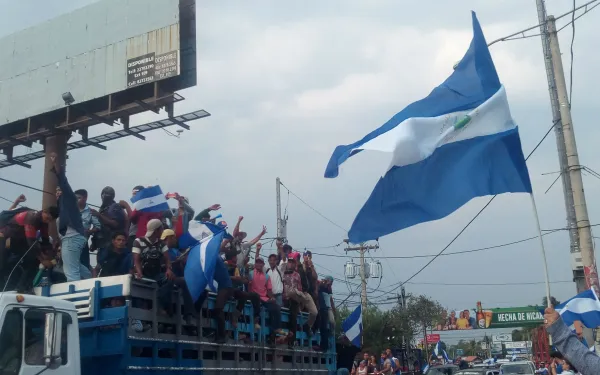
The flame that ignited Nicaragua’s protests
On April 3, a wildfire broke out in the Indio Maíz Biological Reserve in southeast Nicaragua. The government’s slow and inadequate response to the fire marked the beginning of a struggle that continues to this day—a struggle to uphold democracy and protect our rights. Using the hash tag #SOSIndioMaíz, hundreds of university students organized a peaceful protest to demand the government of President Daniel Ortega, in its eleventh year, act quickly to battle the blazes and save the reserve. The students gathered peacefully in the streets on April 12 and 13, but their protest was repressed by the police and para-police groups. Located along the border with Costa Rica, Indio Maíz is considered the second most important natural reserve in the country and one of the largest in Central America. According to experts, the site is vital for the maintenance of a unified block of tropical forest through which thousands of wild animals travel—it connects with Barra de Colorado National Wildlife Refuge and Tortuguero National Park, both in Costa Rica. Indio Maíz also protects several of Nicaragua’s most important water basins. Despite the reserve’s importance, the government waited three days to react to the fire. Then, it filled the area with military personnel and prevented independent media from entering. When the NGO Fundación del Río informed the people of the late response, the government threated to cancel their legal status. Costa Rica’s offer to send firefighters to help battle the blaze was rejected. What resulted was the destruction of more than 5,000 hectares of forest in the reserve’s core area, a disaster that nationally renowned scientist Jaimes Incer Barquero called “the most serious environmental problem in the history of Nicaragua.” The awakening of a nation Many of the young people who demanded the protection of Indio Maíz took to the streets again on April 18 to show their dissatisfaction with reforms to the Social Security Law, announced two days before. Environmentalists, pensioners, journalists, black and indigenous activists, and people from across the national spectrum joined them. The government’s repression was repeated and the message was clear: in Nicaragua protest was forbidden. The next day, April 19, the demonstrations grew exponentially. Thousands of people joined from every corner of the country. With the growing crowds, the government’s response intensified as well. A wave of state violence and repression has, as of May 21, left 76 people dead and 868 wounded, most in the context of the protests; five remain in critical condition. In addition, 438 people have been arrested, among them students, civilians, human rights defenders and journalists. The figures above come from the preliminary observations of the Inter-American Commission on Human Rights, which made a special visit to the country in May. Undoubtedly, as journalist Carlos Fernando Chamorro has stated, it has been “the worst bloodbath in the history of Nicaragua during peacetime.” Environmental defense in Nicaragua Over the last decade, environment struggles like that of Indio Maíz have been gaining strength across the nation. One of the most iconic has been the movement demanding the cancellation of the law that authorized the Interoceanic Grand Canal—the Antichannel Campesino Movement, led by the fearless Francisca Ramírez. The canal threatens to strip thousands of Nicaraguans of their land and put the country’s biodiversity at grave risk. In their five years of resistance, the movement has been victim to repression, threats and persecution. Another example can be found in the National Environmentalist Movement Against Industrial Mining. This year, in a public hearing for the Inter-American Commission on Human Rights, members denounced human rights violations and the criminalization of defenders in the context of extractive industries. These struggles have faced off against a State with corruption problems, weakened institutions, alliances with private economic interests, and little will to protect natural resources. Added to this are the criminalization of citizen protest and the persecution of people who speak out in defense of the environment and human rights. But Nicaragua has changed. The flames of Indio Maíz revived the people’s consciousness and ignited their desire for free manifestation, a right guaranteed by our Political Constitution (but denied by the current government’s reign). The peaceful protests of April and May are the result of a decade of abuses and the systematic denial of our rights. Nicaraguans are fighting today for the true democratization of our country, which I hope will come hand-in-hand with respect for our right to a healthy environment.
Read more