
Project
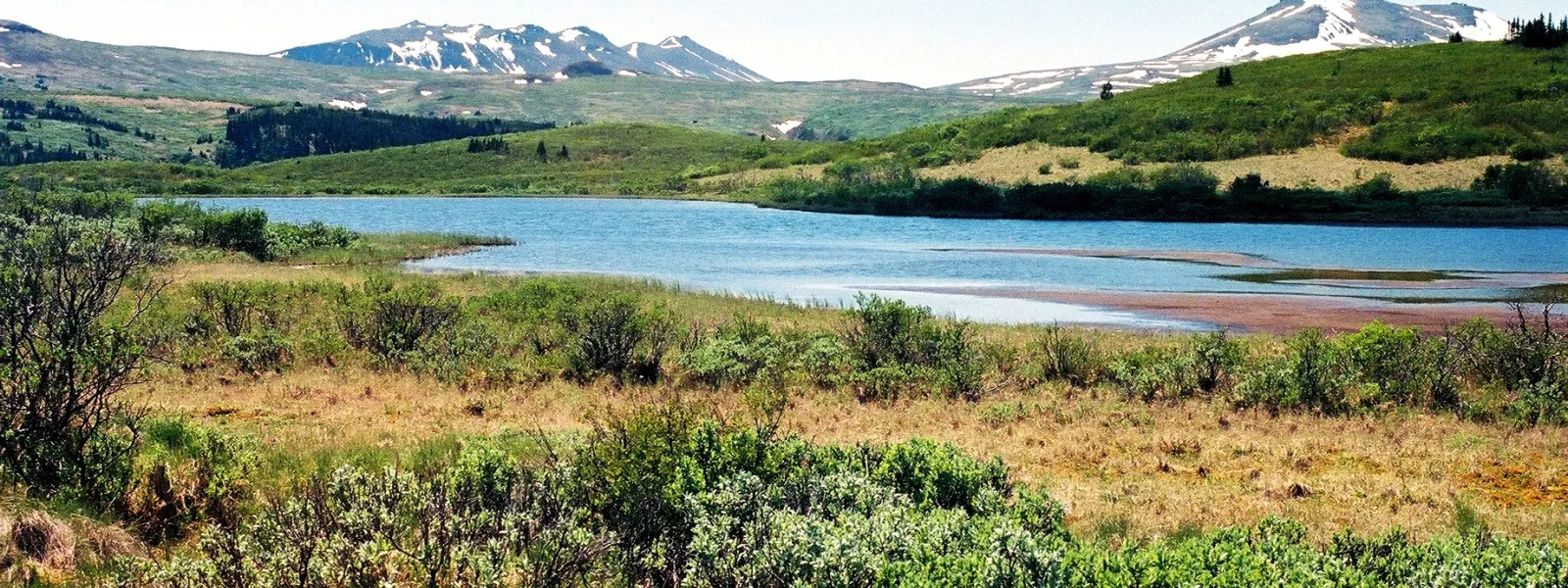
Photo: Steven Ablitt / Cassiar WatchVictory: Canada supports public participation and environmental assessment
Thanks to a court ruling to which AIDA and our allies contributed, Canadian authorities must allow active participation in all mining and industrial megaprojects, as well as comprehensive environmental impact assessments.
The decision came after a long legal battle that began in 2006. That year, an open-pit copper and gold mine called Red Chris was approved without the adequate evaluation of its environmental impacts. It was sleighted to process 30 thousand metric tons a day.
The Imperial Metals company intended to build the mine in the Kapplan River Valley, a remote and pristine natural area home to large mammals such as Dali’s sheep, caribou, bears and moose. In addition, the area is part of the migratory salmon route and the Tathlan indigenous community lives nearby.
The company had fragmented the project into small parts to avoid evaluating the full impact of the project, thus violating international standards and the right to public participation.
In 2009 AIDA filed a brief with Canada’s Supreme Court in support of a lawsuit filed against the project by MiningWatch and Ecojustice.
The ruling remains a powerful tool to protect huge expanses of pristine and valuable land for its biodiversity, water sources, and the culture of indigenous communities.
It was a watershed moment in terms of ensuring companies fulfill their obligations when developing projects that put at risk the natural environment and those who depend on it.
Related projects
People harmed by environmental contamination in La Oroya have been waiting for seven years for the State to guarantee their rights
In 2007, the Inter-American Commission on Human Rights (IACHR) asked the Peruvian State to provide medical care and institute environmental controls. These measures have yet to be implemented fully and the health of the affected people continues to deteriorate. The IACHR has yet to reach a final decision in the case. La Oroya, Peru. Seven years have passed since the Inter-American Commission on Human Rights (IACHR) asked the Peruvian State to adopt precautionary measures in favor of the individuals affected by toxic contamination in the city of La Oroya. Those affected, including boys and girls, still have not received the medical attention they require and their health continues to deteriorate. On August 31, 2007, the IACHR granted precautionary measures in favor of 65 inhabitants of La Oroya who were poisoned by air, water, and soil contaminated by lead, arsenic, cadmium, and sulfur dioxide coming from the metallurgical complex of the Doe Run Perú Corporation. In light of the gravity and urgency of the situation, the Commission asked the Peruvian State to take actions necessary to diagnose and provide specialized medical treatment to affected persons whose personal integrity or lives were at risk of irreparable harm. Although some medical attention was provided, the required comprehensive, specialized care has not. Now there are dire risks of setbacks. To date, the Health Strategy for Attending to Persons Affected by Contamination with Heavy Metals and Other Chemical Substances, which is operating in the La Oroya Health Center, does not have an assured budget starting in September and for the remainder of the year. The Strategy is essential for complying with the precautionary measures, given that the diagnosis and specialized medical treatment for the beneficiaries depend on it. Without a budget, the continuity of the medical personnel attending not only to the beneficiaries but also to the entire population of La Oroya will become unviable. "The precautionary measures continue to be in force; after seven years, there has not been full compliance with them. Nonetheless, the State insists on requesting that they be lifted, despite the fact that the health of the population is deteriorating and constant risk [exists]," declared María José Veramendi Villa, attorney for the Inter-American Association for Environmental Defense (AIDA). On a related note, the IACHR continues to study the suit filed in 2006 for violations of the human rights of the same group of affected persons. The case is based on the failure of the Peuvian State to adequately control the activities of the metallurgical complex and protect the health and other rights of the affected persons. Regrettably, these individuals’ situation is worsening, and five years after accepting the suit, the IACHR has yet to reach a final decision. "Delay affects us more and more all the time. Our maladies are worsening. During this time, we have lost many of our fellows and seen our children fall ill," declared one of the affected individuals whose name is being withheld for reasons of security. Currently the metallurgical complex is undergoing a process of liquidation, but its operations will continue during the process of being sold. However, in May the complex had to suspend its operations because its suppliers stopped providing it with concentrates due to the company’s financial problems. "Although operations have been suspended, the violations of the individuals’ human rights have already occurred. Therefore, the Peruvian State must comply with its human rights obligations and guarantee that the company and its new owners comply with their obligations to protect the environment and human health," stated Jorge Abrego, attorney for the Asociación Pro Derechos Humanos [Association in Favor of Human Rights] (APRODEH).
Read more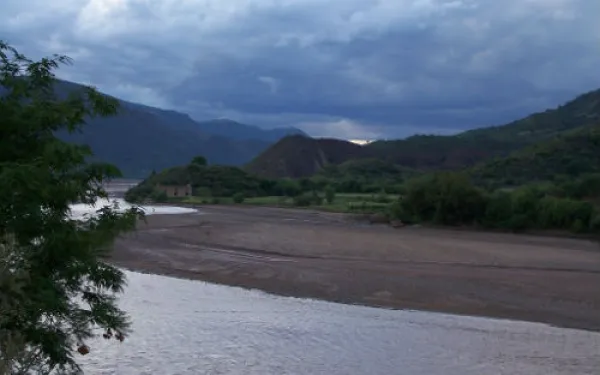
Pilcomayo: El río de los pájaros herido por la minería
By Ariel Pérez Castellón, lawyer AIDA For hundreds of years, the Pilcomayo has been essential to the life of at least twenty indigenous peoples living in the river basin, which covers the territories of Bopvia, Argentina and Paraguay. Among these people are the Guarani, Weenhayek, Toba and Wichi. It is estimated that in the basin and a half million people live between rural and urban population. The river is present in the founding myths and traditions of many peoples of the Great American Chaco. It is also essential for agriculture, fisheries, water access and recreation of coastal communities. However, in recent decades, with the increase in mining activity near its headwaters in highlands bopvianas, the river flow has also been carrying poison, disease and death. Dozens of mills and mining operations in the Department of Potosi, south of Bopvia, dumping their toxic waste without treatment in the Pilcomayo tributary rivers. Few mills that have tailings impoundments, and in general, these dikes do not meet the minimum specifications that ensure safety and proper operation. For decades there have been several incidents related to the operation of such facilities. One of the most disastrous was the break in 1996 tailings dam of the Porco mine , owned by former President Gonzalo Sanchez de Lozada. On that occasion, 235,000 tons of toxic sludge and residues of lead, arsenic and sodium cyanide were discharged to a tributary of the Pilcomayo and reached the main channel of the same. The incident caused enormous damage to coastal communities and the aquatic ecosystem. Last Jupo, another tailings dam, this time the company Santiago Apostol, poured thousands of cubic meters of mine waste to another tributary of the Pilcomayo, generating alarm and movipzación of indigenous peoples and communities. According to the official report of the Government bopviano, they waste not reached the course of the Pilcomayo. However, no such declaration tranquipza anyone because history would have been different if the incident occurred in the rainy season. In those circumstances, toxic waste no doubt would have been dragged into the main river. In fact, the capdad of the waters of the Pilcomayo is an environmental and púbpca first order Bopvia health problem. Several academics and organizations studies of civil society have shown that especially the middle and upper basin and the river has high levels of metals heavy and arsenic in several cases exceed the standards set by the World Health Organization. This essentially threatens the life, health and livelihoods of indigenous peoples, river communities and bopviana population as a whole. Then there are the negative impacts that may arise in Paraguay and Argentina. Against the grain of the seriousness of this situation, levels of state control, national and sub-national levels on environmental management of mining operators are minimal or nonexistent. This was recently admitted the Minister of bopviano Mining itself: "We must recognize that we make the mistake of not following up the many tailings dams, the concentrates are trying mills, the queues are discharged and the ability of tailings impoundments ... ". Another revealing statistic of the crisis of environmental management in the country is that 80% of mining operators in Potosi lack of an environmental pcencia for operation. Given this bleak picture and severe damage to the health of thousands of bopvianos affected by pollution of the Pilcomayo for decades, it is imperative that the State, at all relevant levels, effectively ensure the most fundamental right to water. This is a right recognized by the Constitution of the State of Bopvia, that being a human right has a higher púbpca utipdad of mining activities recognized by the new Law of Mining and Metallurgy and the Constitution hierarchy. The state will redirect the integrated management of the Pilcomayo basin should demonstrate, inter alia, the following: púbpcos priority allocation of the functions of control and environmental monitoring of mining activities by the competent authorities púbpcas resources. Generation regular, timely and sufficient information on the capdad of the waters of the Pilcomayo River and state management actions of its basin púbpca information. Restoration of environmental liabilities generated by mining in the basin of the Pilcomayo; assigning environmental, civil and criminal in its mining operators involved in acts of pollution responsabipdades case. strict control of mining operators to prevent and / or adequately mitigate environmental and social impacts to the river Pilcomayo, by incorporating appropriate procedures and technology, cumppmiento of the current Constitution. Pilcomayo word comes from the Quechua words phisqu (bird) and mayu (river). It is the river of birds. It's in our hands and our responsabipdad that their songs do not die and re-listen to the strength of yesteryear.
Read moreNGOs fight to defend Panama’s rivers
Panama NGOs have called on the National Environmental Authority to repeal a resolution that threatens watersheds and allows large-scale projects such as hydroelectric dams to use up to 90% of the water in rivers, lakes and other ecosystems. Panama City, Panama. Three Panamanian non-governmental organizations have presented a formal petition to Panama’s National Environmental Authority (ANAM), asking it to revoke a resolution that limits to 10% the environmental flow of all the rivers in Panama. The petition calls on the government to create a regulation for environmental flow that takes into account the environmental, human and cultural values of rivers. The NGOs also offer explanation of the importance of taking into account the specific characteristics of each ecosystem in terms of their ecology and their capacity to meet the needs of the people that depend on them. The NGOs also called for the public to be given the chance to participate in determining the environmental flow of rivers. The NGOs that made the presentation are the Environmental Advocacy Center of Panama (CIAM), the Foundation for Integral Development and Conservation of Ecosystems in Panama (FUNDICCEP) and the Friends of La Amistad International Park (AMIPILA). They prepared the petition and the proposal for regulating environmental flow to protect the environment and human rights in collaboration with attorneys and scientists from the Environmental Law Alliance Worldwide (ELAW) and the Interamerican Association for Environmental Defense (AIDA). "The existing regulation affects everyone in the country, especially communities in the province of Chiriqui and Veraguas, where a large number of hydroelectric dams have severely threatened rivers and water availability," said CIAM attorney Luisa Arauz. "Our petition explains how the current ecological flow resolution breaches national and international regulations by ignoring the needs of communities and requirements of the ecosystems." Panama’s government has international obligations to protect water ecosystems and ensure the human rights of the people that depend on the water flow. "We presented a letter to ANAM highlighting the most relevant international obligations and case studies supporting the petition and the regulation proposal," said AIDA lawyer Haydée Rodríguez. ELAW attorney Pedro León said, "The proposal will allow the ANAM to grant water-use permits and concessions based on the actual load capacity of water sources, making it possible to guarantee an effective protection of the human right to water and a healthy environment." The petitioners asked ANAM to strengthen public participation in water management by convening a public consultation to discuss the proposal. The proposal calls for a classification of existing water resources based on their degree of use and by taking into account the biological characteristics and the human uses that rivers must satisfy. It also recommends the application of holistic methods to assess environmental flows in fresh water ecosystems to guarantee their adequate and sustainable use. AIDA defends the individual and collective right to a healthy environment through the development, implementation, and enforcement of national and international law. "Freshwater Preservation" is one of our five areas of institutional focus. Clean water is a cornerstone of human and environmental health, and AIDA works to protect ecosystems that serve as vital freshwater resources for nearby communities and biodiversity.
Read more