
Project
Victory: Court ends the “lawful” killing of endangered green sea turtles
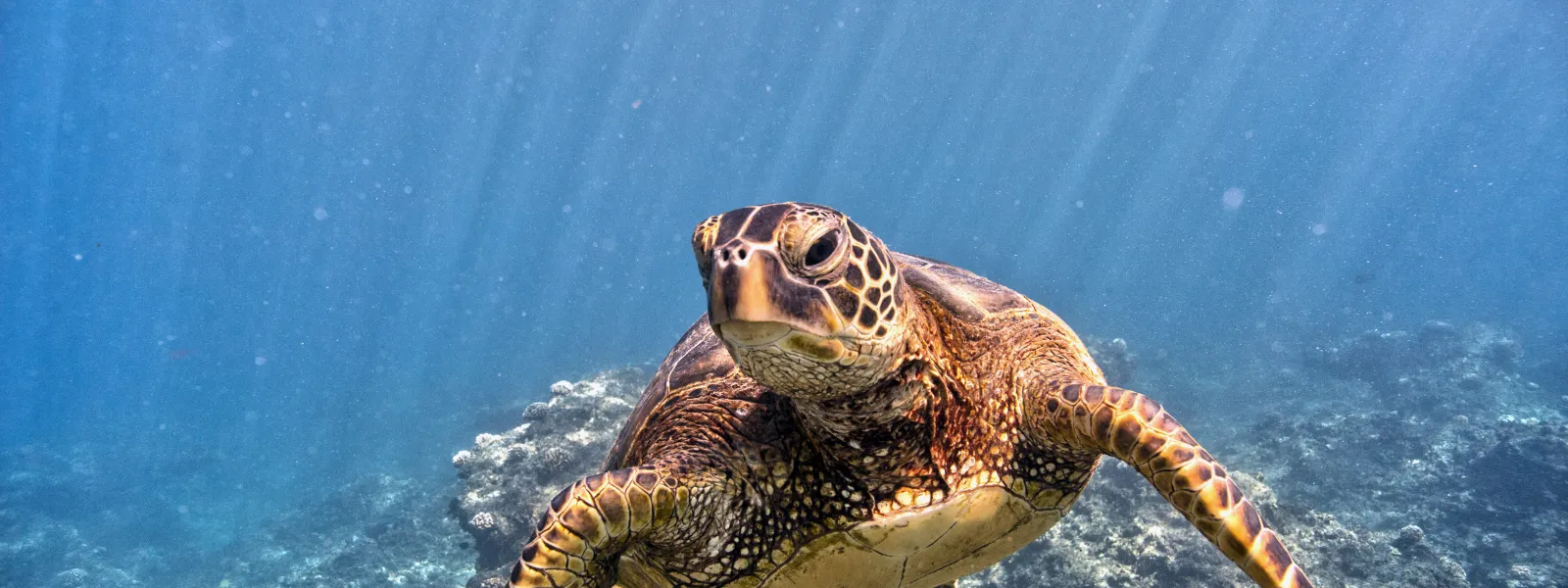
In February of 1999, the Constitutional Court in Costa Rica declared an end to the "lawful" killing of endangered green sea turtles. The ruling is an important victory for the green sea turtle and potentially other species left vulnerable by their host countries.
Costa Rica has the privilege and responsibility of being a haven for one of the largest remaining populations of this endangered species of marine turtle in the Atlantic Ocean. Every two or three years, female green sea turtles, many of which are decades old, slowly plod from their ocean homes to nest on a 35 kilometer long beach between the Tortuguero and Parismina River.
Costa Rica, rather than fully protecting these ancient guests, previously had a law allowing for the capture and slaughter of almost two thousand green sea turtles annually. Unfortunately, poachers exploited the law to kill many more than the legal limit, with the survival of the sea turtles jeopardized.
In response to inaction by the Costa Rican government, and to safeguard the survival of the green sea turtle, AIDA worked through its partner organization CEDARENA to file suit and challenge the law.
In the law suit, AIDA and CEDARENA argued that the law violated the Costa Rican constitutional guarantee of an environment that is healthy and “in ecological equilibrium.” We presented hard evidence of the hidden impact of the law on the sea turtles. The Court ruled in our favor, and annulled the law.
The ruling itself does not end the threat to green sea turtles. It may however, provide some breathing room for conservationists to concentrate on stopping illegal poaching. Hopefully, they will succeed.
Related projects
Science in the Service of Environmental Justice
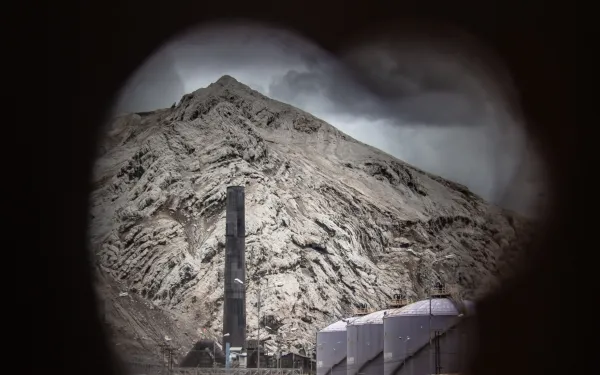
By David Cañas and Mayela Sánchez* Science—or rather, the sciences—are the systems of knowledge that different social groups have developed over time to describe the phenomena of nature and society. Thanks to these knowledge systems, humanity has been able to find solutions to countless challenges, and today, more than ever, they must respond to global crises such as climate change, pollution, and biodiversity loss.Understanding ecosystem processes is essential for protecting the environment and providing verifiable, replicable evidence of natural phenomena and the impacts of human activities. It also enables the development of innovative solutions to protect and restore the environment.For science to contribute meaningfully to environmental justice—a concept centered on ensuring that all people enjoy a healthy environment—scientific work must be grounded in the realities of the people and communities affected by environmental degradation, who live in or rely on ecosystems vulnerable to harm. It must also be built on empathy and respect for other forms of knowledge, while seeking to reduce social inequalities.At AIDA, science is a central part of our work, supporting and complementing the strategic litigation we pursue to protect a healthy environment in Latin America. Through science, we can demonstrate the environmental impacts caused by human activities and hold those responsible accountable. How Do We Do Science at AIDA? The AIDA scientific team is a multidisciplinary group of professionals specializing in diverse fields, including geography, geology, biology, marine biology, oceanography, anthropology, and economics.Among other tasks, they collect and develop scientific evidence to strengthen the legal arguments in the cases we support across our various lines of work—from protecting the ocean and other critical ecosystems to defending human rights, such as the right to health and access to safe drinking water.The strategic use of science has been central to AIDA’s work since the organization was founded more than 25 years ago. One early example is the case of La Oroya in Peru, where a group of residents sued the government for failing to protect them from decades of heavy metal pollution caused by a metallurgical complex.Then we did something that had not been done before: we connected existing studies with the lived reality of La Oroya. This approach allowed us to demonstrate the relevance of the case and establish a clear link between pollution and its impact on the health of the city’s residents. Our analysis, compiled in the report La Oroya Cannot Wait, served to build the legal case and formulate proposals to the Peruvian government for corrective and preventive measures to address the problem. In 2024, in a decision that set a historic precedent for state oversight of industrial pollution, the Inter-American Court of Human Rights held the Peruvian state responsible and ordered it to adopt comprehensive reparations measures. Among the scientific team’s more recent contributions is a geospatial analysis of the Salar del Hombre Muerto in the Argentine provinces of Catamarca and Salta. Using maps and satellite imagery, the team documented water loss in this ecosystem caused by lithium mining.Another example is the expert report on solid waste pollution in the tributaries of the Motagua River in Guatemala, in which we recorded and characterized illegal dumps along the banks of the Chinautla River. This work enabled the affected communities to gather the evidence needed for the lawsuit they filed against the municipality of Chinautla for failing to address the contamination of rivers and soil caused by inadequate solid waste management. The Right to Science When science serves social and environmental justice, its benefits extend to everyone. This purpose was recently upheld by the Inter-American Court of Human Rights in its Advisory Opinion 32, which recognizes the “right to science” as the right of all people to enjoy the benefits of scientific and technological progress, as well as to have opportunities to contribute to scientific activity without discrimination.The Court also recognized indigenous, traditional, and local knowledge as equally valid forms of knowledge. This acknowledges how the deep understanding that indigenous peoples and local communities have of their environment—their worldview based on respect and interdependence, and their spiritual connection to nature—has been fundamental to ecosystem conservation.As an organization that uses science as a tool for environmental protection, we believe in a science that embodies these principles: one built on dialogue between different forms of knowledge, whose benefits reach all people, and which contributes to the socio-ecological transformation the planet urgently needs. *David Cañas is AIDA's Interim Director of Science; Mayela Sánchez is our digital community specialist.
Read moreScience in the Service of Environmental Justice
By David Cañas and Mayela Sánchez* Science—or rather, the sciences—are the systems of knowledge that different social groups have developed over time to describe the phenomena of nature and society. Thanks to these knowledge systems, humanity has been able to find solutions to countless challenges, and today, more than ever, they must respond to global crises such as climate change, pollution, and biodiversity loss.Understanding ecosystem processes is essential for protecting the environment and providing verifiable, replicable evidence of natural phenomena and the impacts of human activities. It also enables the development of innovative solutions to protect and restore the environment.For science to contribute meaningfully to environmental justice—a concept centered on ensuring that all people enjoy a healthy environment—scientific work must be grounded in the realities of the people and communities affected by environmental degradation, who live in or rely on ecosystems vulnerable to harm. It must also be built on empathy and respect for other forms of knowledge, while seeking to reduce social inequalities.At AIDA, science is a central part of our work, supporting and complementing the strategic litigation we pursue to protect a healthy environment in Latin America. Through science, we can demonstrate the environmental impacts caused by human activities and hold those responsible accountable. How Do We Do Science at AIDA? The AIDA scientific team is a multidisciplinary group of professionals specializing in diverse fields, including geography, geology, biology, marine biology, oceanography, anthropology, and economics.Among other tasks, they collect and develop scientific evidence to strengthen the legal arguments in the cases we support across our various lines of work—from protecting the ocean and other critical ecosystems to defending human rights, such as the right to health and access to safe drinking water.The strategic use of science has been central to AIDA’s work since the organization was founded more than 25 years ago. One early example is the case of La Oroya in Peru, where a group of residents sued the government for failing to protect them from decades of heavy metal pollution caused by a metallurgical complex.Then we did something that had not been done before: we connected existing studies with the lived reality of La Oroya. This approach allowed us to demonstrate the relevance of the case and establish a clear link between pollution and its impact on the health of the city’s residents. Our analysis, compiled in the report La Oroya Cannot Wait, served to build the legal case and formulate proposals to the Peruvian government for corrective and preventive measures to address the problem. In 2024, in a decision that set a historic precedent for state oversight of industrial pollution, the Inter-American Court of Human Rights held the Peruvian state responsible and ordered it to adopt comprehensive reparations measures. Among the scientific team’s more recent contributions is a geospatial analysis of the Salar del Hombre Muerto in the Argentine provinces of Catamarca and Salta. Using maps and satellite imagery, the team documented water loss in this ecosystem caused by lithium mining.Another example is the expert report on solid waste pollution in the tributaries of the Motagua River in Guatemala, in which we recorded and characterized illegal dumps along the banks of the Chinautla River. This work enabled the affected communities to gather the evidence needed for the lawsuit they filed against the municipality of Chinautla for failing to address the contamination of rivers and soil caused by inadequate solid waste management. The Right to Science When science serves social and environmental justice, its benefits extend to everyone. This purpose was recently upheld by the Inter-American Court of Human Rights in its Advisory Opinion 32, which recognizes the “right to science” as the right of all people to enjoy the benefits of scientific and technological progress, as well as to have opportunities to contribute to scientific activity without discrimination.The Court also recognized indigenous, traditional, and local knowledge as equally valid forms of knowledge. This acknowledges how the deep understanding that indigenous peoples and local communities have of their environment—their worldview based on respect and interdependence, and their spiritual connection to nature—has been fundamental to ecosystem conservation.As an organization that uses science as a tool for environmental protection, we believe in a science that embodies these principles: one built on dialogue between different forms of knowledge, whose benefits reach all people, and which contributes to the socio-ecological transformation the planet urgently needs. *David Cañas is AIDA's Interim Director of Science; Mayela Sánchez is our digital community specialist.
Read more