
Project
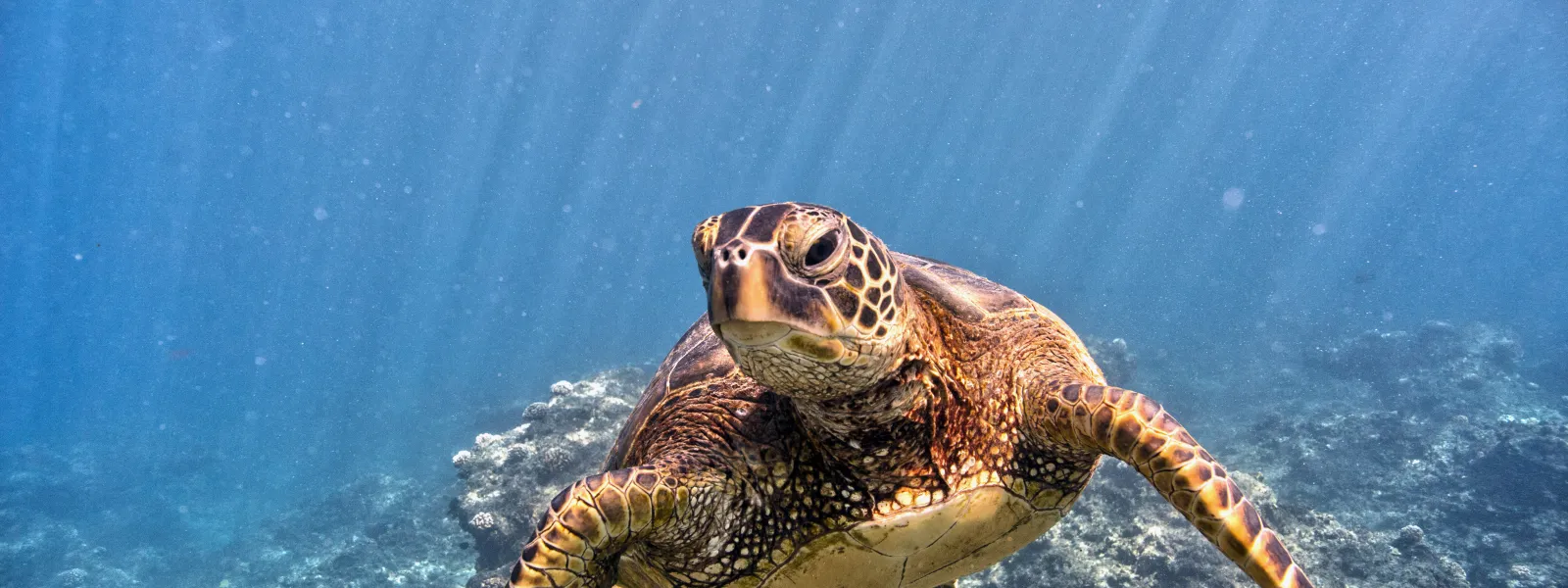
Victory: Court ends the “lawful” killing of endangered green sea turtles
In February of 1999, the Constitutional Court in Costa Rica declared an end to the "lawful" killing of endangered green sea turtles. The ruling is an important victory for the green sea turtle and potentially other species left vulnerable by their host countries.
Costa Rica has the privilege and responsibility of being a haven for one of the largest remaining populations of this endangered species of marine turtle in the Atlantic Ocean. Every two or three years, female green sea turtles, many of which are decades old, slowly plod from their ocean homes to nest on a 35 kilometer long beach between the Tortuguero and Parismina River.
Costa Rica, rather than fully protecting these ancient guests, previously had a law allowing for the capture and slaughter of almost two thousand green sea turtles annually. Unfortunately, poachers exploited the law to kill many more than the legal limit, with the survival of the sea turtles jeopardized.
In response to inaction by the Costa Rican government, and to safeguard the survival of the green sea turtle, AIDA worked through its partner organization CEDARENA to file suit and challenge the law.
In the law suit, AIDA and CEDARENA argued that the law violated the Costa Rican constitutional guarantee of an environment that is healthy and “in ecological equilibrium.” We presented hard evidence of the hidden impact of the law on the sea turtles. The Court ruled in our favor, and annulled the law.
The ruling itself does not end the threat to green sea turtles. It may however, provide some breathing room for conservationists to concentrate on stopping illegal poaching. Hopefully, they will succeed.
Related projects

Media Advisory: Inter-American Court Decision on Climate and Human Rights Approaching
Expected Release: Early July 2025The Inter-American Court of Human Rights is expected to release a historic Advisory Opinion in early July, clarifying how states must uphold human rights in the context of the climate crisis.This legal milestone follows public hearings where frontline communities, Indigenous leaders, and civil society organizations shared powerful testimony on the real-world impacts of environmental degradation and government inaction. The Court’s decision will have far-reaching implications for climate policy, state accountability, and the protection of environmental defenders across the Americas.From the beginning of the process, AIDA assumed a proactive role, promoting the involvement of communities affected by the climate crisis in Latin America. We supported a diverse array of amicus briefs and community testimonies before the Court in public hearings and presented our own amicus brief arguing that the right to a “stable and safe climate” should be recognized as part of the universal right to a healthy environment.Spokespeople Available for Media Interviews:Legal Experts & Organizational LeadersMarcella RibeiroSenior Attorney, AIDALanguages: Portuguese (native), Spanish, English Expertise: Community participation, just transition, climate reparationsBased in: Brazil Available for: Interviews and background briefingsLiliana ÁvilaProgram Director, AIDA Languages: Spanish (native), EnglishExpertise: Human rights law, climate litigation, regional legal mechanismsBased in: ColombiaAvailable for: Interviews and background briefingsFrontline Community VoicesWe can coordinate interviews with several key members of frontline communities who testified directly before the Court during the public hearings.These spokepeople bring a vital human and territorial perspective to the legal decision and are available for media conversations in Spanish and local language, with interpretation support as needed. Background Materials:AIDA's amicus brief on the right to a safe and stable climate.Civil society contributions from around Latin America, on the Climate Litigation Platform for Latin America & the Caribbean.Frontline community interviews from the Manaus public hearing.The Manaus Declaration signed by nearly 400 people and organizations from across the continent.AIDA's background ABC on the Advisory Opinion process. Media Contacts:Victor QuintanillaMedia Coordinator, AIDA 📧 [email protected]📱 +52 55 7052 2107Lorena ZáratePositioning Coordinator, AIDA 📧 [email protected]📱 +52 55 7052 2107
Read more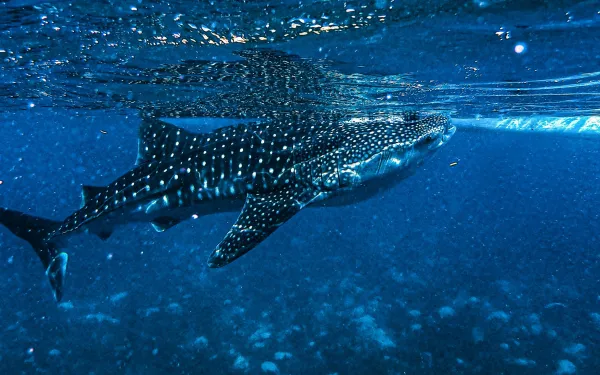
International Ocean Conference ends with High Seas Treaty on verge of entry into force
Nice, France. The 3rd UN Ocean Conference is ending today with a historic step towards ensuring greater High Seas protection. With 19 additional countries depositing their ratifications, the total number of that count toward the High Seas Treaty’s entry into force has now reached 50. Only 10 more are needed to cross the critical 60-country threshold that would trigger the Treaty’s coming into effect.Several countries have already indicated their intent to deposit their ratification instruments at the UN very soon. There is no obligation for them to wait for the UNGA meeting in September, which could mean the Treaty’s entry into force could be activated in the coming weeks."The journey towards a high seas treaty has been nearly as long as the great migrations of whales, sharks and turtles but the wave of new ratifications at the UN Ocean Conference shows we are in the final straight," said Matthew Collis, Senior Director of Policy at the International Fund for Animal Welfare.In addition to the boost in ratifications, the number of countries signing the Treaty also surged. An extra 20 countries added their signatures during the week, bringing the total number to 136. This is an encouraging sign, as widespread ratification will be crucial to ensuring the Treaty’s full effectiveness.Rebecca Hubbard, Director of the High Seas Alliance, emphasized the urgency to maintain momentum: "We must keep our foot on the #RaceForRatification accelerator. The Treaty’s power lies in the number of countries that join, so while we celebrate this incredible progress, we urge all remaining nations to ratify without delay and help drive this Treaty past the first 60 to make it a truly global force for ocean protection."Around 60 heads of state and government attended the meeting reflecting a significant high level attention for the plight of the ocean. The momentum on High Seas Treaty ratification showed what is possible when the world comes together with urgency and purpose.“This is a landmark moment to safeguard the ocean as our greater common good, an opportunity to achieve equity and justice for all nations, and to empower regions, such as Latin America, in defining actions that can shape a fair and sustainable future for all,” said María José González-Bernat, Co-Director of Ecosystems Program of the Interamerican Association for Environmental Defense (AIDA).Attention is now also turning to how the Treaty will be implemented once it enters into force. Several major announcements were made earlier in the week including the re-launch of the High Ambition Coalition for BBNJ and the €10 million that has been made available through the EU’s €40 million Global Ocean Programme to provide technical assistance to developing countries for both ratification and implementation. Private philanthropy also stepped up with the Minderoo Foundation pledging an additional USD6.5 million to support High Seas protection, and funding was confirmed to support a secretariat for the First Movers initiative, which will help advance early proposals for High Seas marine protected areas.Focus is intensifying on building strong bodies and processes under the Treaty to ensure it functions effectively as well as identifying critical High Seas sites for protection once the Treaty is operational through an ongoing Preparatory Commission process at the UN. Efforts to build the case for High Seas MPA proposals submissions under the Treaty were also showcased at the Conference, profiling a number of areas including the Salas y Gomez and Nazca Ridges, the Lord Howe Rise and South Tasman Sea, the West Indian Ocean Sub-Antarctic and the Thermal Dome in the Eastern Pacific.“While the Race to Ratification will soon come to an end, the hard work to fully implement the treaty is just about to begin. Protecting and sustainably managing the High Seas – 50% of the planet – cannot come soon enough. The inclusion of Indigenous and local knowledge systems in the BBNJ Treaty sets new ocean governance foundations for how and for whom this treaty is implemented,” said Ernesto Fernández Monge, International Oceans Director at Oceans North.Notes to editorAs of Friday 13 June at 1400CET,19 additional instruments of ratification were deposited by countries at the UN during the conference and 20 more countries signed the Treaty, signaling their intent to ratify.Additional countries that ratified during UNOC: Albania, Bahamas, Belgium, Croatia, Côte d’Ivoire, Denmark, Fiji, Malta, Mauritania, Vanuatu, Greece, Guinea-Bissau, Indonesia, Jamaica, Jordan, Liberia, Solomon Islands, Tuvalu, VietnamThe European Union has also deposited its instrument of ratification on 28 May 2025. However, as a regional economic integration organization, its ratification does not count toward the total, only ratifications by its individual member states.Additional countries that signed during UNOC: Andorra, Armenia, Burundi, Cambodia, Equatorial Guinea, Guinea, Guinea Bissau, Jordan, Lebanon, Lesotho, Montenegro, Niue, North Macedonia, Papua New Guinea, Peru, Senegal Serbia, South Africa, Saint Kitts and Nevis, YemenThe High Seas Treaty is formally titled the Agreement under the United Nations Convention on the Law of the Sea on the Conservation and Sustainable Use of Marine Biological Diversity of Areas Beyond National Jurisdiction (BBNJ Agreement).The High Seas Alliance (HSA) sometimes uses the term “High Seas Treaty“ as a short-hand for the BBNJ Agreement. HSA acknowledges that the scope of the BBNJ Agreement encompasses all Areas beyond national jurisdiction, including the seafloor and water column. This choice of wording is intended to ease understanding for broad audiences and does not convey a prioritization among the components or principles of the BBNJ Agreement.The official status of signatures and ratifications can be found on the UN website and the High Seas Alliance’s ratification tracker. Note: The number shown on the High Seas Alliance tracker reflects only the ratifications that count toward entry into force and does not include the EU’s ratification and therefore differs from the UN’s total count.The Treaty enters into force 120 days after the 60th instrument of ratification has been deposited at the UN.For more information on the BBNJ High Ambition Coalition.For more information on the EU’s Global Ocean Programme.A series of Preparatory Commission (PrepCom) sessions are happening at the UN to agree on the different institutions and processes that will sit under the Treaty. The first of these sessions happened in April 2025, the second one will be from 18-29 August 2025, and a third one is likely to take place in early 2026. The way these institutions are structured and how they function will shape the Treaty’s long-term effectiveness and determine how quickly global ambition can be translated into tangible results for ocean protection, including the establishment of High Seas marine protected areas.Members quotes-RISE UP: "The wave of High Seas Treaty ratifications at UNOC 3 marks a powerful step toward a thriving ocean future, bringing us closer to protecting our shared ocean heritage. Implementation must be driven not only by science and policy, but also by the leadership and wisdom of Indigenous Peoples and traditional knowledge holders. This is ocean justice in action." – Flora McMorrin, Director, RISE UP.-The Ocean Race: "We at The Ocean Race are thrilled to become a Friend of the High Seas Alliance, recognizing the vital alignment in our joint race for the Ocean. We look forward to collaborating to help the implementation of the High Seas Treaty, working towards the 30x30 target and amplifying critical campaigns for ocean health.” - Richard Brisius, Race Chairman, The Ocean Race.-Accountability.Fish: "A great watershed in the history of sustainable ocean governance. With sufficient support for getting the BBNJ implemented on short notice, Nice has proved a boost for the international commitment with saving biodiversity on the High Seas." - Steven Adolf, Senior Advisor for Accountability.Fish.-AIDA: "The entry into force and the implementation of the BBNJ Agreement is a landmark moment to safeguard the ocean as our greater common good, an opportunity to achieve equity and justice for all nations, and to empower regions, such as Latin America, in defining actions that can shape a fair and sustainable future for all." - María José González-Bernat, Co-Director of Ecosystems Program of AIDA. -Birdlife International: "As a member of the High Seas Alliance, BirdLife International stands ready to provide the science, tools and global-to-local action to build a strong High Seas treaty. Here at UNOC, we now commit to identify the most important areas across 100% of ocean flyways until 2030. This is a key building block for the High Seas treaty to be successful. We call on governments to unite in saving our ocean and to send a strong signal from Nice to the world." - Martin Harper, CEO of BirdLife International.-Global Choices: "Global Choices congratulates the High Seas Alliance on driving increasing ratifications of the BBNJ and we add our voice to the call for urgent full and meaningful implementation of the Agreement. For our work on collaborating to protect the Central Arctic Ocean, an Area Beyond National Jurisdiction, the enhanced Environmental Impact Assessments in the BBNJ agreement will be of particular benefit to enhancing precaution of harm to this most fragile and unique biome." - Inge Relph - Executive Director and Co-Founder, Global Choices.-OceanCare: "Over the past week, we’ve seen an impressive wave of ratifications. While this is a major milestone, it is only the beginning. The real work lies in implementation — and the true test will be whether the Agreement delivers tangible benefits for marine ecosystems. Success will depend on robust institutional arrangements, adequate financing, capacity-building, and genuine cooperation among States and stakeholders. We must seize the momentum generated by the 3rd UN Ocean Conference and act swiftly — the health of our ocean hangs in the balance." - Fabienne McLellan, Managing Director at OceanCare.-The German Ocean Foundation: "The German Ocean Foundation celebrates the growing number of States who have ratified the BBNJ Agreement and urges other States, in particular the German government, to prioritize ratification, so that this treaty can realise its true potential as the catalyst for meaningful and lasting protection of the High Seas that it is designed to be." - Frank Schweikert, Director of the German Ocean Foundation.-Campaign for Nature: "Jumping from 31 to 50 country ratifications within a few days is a remarkable achievement. We now need to capitalise on this momentum and ensure we reach the magic number of 60 before the UN General Assembly meets in September in New York. Every country should aspire to be among this top 60 in the next three months." - Adrian Gahan, Ocean Lead, Campaign for Nature.-MarViva Foundation: "UNOC presented a unique opportunity to strengthen the momentum around the protection of the high seas. We look forward to continuing working along with governments and partner organizations from the High Seas Alliance to ensure the implementation of the BBNJ Treaty and the adequate management and conservation of key sites such as the Thermal Dome." - Katherine Arroyo Arce, Executive Director.-IFAW (The International Fund for Animal Welfare): "The journey towards a high seas treaty has been nearly as long as the great migrations of whales, sharks and turtles but the wave of new ratifications at the UN Ocean Conference shows we are in the final straight. IFAW urges all nations that have not yet done so to ratify the treaty as a matter of urgency so we can at last give meaningful protection to marine life on the high seas." - Matthew Collis, Senior DIrector of Policy.-Sustainable Ocean Alliance: "The BBNJ Treaty is a historic step toward protecting the biodiversity of the high seas, a global commons that no country owns, but all depend on. Contrary to misinformation, this agreement fully respects national sovereignty: it only applies to the High Seas that is generally beyond 200 nautical miles, where no country has exclusive rights. By ratifying the BBNJ Treaty, countries are not giving up power, they are stepping up to protect life beyond borders and ensure that international waters are governed by cooperation, science, and fairness." - Daniel Cáceres Bartra, SOA Hispanoamérica.-Greenpeace International: "Ratification of the High Seas Treaty is now within touching distance. The progress made on Monday reminded us of the multilateral cooperation we saw when the Treaty text was agreed by consensus in 2023. This momentum now must be maintained. We need to cross the threshold of sixty ratifications as soon as possible, so the Treaty can enter into force in 2025. Following this, we must see governments take marine protected area proposals to the first Ocean Conference of Parties in 2026. One billion people rely on the oceans, and if we can protect 30% of the oceans using this Treaty, they will continue to provide for us." - Megan Randles, Greenpeace International’s Head of Delegation for the Conference.-WILDTRUST: "The South African based NGO WILDTRUST – WILDOCEANS programme team have been blown away by ocean conservation commitments made by both the South African government and the Union of Comoros at UNOC 2025. South Africa’s Minister of Forestry, Fisheries and the Environment Dr Dion George, signed the BBNJ Agreement, also known as the High Seas Treaty, on the 9th of June. The Minister touched on how signing the Agreement builds on the countries record of active multilateral engagement and positions them as a bridge-builder between global ambition and local action for the oceans.On Tuesday the 10th of June the Ministry of Comoros confirmed the country’s readiness to take swift action to support global marine conservation goals. They signed and committed to move to ratify the High Seas Treaty, as well as pledged to protect 30% of their ocean by designating approximately 50 000km2 in Marine Protected Areas by 2030.Ecological sustainability is only possible when paired with socio-economic prosperity, especially in vulnerable coastal communities, where lasting marine conservation depends on both nature and people thriving together," commented Strategic Ocean Lead at the WILDTRUST. "This is why we are so pleased about these bold steps to protect the western Indian Ocean at large."-Oceans North: "While the Race to Ratification will soon come to an end, the hard work to fully implement the treaty is just about to begin. Protecting and sustainably managing the high seas – 50% of the planet – cannot come soon enough. The inclusion of Indigenous and local knowledge systems in the BBNJ Treaty sets new ocean governance foundations for how and for whom this treaty is implemented." - Ernesto Fernández Monge, International Oceans Director, Oceans North.-The Ocean Project: "We are highly encouraged with the progress made toward ratification and urge all nations to "seas the day" and swiftly ratify the High Seas Treaty. Ratification provides an historic opportunity for nations of the world to come together and finally safeguard this global commons. Critically important, ratification will provide the ability to protect at least 30% of the ocean, which nations of the world committed to achieving by 2030. Doing so will help both current and future generations because no matter where we live on our blue planet, we all need a healthy ocean to survive and thrive." - Bill Mott, Executive Director, The Ocean Project | World Ocean Day.-Conservation International and the Coral Reefs of the High Seas Coalition: "The wave of international commitments to the High Seas Treaty signals growing global recognition that we must urgently conserve marine biodiversity in our shared ocean. This landmark agreement lays the foundation for creating marine protected areas beyond national jurisdiction - safeguarding the rich biodiversity and deep cultural heritage of the high seas for future generations." - Haydée Rodriguez-Romero, Director of the Coral Reefs of the High Seas Coalition, Conservation International.-The Pew Charitable Trusts: “"This remarkable progress demonstrates the global community’s commitment to swiftly implement the BBNJ Agreement and secure benefits for marine life and people worldwide. This includes a global ambition to establish the first generation of high seas marine protected areas, which is critical for meeting the world’s 30 by 30 conservation goal within the next five years." – Nichola Clark, senior officer on The Pew Charitable Trusts’ ocean governance team.-Iceland Nature Conservation Association: "We very much welcome Iceland’s commitment to ratifying the BBNJ treaty during the autumn session of the Icelandic Parliament. However, given Iceland’s previous commitments, Iceland must be among the first 60 states to ratify the BBNJ." - Árni Finnsson, Iceland Nature Conservation Association.-iSea: "At iSea, we are proud to have supported the High Seas Alliance's Race for Ratification, and we welcome Greece’s and Cyprus's ratification of the BBNJ Agreement as a crucial step toward ocean protection. With only a few national ratifications remaining after the momentum of UNOC3, the High Seas Treaty is closer than ever to entering into force. As an NGO dedicated to the conservation of the marine environment, iSea remains committed to actively supporting the next steps for the Treaty’s effective implementation worldwide."-Global Fishing Watch: "UNOC has given us a glimmer of hope that the challenges facing our ocean are being seen and will be tackled. Transparency at all levels has rightly emerged as crucial in this work, because we can’t protect what we can’t see. As we edge closer to the High Seas Treaty coming into force, governments need to double down - using both transparency and new technologies - to safeguard the ocean and its riches for the benefit of all those who rely on it." - Tony Long, chief executive officer of Global Fishing Watch.-The Nature Conservancy: "Achieving meaningful change on the high seas requires a whole-ocean approach grounded in global cooperation and local leadership. The momentum behind the BBNJ Treaty shows that this is possible. Now is the moment to double down. As we approach the 60 ratifications needed to bring it into force, we move closer to protecting the ocean systems that sustain life— safeguarding food security, livelihoods, and climate resilience for communities around the world." – Dr. Elizabeth McLeod, Global Ocean Director, The Nature Conservancy.-Iceland Nature Conservation Association: "We very much welcome Iceland’s commitment to ratifying the BBNJ treaty during the autumn session of the Icelandic Parliament. However, given Iceland’s previous commitments, Iceland must be among the first 60 states to ratify the BBNJ." - Árni Finnsson, Chair of Board, Náttúruverndarsamtök Íslands / Iceland Nature Conservation Association.-EarthEcho: "On behalf of our global community of young people at EarthEcho, I am extremely excited by the multilateral progress made here at Nice in the Race for Ratification. Young people are already strongly mobilized in laying the groundwork for BBNJ Treaty implementation, and we’re ready and eager to hit the ground running once it enters into force. To our world leaders, the ball is in your court!" - Taylor Cargill, EarthEcho International Youth Leadership Council member.
Read more
Small investments with great impacts. Territorial gender-just climate solutions
Since 2016, the Global Alliance for Green and Gender Action (GAGGA), together with other actors, has promoted a series of initiatives to strengthen the inclusion of a gender perspective in climate finance, particularly within the projects and financial flows of the Green Climate Fund (GCF).The GCF is the first international climate finance fund to incorporate a gender perspective as a central pillar of its operations, becoming a key framework for advancing equity in the access, use, and allocation of climate resources globally.However, international climate finance that reaches countries is often disconnected from the actual needs of the local communities it is meant to benefit— especially women. This poses a critical issue that demands urgent attention— communities have the right to participate in decisions that directly affect them. At the same time, it misses the opportunity to incorporate local knowledge into solutions— knowledge that could make them more relevant and effective in addressing the climate crisis. In its special report on climate change and land, the Intergovernmental Panel on Climate Change (IPCC, 2022) highlights that incorporating women’s knowledge of land management helps mitigate degradation and supports the adoption of integrated adaptation and mitigation measures.Gender-responsive climate finance goes beyond allocating resources to women and promoting gender equality—it requires rethinking how financial and climate solutions are designed and implemented. This means acknowledging the diversity of women, removing barriers to resource access, defunding so-called ‘false solutions’, and supporting initiatives that tackle the structural causes of climate change.In Latin America and the Caribbean, many local climate solutions remain unknown to decision-makers. As a result, they struggle to receive support, be replicated, or serve as inspiration for other initiatives benefiting the same communities. This publication presents five case studies of successful, locally developed climate solutions with a focus on gender and climate justice. The goal is to strengthen collaboration between those responsible for providing and implementing GCF resources and civil society organizations.The case studies show the efficiency that can be achieved when resources are channeled directly to civil society organizations and communities. All the projects were carried out with budgets under USD 50,000 and made significant contributions to transforming the structural conditions that heighten the vulnerability of territories, women, and other marginalized groups in the face of the climate crisis. Read and download the publication
Read more